US News / Culture — The New York City Council voted 40–7 on Thursday to outlaw horse-drawn carriages across all five boroughs from June 1, 2028, ending an industry that has circled Central Park since the 1800s. The law is named for Romanch Mahajan, the 18-year-old tourist killed when a carriage horse bolted this summer. Mayor Zohran Mamdani will sign it, President Donald Trump called the carriages a "great tradition" that "will be missed," and the drivers' union says it will sue "the minute the ink dries."
The vote was not close, and it was not really in doubt. On Thursday, October 22, the New York City Council approved a ban on horse-drawn carriages by 40 votes to 7, with two abstentions — a veto-proof margin in the 51-member council, passed despite a last-minute attempt to amend the bill and push the end date back to 2030. The ban takes effect on June 1, 2028, and covers the whole city, not only the Central Park loop where the carriages have worked since the nineteenth century. "Today's historic vote marks our commitment to animal welfare, public safety, and protecting workers," Council Speaker Julie Menin, who championed the legislation, said in a statement.
Mayor Zohran Mamdani supports the bill and is expected to sign it. Earlier this month he declared that the horse carriage industry was "coming to an end in New York City," and he and Menin struck the deal to wind the industry down in October, citing safety as the primary factor. The legislation is known as Romanch's Law. Romanch Mahajan, an 18-year-old visitor from India, died on June 17 after he was thrown from a carriage in Central Park when the horse bolted after the driver stepped away to take a picture of the family. His parents appeared at Thursday's council meeting. It was, the Wall Street Journal noted, the first human fatality in a horse carriage accident in the city.
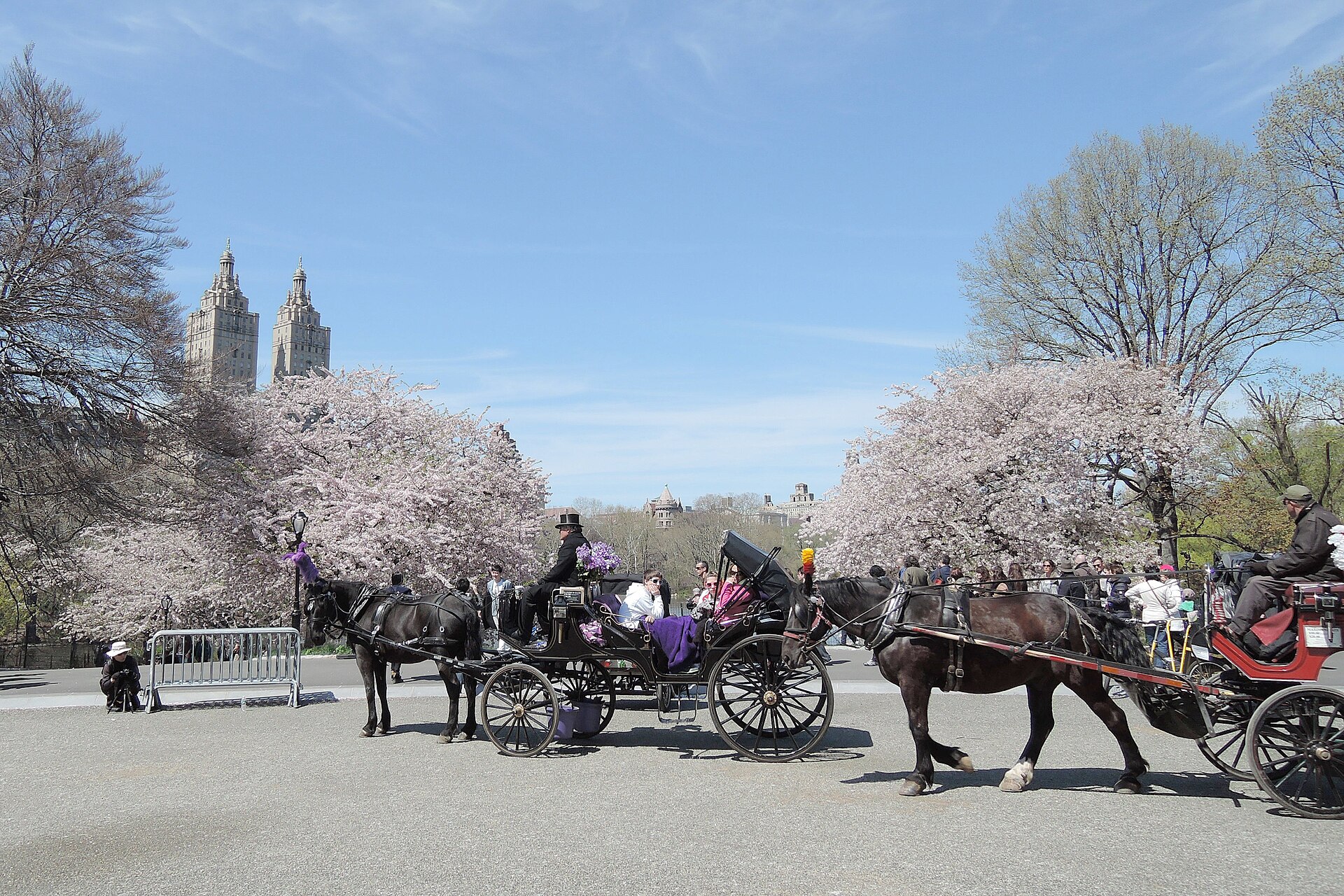
The summer that changed the politics
New York has argued about the carriages for decades, and for decades the carriages won. Animal-rights activists have long called the practice inhumane — horses working in traffic, heat and noise, then collapsing, in some summers, in full view of tourists — while drivers, owners and their union answered that the horses are regulated, rested and cared for, and that the trade is part of the city's fabric. What changed was not the argument but a sequence of events in a single summer. In June, a carriage horse named Deniz collapsed suddenly in Central Park while pulling passengers, setting off a wave of backlash. Weeks later came Mahajan's death.
His father's testimony has followed the bill ever since. "If [the prior legislation] had passed, the carriages would have stopped on June 1, 2026 — Romanch died on June 17," Deepak Mahajan told a council hearing in July. "This was not an unpredictable accident. Let his death not be in vain." A human death did what years of horse deaths and collapses had not: it moved the question from animal welfare, where opinion splits along familiar lines, to public safety, where the council could assemble 40 votes. Supporters of the ban were explicit about the sequence — the bill that finally passed is the one named after the teenager.
Trump weighs in: "Another piece of history that's gone"
The president, whose business empire is headquartered in Trump Tower a few minutes from Central Park, opposed the ban in posts on Truth Social. "When there is a car accident in the area, of which there are many, they don't stop cars from entering the Park. So why would they stop the Carriages? It was a Great Tradition. Another piece of History that's gone. It will be missed!" he wrote, in the post quoted by Reuters. In another post quoted by USA Today, he said: "The Horse-drawn Carriage in New York City is a quintessential New York experience. So sad that, for political reasons, we will see it go!"
The intervention is notable for what it did not do. Trump has both attacked Mamdani and held cordial meetings with him, and his posts were elegiac rather than threatening — no federal angle exists through which a president could block a city licensing law, and none was suggested. The carriages instead become the latest piece of old New York to be argued over in national politics: the same trade that appears in "Sex and the City," "Elf" and "Home Alone 2: Lost in New York" is now a small, vivid proxy in the larger fight over what kind of city New York should be, and who gets to decide.
Why this matters
A carriage ban is, on paper, a minor municipal measure affecting 68 licensed carriages. Its significance is larger, for three reasons. First, it is a rare case of a city abolishing — not regulating, not reforming — an entire licensed profession, a point the Transport Workers Union's lawyers made in writing before the vote: "This may be the first time in City history that a previously licensed profession was banned," the union's principal attorney, Arthur Schwartz, wrote to the city's corporation counsel. If the ban survives in court, it becomes a precedent other cities and other industries will cite, in both directions.
Second, New York is not an outlier but a latecomer. Over the last five years Philadelphia, Chicago and San Antonio have all outlawed horse-drawn carriages, according to USA Today's account. The country's largest and most visible carriage trade was the holdout; its fall removes the industry's showcase and its strongest argument — that if the practice were truly indefensible, New York would not still license it. Third, the politics cut across the usual lines in a way that will be studied: an animal-welfare cause carried by a democratic-socialist mayor and a council speaker, opposed by a Republican president on tradition grounds and by a major transport union on livelihood grounds, and decided, in the end, by a safety tragedy rather than by any of those ideologies.
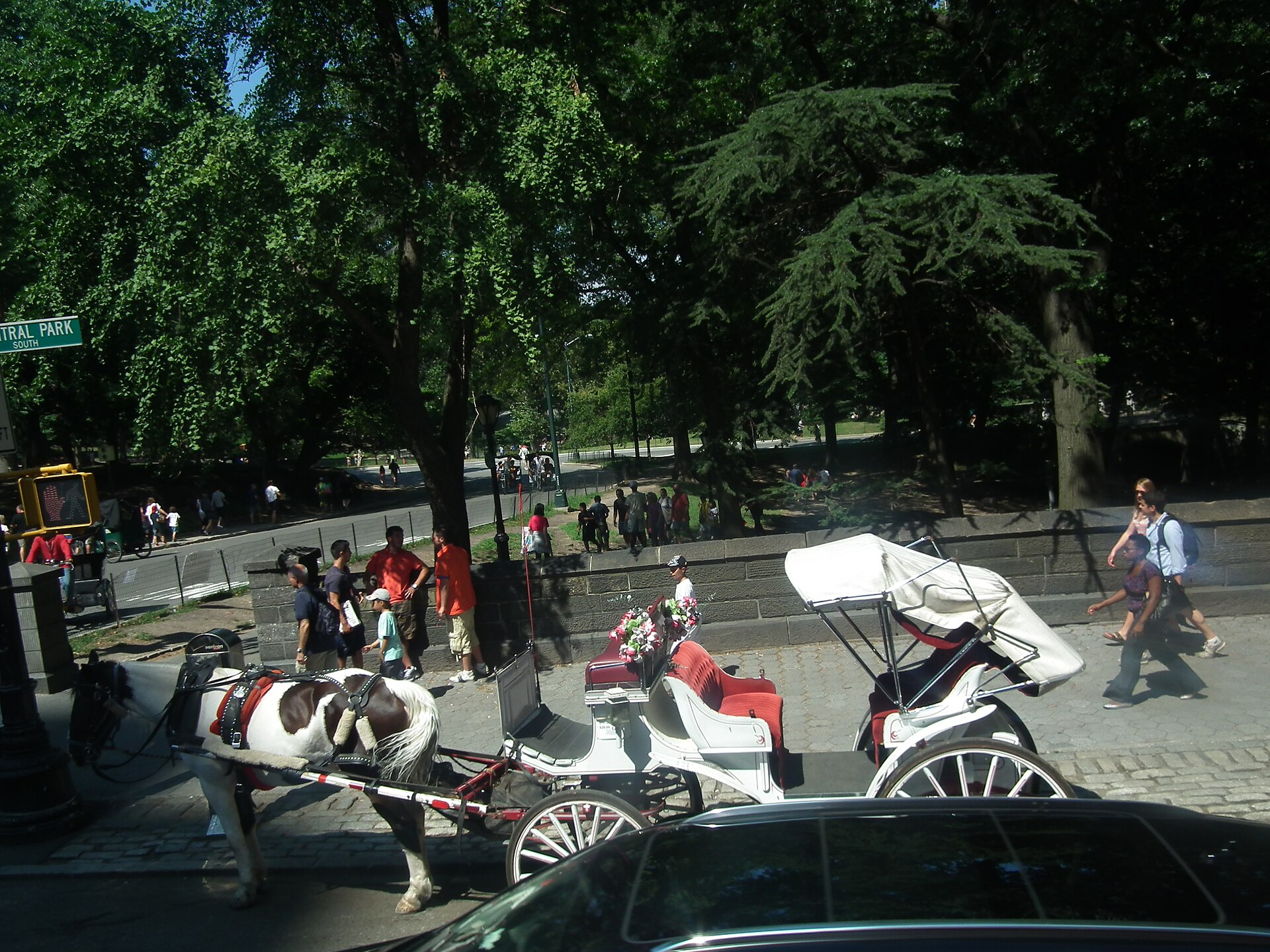
Who wins, who loses
The clearest winners are the animal-welfare organisations that campaigned for this for decades. "New York City is finally ending deadly horse carriage rides," the anti-carriage group NYCLASS said after the vote, promising to work with the administration "to ensure the horses retire to safe, loving rescue farms where they can finally run free." The council majority and the mayor also win a clean, popular deliverable: the ban costs the city budget almost nothing, offends no large voting bloc, and photographs well.
The losers are concentrated and know exactly who they are. City officials say about 150 carriage drivers currently work in the city; the New York Post put the figure at about 200 drivers whose livelihoods will vanish, and driver Alexus Lawson, 28, outside City Hall in tie and top hat, called the vote a "travesty." "New Yorkers want us," she said. "We're not going down without a fight." The union's case is not really about horses; it is about assets. Drivers and owners hold city-issued licences and medallions they paid for, horses they own, and in many cases life savings tied up in the operation. Longtime driver Atakan Aktay made the comparison that stings most for this mayor, who once joined a hunger strike for yellow-taxi medallion owners facing ruin: "Now you are mayor, and we face the prospect of losing our businesses without guaranteed compensation. Where is that same compassion for us?"
The bill's answer, at present, is a process rather than a cheque. It requires the mayor's office to develop a transition plan for the workforce by April 2027 and to consider a program to compensate carriage operators for their businesses and help with the disposition of their horses. "Consider" is the word the union is litigating over. TWU president John Samuelsen called the bill "a train wreck of constitutional and due process violations" that "offers nothing concrete for blue-collar drivers and carriage owners who will be financially crushed… It is not progressive. It is anti-worker. It's theft."
The horses themselves
Even the number of horses is argued over, which tells its own story about how loosely this small industry has been counted. The Wall Street Journal put it at approximately 100 horses powering the licensed Central Park carriages; an industry spokesperson cited in other coverage put the trade at more than 180 horses and about 150 drivers. What the law does specify is the floor of their future: the bill requires the "humane disposition of carriage horses" and prohibits their sale for slaughter or for use in another horse-drawn carriage business. Mamdani has said officials are considering sanctuaries or farms, while noting the legislation does not say who pays for the horses' upkeep — an unglamorous, decades-long cost that will land on someone, and a detail the transition plan will have to resolve.
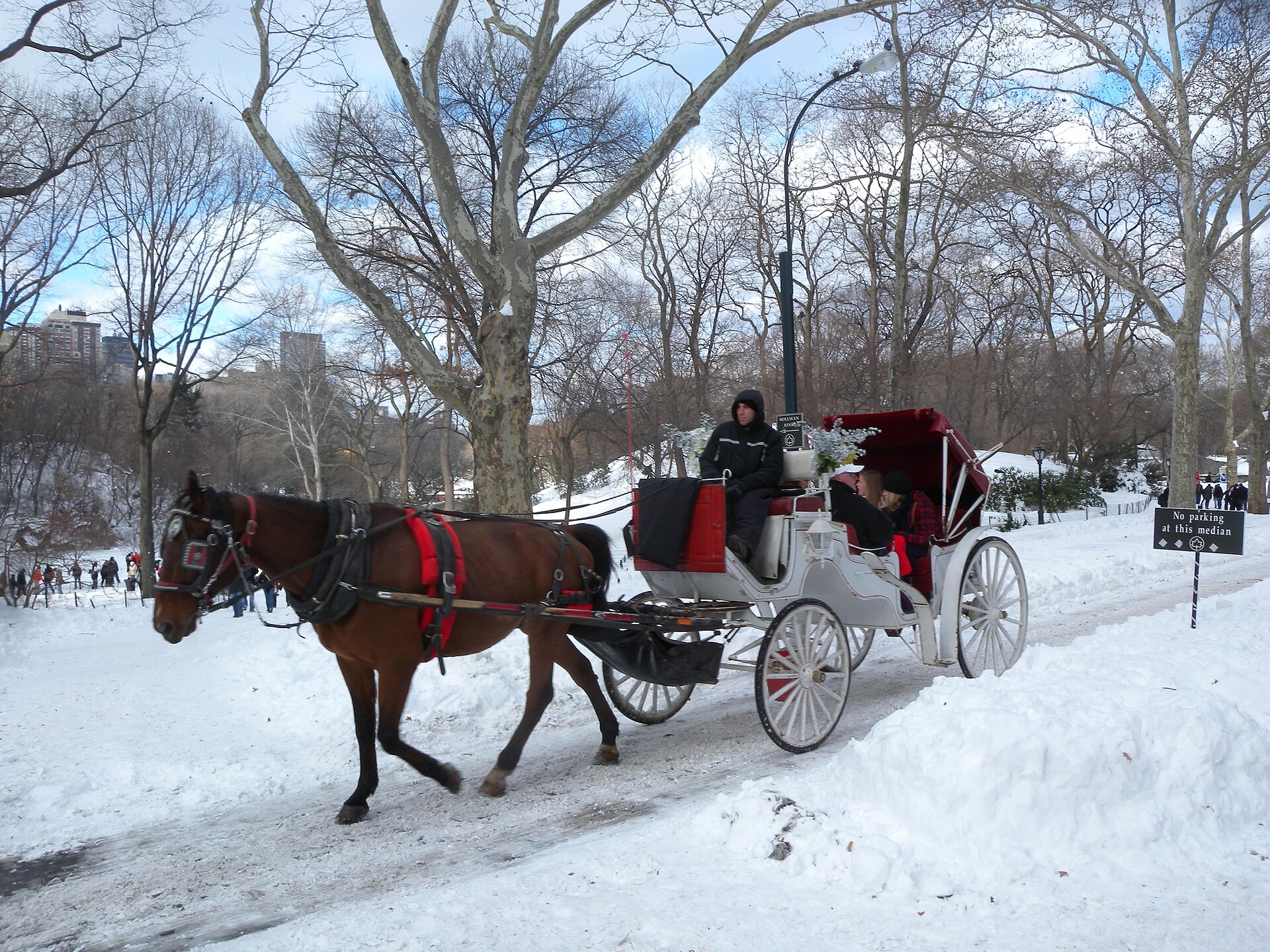
What happens next
The sequence from here is set, and contested at every step. Mamdani is expected to sign the bill — the council's 40 votes are in any case more than enough to override a veto that is not coming. The Transport Workers Union has promised to seek a temporary restraining order "the minute the ink dries," in its letter's phrase, arguing the ban takes licensed property without compensation; a court fight over whether a city may abolish a trade it created, and what it owes the people it licensed into it, could run well into 2027. In parallel, the administration must produce the transition plan by April 2027 — compensation, job help and horse placement — and City Hall says it has been working with the council, the union, drivers and animal-welfare advocates toward "a just transition that protects workers while ending horse-drawn carriages in Central Park once and for all," as spokesperson Sneha Choudhary put it.
If the law stands, the last legal clip-clop is scheduled for the spring of 2028, and on June 1 that year a sight that has defined Central Park postcards for more than a century and a half simply stops. The drivers have nineteen months of work left, a lawsuit, and a mayor who once fasted for people in their exact position. Which of those facts decides how this ends is the story to watch.
Related coverage: Mamdani calls ICE "rotten to the core" after Bronx shooting · Trump and Mamdani at Gracie Mansion: what their meeting signalled
Sources: Reuters, "New York City bans horse-drawn carriages from June 2028," October 22, 2026; USA Today, "A 160-year-old New York tradition is headed for extinction," October 22, 2026; Wall Street Journal, "NYC Votes to Ban Carriage Horses," October 22, 2026; New York Post, "NYC Council bans horse carriages in veto-proof vote," October 22, 2026.