Russia NATO limited attack warning
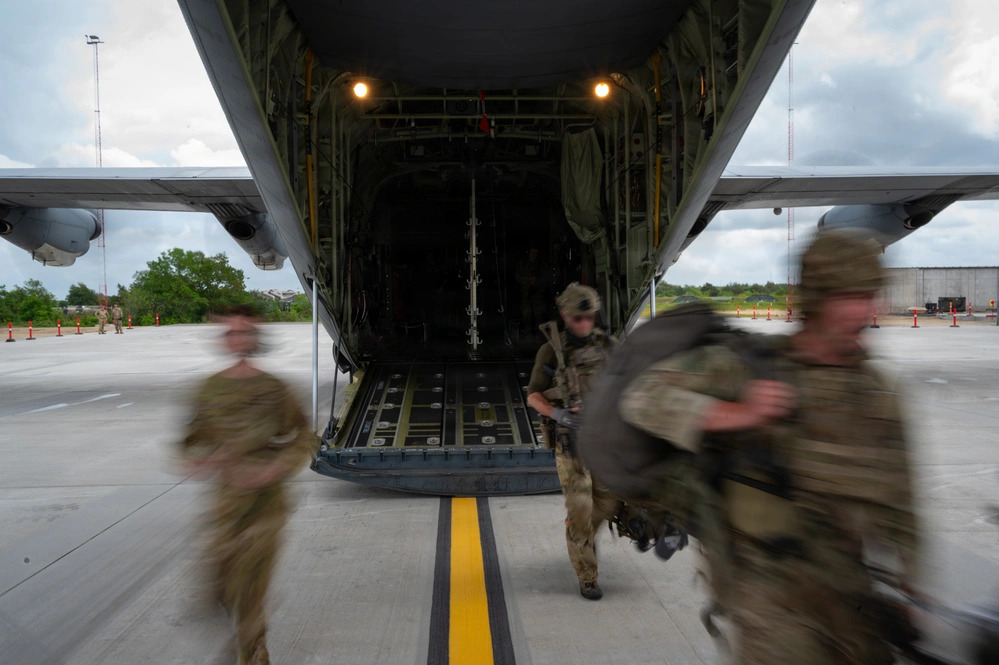
COPENHAGEN — The Russia NATO limited attack warning issued by Denmark's Defence Intelligence Service, known as FE, sharpens Europe's security debate without declaring that war is imminent. Presenting the assessment in Copenhagen, intelligence chief Thomas Ahrenkiel said the agency sees a “low but growing risk” that Russia could attempt a limited military action against one or more NATO countries on its border in the coming months.
The wording is deliberately calibrated. FE still considers an outright Russian invasion of a NATO country “highly unlikely,” though it says that possibility cannot be ruled out. A low but growing risk is not a prediction, and it is not evidence that Moscow has selected a target or date. It is an intelligence judgment about capability, incentives and a widening pattern of hybrid pressure.
Ahrenkiel's central argument is that Moscow would not need to conquer an allied country to create a strategic crisis. The aim is not to take over the country, but to divide NATO.
he said. The most dangerous operation, in that reading, would be one limited enough to generate doubt—about authorship, intent or proportionality—but serious enough to force 32 allies to decide whether and how collective defence applies.
Three scenarios in Thomas Ahrenkiel's NATO threat assessment
FE described three broad ways a limited operation could unfold. The first is a long-range strike against infrastructure in a NATO country that supports Ukraine. Rail terminals, ports, logistics depots, communications nodes and repair facilities are possible categories because they connect European territory to Ukraine's war effort. The assessment does not identify a confirmed target.
The second is a false-flag operation using Ukrainian-made drones. Such an attack would be designed to obscure origin and delay agreement over responsibility. The crucial evidence would include launch location, flight path, control links, component history, communications intercepts and motive—not simply the nationality of the hardware. A drone manufactured in Ukraine would not by itself establish that Ukraine operated it.
The third is a small deployment of unmarked troops into a NATO border area, potentially justified by the Kremlin as necessary for protecting Russian minorities. The scenario recalls the ambiguity Moscow exploited in Crimea in 2014, when armed personnel without insignia helped seize key sites while Russia initially denied direct involvement. FE's point is not that the same plan is known to be under way, but that a limited footprint could be used to test whether allies agree on what happened before facts on the ground harden.
Hybrid escalation is already the more immediate concern
Beyond the military scenarios, Denmark expects Russia to escalate hybrid attacks in Europe in the coming months. The assessment points to sabotage against defence companies and rail transport, along with destructive cyberattacks. Each method can interrupt Ukraine-aid corridors, raise security costs and erode public confidence while remaining below the scale of a conventional invasion.
Attribution is the hinge. A factory fire, railway failure or network outage can have ordinary causes; calling it sabotage requires evidence. Democratic governments therefore face a double burden: they must investigate quickly enough to prevent a repeat, yet disclose enough evidence to support sanctions or other consequences. Automatic attribution would be reckless. Endless hesitation would reward an operator whose advantage is deniability.
Moscow denies conducting hybrid warfare or sabotage against NATO states and denies planning a military confrontation with the alliance. The Russian embassy in Denmark did not immediately respond to a request for comment reported with the assessment. Those denials belong in the record, but they do not end the evidentiary question surrounding individual incidents.

Leipzig/Halle, EU sanctions and the Danish helicopter incident
The warning lands amid a cluster of incidents that European governments are assessing as parts of a broader pattern. Germany has blamed Russia for an attempted drone attack at Leipzig/Halle Airport, an important cargo and logistics hub, and European Union governments are pushing for sanctions. A separate episode involved a Russian frigate firing flares toward a Danish military helicopter.
Neither incident is equivalent to a missile strike on allied territory. That distinction matters. Flares can endanger an aircraft and communicate hostility without carrying the meaning of a launched weapon; an attempted drone operation can fail while still revealing a target and a method. FE's assessment asks governments to consider the cumulative campaign rather than treat every event as isolated, while still judging each one on its own evidence.
NATO's top European commander, Gen. Alexus Grynkewich, has separately said the alliance is increasing intelligence sharing and should remain calm and confident. Signal Post News's related report on the NATO Russia hybrid-war warning and Grynkewich's deterrence message explains how information from military commands, police and private infrastructure operators is being combined.
Article 5 ambiguity is the weapon
NATO's Article 5 treats an armed attack on one ally as an attack on all, but it does not run on an automatic mechanical trigger. Allies assess the facts and each determines the action it considers necessary. A conventional invasion leaves comparatively little doubt. A single drone, an unattributed explosion or a brief incursion by unmarked troops creates harder questions: Was the action deliberate? Who directed it? Does its scale constitute an armed attack? What response would deter another attempt without producing uncontrolled escalation?
That ambiguity can be strategically useful to an adversary. If allies argue in public while evidence is still being assembled, the operation may achieve Ahrenkiel's stated purpose even without territorial gain. If they respond before attribution is sound, they risk acting on a false or manipulated picture. Faster intelligence sharing, pre-agreed consultation procedures and resilient infrastructure are therefore not bureaucratic details; they narrow the space in which uncertainty can divide the alliance.
Ukraine-aid corridors sit directly inside that dilemma. Rail lines, warehouses, ports, satellite links and repair facilities on NATO territory make continued support possible. Sabotaging one node could slow deliveries while forcing governments to debate whether the act is a crime, espionage, coercion or an armed attack. Poland's finding that a fire at a station serving Ukraine was deliberate is examined in our report on the Starlink station sabotage investigation; responsibility in that case has not been publicly established.
Context since Russia's 2022 full-scale invasion
Since February 2022, NATO's eastern members have expanded air policing, reinforced forward units and hardened the transport networks used to support Ukraine. The war has repeatedly brought Russian missiles and drones close to allied airspace, compelling commanders to make decisions before intent is fully clear. On September 23, NATO jets were scrambled over Poland and Romania during Russian strikes on Ukraine; those defensive launches did not by themselves establish that Russia intended to attack NATO territory.
The distinction between spillover and deliberate testing remains vital. Air-defence readiness can reduce the consequence of either, but political responses depend on evidence of origin and intent. The same principle applies to cyberattacks and sabotage: patterns can strengthen an attribution, yet similarity alone is not proof.
FE's warning therefore belongs to a continuum, not a sudden discovery. Europe has spent more than four years adjusting to a war beside NATO territory, while Russia has shown that conventional force, cyber operations, covert action and information campaigns can operate together. What changed in the Danish assessment is the weight assigned to a bounded military test as a plausible near-term risk.
Who wins, who loses and what critics should test
The Baltic states, Poland and other exposed allies gain support for their longstanding argument that hybrid incidents must be read as a campaign rather than as disconnected police cases. Intelligence agencies, counter-drone suppliers, cybersecurity teams and infrastructure-protection firms gain urgency—and likely funding—as governments move from warning to preparedness.
Ukraine gains when transport and communications corridors are hardened, because resilience makes aid less vulnerable to one disruptive event. The broader alliance also gains if shared evidence produces faster consensus. But European budgets face trade-offs: money directed to surveillance, air defence, rail security and redundancy is money unavailable elsewhere, and excessive secrecy can weaken public trust in official attribution.
Russia would lose room for deniability if allied governments can pool evidence and impose coordinated costs quickly. Yet Moscow may benefit if warnings generate fear, expensive overreaction or visible disputes among allies. Critics are therefore right to demand proportionality, independent scrutiny and precise language. Intelligence agencies rarely publish the probability model behind phrases such as “low but growing,” and the claim can be difficult to falsify. The proper test is whether evidence, readiness and policy become more specific—not whether officials simply repeat a dramatic warning.
What happens next: four tests
1. The echo test. Watch whether other NATO intelligence services independently adopt Denmark's assessment or publicly describe similar scenarios. Repetition based on separate evidence would matter more than allies merely quoting FE.
2. The attribution test. Investigations into Leipzig/Halle, the Danish helicopter incident and suspected sabotage will show whether governments can produce a shared, public evidentiary account. Sanctions that name actors, methods and supporting evidence would mark a stronger step than generalized blame.
3. The hardening test. Border allies and states carrying Ukraine aid can disperse logistics, protect rail junctions and depots, add counter-drone coverage, rehearse Article 4 consultations and improve cyber recovery. The measure of readiness is whether one damaged node can be bypassed without halting support.
4. The sanctions track. The European Union's response to the Leipzig/Halle case will show whether hybrid incidents can generate timely collective costs. A narrowly evidenced package could strengthen deterrence; a delayed or poorly explained one could deepen disagreement over attribution.
None of those tracks proves that an attack will happen. They are ways to reduce the value of an attempted test. If attribution is fast, infrastructure survives and consultation begins from shared facts, a limited operation is less likely to divide NATO—the objective Ahrenkiel says Moscow could seek.
The bottom line
Denmark's assessment is a warning about a method, not a timetable for war. It says the most plausible Russian challenge may be deliberately constrained: enough force to frighten or disrupt, not enough to make allied unity automatic. That is why FE can judge invasion highly unlikely while still raising the risk of a limited strike.
The alliance's answer cannot be certainty, because intelligence rarely offers it. It must be a combination of disciplined attribution, resilient Ukraine-aid routes, rapid consultation and proportional consequences. The warning succeeds if it helps deny an adversary the political effect of ambiguity. It fails if “low but growing” is treated either as proof that war is coming or as an excuse to ignore the problem until a test occurs.
Sources and reporting limits
- Reuters via WNCY: Denmark expects Russia to escalate hybrid warfare in coming months
- New York Post: Danish assessment's limited-strike scenarios
- Europe Says: syndicated account of the Danish intelligence warning
Reporting limits: This is a fixed September 24, 2026 snapshot. The scenarios and risk language are FE's assessment, not confirmed Russian operational plans. Signal Post News has not independently verified responsibility for the cited hybrid incidents. Moscow denies conducting hybrid warfare or sabotage against NATO states; the Russian embassy in Denmark did not immediately respond to a request for comment reported by Reuters. Analysis of incentives, Article 5 ambiguity, winners and losers is Signal Post News's own.