Entertainment · UK · Media
The David Walliams police investigation is now the central fact in a story that has moved, in four days, from a media exposé to a criminal inquiry. Scotland Yard says the allegations it received are separate from the ones the Guardian and ITV News published. Walliams denies wrongdoing, and he has neither been arrested nor charged.

LONDON, November 13, 2026 — The David Walliams police investigation began, formally, on Friday, when London’s Metropolitan Police announced that it has opened an investigation after receiving a number of allegations of non-recent serious sexual offences involving a man now in his 50s. The force did not name David Walliams — British police do not routinely name people who have not been charged — but it confirmed that the allegations relate to this week’s joint investigation by the Guardian and ITV News, which published detailed allegations against the comedian and children’s author on Tuesday. The Met said the allegations it has received are separate from those in the published reports, and that detectives will also review the published material for evidence of offences. Walliams, 55, has denied the allegations against him. He has not been arrested, and no charges have been brought.
Those distinctions — allegation, investigation, charge — are the load-bearing facts of this story, and they are easy to blur. An investigation is the police examining whether offences may have been committed and whether evidence exists to prove them. It is not a finding. What follows is an account of what the police say they are doing, what the Guardian and ITV News reported, and what Walliams has said in response, in that order, because the sequence matters.
What the police are actually investigating
The Met’s statement was short and carefully bounded. The force said it had received “a number of allegations of non-recent serious sexual offences involving a man now in his 50s,” and that the allegations relate to the Guardian and ITV News reporting published this week. “Non-recent” is the term British policing uses for offences reported long after they are alleged to have happened; it says something about the age of the claims and nothing about their truth.
Two features of the statement deserve emphasis. First, the Met said the new allegations are separate from those published by the Guardian and ITV News. That means people have come forward to the police directly, beyond the accounts already in print — the police are not simply re-reading Tuesday’s journalism, though they are doing that too: detectives will review the published material to establish whether it contains evidence of offences. Second, the force did not name Walliams. In England and Wales, police generally do not identify a person under investigation before charge, both to protect the integrity of an inquiry and because an uncharged person retains the presumption of innocence in full. The identification of the investigation’s subject comes from the Met’s own confirmation that the allegations relate to this week’s reporting, which named Walliams.
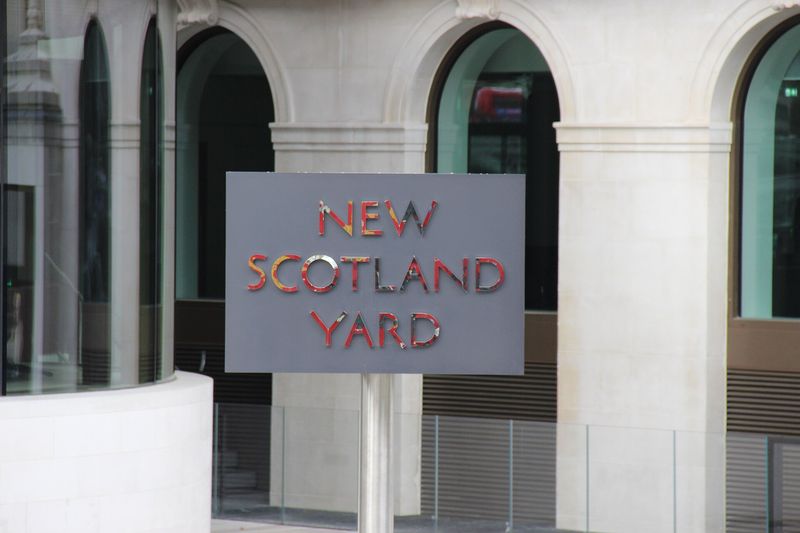
Detective Superintendent Mike Cagney, who is leading the investigation, appealed for anyone who has been a victim of a sexual offence to come forward “no matter when it happened.” The Times reported that the Met directed people to contact the force on 101, quoting reference 4900/10NOV26, or to reach its Complex Sexual Offences Unit. Appeals of this kind are a standard feature of non-recent investigations, where detectives often begin with accounts separated from the alleged events by many years and must build a picture from witnesses, records and whatever contemporaneous material survives.
What the Guardian and ITV investigation reported
The Guardian and ITV News published their joint investigation on Tuesday, November 10, the product of three years of work in which the two newsrooms spoke to more than 100 people. It is important to be precise about what their reporting is: a set of allegations, gathered and tested by journalists to a publication standard, now being assessed by police against a criminal one. The outlets reported allegations dating back to 2003. Among them, one woman said Walliams sexually assaulted her at his London home when she was 15, after they met on the social network Myspace in 2007. Other women accused him of grooming them when they were teenagers, and of using his fame to pursue girls and young women. Those accounts, as reported, are allegations; Walliams disputes them, and no court has ruled on them.
The scale of the reporting operation — three years, more than 100 interviews — is part of why the story has landed as it has. Investigations of this kind typically involve lawyers reviewing accounts for corroboration, contemporaneous messages or records, and patterns across people who do not know one another. None of that makes any individual allegation proven. It does explain why the publication was treated, by the police and by institutions around Walliams, as a serious evidentiary starting point rather than a rumour: within days, the Met had opened its own investigation and said it would review the published material itself.
Walliams’ response
Walliams has denied the allegations, and his denial deserves the same prominence as the claims. In a personal letter to the journalists who investigated him, he wrote: “I am not a sexual predator. I have not broken the law, but I am devastated that some of the women I met 10 to 20 years ago have now expressed hurt or anger towards me.” He denied abusing his position of power. On Friday, his lawyer did not immediately respond to a Reuters request for comment on the police investigation itself.
Before publication, Walliams went to the High Court in an attempt to block the Guardian and ITV News from naming him. A judge dismissed his legal team’s submissions, and the reports were published after a deadline for him to appeal had expired. The court bid matters beyond the immediate story: celebrities and public figures in Britain have repeatedly sought injunctions or anonymity orders to prevent allegations being published at all, and each refusal by a court reinforces the principle that the press may publish responsibly reported allegations of public interest, with the subject’s denial carried alongside. Walliams exercised a legal right in bringing the application; the court’s answer was that the reporting could proceed.
Why this matters
Walliams is not a marginal celebrity. He is one of Britain’s best-selling children’s authors, a writer whose books sit in school libraries and on bedroom shelves in millions of homes, and a television personality known to generations of families as the co-creator and co-star, with Matt Lucas, of the sketch show Little Britain and as a long-serving judge on Britain’s Got Talent. When a figure trusted at that scale — trusted, specifically, by children and the adults who choose books for them — becomes the subject of a police investigation into alleged sexual offences, the shock is institutional as much as personal. Publishers, broadcasters, schools and booksellers all hold pieces of his reputation in their own catalogues and classrooms, and each must now decide what to do with them while nothing has been proven either way.
That gap — between media findings and criminal evidence — is the second reason this matters. Journalism and criminal law ask different questions. A newsroom asks whether an account is credible, corroborated and in the public interest to publish. A court asks whether a specific offence can be proven beyond reasonable doubt, years later, often without physical evidence. The Guardian and ITV investigation having been published, and the police having opened an investigation, answers the first set of questions in the outlets’ and the Met’s favour as a matter of process. It answers none of the second set. The presumption of innocence is not a courtesy extended to the famous; it is the operating rule of the system now examining these claims, and it applies to Walliams in full unless and until a court decides otherwise.
Context and background
Friday’s investigation did not arrive without warning signs. In December 2025, HarperCollins UK — Walliams’ publisher and the commercial engine of his children’s books — dropped him, after the Daily Telegraph reported that the firm had investigated allegations that he harassed some of its junior female employees. He denied those allegations too. At the time, the split was the first public crack in one of British publishing’s most profitable relationships; in retrospect, it reads as the moment the questions around Walliams moved from private complaint to corporate decision. On Friday, a BBC spokesperson told AFP that the broadcaster has removed some shows featuring Walliams from its platforms, including all episodes of Little Britain, the programme that made him famous.
Timing added a second, unavoidable frame. The Guardian and ITV reports were published a day after Russell Brand — another comedian of the same generation, whose fame was built in the same British entertainment ecosystem — was sentenced to ten and a half years in prison for rape and sexual assault. Signal Post News has covered that case in full, from the verdict to the sentence, in our report on Russell Brand’s conviction and sentencing. The proximity invites a comparison, and the comparison must be handled carefully. Brand was convicted by a jury after a trial; Walliams has been accused in journalism and is now under investigation, and he denies the allegations. The two cases share a context — British institutions confronting historic allegations against famous men — and nothing else. One man’s proven guilt is not evidence of another’s.
That institutional context is now a pattern with its own history. Over the past decade and more, UK broadcasters, publishers and police forces have repeatedly had to answer the same sequence of questions: what was alleged, who knew, what was done, and why did it take a media investigation to force the issue. The answers have varied, and so have the outcomes — some investigations have ended in convictions, others in decisions to take no further action. What has changed is the expectation that institutions act on allegations when they receive them rather than when they become public, and it is against that expectation that HarperCollins’ December 2025 decision, the BBC’s removals this week, and the Met’s speed in opening an investigation will all be judged. Readers can follow our wider entertainment and UK coverage as the institutional response develops.
Who is affected
The people at the centre of this story are the women whose allegations are now with the police. Some spoke to journalists over three years; others, if Detective Superintendent Cagney’s appeal works as intended, will contact detectives for the first time in the coming days and weeks. For anyone in that position, a public investigation cuts both ways: it signals that accounts will be taken seriously, and it exposes those who come forward to a process that is slow, demanding and, if it reaches court, adversarial. Their accounts remain allegations, and they are also, now, evidence to be tested.
Around them stands the machinery of a career. HarperCollins must manage a back catalogue that has earned enormously and now carries reputational risk with every reprint. The BBC has already begun removing programmes, a decision that rewrites a small piece of British comedy history — Little Britain was a defining show of its era — without erasing the questions about the era itself. Schools and booksellers hold the most delicate position of all: Walliams’ books are genuinely loved by young readers, and the adults who stock them must weigh an unproven set of allegations against a presumption of innocence, with no settled guidance and no verdict to point to.
And there is Walliams himself, who maintains that he has broken no laws and is not a sexual predator. If the allegations are not substantiated, he will have lost his publisher, his place on the BBC’s platforms and a measure of his public standing on the basis of claims that were never proven. If they are substantiated, the story becomes one about how fame shielded behaviour for two decades. Both of those sentences are true to the present state of knowledge, which is precisely why the investigation, rather than the argument around it, is what matters now.
What happens next
Non-recent investigations follow a recognisable course. Detectives will take accounts from complainants and witnesses, seek whatever records survive from the years in question — messages, diaries, employment and travel records — and review the Guardian and ITV material for anything that amounts to evidence of offences. If the evidence justifies it, a suspect in such an investigation is typically interviewed, often voluntarily under caution rather than after an arrest. None of those steps has been announced in this case, and none should be assumed.
Any charging decision would not be the police’s alone. In England and Wales, serious sexual offence cases are referred to the Crown Prosecution Service, which applies a two-stage test: whether there is sufficient evidence to give a realistic prospect of conviction, and whether a prosecution is in the public interest. Cases built on accounts of events ten to twenty years old are among the hardest to bring, which is a statement about evidence, not about the credibility of any individual account. The realistic scenarios from here are the standard three: the investigation closes with no further action; it continues for months while evidence is assembled; or it produces arrests, interviews and, ultimately, a CPS decision on charges. Each is possible. Nothing in Friday’s statement points to one over the others, and any account that predicts an outcome is guessing.
What can be said is what Friday established. A police force has looked at a week of reporting and at new allegations made directly to it, and has decided they warrant a criminal investigation led by a detective superintendent with a public appeal for further victims. A famous man has denied everything, in writing, in his own words. And the institutions that profited from his fame are quietly removing him from their shelves and schedules while the law does its slower work. The next facts in this story will come from detectives, not from headlines.
Sources
Reuters, reporting on the Metropolitan Police investigation (November 13, 2026): the Met’s confirmation that it has opened an investigation into a number of allegations of non-recent serious sexual offences involving a man now in his 50s, that the new allegations are separate from the published reporting, that detectives will review the published material, and that Walliams’ lawyer did not immediately respond to a request for comment. Associated Press (November 13, 2026): coverage of the police investigation and the BBC’s removal of programmes featuring Walliams, including all episodes of Little Britain, as also reported by AFP. The Times (November 13, 2026): Detective Superintendent Mike Cagney’s appeal, and the Met’s direction to report via 101 quoting reference 4900/10NOV26 or its Complex Sexual Offences Unit. The Guardian and ITV News, joint investigation (November 10, 2026): the three-year investigation, more than 100 people spoken to, and the allegations reported dating back to 2003, including the 2007 account and the grooming allegations — all reported allegations, denied by Walliams, whose letter to the journalists is quoted in this article. Background: HarperCollins UK’s December 2025 decision to drop Walliams following Daily Telegraph reporting of the publisher’s internal investigation, which he denied. The allegations in this story are allegations: David Walliams has not been charged with or arrested for any offence in connection with them and denies wrongdoing. Photos: Wikimedia Commons, as credited in the captions.