Culture · Entertainment · Courts
Russell Brand found guilty: that is the verdict a London jury delivered on Thursday, convicting the comedian and actor of raping a 21-year-old fan in 2009 and sexually assaulting three other women at the height of his fame. Brand, 51, was refused bail, remanded in custody and told by the judge that a significant prison term is inevitable. He will be sentenced on Monday. The jury acquitted him on three other counts — a split verdict that closes a four-week trial, and a three-year investigation, that began with a newspaper and television exposé and ended with one of Britain’s most famous entertainers being taken down to the cells.
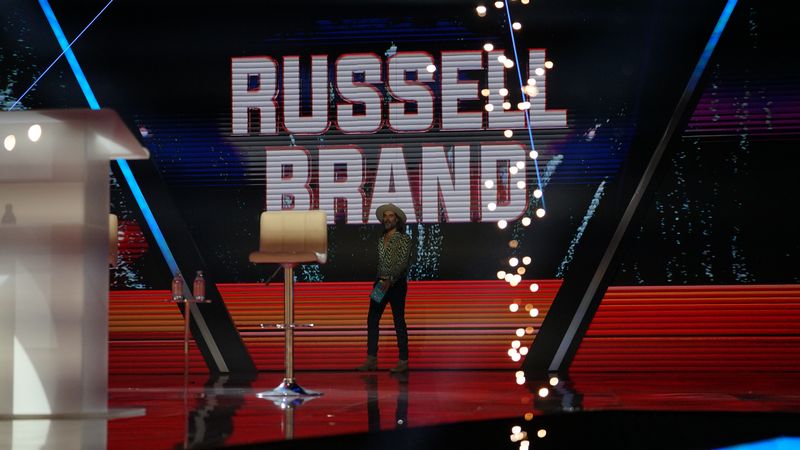
London, United Kingdom — British comedian and actor Russell Brand was found guilty in a London court on Thursday of rape and sexual assault and told he faces jail, Reuters reported. A jury of eight men and four women at Southwark Crown Court convicted Brand of one count of rape and three counts of sexual assault after deliberating for around eight and a half hours, and cleared him of two other rape charges and one count of attempted indecent assault. The verdicts were unanimous, the Metropolitan Police said.
Brand, who had denied all seven charges, stood straight in the dock as the verdicts were read and closed his eyes as the rape conviction was announced, CNN reported. He had told his wife, Laura Gallacher, “I love you” before entering the dock. Mr Justice Joel Bennathan refused bail, remanded Brand in custody and told him: “The consequence of that is inevitably a significant custodial term.” Sentencing will take place at Southwark Crown Court on Monday, November 9.
The four convictions, count by count
The jury convicted Brand over offences against four women between 2004 and 2009, the years in which he rose from stand-up comic to one of Britain’s most in-demand broadcasters and then a Hollywood film star. Reuters set out the convictions in detail.
Rape — complainant five. The woman told the court she met Brand in 2009 after one of his gigs — the Hammersmith Apollo show in west London — and that she and a friend were “selected” to come for a drink afterwards. She engaged in a sexual encounter with Brand and another woman in his dressing room, and later agreed to go to his home. There, she said, consensual sex turned into rape: he flipped her over and anally raped her, removing a condom in the process. Afterwards, she testified, he looked horrified and, instead of apologising, told her: “You need to clear up the mess.” Months later, when she saw him at the Edinburgh Festival and texted that he had “treated her like an animal,” he replied “I’m sorry,” she told the jury. Brand was convicted of rape.
Sexual assault — complainant three. At a party in a London bar in 2004, the woman asked a colleague to introduce her to Brand because she thought he was funny. Less than a minute into the conversation, she said, he lunged forward and grabbed her breasts, then pulled her into the toilets and forced her to give him oral sex. The jury convicted Brand of sexual assault on this count but acquitted him of rape.
Sexual assault — complainant four. In 2004 or 2005, while the woman was working at a London radio station, she said Brand grabbed her outside the room where she was working, in front of his entourage, pushed her against a wall, kissed her and groped her so hard it caused pain. When she finally got away, she said, he just sniggered. He was found guilty of sexual assault.
Sexual assault — complainant six. In 2009, the woman was working on a project for Britain’s Channel 4 with Brand. She said his associates told her he would only continue working if she gave him a massage; she agreed so the job could be finished, and said he thrust his head into her groin area. He was found guilty of sexual assault.
The three acquittals matter to the record as much as the convictions. The jury cleared Brand of raping complainant one, who said she was attacked at a hotel in Bournemouth in 1999 around the Labour Party conference; of raping complainant three; and of attempting to indecently assault complainant two by dragging her towards a toilet in 2001. All four women whose evidence produced convictions are entitled to lifelong anonymity, the Crown Prosecution Service said.
What prosecutors and police said
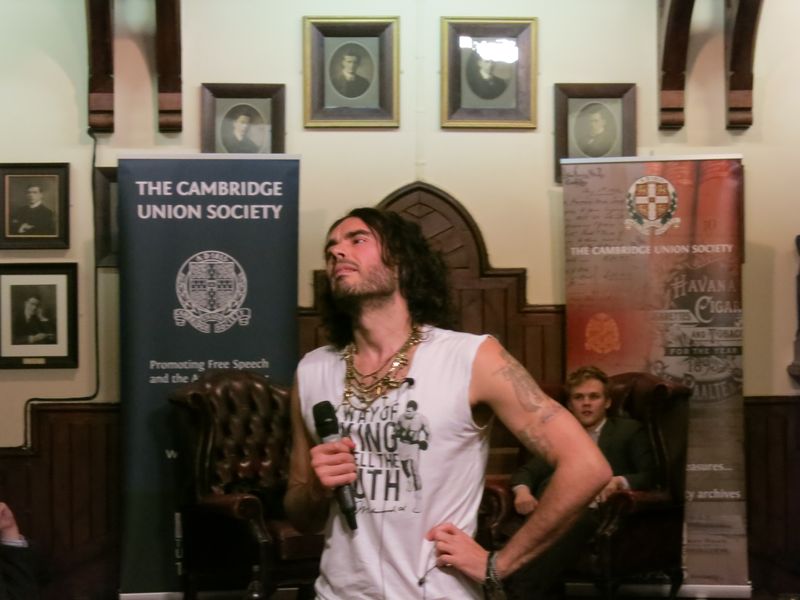
“Russell Brand was predatory and used his celebrity status to commit sexual crimes,” said David Roberts, a senior Crown prosecutor in the London Rape and Serious Sexual Assault Unit. “He was a manipulator with an insatiable desire to get what he wanted regardless of whether consent was given or not. As his career took off, he seized opportunities to assault the women around him. Although his tactics varied, at the centre of every assault was an abuse of power and sexual greed, with a complete disregard for the impact of his actions. I would like to thank all the women in this case for their courage in coming forward and seeing this sexual abuser brought to justice.”
Detective Superintendent Andy Furphy of the Metropolitan Police said Brand “used his influence, status and fame to exploit and sexually offend against women. As his profile grew, so too did his sense of entitlement. I hope this conviction sends a clear message that no one is above the law, no matter how famous or powerful they may be.” Furphy urged anyone who may have been a victim of rape or serious sexual assault to come forward, and confirmed that investigations are continuing into two further allegations of rape made against Brand, with files submitted to the Crown Prosecution Service. The Times reported that one of those two allegations involves a 16-year-old schoolgirl. Those are allegations only: no charges have been brought on them, and Brand has previously been interviewed under caution in connection with them.
Brand’s defence: denial, from first video to final testimony
Brand denied every charge. His position, stated before the criminal case existed and maintained through his own testimony, was that the incidents were either consensual, reinvented or re-imagined, Reuters reported. In police interviews he called the allegations “defamatory and fictitious,” The Times reported. In court he accepted he had been obsessed with sex in the period covered by the charges but insisted consent in sex was “fundamental,” CNN reported. Prosecutors, by contrast, described the 51-year-old — who starred in “Get Him to the Greek” and “Arthur” — as a ruthless sexual predator who was pursuing a mission to have sex with 5,000 women.
Before the 2023 media investigation was even published, Brand posted a video pre-emptively denying wrongdoing. That denial defined his public posture for three years: the claims were, he argued, a coordinated attack on an outsider who had built an audience beyond the mainstream media. The jury’s verdict is the first time that argument has been tested by a criminal court — and on four of seven counts, it was rejected.
How we got here: from Dispatches to the dock
Detectives began investigating Brand in September 2023, after allegations were reported in a joint investigation by The Sunday Times, The Times and Channel 4’s “Dispatches” programme. Women who did not know each other came forward to officers after that reporting appeared, the Met said. The police investigation involved interviews with more than 100 witnesses and a review of thousands of documents, the Wall Street Journal reported. The Crown Prosecution Service authorised the first charges in April 2025, and further charges concerning two additional women followed in December 2025. The trial opened at Southwark Crown Court on October 12, 2026, and ran for roughly four weeks.
The timeline is central to the case’s meaning. The convicted offences date from 2004 to 2009. The first public allegations arrived in 2023. The verdict landed in 2026 — seventeen years after the rape for which Brand now faces sentence. The CPS has stressed that prosecutions can take place however much time has passed, and this case is now one of the clearest demonstrations of that principle in British entertainment: a career built in the pre-social-media era, judged in the present one.
Why this matters
Strip away the celebrity and the case is about a question British courts have been asked repeatedly in the past decade: what happens when fame functioned, for years, as a working environment’s operating system — when the people around a star understood access to women as part of the star’s entourage economy? The prosecution’s answer, accepted by the jury, was that Brand’s growing fame was not incidental to the offences but instrumental to them: the gigs, the radio station, the Channel 4 project and the bar party were the settings because those were the rooms his status controlled. That is the same structural pattern alleged in the cases that produced convictions against Harvey Weinstein, sentenced to 15 years in New York, and in the prosecution of Sean Combs, whose imprisonment SPN has covered in the Diddy Fort Dix reporting — different legal systems, the same argument that power created the opportunity and the silence.
The split verdict deserves emphasis, because it cuts against both available narratives. Brand was not convicted of everything: the jury acquitted on the oldest allegation (1999) and on two other counts, including one where it convicted on a lesser offence arising from the same encounter. That discrimination is exactly what a functioning trial looks like — complainant-by-complainant assessment rather than a referendum on a personality. It also means the defence’s blanket claim that the case was fabricated wholesale was not accepted, while the prosecution did not sweep the board either. Whatever happens at sentencing, the verdicts themselves are difficult to describe as either a stitch-up or a whitewash.
There is an industry reckoning still to come. The convicted offences happened at an MTV party, at a radio station and on a Channel 4 production — workplaces with managers, producers and safeguarding duties, in an era when, as complainant six’s evidence described, a junior worker could be told the star would only keep working if she massaged him, and the path of least resistance was to comply. The questions raised by the Epstein-era cases about who knew what around powerful men apply here in a domestic, broadcast-industry register, and Thursday’s verdicts will renew them.
What happens next: sentencing on Monday
Brand will be sentenced on Monday, November 9, at Southwark Crown Court. In England and Wales, rape carries a maximum of life imprisonment, with Sentencing Council guidelines listing an offence range of four to 19 years in custody; sexual assault can carry up to 10 years. Those are ranges, not a forecast: the judge must weigh the four convictions together, decide whether the sexual assault sentences run alongside or after the rape sentence, and consider both aggravating and mitigating factors argued by counsel. One outside legal estimate reported by Page Six put a possible total in the region of eight to nine years — an informed guess, not a court indication. What the judge has already said, on the record, is narrower and firmer: a significant custodial term is inevitable, and Brand begins it in custody tonight rather than on bail.
Beyond Monday, three threads remain open. First, the two further rape allegations under Met investigation could produce a second charging decision by the CPS. Second, Brand’s media operation — more than 6.6 million YouTube subscribers and a show on Rumble, built from Florida after his reinvention as a born-again Christian commentator — must now operate, if it operates at all, without its presenter for the length of his sentence. Third, an appeal is a standard route after conviction in England and Wales, but no appeal has been announced, and nothing in Thursday’s proceedings should be read as one. The story that began as a media investigation in 2023 has become, definitively, a criminal record: Russell Brand, convicted rapist, awaiting sentence.
Sources
Reuters, “Comedian Russell Brand found guilty by UK court of rape and sexual assaults” (Nov. 5, 2026) and “Details of Russell Brand’s convictions” (Nov. 5, 2026); CNN, “Actor and comedian Russell Brand found guilty of rape and sexual assault” (Nov. 5, 2026); The Wall Street Journal, “Russell Brand Found Guilty of Rape and Sexual Assault Charges” (Nov. 5, 2026); USA Today, “Russell Brand found guilty of rape, sexual assault after bombshell trial” (Nov. 5, 2026); Crown Prosecution Service and Metropolitan Police statements (Nov. 5, 2026, via PA and The Times live coverage). Photos: Wikimedia Commons file photos as credited in captions — none of the images is from the trial, and UK court reporting restrictions mean the complainants are never identified.