Health / World / Ebola
Kinshasa / Five thousand and twenty-six dead among 10,351 infected — the Bundibugyo outbreak is now the second-deadliest Ebola epidemic in history, the worst Congo has ever recorded, and still spreading through a conflict zone with no vaccine for its strain and a tracing system that is losing four cases in five
Track it live: Live outbreak tracker
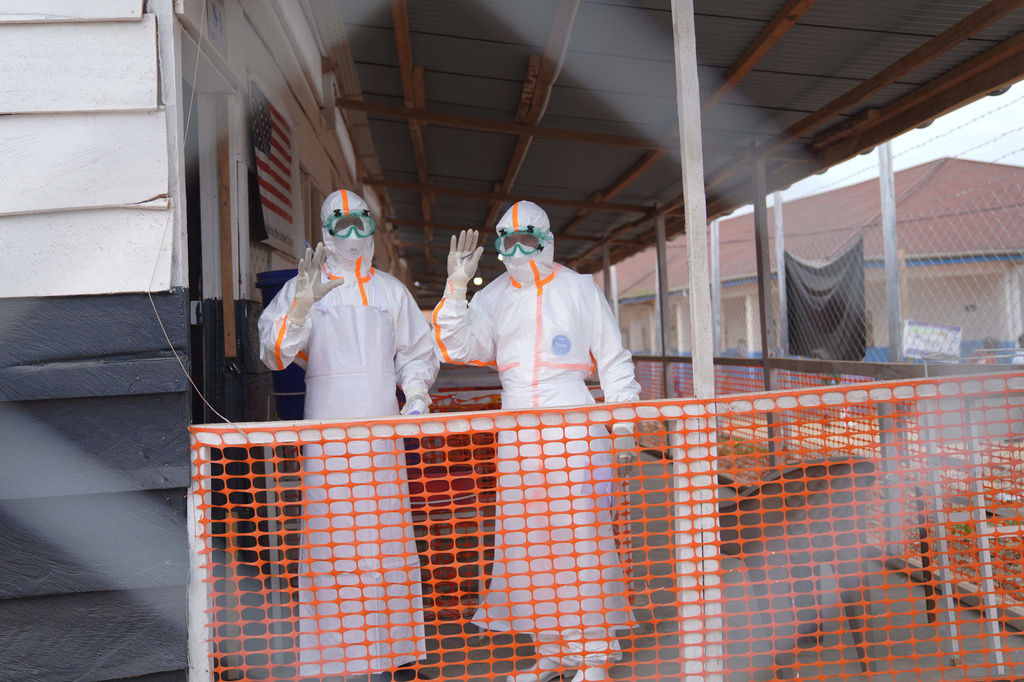
The Congo Ebola death toll has passed 5,000. Data from the Congolese Ministry of Health reported on Saturday, October 31, put the outbreak at 5,026 deaths among 10,351 people infected — a case-fatality rate of about 48.6 percent, very nearly one death for every two confirmed patients. The milestone, reached less than six months after the outbreak was declared on May 15, makes this the deadliest Ebola epidemic in the Democratic Republic of Congo’s history and the second-deadliest recorded anywhere, behind only the West African epidemic of 2014–2016. It also arrives with the response visibly straining: most new cases are being found outside the contact chains that are supposed to contain them, staff at one treatment centre stopped work on Friday over months of unpaid wages, and the virus has now been carried into Kenya and Nigeria.
The underlying figures come from the National Institute of Public Health (INSP), whose situation report 168, published on October 30, set out the cumulative totals as of October 29 and counted 77 new confirmed cases and 34 deaths in the preceding 24 hours alone. A further 2,788 people have recovered. The outbreak is caused by the Bundibugyo species of Ebola virus — and that single fact governs everything about the fight against it. There is no approved vaccine for Bundibugyo Ebola and no specific treatment. Care is supportive: fluids, electrolytes, oxygen and vigilance. The ring-vaccination strategy that helped end Congo’s previous epidemics was built for a different species of the virus, and it does not transfer.
The threshold was crossed quickly. Signal Post News reported three days ago that Congo’s Ebola cases had passed 10,000 in the fastest-growing outbreak ever recorded, with 4,887 dead at that point; the death toll has since climbed by a further 139. Earlier in October we reported the moment the Congo Ebola death toll passed 4,000, when burned infrastructure and unpaid surveillance teams already exposed the response’s fragility. Each thousand-death threshold is now arriving faster than the last.
An epicentre in the east, a map covering eight provinces
The outbreak has spread to 67 of Congo’s 178 health zones across 8 of its 26 provinces — and 50 of those 67 zones still have active cases, a measure of how far the epidemic is from burning out even in places it reached months ago. Its centre of gravity remains the east. Ituri and North Kivu provinces together account for 9,782 confirmed cases and 4,792 deaths — the overwhelming share of the national burden — and Ituri, where the outbreak began, is an active conflict zone, where armed violence, displacement and attacks on health workers have repeatedly broken the response’s access to the communities it most needs to reach.
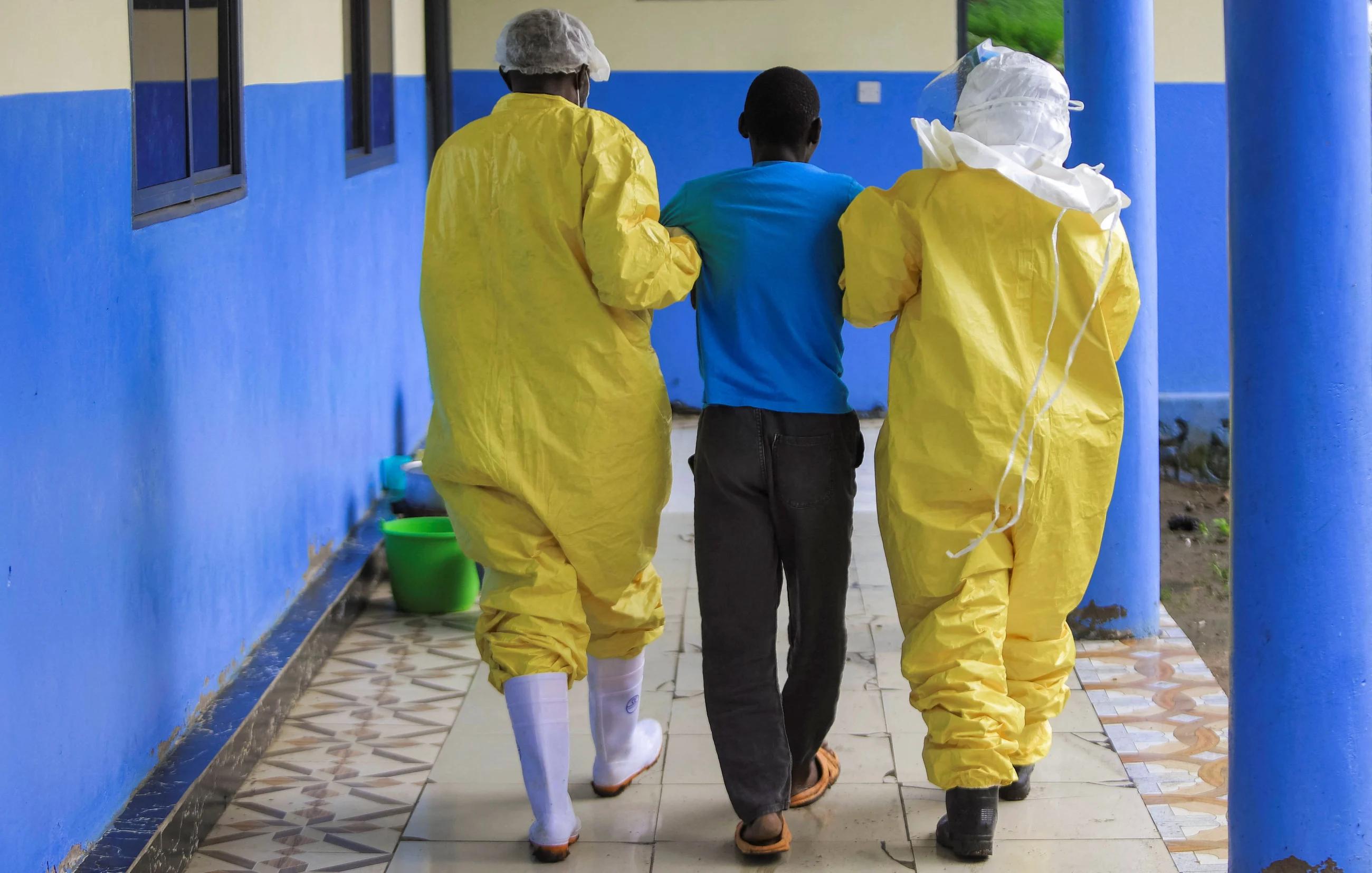
The distribution of the deaths is as revealing as their total. About one-third of recorded deaths happened outside treatment centres, before the patients were tested, according to Dr Patrick Otim, a programme area manager at the World Health Organization. Otim, speaking to the Associated Press, called the 5,000 threshold “a very tragic milestone because it is just not a number” — behind it stand “families and communities that have been devastated” — and described the people who died untested, outside any treatment centre, as “people we never had opportunity to try to save.” A death outside a treatment centre is a double failure: the patient never received the supportive care that is the only therapy available, and the chain of contacts around that patient — the household, the caregivers, the mourners — was never mapped while it could still be interrupted. Community deaths are both a measure of late detection and a mechanism of further spread, because Ebola is most infectious around and after death, and traditional burials bring families into close contact with the body.
Why this matters
A near-50 percent fatality rate with no pharmaceutical backstop. A case-fatality rate of about 48.6 percent is not a property of the virus alone; it is a property of the virus meeting a system. Bundibugyo Ebola kills through vomiting, diarrhoea and catastrophic fluid loss, and supportive care delivered early is the difference between survival and death for a large share of patients. When a third of the dead never reach a treatment centre at all, the fatality rate is recording how late the response is finding people. And behind the bedside there is nothing else: no approved vaccine to ring-fence a cluster, no approved therapy to offer the critically ill. Every previous major Ebola response of the vaccine era could fall back on immunisation when tracing faltered. This one cannot.
The contact-tracing battle is being lost, measurably. Africa CDC says about 80 percent of new cases are being found outside monitored contact chains — people who were on no contact list when they fell ill. The benchmark for an outbreak under control runs in the opposite direction: responders aim for the great majority of new cases to arise among already-identified contacts, who can be isolated at the first symptom. At 80 percent unknown, four-fifths of the epidemic’s future is invisible until patients surface at a clinic or a funeral, and each unmapped case implies a chain of exposures nobody has traced. Africa CDC’s director general, Jean Kaseya, told African health ministers this week that the continent is “not winning so far,” and compared the risk of spread to the spread of Covid — a comparison from the head of the continent’s public-health agency that is meant to be heard as an alarm, not a metaphor.
Second-deadliest ever, in under six months. Rankings are not rhetoric; they are a preparedness audit. The West African epidemic took roughly two and a half years to kill more than 11,000 people and became the defining failure of the global outbreak system, prompting reforms across the WHO, new emergency financing and a vaccine stockpile. The Bundibugyo outbreak has become the second-deadliest Ebola epidemic in history in under six months, against a strain for which the stockpile holds nothing, in a region whose insecurity was documented in outbreak after outbreak. Whatever the reforms built, they were built for the last virus. The gap between the speed of this epidemic and the speed of the system answering it is the story the 5,000 figure is telling.
Context and background: Ebola in Congo since 1976
Ebola was first identified in 1976 near the Ebola River in what is now the Democratic Republic of Congo, and no country has lived with the virus longer or more often. This is Congo’s 17th Ebola outbreak. Until this year, its worst was the 2018–2020 epidemic in North Kivu and Ituri, which recorded 2,299 deaths, according to the United Nations, over nearly two years of fighting both the virus and the armed groups — and the suspicion of responders — that surrounded it. The Bundibugyo outbreak passed that death toll months ago and has now more than doubled it.
The global comparison is starker still. The 2014–2016 West African epidemic, across Guinea, Sierra Leone and Liberia, remains the largest on record, with more than 11,000 deaths. Congo’s current outbreak, at 5,026 deaths, stands second — ahead of every other epidemic ever documented, including Congo’s own 2018–2020 emergency. And the CDC notes that it got there faster than any outbreak before it: it passed 1,000 confirmed cases within about 40 days, compared with about 235 days for the 2018 outbreak. Speed, in an epidemic, is not a statistic but an operational condition — bed capacity, burial teams, laboratories and tracing workforces are all sized against an expected pace, and this outbreak has outrun every plan built on a slower one.
Across the borders: Kenya, Nigeria, Uganda — and a travel suspension
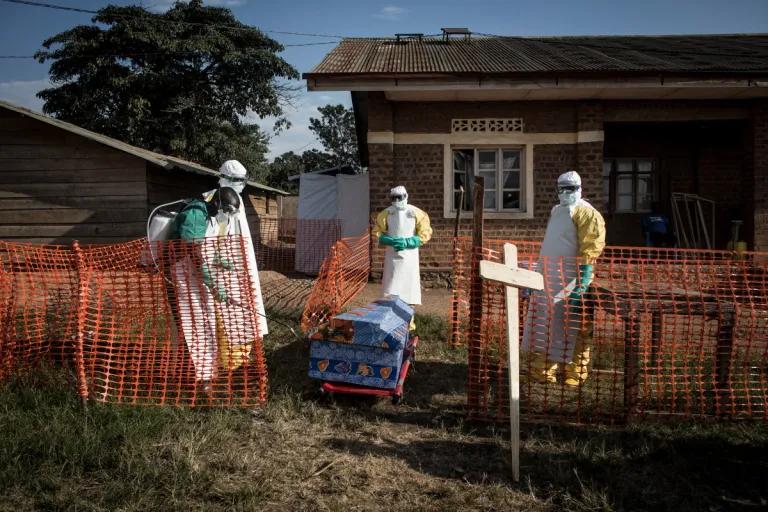
The outbreak is no longer a single-country event. With confirmed cases in Congo, Kenya and Nigeria and earlier cases in Uganda, the Associated Press notes, this is the first Ebola outbreak recorded across three African regions — and the most geographically widespread Ebola epidemic the continent has seen. Kenya confirmed cases in October; the Associated Press reports eight cases and two deaths there. Nigeria has confirmed one case — the patient was evacuated to Switzerland for care — and Signal Post News reported earlier this month on Nigeria’s first Ebola case in Abuja and the 44 contacts identified around it. Uganda recorded cases earlier in the outbreak. On Friday, Saudi Arabia suspended travel to and from Kenya; it had already restricted travel involving DR Congo, Uganda and South Sudan in June.
Exported cases are containable in themselves — Kenya and Nigeria both have deep outbreak experience — but they function as a measurement of the source. Travellers are detected at a rate proportional to the prevalence they left behind, and the routes involved — roads to Kampala and Kisangani, flights onward to Nairobi and beyond — are travelled by thousands every week. The United States CDC, in a situation summary updated October 30, assesses the overall risk to the American public as low and says no US cases are tied to this outbreak. Even so, from November 3 at 11:59 p.m. ET, US-bound air passengers must attest that they have not been in DR Congo in the prior 21 days — the virus’s maximum incubation period — a rule airlines have urged the CDC to reconsider.
A response under strain: unpaid staff, conflict and shortages
On Friday, staff at a treatment centre in Tchomia, in Ituri province, halted work to demand four months of overdue pay — walking away, for a time, from 5 confirmed and 10 suspected Ebola patients under their care. Striking worker Moise Mugenyi told the Associated Press that after four months without pay, staff cannot feed their families; Ituri’s response head, Dr Justin Mukonkole, urged the staff to be patient. The stoppage is a small event with a large meaning. In an outbreak whose entire containment strategy rests on people — tracers, burial teams, surveillance officers, treatment-centre staff — unpaid wages are not an administrative backlog; they are a hole in the containment net, opening in the epicentre province itself. The CDC and WHO cite the same cluster of obstacles: conflict, attacks on health workers, shortages of personal protective equipment, and the constant movement of populations across a region where roads, borders and displacement camps connect every hotspot to the next.
The conflict is not background noise; it is an active combatant. The M23 and ADF insurgencies limit where health workers can safely go in the east. A nurse responding to an Ebola alert was killed last week, health facilities have been attacked, and the Tchomia stoppage is one of repeated pay strikes across the response — in Beni, services have at times ground to a halt for lack of fuel and funds. Each incident subtracts the same scarce resource: trusted, present, working responders in the places transmission is actually happening.
Multiple angles: who is exposed, who bears the cost, and the argument over travel bans
The exposure is unevenly shared. Caregivers — disproportionately women nursing sick relatives at home — meet the virus at its most infectious. Health workers meet it professionally and, in Ituri, sometimes violently. Children, nursed in close contact and slower to have early symptoms recognised, have fared worst in this outbreak’s earlier phases. The costs fall the same way: on households that lose earners and caregivers, on health workers labouring unpaid, and on border communities whose trade is throttled by restrictions imposed far away.
Travel measures are the sharpest point of dispute. Supporters of suspensions like Saudi Arabia’s argue that exported cases in Kenya and Nigeria prove the screening net leaks, and that a pause is cheaper than an imported cluster. Critics — including, in effect, the airlines pressing the CDC over its attestation rule — answer that blunt bans punish the very surveillance the world depends on: they drive travel underground, cut the trade and income of response zones, and have historically done less to stop Ebola than exit screening, contact tracing and honest reporting by affected states. The CDC’s own posture reflects the tension: a low assessed risk to the American public, paired with a 21-day attestation requirement that treats the DRC route as a risk worth policing anyway.
What happens next
Analysis, not forecast. Three paths are visible from Saturday’s data. The first is a tracing recovery: contact lists rebuilt, Tchomia’s staff paid and back at work, the share of new cases arising inside known chains climbing from roughly one-fifth toward the levels that mark control. Under that scenario the outbreak does not end quickly — 67 health zones do not clear at once — but its growth bends, province by province, the way Congo’s earlier epidemics eventually did.
The second path is regional entrenchment. Kenya’s cluster seeds sustained transmission of its own, further exports follow the roads and flight paths that have already carried the virus to three neighbouring states, and travel restrictions multiply faster than coordination does. Kaseya’s Covid comparison was aimed at exactly this future: a virus with a long incubation period and heavy pre-diagnosis spread does not respect the distinction between an outbreak and a regional epidemic once multiple national systems are chasing it at once.
The third path runs through the laboratory. Trials of candidate vaccines and treatments for the Bundibugyo species — the work that a vaccine era for the Zaire species showed can change an epidemic’s endgame — could, if they read out in time and can be manufactured at scale, give responders the tool this outbreak has lacked from its first day. That is a horizon measured in months at best, against an epidemic currently adding dozens of confirmed cases a day. The patients of November will be treated as the 10,351 before them were: with fluids, oxygen and vigilance, by staff whose pay, protection and access remain the outbreak’s most consequential variables. Whether the next milestone is a slowing curve or another thousand deaths depends less on the virus than on whether the systems around it are finally funded, paid and protected at the speed the epidemic set in May.
Related coverage: Congo Ebola Cases Pass 10,000 in Fastest-Growing Outbreak Ever Recorded · Congo Ebola Death Toll Passes 4,000 in the Bundibugyo Outbreak · Nigeria Ebola Case in Abuja: 44 Contacts Identified
Sources
- Associated Press (October 31, 2026) — Congolese Ministry of Health figures of 5,026 deaths among 10,351 infected; Kenya’s eight confirmed cases and two deaths; Dr Patrick Otim on the milestone and on deaths outside treatment centres; the Tchomia treatment-centre stoppage (5 confirmed and 10 suspected patients; worker Moise Mugenyi; response head Dr Justin Mukonkole); the M23 and ADF access constraints, the killing of a nurse responding to an alert, and services halting in Beni for lack of fuel and funds.
- Reuters (October 30–31, 2026) — the INSP situation report 168 totals as of October 29, including 77 new confirmed cases and 34 deaths in 24 hours, and the outbreak’s spread across 67 health zones in eight provinces.
- BBC News (October 2026) — the outbreak’s ranking as the second-deadliest Ebola epidemic in history, its status as DR Congo’s deadliest and 17th outbreak, and the absence of an approved vaccine or specific treatment for the Bundibugyo species.
- Al Jazeera (October 2026) — Africa CDC director general Jean Kaseya’s warning to African health ministers that the continent is “not winning so far,” the estimate that about 80 percent of new cases arise outside monitored contact chains, and Saudi Arabia’s suspension of travel to and from Kenya.
- US Centers for Disease Control and Prevention, Ebola situation summary (updated October 30, 2026) — overall risk to the American public assessed as low, no US cases tied to the outbreak, the fastest-growing Ebola outbreak on record (1,000 confirmed cases in about 40 days, versus about 235 days in 2018), and the November 3 attestation requirement for US-bound passengers who have been in DR Congo within 21 days.