Cardinal Matteo Zuppi's third Moscow mission kept a papal back-channel alive on prisoners, children and civilians. Its value is measured less by a breakthrough than by whether access can become verifiable humanitarian progress.
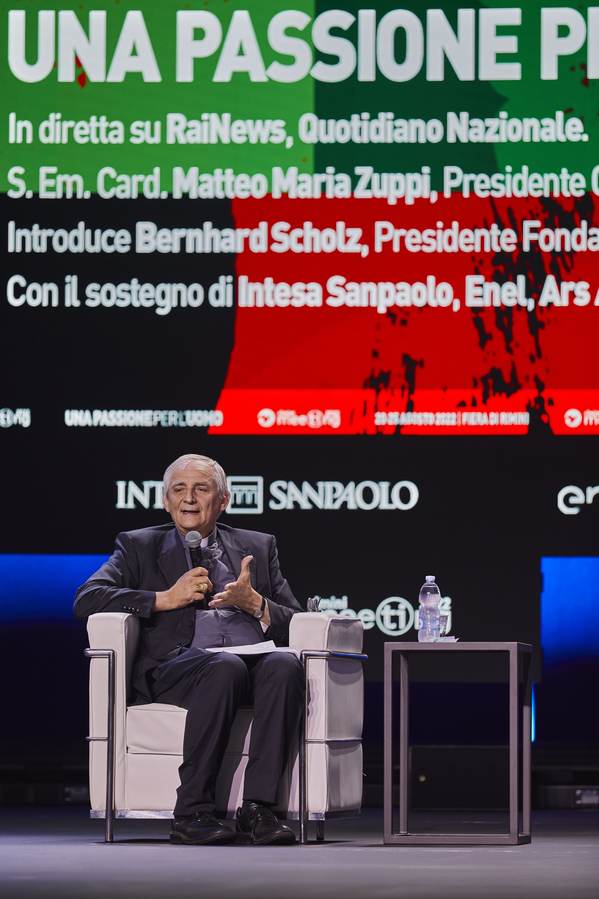
MOSCOW — The Zuppi Moscow Vatican envoy mission ended Wednesday after three days of meetings that put the war's most human questions — prisoners, children and civilians cut off by occupation — ahead of the territorial bargain neither side is ready to make. Cardinal Matteo Zuppi, Pope Leo XIV's envoy and president of the Italian Episcopal Conference, met Kremlin foreign-policy aide Yuri Ushakov and other Russian officials from September 28 through September 30, according to Reuters and Vatican-linked reporting.
The agenda combined discussion of prospects for a settlement with narrower humanitarian files: prisoner-of-war exchanges, children displaced or deported during the war, and civilians in Oleshky, the Russian-occupied town in Ukraine's Kherson region where Kyiv said it used drones last weekend to deliver food and medicine. Zuppi was also permitted to visit Ukrainian prisoners held in Russia — unusual access in a conflict where each government accuses the other of abuses and information itself is contested.
Russia's Foreign Ministry said the cardinal saw “for himself that Russia strictly follows all the relevant humanitarian standards.” That is Moscow's claim, not an independently established finding. Kyiv has accused Russian forces of mistreating detainees and obstructing humanitarian corridors. The gap between those positions is precisely why access matters and why a supervised visit, by itself, cannot settle the dispute.
Why this matters: a papal back-channel is still alive
After four years of war, the significance is not that the Vatican has found a peace formula. It has not. The significance is that it remains one of the few institutions able to speak with officials in Moscow and Kyiv while maintaining a practical mandate on individual cases. Governments can freeze formal negotiations without wanting to look indifferent to families waiting for a prisoner, a child or a civilian relative. Humanitarian diplomacy works in that narrower space.
That can sound modest beside the scale of the fighting, but modest channels often survive when strategic ones collapse. A list of prisoners can be checked. A child's identity can be verified. A transfer route can be negotiated. One family reunited does not change a front line; it does prove that adversaries can still perform a bounded agreement. The Vatican's best argument for relevance is therefore operational, not rhetorical.
The mission also coincided with the Pope Leo XIV Ukraine peace appeal. Leo urged Russia and Ukraine to sit down and discuss ending the war and warned about leaders “beginning to speak about nuclear weapons and wars that are becoming ever more destructive.” As our analysis of Pope Leo's call for Ukraine peace talks and concessions explains, moral pressure can name the cost of war, but it cannot substitute for agreed terms, security guarantees and enforcement.
Cardinal Zuppi Russia visit: a mandate carried across two papacies
Pope Francis gave Zuppi the humanitarian assignment in 2023. Leo XIV confirmed it after succeeding him, preserving continuity across papacies at a time when diplomatic continuity is scarce. Zuppi described that chain of authority to TASS: “All of this is part of the humanitarian mission entrusted to me initially by Pope Francis and subsequently confirmed by Pope Leo XIV.” He added that the Vatican wished to develop the dialogue further, aware of the suffering caused by the war and seeking to help bring it to an end.
This was Zuppi's third Moscow visit: June 2023, October 2024 and September 2026. The repetition is the point. A single visit can be ceremonial; three visits, paired with engagement in Ukraine, create a working relationship that officials can use without announcing a political concession. In July 2026, Zuppi traveled to Ukraine and visited a camp in the Lviv region holding Russian POWs. Archbishop Paul Gallagher, the Vatican's secretary for relations with states, followed with an August 25–28 visit to Russia.
The sequence forms a diplomatic relay rather than a peace conference. Zuppi handles a humanitarian brief across both sides; Gallagher maintains state-to-state contact; the Pope supplies public pressure. None controls armies, sanctions or borders. Together, they keep a channel from disappearing.
From Mozambique to Moscow: what Zuppi's record does — and does not — prove
Zuppi brings a biography shaped by Sant'Egidio, the Catholic lay community known for mediation. He was one of four mediators in the two-year Rome process that produced the 1992 General Peace Accords, ending Mozambique's civil war, and Mozambique later made him an honorary citizen. That history explains why the Vatican chose him: he has experience with patient talks, armed actors and an agreement built over time rather than announced at a summit.
It does not mean the Mozambique model can be transplanted to Ukraine. The power balance, territorial stakes, international alliances and nuclear risks are different. Critics who call Vatican diplomacy naïve are right that moral authority cannot compel compliance. Critics who say it can become useful propaganda also have a case: Moscow can showcase a clerical visitor and his prison access as evidence of humane conduct without opening detention sites to unrestricted outside monitoring.
Yet dismissing the channel carries its own cost. If the Vatican walks away because access is managed, families lose one possible intermediary. The disciplined response is neither celebration nor contempt: demand outcomes that can be counted and independently checked.
Ushakov-Zuppi talks in Moscow and the humanitarian-legitimacy contest
The meeting with Ushakov put Zuppi near the Kremlin's foreign-policy machinery. For Moscow, that offers diplomatic legitimacy: a senior papal envoy arrives, discusses settlement prospects and visits detainees. The Foreign Ministry's statement about “strict” standards turns the humanitarian encounter into a political message aimed beyond the Vatican.
For the Vatican, accepting the meeting is the price of access. Neutral-broker practice is not a declaration that the parties' conduct is equivalent; it is a decision to preserve contact with both. The risk is that neutrality in method is mistaken for neutrality about responsibility. Russia launched the full-scale invasion in 2022. Kyiv's mistrust is rooted in that fact and in its accusations of detainee abuse, deportations and blocked aid routes. Those accusations require investigation, not rhetorical balancing.
The Oleshky Kherson civilians file shows the practical dilemma. Ukraine said drones carried food and medicine to people in the occupied town last weekend. That method underscores both urgency and failure: supplies reached civilians, but through aircraft small enough to evade a battlefield rather than through a dependable humanitarian corridor. A successful Vatican intervention would be a repeatable, monitored delivery arrangement — not a photo opportunity attached to a one-off drop.
Ukraine-Russia POW exchange 2026: what “all-for-all” would take
Ukraine has asked for an “all-for-all” prisoner exchange. The phrase is clear; implementation is not. The sides would need to reconcile names, status, locations and eligibility, agree the treatment of people missing from official lists, choose transfer points, and provide monitors enough access to verify that the exchange is complete. Disputes over whether a captive is a prisoner of war, a civilian detainee or a criminal suspect can stop a list before buses ever move.
Zuppi's prison visit matters only if it advances that machinery. Did he receive or validate names? Can the Vatican transmit messages to families? Will Russia permit follow-up access? Can Kyiv and Moscow agree on a tranche even if an immediate all-for-all deal remains out of reach? Those are more meaningful tests than the competing claims about detention conditions.
The same logic applies to children. Each case requires identity records, guardianship evidence, location and a safe handover accepted by the relevant authorities. Progress may come one dossier at a time. That pace is painfully inadequate to families, but it is how humanitarian confidence is built when political trust is near zero.
What families stand to gain — and why verification is the dividing line
For families of POWs, the first gain may be information: confirmation that a person is alive, where that person is held and whether contact is possible. For families of displaced or deported children, an intermediary can connect records that sit in incompatible systems. For civilians in occupied areas, a neutral channel may secure medicine, food or evacuation for people whom neither military can safely reach through ordinary routes.
But every category also creates an opportunity for narrative warfare. Moscow can present limited access as proof that broader allegations are false. Kyiv can treat a slow or selective process as evidence that Russia is bargaining with human beings. The Vatican can overstate dialogue because continued access is its principal source of leverage. Verification is the safeguard: named cases resolved, exchanges completed, families contacted, corridors used more than once, and independent monitors able to report what they saw.
What happens next
The most realistic near-term outcome is incremental: another exchange list, a set of child-return cases, or a renewed channel for Oleshky aid. The most encouraging signal would be repeat access to detainees and an agreed mechanism for correcting prisoner lists. A larger all-for-all exchange would require synchronized political decisions and confidence that neither side is withholding categories of captives.
A second path is stalemate dressed as dialogue. Zuppi returns with promises, Moscow cites the visit as validation, Kyiv sees no change, and the Vatican preserves access without measurable gains. That would still keep a back-channel alive, but its humanitarian legitimacy would erode with every unresolved case.
The Vatican channel will also coexist with U.S. diplomacy, not replace it. Washington can offer or withhold resources and political guarantees that Rome cannot. Rome can carry humanitarian messages with less public bargaining than a state actor. If the tracks reinforce each other, a small prisoner or child agreement could create evidence that larger negotiations are possible. If they compete, the Vatican risks becoming a symbolic side channel while governments negotiate the war's political terms elsewhere.
What would signal real movement is concrete: a dated exchange, published numbers acknowledged by both sides, identified children returned, recurring aid access to Oleshky, or continued prison visits with independent follow-up. Zuppi's third Moscow mission has preserved the possibility. The next test is whether diplomacy produces names, routes and reunions rather than another carefully worded communiqué.
Sources
- Reuters, September 30: Vatican envoy discusses humanitarian issues and visits POWs in Russia
- Vatican News report: Cardinal Zuppi's humanitarian mission to Moscow
- National Catholic Register: Cardinal Zuppi visits Russia to urge release of Ukrainian prisoners
- EWTN Vatican: Cardinal Zuppi visits Russia to urge release of Ukrainian prisoners
Reporting basis: Published September 30, 2026. Facts and quotations are attributed above to Reuters, the Russian Foreign Ministry, Vatican-linked reporting, TASS and Kyiv. Analysis and scenario framing are Signal Post News's.