Pope Leo urges Ukraine peace concessions
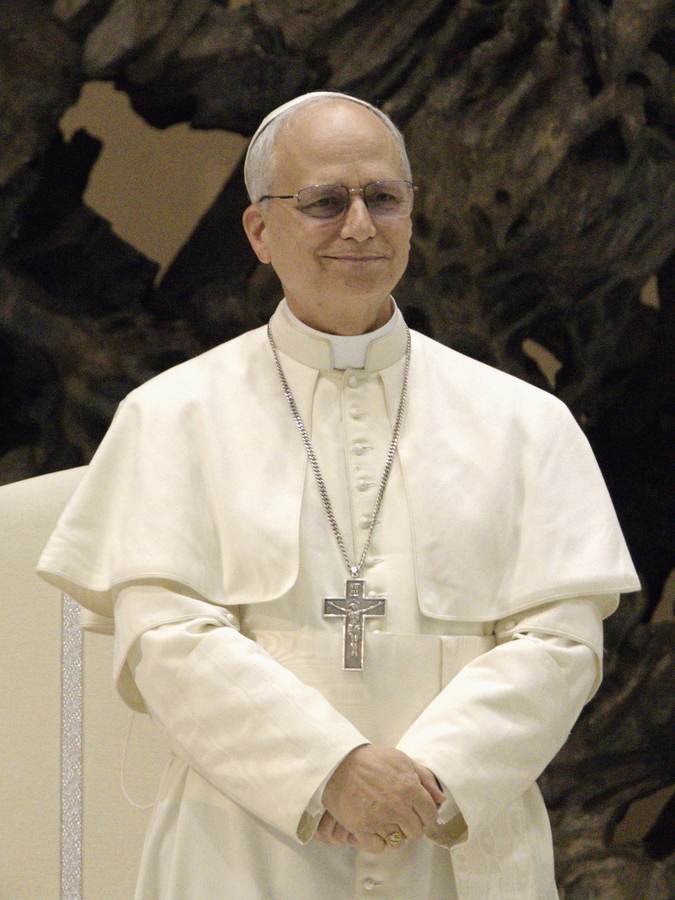
METZ, France — Pope Leo urges Ukraine peace concessions at a moment when almost every diplomatic track has stalled and almost every European capital is spending more on deterrence. Addressing European leaders in Metz on Monday, September 28, Leo XIV said negotiators must show courage and be willing to yield positions “for the greater good of peace.”
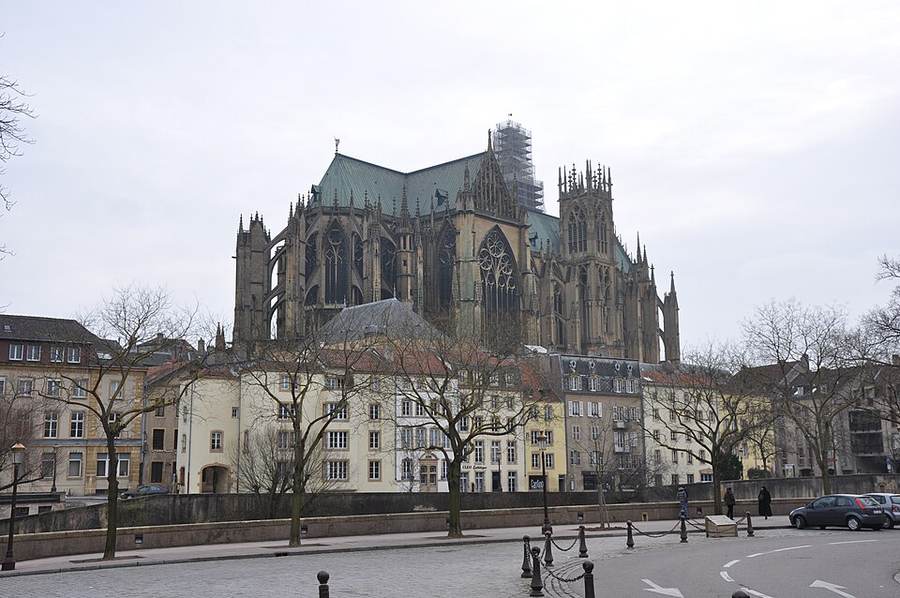
The setting made the appeal more than a generic papal plea. Metz is the hometown of Robert Schuman, the French statesman whose practical plan to pool coal and steel helped turn former enemies into the institutions that became the European Union. Leo spoke in French, praised integration and multiculturalism as far-right parties gain ground across Europe, and received a standing ovation. Reuters described the address as his clearest political vision yet for Europe.
His language was severe. “War has returned, even to Europe: a new senseless slaughter, claiming countless civilian lives every day,” he said. He then warned, “We must also guard against the illusion that rearmament is the answer.” Those two claims form the core of the Pope Leo XIV Metz speech: Europe must be able to defend people, but weapons accumulation without a credible political end state is strategy reduced to inventory.
Why this matters: the Pope named the political cost of peace
Calls for dialogue are easy to applaud because they often leave every hard question untouched. Leo went one step further. “We need ... to show courage in negotiation and to be willing to give up some positions for the greater good of peace,” he said. Le Monde reported that diplomats in the room wrote the words down. That reaction matters because “give up some positions” is the part of negotiation that governments normally prefer to discuss privately.
The phrase is also combustible. Moscow can hear territorial realism in it. Kyiv can hear pressure to trade land taken by force. Washington can hear support for a deal-first approach. European governments bordering Russia can hear a warning that security guarantees may be diluted by partners farther from the front. Leo did not specify what concessions Russia or Ukraine should make, whether they should be reciprocal, or whether territory, sanctions, force posture, sovereignty or sequencing was at issue. Any claim that he endorsed a particular map goes beyond what he said.
That ambiguity is both the speech's strength and its limit. It allows the Vatican to remain available to both sides. It also leaves unanswered the central problem of the Ukraine war peace talks 2026: a concession that looks like compromise to one party can look like permission for conquest to another. Moral seriousness begins with naming sacrifice; diplomatic seriousness begins with defining who sacrifices what, under whose guarantee and with what consequence for cheating.
Pope Leo XIV Ukraine war stance: dialogue without a drafted settlement
Aboard the papal flight back to Rome on Monday, Leo urged Russia and Ukraine to “sit down and discuss how to end their four-year war.” He decried leaders “beginning to speak about nuclear weapons and wars that are becoming ever more destructive,” and placed the Church's role squarely in the field of convening rather than coercion.
“The Church has a responsibility to promote these values, continually inviting leaders — from Russia and Ukraine — to come together, sit down, engage in dialogue,” he said. He urged them to “seek ways to solve problems without continuing these wars, which no longer make sense,” and suggested “perhaps spending more on health and education and less on weapons.”
That is a recognizably Vatican position: keep channels open, resist the normalization of indefinite war and preserve room for humanitarian work even when formal diplomacy fails. But it is not neutrality between facts. Russia launched the full-scale invasion in February 2022; Ukraine is defending internationally recognized territory. A useful Vatican Ukraine peace role would have to maintain access to Moscow without obscuring that asymmetry.
Benedict XV 1917 appeal: a warning from a peace note that failed
Leo invoked Pope Benedict XV, whose August 1, 1917 peace note, Dès le début, was sent to the leaders of the belligerent powers during World War I. Benedict called the conflict a “useless slaughter” and did not stop at moral language. His proposal included disarmament, arbitration to replace force, freedom of the seas and restitution of occupied territories, including Belgium.
The Benedict XV 1917 appeal was largely ignored. The war continued for another 15 months. That history complicates rather than weakens Leo's analogy. Benedict had concrete terms but little leverage over leaders who still believed battlefield outcomes could improve. Leo has moral visibility and diplomatic reach, but the same structural problem remains: parties accept mediation when the expected cost of continuing becomes greater than the feared cost of compromise.
The precedent also carries a caution for those who quote only “useless slaughter.” Benedict paired condemnation with principles that addressed security, occupation and rules between states. If Leo's appeal is to become more than a memorable line, a modern equivalent will need terms on territory, civilian protection, prisoners, sanctions, force deployments, verification and what happens after a violation.
The Schuman peace method was built from concrete integration
The choice of Metz invited another historical comparison. Schuman did not ask postwar Europe to rely on reconciliation as a mood. The Schuman peace method bound French and German coal and steel production through common institutions, making the material foundations of war subject to shared rules. Peace advanced through concrete integration steps, not through a treaty preamble alone.
Applied to Russia and Ukraine, the lesson is not that coal-and-steel pooling can be copied. It is that durable peace needs machinery: monitoring, agreed lines, protected infrastructure, defined economic exchanges and institutions that make violations visible and costly. A ceasefire can stop shooting; it does not by itself resolve sovereignty, return displaced people, rebuild trust or prevent rearmament for another round.
Leo's praise for European integration and multiculturalism therefore belongs to the same argument as his critique of war. He is defending the idea that security can be produced by habits of cooperation as well as by military capability. With far-right movements gaining strength across Europe, that is a political intervention even if it is delivered in ecclesiastical language.
Where Russia Ukraine negotiations actually stand
The appeal came as peace efforts repeatedly failed to produce a durable negotiating table. The United States has proposed a trilateral meeting in the United Arab Emirates involving Washington, Kyiv and Moscow, but a proposed venue is not yet a settlement and the parties' conditions remain far apart. Our earlier report on the U.S.-proposed UAE trilateral meeting explains the gap between diplomatic staging and substantive agreement.
UN debates have kept sovereignty, civilian harm and the nuclear danger in view, while exposing how little consensus exists on enforcement. On the first day of his France visit, Friday, Leo warned that the United Nations and other multilateral institutions were in crisis and that international dialogue risked becoming “a charade.” His Monday appeal should be read against that warning: he is not claiming that another meeting automatically produces peace.
Kyiv continues to argue that an insecure truce could give Russia time to regroup. That concern is sharpened by President Volodymyr Zelenskyy's warning that Russia could threaten other parts of Europe, examined in our report on Kyiv's wider European security case. The Pope's challenge to that camp is not that military risk is imaginary. It is that deterrence without diplomacy can become an expensive holding pattern with no exit.
The Metz address also extends the line Leo took during his France trip and Notre-Dame visit: Europe should recover a political purpose larger than crisis management. The test is whether that purpose can include both defense of a smaller state and a negotiated route out of war.
European rearmament spending: the record surge and its limits
European military spending grew last year by the largest amount since the end of the Cold War, according to the reporting surrounding Leo's visit. The surge reflects Russian assertiveness, the demands of supporting Ukraine and pressure from U.S. President Donald Trump for Europe to carry more of its defense burden. It also reflects a change in the denominator of the debate: the familiar NATO benchmark of 2 percent of gross domestic product is increasingly treated as a floor rather than a finish line.
GDP shares can clarify effort but obscure output. Two countries can devote the same percentage of national income to defense and obtain different readiness because procurement cycles, personnel costs, industrial capacity and fragmentation differ. More money can buy ammunition, air defense and trained units; it cannot by itself create a common strategy or guarantee that promised equipment arrives before the next crisis.
Rearmament has achieved real things. It has increased the cost Russia must consider before testing NATO territory, expanded production orders and reduced some of Europe's dependence on assumptions that the United States will always fill every capability gap. It has not ended the Ukraine war, produced a shared European command or solved the political question of what settlement allies would support. Leo's warning is strongest when read as a claim about sufficiency, not as proof that defense spending has no purpose.
The guns-versus-butter choice is also less mechanical than political slogans suggest. A euro allocated to defense is not automatically a euro cut from a hospital, because governments can borrow, tax or reduce other programs. Over time, however, budgets impose trade-offs. Leo's line about health and education asks voters to demand an account of opportunity cost: what marginal security does the next increment of military spending buy, and what resilience is lost if public services weaken?
Who benefits, who loses and what critics will say
Vatican diplomacy benefits if the speech keeps Rome acceptable as a humanitarian intermediary or quiet host. European doves gain language for arguing that strategy needs an endpoint. Moscow benefits rhetorically because “concessions” can be framed as recognition that territorial realities must shape negotiations. Trump's camp can cite the Pope as support for pressing both sides toward a deal and for demanding that Europe reconsider how it spends.
Kyiv's hawks lose ground if allied publics treat compromise as primarily Ukraine's burden. Supporters of European rearmament may see the speech as discounting the deterrent effect that made diplomacy possible. Eastern-flank states — especially those geographically closest to Russia — will resist any moral equivalence between a country that invaded and one defending itself. Their argument is that peace purchased without enforceable security can postpone rather than prevent another war.
Critics are right to press the missing specifics. Leo did not identify concessions, sequence them or say what Russia must withdraw before Ukraine should negotiate. He did not define a security guarantee or explain how a settlement would be enforced. Those omissions do not make the appeal empty; they mark the boundary between moral leadership and statecraft. The danger comes when politicians fill that blank with the concession they already wanted someone else to make.
What happens next: four plausible paths
Vatican mediation gains a narrow role. Rome is more likely to help with prisoners, children, humanitarian corridors or private messages than to design the final territorial settlement. Success on a bounded issue could build trust without asking either government to recognize the Vatican as the main broker.
Talks fail again. The UAE proposal or another channel may produce meetings but no agreement on sequencing. In that case, Leo's words will be cited by peace advocates while military planning accelerates. The 1917 precedent is the warning: eloquence does not overcome leaders who expect time or force to improve their position.
Europe's guns-versus-butter debate sharpens. Governments will have to explain not simply how much they spend, but what capability it buys and which civilian investment is deferred. Leo has supplied opponents of open-ended rearmament with a memorable question. Defense ministers will answer that credible negotiation depends on credible deterrence.
The Trump variable dominates. Trump can pressure allies, threaten or relax support, and accelerate a negotiating timetable. That leverage may bring parties into the same room. It may also produce a brittle agreement if urgency outruns verification. Moscow will test whether Washington values speed more than enforcement; Kyiv will test whether U.S. guarantees survive political pressure after signatures are collected.
The Pope Leo XIV Ukraine war stance is now clearer than before Metz: Europe cannot arm its way out of every political problem, multilateral dialogue is losing credibility, and peace requires surrendering some maximal positions. What remains unclear is the only part that can end the war — the terms. Leo has named the courage negotiators need. Governments still have to prove that compromise will not reward aggression, abandon security or become another pause before the killing resumes.
Sources
- Reuters, September 28: Pope Leo urges concessions for peace as Ukraine war drags on
- Reuters, September 28: Pope urges Russia and Ukraine to sit down and discuss how to end war
- Le Monde, September 29: Pope visits Metz and urges compromise
- The Times: Pope Leo, Donald Trump and the politics of the France visit
Reporting basis: Published September 30, 2026. Facts and quotations are attributed to the reports above; analysis, scenario framing and judgments are Signal Post News's. The Pope did not specify the concessions he believes Russia or Ukraine should make.