Track it live: Ukraine war map — live tracker
BRUSSELS, November 17, 2026 — The announcement was made by Defence Secretary Wes Streeting at NATO headquarters in Brussels, where he co-chaired the 37th meeting of the Ukraine Defence Contact Group — the roughly 50-nation format that coordinates military support for Kyiv — alongside Germany’s Defence Minister Boris Pistorius. The package, set out by the Ministry of Defence on GOV.UK and independently reported by Reuters, has three components: more than 1,000 additional short-range air-defence missiles with their launchers; more than a dozen air-defence radars, sourced from the UK and Europe; and a delivery schedule that starts in mid-December, building on 400 surface-to-air missiles Britain has already supplied ahead of winter.
Streeting framed the package against the season. “In Ukraine, President Putin uses winter as a weapon,” he said, adding that Britain must continue to convert its steadfast commitment for Ukraine into capability that will help defend against Russian attacks. The £240 million is part of the £500 million winter air-defence pledge announced at the Budget, which itself sits inside Britain’s wider £10 billion commitment to Ukraine — the commitment Signal Post News set out in our report on the £10 billion UK support package. Tuesday’s announcement is the moment a line in that budget becomes a count of missiles, radars and dates.
Why these missiles: the jet-powered Shahed problem
The package is aimed at a specific and worsening threat. Russia’s strike campaign against Ukrainian cities and infrastructure increasingly uses Iranian-designed Shahed drones in jet-powered variants — faster than the propeller-driven originals, harder to catch with the guns and heavy machine guns that Ukraine’s mobile fire groups have relied on, and arriving in waves sized to exhaust whatever intercepts them. GOV.UK states that the systems in this package have proven effective against those jet-powered Shaheds. That phrase carries the whole logic of the purchase: the binding constraint on Ukrainian air defence this winter is not only the number of launchers, but the cost and availability of the missile fired at each incoming drone.
This is the cost-exchange problem that has defined the drone war’s economics. A high-end interceptor costing orders of magnitude more than its target cannot be the answer to mass drone waves; the defender goes bankrupt winning. Short-range missiles of the class Thales builds in Belfast — the family that includes the Starstreak high-velocity missile and the Lightweight Multirole Missile, known as Martlet — invert that exchange: they are comparatively cheap, produced in volume, man-portable or vehicle-mounted, and fast enough to engage low-flying drones and cruise missiles. Defence Blog reported that the launchers in the package are Thales’ RapidRanger — a lightweight, vehicle-mounted system that fires Starstreak and Martlet, detects targets at more than 15 kilometres and engages at more than 7 kilometres — and that Ukraine fielded its first RapidRanger systems earlier this year with mobile fire groups hunting drones and low-flying cruise missiles. That launcher detail is Defence Blog’s reporting, attributed as such; the missile, radar and value figures are GOV.UK’s and Reuters’.
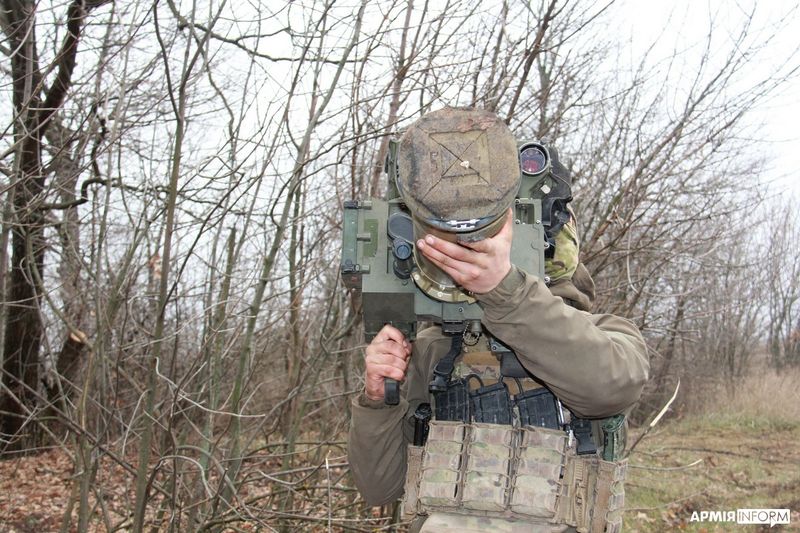
Announced on the day the need was demonstrated
The timing was not abstract. The package was announced hours after Russia’s overnight strikes hit Kyiv’s Northern and Southern bridges over the Dnipro and left power cuts across eight Ukrainian regions — the attack Signal Post News covered in our report on the seven-missile strike on Kyiv’s bridges — and on the same day Ukraine’s second Crimean Bridge strike was confirmed, in the operation detailed in our report on Zelenskyy’s confirmation of the seven-stage operation. The two stories are the same war seen from opposite ends of the air battle: Russia demonstrating that it can still reach the capital’s infrastructure at will, and Ukraine’s partners racing to thicken the layer of defence that decides how much of each wave gets through.
That is also why the radars in the package matter as much as the missiles. A short-range missile is only as good as the warning that cues it: a dozen-plus additional air-defence radars extend the detection web that tells a mobile fire group where to be and when to fire, particularly against low-flying targets that slip under long-range radar coverage. Missiles without sensors are inventory; missiles cued by radars are a system. The package buys both halves.
The Ramstein chair: Britain and Germany in front
The setting carried its own signal. The Ukraine Defence Contact Group — the Ramstein format — was built and chaired by the United States; its 37th meeting was co-chaired by Britain and Germany, at NATO headquarters, with almost 50 nations coordinating support. Whatever the formal arrangements, the picture of Streeting and Pistorius in the chairs, announcing European-funded capability, is the clearest institutional expression yet of the shift in who is organising Ukraine’s supply. For London, the package doubles as industrial policy: the missiles are built by Thales in Belfast, and a 1,000-missile order sustains the production line and the workforce that Ukraine’s continuing demand depends on. Air defence for Ukraine and defence-industrial capacity at home are, in this announcement, the same policy stated twice.
Reuters reported that Prime Minister Andy Burnham will outline the remaining support at Thursday’s Coalition of the Willing meeting — which means Tuesday’s £240 million is a first tranche of announcements, not the week’s total. The same Brussels day also produced, according to Defence Blog’s reporting, a German-Norwegian deal for Patriot interceptors. That deal rests on single trade-press sourcing at the time of writing; it is reported here as reported, not as confirmed — but its logic is sound and worth noting, because Patriot-class interceptors and Belfast-class short-range missiles are complements, not substitutes: the high end for ballistic and fast air-breathing threats, the volume end for the drone waves, each layer making the other affordable.
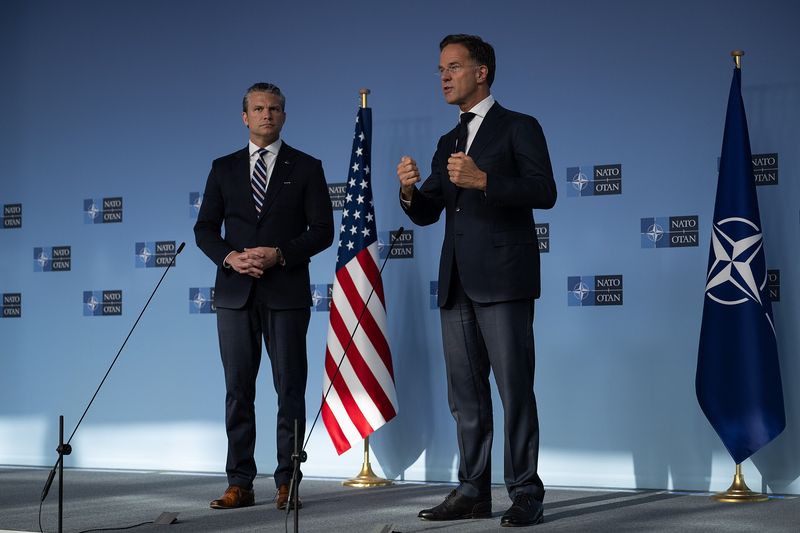
The Gripen letter of intent — and what it is not
GOV.UK also carried a secondary item from the same day: Britain, Sweden and Ukraine signed a letter of intent committing in principle to providing Swedish Gripen fighter jets to Ukraine, against the background of a €300 million investment announced this year, with more than 30 percent of each Gripen manufactured in the UK. The status of that document matters and is stated plainly here: it is a letter of intent. It is not a delivery, not a contract, and not a date. It signals the direction of a programme — a Western fighter for Ukraine with a substantial British industrial share — and it will be measured, like every such document, by whether airframes, training and support follow. Signal Post News reports it as an intention, and readers should hold it at exactly that weight.
What the package does not solve
Short-range missiles defend the last few kilometres of a drone’s flight. They do not address the rest of Ukraine’s air-defence problem, and the package should not be read as if they do. Ballistic missiles still demand Patriot-class interceptors that remain scarce and rationed; cruise missiles still require the medium-range layer to be in the right place on the right night; and the power grid’s vulnerability is as much about transformers, repair crews and generation capacity as about interception rates. A defence can shoot down a rising share of every wave and still lose substations it cannot replace. That is why the reported German-Norwegian Patriot arrangement, if confirmed, would matter alongside this package rather than instead of it — and why the honest description of Tuesday’s announcement is that it deepens one layer of a defence that needs every layer it has.
There is also a production question hiding inside the delivery date. A commitment to supply 1,000 missiles is a commitment about a factory as much as about a battlefield: Thales’s Belfast line must produce at a rate that sustains both Ukraine’s expenditure and Britain’s own stocks, and every previous package of this war has eventually met the arithmetic of consumption — missiles are fired in nights, and produced in months. The mid-December start matters because it signals that this tranche is drawn substantially from production already in train, including the 400 missiles supplied ahead of winter; the open question for the new year is the rate after the first consignments, which is where pledges of this kind have historically thinned out.
The money, in context
The package’s arithmetic is a set of nested commitments. £240 million (about $317 million, per Reuters) buys the missiles, launchers and radars announced on Tuesday. It is drawn from the £500 million pledged at the Budget specifically for Ukraine’s winter air defence — so roughly half of that winter pledge is now allocated, with the remainder expected to be outlined at Thursday’s Coalition of the Willing meeting. Both figures sit inside the wider £10 billion British commitment to Ukraine. Against those totals, the delivery numbers are the ones that matter operationally: 400 surface-to-air missiles already supplied ahead of winter, more than 1,000 more missiles plus launchers and a dozen-plus radars to come, with deliveries beginning in mid-December.
Mid-December is the date to watch, because it is a race. Russia’s winter campaign is already under way — the Kyiv bridges strike and the eight-region power cuts happened the night before this announcement — and the worst strike months are typically the coldest ones. Every week between the announcement and the first deliveries is a week in which Ukraine defends its grid with what it has. The package’s value will be decided less by its headline size than by whether the mid-December start holds, and whether the flow that follows is a stream or a single consignment.
Why this matters
Strip the announcement to its essentials and it is about magazine depth. Ukraine’s air defence does not fail when a radar misses a drone; it fails when a fire group has fired its ready missiles and the wave is still coming. A thousand additional short-range missiles, cued by additional radars and fired from mobile launchers, is a direct purchase of endurance — more engagements per night, sustained across more nights, at a cost per kill that Ukraine’s partners can sustain. Against jet-powered Shaheds, which were specifically built to outrun the cheap end of the defensive inventory, restoring a cheap, fast interceptor is the difference between a layered defence and a rationed one.
The angles around the package are distinct. From Kyiv, it is winter survival measured in interceptors, arriving against a deadline set by the weather and by Russia’s strike tempo. From London, it is commitment converted into capability — Streeting’s own phrase — plus a Belfast production line kept hot by Ukrainian demand. From Berlin and the Ramstein co-chairmanship, it is Europe visibly organising the supply effort it once left to Washington. And from Moscow’s side of the hill, every additional thousand missiles is a recalculation of how large a drone wave must be to saturate a defence that is being deliberately deepened at exactly the layer the waves attack.
What happens next
The markers are close together. On Thursday, the Coalition of the Willing meets and the Prime Minister is expected to outline the remaining support — the unallocated portion of the £500 million winter pledge will either take shape there or become a question. In mid-December, the first deliveries under this package are due to begin; confirmation of that start, and of the rate that follows, is the operational test of Tuesday’s announcement. Beyond it sit the slower programmes the day also touched: the Gripen letter of intent, which must become contracts and training pipelines to mean anything in the air, and the reported German-Norwegian Patriot arrangement, which awaits confirmation beyond its single trade-press source.
What Britain has done in Brussels is convert a budget line into a schedule: 1,000 missiles, a dozen radars, a December start. Ukraine’s winter will grade it.
Reporting based on GOV.UK / Ministry of Defence (Nov. 17, 2026) and Reuters (Nov. 17, 2026). RapidRanger launcher detail and the German-Norwegian Patriot report are Defence Blog reporting and are attributed as such; the Gripen item is a letter of intent, not a delivery.
Sources
Sources: GOV.UK / UK Ministry of Defence, “More than 1,000 air defence missiles for Ukraine as UK delivers £240 million in winter support” (Nov. 17, 2026); Reuters (Nov. 17, 2026); Defence Blog (Nov. 17, 2026, attributed).