War · Ukraine
The Kyiv bridges missile strike hit both of the capital's Dnipro crossings in a single night — seven ballistic missiles, three at the Northern Bridge and four at the Southern, a closed bridge, a suspended metro line, and a city of three million counting what its crossings carry.
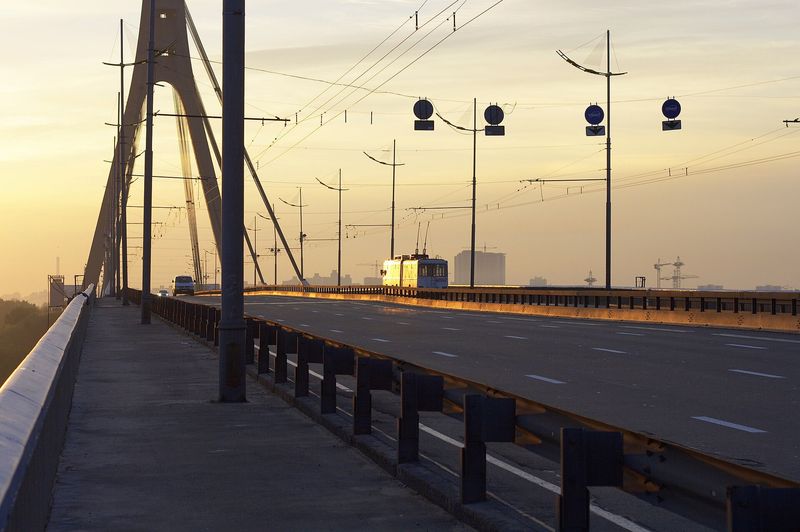
KYIV — Russian ballistic missiles struck both of Kyiv's bridges over the Dnipro River late on Monday night, in a Kyiv bridges missile strike that closed the Northern Bridge, suspended the metro line across the Southern Bridge and cut water, heating and power in parts of the capital. Air defence was active over the city from 11:34 p.m., and the explosions were heard across Kyiv, Reuters reported.
Track it live: https://signalpostnews.com/tracker/ukraine-war-map
Seven missiles, two bridges
President Volodymyr Zelenskyy said on Tuesday that seven ballistic missiles had been fired at the two crossings in all — four at the Southern (Pivdennyi) Bridge and three at the Northern (Pivnichnyi) Bridge — according to Kyiv24. At a conference call on Tuesday, the president and officials set the forces, resources and timeline for repairing both bridges. Mayor Vitali Klitschko had reported the strikes as they happened: writing on Telegram shortly before midnight, he said, "According to preliminary information, the North and South bridges of the capital were hit." At about 12:15 a.m. he reported damage to critical infrastructure, with water and heating disruptions in some districts, Reuters and the BBC reported.
The damage on the ground
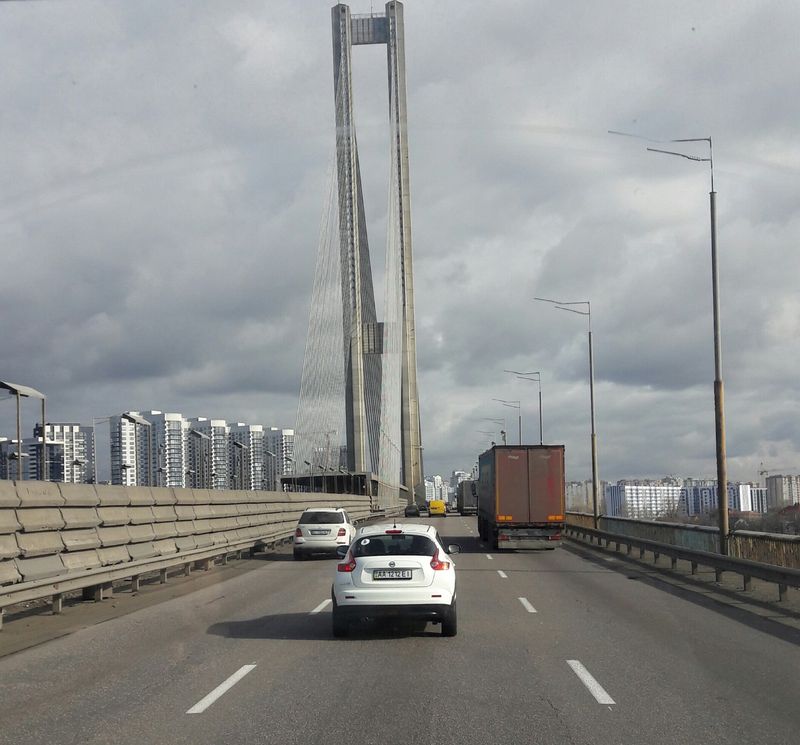
The BBC, reporting from Kyiv, described a large crater near one end of the Northern Bridge, with water rushing through it in the rain. The Northern Bridge was closed to traffic while crews cleared debris, and the pattern of the damage suggested three missiles had been aimed at the same spot to keep the road closed. The Southern Bridge took four missiles. The metro line that crosses it was suspended, and was restored by mid-afternoon; Klitschko said road transport across the Southern Bridge had been partially restored in one direction. Reuters reported that the attack partially damaged the subway system and prompted water and power cuts and traffic restrictions across the capital.
The toll: reported, not established
Ukrainian reporting via h.ua said two people were killed and one injured in the Obolon district, and that 317 homes in the Darnytsia district were left without heating. That toll is attributed Ukrainian reporting only: neither Reuters nor the BBC established a death toll for the attack, and Signal Post News does not state the figures as fact. Russia's Defence Ministry confirmed that its forces had struck targets in Ukraine overnight, saying the strikes hit transport, military and energy facilities in Kyiv, Zaporizhzhia, Cherkasy and Dnipropetrovsk, as well as port infrastructure and cargo ships, Reuters reported. Reuters said it could not immediately independently confirm the reports of the bridge strikes. Both sides deny deliberately targeting civilians.
Why this matters
Kyiv is a city divided by a wide river and held together by its crossings. Eight major bridges span the Dnipro in the capital, and roughly three million residents rely on them — for the metro, for commuter traffic, for freight and for the ordinary movement of food, fuel and ambulances between the left and right banks, the BBC noted. A missile aimed at a bridge is therefore aimed at the functioning of the whole city, not only at a military route. Closing the Northern Bridge and suspending the Southern Bridge metro in a single night forced Kyiv onto its remaining crossings at the start of the working week, and the damage to water and heating infrastructure landed in mid-November, as temperatures fall and the heating network matters most. That is the recurring logic of Russia's autumn campaigns against Ukrainian infrastructure: the target is concrete and steel, but the pressure is applied to civilians' heat, water and movement through the winter.
Context: a return to the bridges
This was a new attack, not a repeat of an old one. On November 7, a Russian strike damaged the Northern Bridge — the earlier assault is covered in Signal Post News's reporting of the November 7 attack. Monday night's volley went further: both of the capital's principal Dnipro crossings at once, with repeated missiles on the same point of the Northern Bridge. Zelenskyy had warned that Ukrainian intelligence expected Russian strikes on Monday evening into Tuesday, and the attack came in the same night-cycle in which Ukraine struck the Crimean Bridge — an operation Zelenskyy later confirmed, as reported in his account of the seven-stage SBU operation. Bridges, on both sides of this war, have become the infrastructure each army reaches for when it wants to cut the other's logistics in full view of the world.
What happens next
The first test is repair: the timeline Zelenskyy set on Tuesday will show whether the Northern Bridge crater can be made passable in days or whether the capital's main northern crossing stays closed into winter, and whether the Southern Bridge's partial reopening can be widened. The second test is diplomatic. The attack came hours before the Ukraine Defense Contact Group — the Ramstein format — met on Tuesday at NATO headquarters in Brussels, convened by Britain and Germany, where Kyiv's air-defence requests were already at the top of the agenda; seven ballistic missiles getting through to the capital's bridges is the kind of fact that reshapes that conversation. And in Kyiv, Zelenskyy on Tuesday ordered officials to prepare proposals for the National Security and Defense Council on additional drone protection for critical infrastructure — an acknowledgment that the bridges, the power grid and the heating network now have to be defended as a single system. Signal Post News will update this story as the repair work and the Brussels meeting proceed.
Sources
Reuters, November 17 — https://www.reuters.com. BBC News, November 17 — https://www.bbc.com/news. Kyiv Independent via Newscord, November 17. Kyiv24, November 17. Russian Defence Ministry statement via Reuters, November 17.