World · ASEAN · Myanmar
An ASEAN Myanmar ban review five years in the making opens in Manila this weekend. Thailand and several other members have quietly stepped up engagement with Myanmar’s military-backed leadership, and the bloc’s leaders will formally review the exclusion of the junta’s leaders from high-level meetings — while the civil war the ban was meant to answer continues, and while rights groups warn that easing it now would legitimise the generals. No decision to ease the ban has been taken.
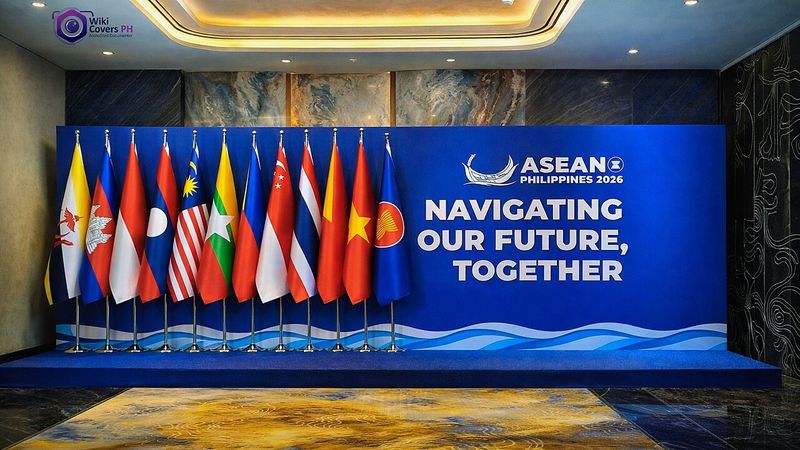
MANILA, November 15, 2026 — The ASEAN Myanmar ban review that diplomats have circled for months is now formally on the leaders’ table. The Association of Southeast Asian Nations is under increasing pressure at its Manila summit, which runs November 15–17, to ease the five-year ban on Myanmar’s military-backed leaders attending the bloc’s high-level meetings, according to a Reuters analysis published on November 13. Leaders will review the exclusion decision itself, alongside an assessment of how far the Five-Point Consensus — the peace plan ASEAN agreed with Myanmar’s generals in the weeks after the 2021 coup, and which the junta has never implemented — has actually been carried out. Philippine officials have confirmed that the assessment is on the agenda and that whatever leaders decide will be reflected in the summit’s negotiated documents.
Track it live: Wars tracker — Myanmar and the world’s active conflicts, updated as events develop.
Two facts frame everything that follows, and both are worth stating plainly at the outset. First, this is a review, not a repeal: no decision to ease the ban has been taken, and nothing in the reporting from Manila suggests ASEAN has lifted, or agreed to lift, the exclusion. Second, the man at the centre of the question will not be in the room. The Philippine government confirmed on November 11 that Min Aung Hlaing — the general who seized power in 2021 and who, according to Human Rights Watch, was made president following 2026 elections the organisation calls a sham — would not attend the summit. Myanmar will instead be represented, as it has been throughout the exclusion, by a non-political official: the director-general of its Foreign Ministry’s ASEAN Affairs Department, the Philippine Department of Foreign Affairs’ ASEAN spokesperson Dax Imperial told reporters, in remarks reported independently by Reuters and by Malaysia’s Business Today.
How the ban works, and why it is being reviewed now
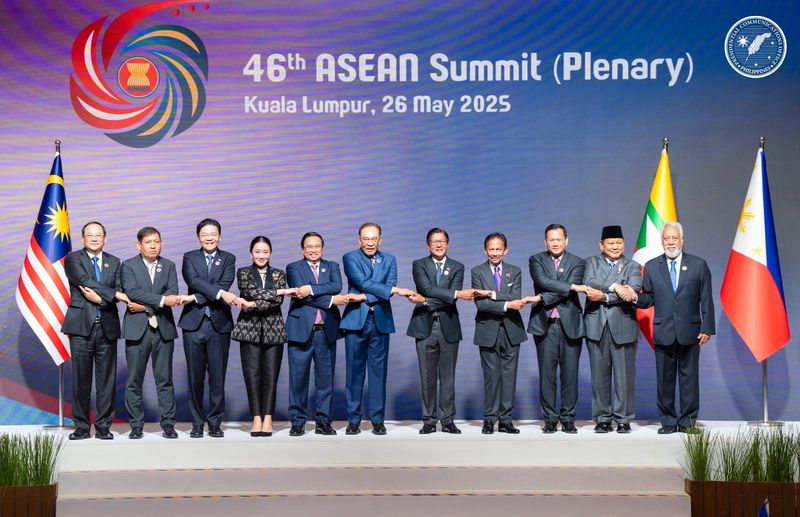
Myanmar’s political leadership has been barred from ASEAN summits and foreign ministers’ meetings since 2021. The mechanism is deliberately narrow. Myanmar remains a member state; its flag flies, its officials attend working-level meetings, and its seat is not empty so much as downgraded — participation is restricted to non-political representatives, a formula ASEAN devised to signal condemnation without expelling a member it has no procedure, and no appetite, to expel. The condition attached to any restoration was implementation of the Five-Point Consensus: an immediate end to violence, dialogue among all parties, mediation by an ASEAN special envoy, humanitarian assistance, and a visit by that envoy to meet all sides. Five years on, by the assessment of ASEAN’s own envoys and of every independent monitor, none of the five has been delivered in substance.
What has changed is not Myanmar’s compliance but its neighbours’ behaviour. Thailand and several other member states have stepped up engagement with the military-backed authorities despite the ongoing civil war, Reuters reported — bilateral contacts, visits and practical cooperation that sit awkwardly beside a collective exclusion the bloc maintains in name. The most visible step came on Thursday, November 12, when Thai Foreign Minister Sihasak Phuangketkeow visited Myanmar. Speaking to reporters afterwards, Sihasak said he hoped sufficient progress would allow a decision on Myanmar’s participation by Thailand’s chairmanship in 2028 at the latest — the first time a member-state foreign minister has publicly attached even a horizon date to the ban’s possible end. Thailand’s foreign ministry has also noted, in the remarks reported this week, that Myanmar has expressed interest in becoming more actively involved in the bloc again. The junta, in other words, is asking to come back; some of its neighbours are increasingly willing to discuss the terms; and Manila is where that discussion becomes official.
Why this matters
Analysis. The ban is the only real leverage ASEAN has ever exercised over Myanmar’s generals, and everyone in Manila knows it. The bloc’s founding habits — consensus, non-interference, the studied refusal to embarrass a member in public — left it with almost no instruments when the coup came. The exclusion was the exception: a genuine cost, imposed and sustained, that told the junta its path back to regional respectability ran through the Five-Point Consensus. That is what makes this review consequential even if it changes nothing this weekend. If the bar is eased without measurable Five-Point progress — without a halt to airstrikes on civilians, without the envoy meeting all parties, without the releases and the dialogue the plan demands — the lesson read in Naypyidaw will be that the cost was temporary and the condition decorative. ASEAN will have taught the generals that waiting works.
The counter-argument, pressed by the engagement camp, is not frivolous either, and it deserves to be stated at full strength. Five years of exclusion have not ended the war, freed a single political prisoner, or opened a single aid corridor. Myanmar’s generals have governed without ASEAN’s blessing and fought without its permission, while China, Russia and India dealt with Naypyidaw on their own terms. On this view, the ban punishes ASEAN as much as the junta: it empties the bloc’s central claim — that Southeast Asia’s problems are managed at Southeast Asia’s table — of content, and it leaves the members most exposed to the war’s spillover, above all Thailand, to manage refugees, border fighting, scam compounds and narcotics flows without the one forum designed for the purpose. Engagement, its advocates argue, is not endorsement; it is the precondition of influence. The Manila review is, at bottom, an argument between those two theories of how a junta changes — and the honest summary is that neither theory has a working example to point to in Myanmar since 2021.
The country behind the agenda item
It is easy, in summit prose, for “the Myanmar issue” to shrink into a question of seating. The numbers resist that shrinkage. Myanmar has been in turmoil since the 2021 coup by then-military chief Min Aung Hlaing, which unleashed armed conflict across much of the country that has killed more than 100,000 people, according to Reuters. Human Rights Watch, in a November 11 letter to the Philippine president ahead of the summit and in reporting published November 13, put the repression’s other ledger at more than 32,000 people arrested for opposing military rule — its figures, and attributed here to the organisation that compiled them. The war is not a frozen backdrop to the diplomacy. Resistance forces and ethnic armed organisations hold much of the countryside; the military holds the cities and the air; airstrikes on villages, schools, hospitals and displacement camps have been documented throughout 2026, including in this newsroom’s own reporting. Any leader reading the Five-Point assessment in Manila is reading it against a war that is still killing people in the week the summit convenes.
That is the core of the case Human Rights Watch carried into Manila. In its letter, the organisation urged ASEAN not to legitimise the junta — to hold the bar until the conditions the bloc itself set are met, rather than retiring them because they have become inconvenient. The argument is procedural as much as moral: the Five-Point Consensus was ASEAN’s own price. Discounting it unilaterally does not merely forgive the generals; it devalues every future condition ASEAN might set for anyone. Rights groups also point to the sequence — an election process they describe as a sham, conducted in stages amid a war, from which the country’s most popular party was excluded and dissolved, followed within the year by pressure to readmit the leadership that process installed. To ease the ban now, they argue, is to let the election launder the coup.
Three camps in one room
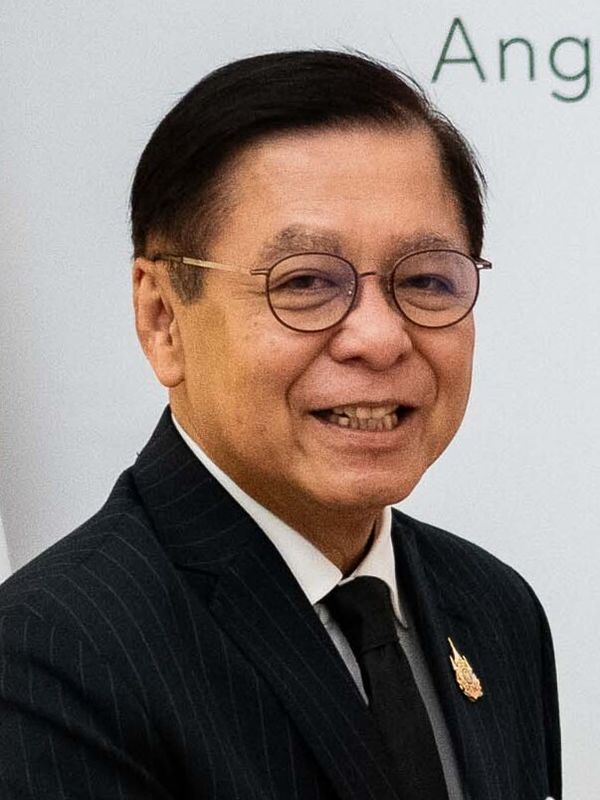
The engagement camp is led, in public at least, by Thailand — the member with the longest border with Myanmar, the largest exposure to its refugees and its fighting, and a chairmanship in 2028 that Bangkok would plainly prefer not to spend administering an exclusion. Sihasak’s November 12 visit and his carefully hedged formulation afterwards — hope, progress, a date two years out — are the diplomacy of a government moving the bloc’s centre of gravity without yet asking it to vote. Reuters reported that several other members have likewise stepped up engagement, quietly and bilaterally. None has proposed readmitting Min Aung Hlaing to a summit next week; the ask, for now, is the review itself, and language in the outcome document that treats renewed participation as a destination rather than a taboo.
The hold-the-line camp — rights organisations, Myanmar’s resistance-aligned diplomats and the member states most invested in the bloc’s credibility — answers that the review is the concession. Once the exclusion is framed as a problem to be solved rather than a condition to be met, the burden of proof silently moves: from the junta, which was supposed to implement a plan, to the bloc, which is asked to explain why it has not yet forgiven. Human Rights Watch’s intervention was timed to Manila precisely because negotiated documents are where such framings harden into text. A sentence in a chairman’s statement costs nothing this weekend and binds, rhetorically, for years.
The junta’s own position is the simplest of the three. Myanmar has expressed interest in becoming more actively involved again, Thailand’s foreign minister reported — an interest that costs Naypyidaw nothing to declare and that it has paired with no announced concession on any of the five points. From the generals’ perspective, the optimal outcome in Manila is movement without payment: a review that softens the language, a horizon date that implies an eventual return, and continued non-political attendance in the meantime. Whether they get it depends on the document, not the speeches.
What Manila will actually decide
Summit mechanics matter here, because ASEAN decides by consensus and records its decisions in negotiated texts. The Philippine foreign ministry’s ASEAN spokesperson, Dax Imperial — named as Dominic Xavier Imperial in the Reuters reporting — confirmed ahead of the summit that the assessment of the Five-Point Consensus’s implementation is on the leaders’ agenda, and that the decisions leaders take will be reflected in the negotiated documents the summit issues. That is the deliverable to watch: not a vote, not a ceremony, but the wording of the review — whether it restates the exclusion as conditional on implementation, attaches any new benchmarks or timelines, acknowledges the stepped-up bilateral engagement, or opens a named path back for Myanmar’s political leadership. The summit sits inside a crowded Manila week — the same gathering is handling an energy crunch, a maritime dispute and a visit by the American president, as our earlier reporting on the ASEAN Summit opening in Manila set out — and crowded agendas favour drafting compromises over dramatic verdicts.
What happens next
The likeliest Manila outcome, on the reporting available as the summit opens, is a review that changes the language more than the seating: the ban stays in force, Min Aung Hlaing stays away — that much is already confirmed — and the argument moves into the text, where words like “progress”, “engagement” and “inclusivity” will be weighed by both camps for what they promise. Beyond the weekend, the date to hold is the one Sihasak himself named: Thailand’s chairmanship in 2028, by which Bangkok hopes a decision on Myanmar’s participation can be taken. Between here and there lie the tests the Five-Point Consensus has always posed and never passed — whether the envoy is received by all parties, whether aid moves, whether the bombing of civilians stops, whether any of the more than 32,000 people Human Rights Watch counts as arrested for opposing military rule are released. If those things begin to happen, the ban’s easing becomes a bargain. If they do not, and the ban eases anyway, Manila 2026 will be remembered as the summit where ASEAN’s one condition quietly expired. The review opens this weekend. The verdict, whatever the document says, will be delivered by the war.
Related coverage: ASEAN Summit Opens in Manila With an Energy Crisis, a Sea Dispute and Trump Still to Come · Track it live: Wars tracker
Sources
Reuters analysis, November 13, 2026 (Panu Wongcha-um, Bangkok), read via SRN syndication — ASEAN under increasing pressure at the Manila summit to ease the five-year ban on Myanmar’s military-backed leaders; Thailand and several other members stepping up engagement; leaders to review the exclusion and the Five-Point Consensus implementation, November 15–17; Thai Foreign Minister Sihasak Phuangketkeow’s November 12 visit to Myanmar and his hope of a decision on participation by Thailand’s 2028 chairmanship at the latest; Myanmar to be represented by the director-general of its Foreign Ministry’s ASEAN Affairs Department; more than 100,000 people killed in the conflict since the 2021 coup. Business Today (Malaysia), November 13, 2026 — Philippine DFA ASEAN spokesperson Dax Imperial confirming the Five-Point Consensus implementation assessment is on the leaders’ agenda, that decisions will be reflected in negotiated documents, and Thailand’s foreign minister quoted on Myanmar’s interest in becoming more actively involved. Human Rights Watch — letter to the Philippine president, November 11, 2026, and reporting of November 13, 2026: urging ASEAN not to legitimise the junta; the Philippine government’s November 11 confirmation that Min Aung Hlaing would not attend; more than 32,000 people arrested for opposing military rule (HRW figures); the 2026 elections characterised by HRW as a sham. No decision to ease the ban had been taken in any of the reporting read for this article.