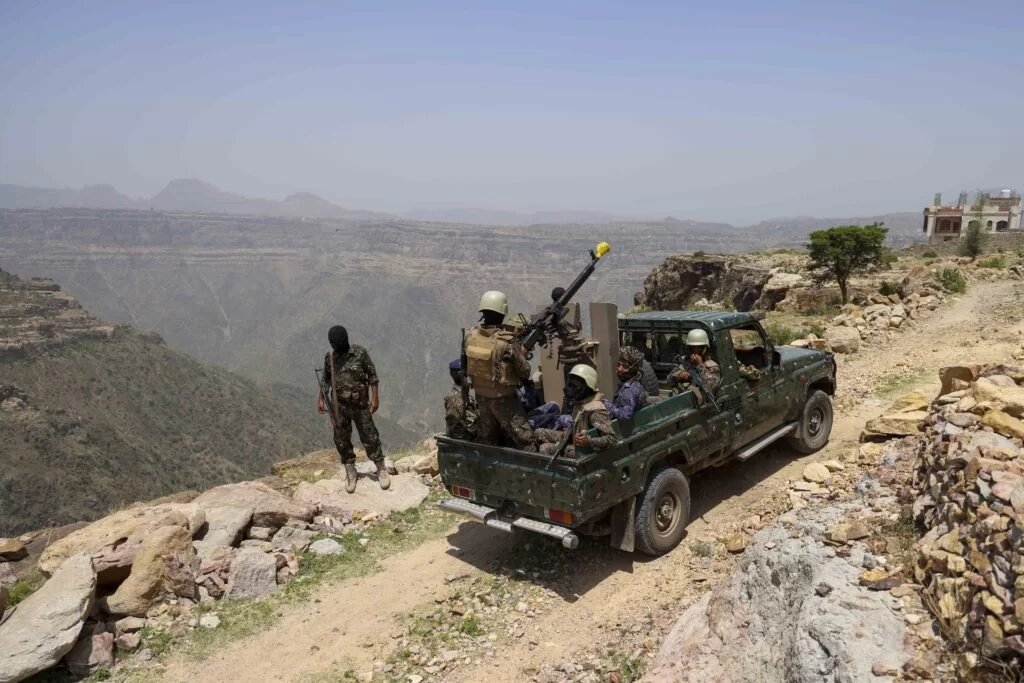

The Yemen Houthi offensive in Taiz has produced its clearest government success of the month: Saudi-backed Yemeni government forces say they repelled overnight Houthi attacks on the Hejat al-Abd mountain pass, the steep, winding corridor that carries the road from Taiz to the southern port of Aden. Government sources told Reuters on Thursday that Iran-aligned Houthi fighters launched coordinated attacks Wednesday night aiming to reach positions along the road that connects the Aden, Lahj and Taiz governorates — and were beaten back. The repulse is real but narrow, and it comes as the Houthis consolidate their biggest territorial gains in four years along the Red Sea coast.
What happened on the pass
Colonel Majid al-Nuzaili, a spokesman for the Saudi-backed government forces, told Reuters that the Houthis mounted coordinated attacks Wednesday night in an attempt to reach the Aden-Lahj-Taiz road. Government troops repelled the attacks, he said, killing and wounding dozens of Houthi fighters.
That casualty claim remains unverified. The Houthis had not immediately commented, and independent access to the front line is effectively impossible. Al-Nuzaili's statement should therefore be read in two ways at once: as the government's account of a battle and as a morale statement from a force trying to show it can still hold essential ground after a month of Houthi gains.
Hejat al-Abd is more than a point on a military map. Reuters described it as the only practical land route linking Taiz — Yemen's third-largest city — to Aden, where the internationally recognised government is based. With no commercial flights operating from Houthi-controlled territory, it is also the route many residents must use to travel abroad. Goods move along the same corridor. Had the Houthis cut it, they would have tightened their grip around Taiz, interrupted a civilian and military lifeline, and handed the government another setback after the loss of the western coast.
The wider battle — Mocha, the islands, and the strait
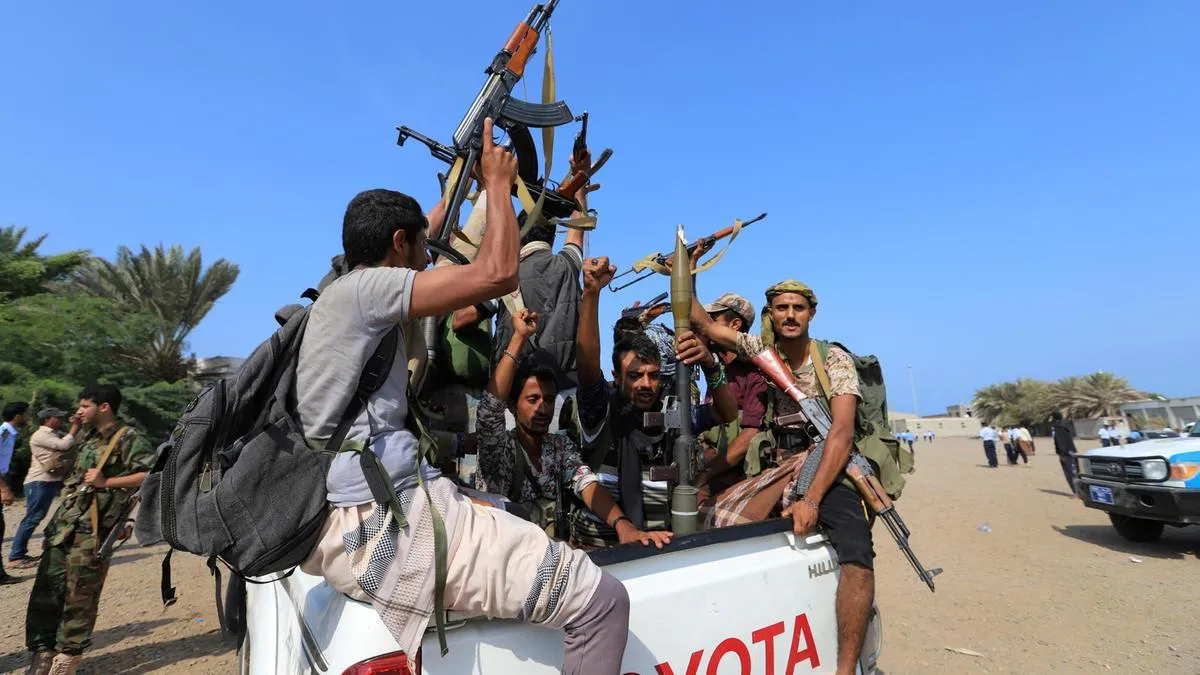
The pass cannot be understood in isolation. Since the beginning of September, Houthi forces have swept south along Yemen's Red Sea coast, seizing the port city of Mokha and extending control across the remaining coastline and islands to the Bab el-Mandab strait, the narrow waterway connecting the Indian Ocean approaches with the Red Sea and the Suez Canal.
Yemeni military sources told AFP that Houthi forces also seized Zuqar Island after rocket attacks and an assault by boat. Witnesses quoted in wire reporting said fighters entered Mokha chanting “death to America, death to Israel.” Those details describe the reported sequence and political messaging; they do not independently establish the strength or permanence of Houthi control at every location.
In the highlands, the battle around the Kahboub Mountains continues. The ridges overlook the strait and Mayyun, also known as Perim Island, giving them significance beyond their elevation. The government said it retook Mount Qarfan on Tuesday, but that remains a government claim rather than an independently verified change to the front line. The earlier Signal Post News report on the Kahboub Mountains offensive explains why control of the heights can determine whether coastal gains remain exposed or become defensible.
The air war has accelerated with the ground campaign. Houthi accounts put the number of Saudi strikes in a single night this week between 40 and 52 across Hodeidah, Taiz, al-Bayda, Marib and Saada. The movement says Saudi Arabia has carried out 988 attacks since the escalation began; Riyadh has not publicly confirmed that total. The Houthis, meanwhile, have fired dozens of missiles and drones toward Saudi Arabia in recent weeks, including a strike on Riyadh on Saturday that left dozens wounded according to the cited reports, while Saudi Civil Defence issued alerts in Jazan and Najran.
Civilians have paid for the widening exchange. Reporting earlier this month described a Saudi strike on a residential house in Mocha that killed six people, including two children and a woman, and wounded eight. Another reported strike hit a prison in Al-Jawf and killed nine detainees. Those accounts relied partly on footage from Houthi-run Al-Masirah and battlefield sources, and Signal Post News cannot independently verify the scenes or tolls. The separate analysis of Saudi airstrikes and civilian deaths sets out the attribution and uncertainty in detail.
How we got here — the truce that thawed
Yemen's civil war entered its current shape after the Houthis seized Sanaa in 2014 and a Saudi-led coalition intervened in 2015 on behalf of the internationally recognised government. A United Nations-brokered truce in 2022 froze the main front lines and sharply reduced cross-border attacks even after the agreement formally expired. That equilibrium has now cracked.
The September coastal offensive is the most significant territorial shift in four years. It is also tied to the wider Middle East war that began with U.S.-Israeli strikes on Iran in late February, according to the reporting and analysis cited below. Yemen has again become a front in a regional confrontation rather than a conflict contained within its own borders.
The pattern of the past week is revealing. Houthi forces have advanced along the coast and toward commanding heights, while government forces, backed by Saudi air power, have blunted them at individual points such as Mount Qarfan and Hejat al-Abd. These are local counterattacks, not yet a broad campaign to reverse the coastal offensive. Analyst Ibrahim Jalal told Al Jazeera that the government's current attacks are “an attempt to shift the momentum,” not a campaign capable of retaking the coast.
Why this matters — analysis
The strait. Bab el-Mandab is one of the world's critical shipping chokepoints. Asia-Europe container traffic enters the Red Sea there before reaching the Suez Canal. Control of coastline does not automatically mean control of the waterway, but a force positioned on the mainland coast and on islands including Mayyun can create observation, launch and interdiction options that pressure ships, insurers and naval planners. Ireland raised freedom-of-navigation concerns at the United Nations, reflecting the international stakes attached to what might otherwise look like a local battle.
The wider-war pattern. Yemen is now a theatre in the U.S.-Israeli confrontation with Iran. With Iran blockading the Strait of Hormuz and the Houthis positioned around Bab el-Mandab, two of the world's great maritime chokepoints are contested at the same time. Each front affects the other: pressure at one route increases the economic value of the other, while every missile launch, airstrike and shipping warning enlarges the risk of miscalculation.
The demonstration effect. Holding Hejat al-Abd shows that the government can still defend critical terrain. The largely unchecked coastal advance shows that the Houthis can exploit momentum faster than the coalition has organised a counteroffensive. Both signals will be read outside Yemen — in Riyadh and Tehran, and in Washington and Tel Aviv — because the next decision on escalation will depend on whether each side believes the other can be stopped at acceptable cost.
Who benefits, who loses
The government gains a defensive success it can present to troops and Saudi backers as proof that the line has not collapsed. Saudi air power again appears to be the hinge of government survival, though whether that means the campaign is strategically effective cannot be judged from one held pass.
The Houthis lose much less than the government wins. Their gains at Mokha, on the islands and around the strait still stand according to the available reporting. Pressure on Taiz continues, and the missile-and-drone campaign keeps Riyadh's security calculus expensive. A failed attack can be absorbed if the larger front remains favorable.
Civilians lose again. AFP's tally put deaths since last week above 500, mostly combatants. UN reporting says more than 130,000 people have been displaced since September began and more than 3,000 have fled by boat to Djibouti. Agencies expect another 10,000 crossings by mid-October as the seas calm. Twenty-two million Yemenis — more than half the country — already need humanitarian assistance. UNHCR's Yemen appeal was less than 20% funded and the Djibouti response about 15% funded; the displaced are overwhelmingly women and children. The UNHCR displacement warning shows how quickly a front-line shift becomes a regional protection crisis.
The numbers behind the battle
- 1 mountain pass: Hejat al-Abd, the only practical Taiz-Aden land route.
- 500-plus killed: AFP's tally since last week, mostly combatants.
- 130,000-plus displaced: UNHCR's count since the start of September.
- 3,000-plus sea crossings: people reported to have fled Yemen for Djibouti.
- 40 to 52 Saudi strikes in one night: a range from Houthi accounts; the movement claims 988 attacks in all, while Saudi Arabia has not confirmed that figure.
- 22 million people: the population already needing humanitarian assistance.
- 4 years: the period since Yemen last saw territorial gains on this scale.
- 0 Houthi responses: no immediate second account of the reported repulse at publication, leaving the fog of war uncut.
The numbers are not equally certain. The displacement and aid figures come from United Nations reporting; the casualty tally is an AFP compilation; the strike totals are claims by a belligerent. Keeping those evidentiary categories separate is essential to understanding the war rather than merely repeating its propaganda.
What happens next — three scenarios
1. Localised grinding, without a strategic reversal — the most likely course. Government forces hold the pass and contest nearby heights, but the coast remains under Houthi control through winter. Bab el-Mandab stays a standing threat to shipping even without a formal attempt to close the strait. The war becomes a chain of small battles whose aggregate effect is displacement, rising costs and persistent risk.
2. Saudi escalation. If Houthi attacks on Saudi cities continue, the strike on Riyadh may be read as a crossed line. A tactical air campaign could become sustained coastal interdiction. That would likely raise the civilian toll and invite more Houthi retaliation against Saudi cities, turning Yemen into a full second front of the wider Iran war.
3. A negotiated freeze around the coast. This is the least likely short-term outcome but the most durable one. The 2022 truce provides a template, and freedom of navigation at Bab el-Mandab is on the diplomatic agenda during United Nations General Assembly week. A workable freeze would still require a Tehran-Riyadh channel capable of translating regional restraint into verifiable limits in Yemen; no sign of such a channel was evident in the cited reporting.
The bottom line
One pass held; one strait lost. Wednesday night's repulse keeps the Taiz-Aden lifeline open and gives the government a measure of momentum. It does not change the month's strategic fact: the Houthis sit on the Bab el-Mandab with islands, coastline and missiles. Yemen is no longer a frozen civil war. It is a live theatre of a regional war, and the chokepoint map of the Middle East has been redrawn.
Sources and reporting notes
- Reuters, September 24, 2026: government account of the Hejat al-Abd fighting and the route's importance
- Al Jazeera analysis reprint: government counterattacks, coastal gains and analyst Ibrahim Jalal's assessment
- Newsline24 wire report: Taiz fighting and government claims
- The Himalayan Times / AFP: coastal and island advances, casualty figures and regional context
- UN News, September 22, 2026: displacement, humanitarian need and regional crossings
Reporting cutoff: September 24, 2026 at 3:06 a.m. PDT. The government account of the Hejat al-Abd battle, Houthi and Saudi strike totals, front-line control claims and casualty figures remain attributed to their named sources. Signal Post News could not independently verify battlefield claims, and no immediate Houthi response to the reported repulse was available.