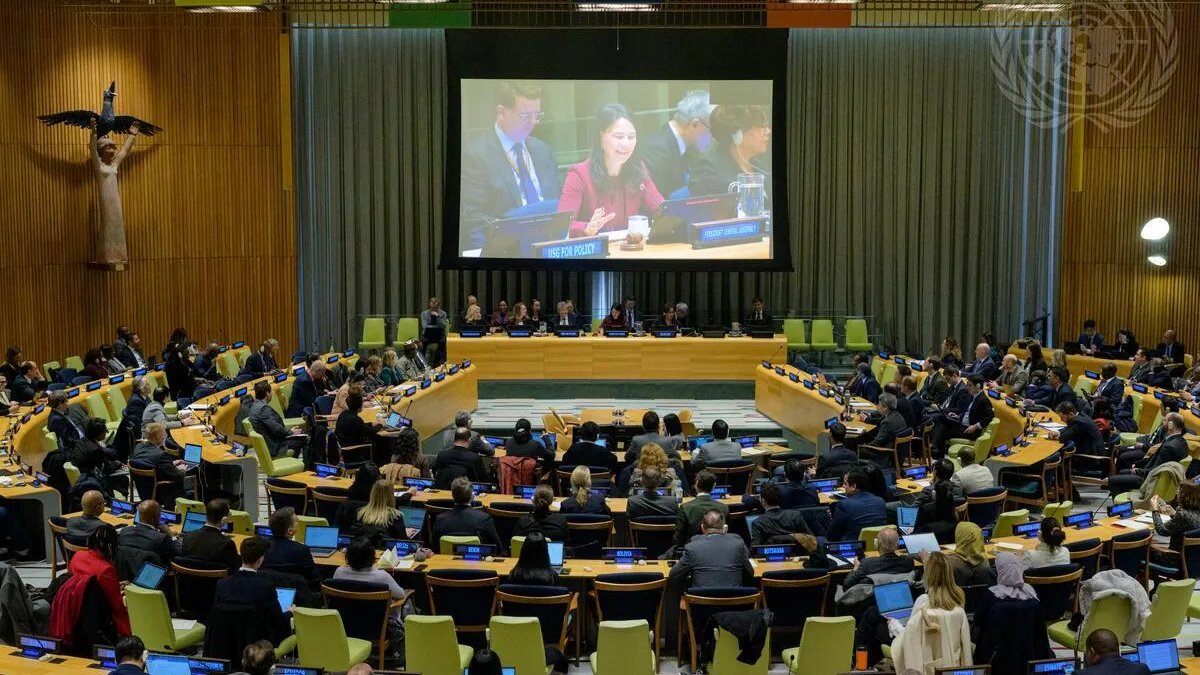

Foreign ministers from the Group of Seven called on Iran on Monday to end what they described as its “arming and support of Houthis in Yemen,” using the opening of United Nations General Assembly high-level week to present a common front as the conflict spread across Yemen, Saudi airspace and the Red Sea.
In the joint statement, reported by Reuters correspondent John Irish and separately confirmed by CNN, the ministers said Iranian support constituted “a dangerous pattern of escalation that risked undermining international trade and creating global instability.” Britain, Canada, France, Germany, Italy, Japan and the United States all backed the language.
“We condemn in the strongest terms the unacceptable continued strikes carried out by the Houthis in Yemen and against the Kingdom of Saudi Arabia,” the ministers said. “We call on the Houthis to immediately cease all military actions, all threats and attacks against civilian shipping, and to return to the political process in good faith.”
No Iranian or Houthi response to the G7 statement had been reported by Monday evening. Iran has previously denied arming the Houthis. The movement has said its attacks are retaliation for Saudi strikes. Those positions remain contested, and the G7 statement is the seven governments’ collective allegation—not independent proof of each alleged transfer.
Why the first unified G7 position matters
This is the first joint G7 position on the renewed war. Its importance lies less in the wording of condemnation than in the alignment behind it: seven large economies are treating the Yemen fighting, attacks on Saudi Arabia and danger to civilian shipping as one connected security problem. That creates a common diplomatic basis for later action even though Monday’s statement announced no sanctions, interdictions or new military mission.
The timing also exposes a deliberate gap between diplomatic unity and military commitment. The United States joined the statement while continuing, as of Monday, to avoid direct strikes on the Houthis. The New York Times reported that President Donald Trump first opposed strikes, reversed course after a Thursday call with Saudi Crown Prince Mohammed bin Salman and ordered the Pentagon to prepare an operation, then called it off on Sunday as bombs were being loaded. Reuters separately reported that Washington considered strikes and that Trump stopped them. The exact operational sequence has not been independently established, but both reports support the narrower conclusion that the United States considered and then declined direct action.
That contrast matters to every party. Saudi Arabia gains broad diplomatic backing but not a new American combat commitment. Iran faces coordinated pressure without an immediate attack. The Houthis can see that their campaign has moved from a regional conflict issue to the agenda of the G7, while also seeing limits in Washington’s willingness to intervene directly. For shippers, the question is whether political coordination changes conditions at sea rather than merely the language around them.
How the war returned after a long pause
Yemen’s civil war began after the Houthis seized Sanaa and much of northern and central Yemen in 2014. A Saudi-led coalition intervened in 2015 on behalf of the internationally recognized government. Twelve years of conflict left the country divided and its civilian infrastructure severely weakened. A ceasefire reached in 2022 sharply reduced large-scale fighting and largely held until July 2026, when hostilities reignited.
The renewed Yemen front is also part of a wider regional war. The United States and Iran have been in direct conflict under the U.S.-named “Operation Epic Fury” since February. That larger confrontation raises the stakes of every allegation about Iranian support: pressure on the Houthis can be read in Tehran not only as Yemen policy, but as another front in an existing U.S.–Iran war.
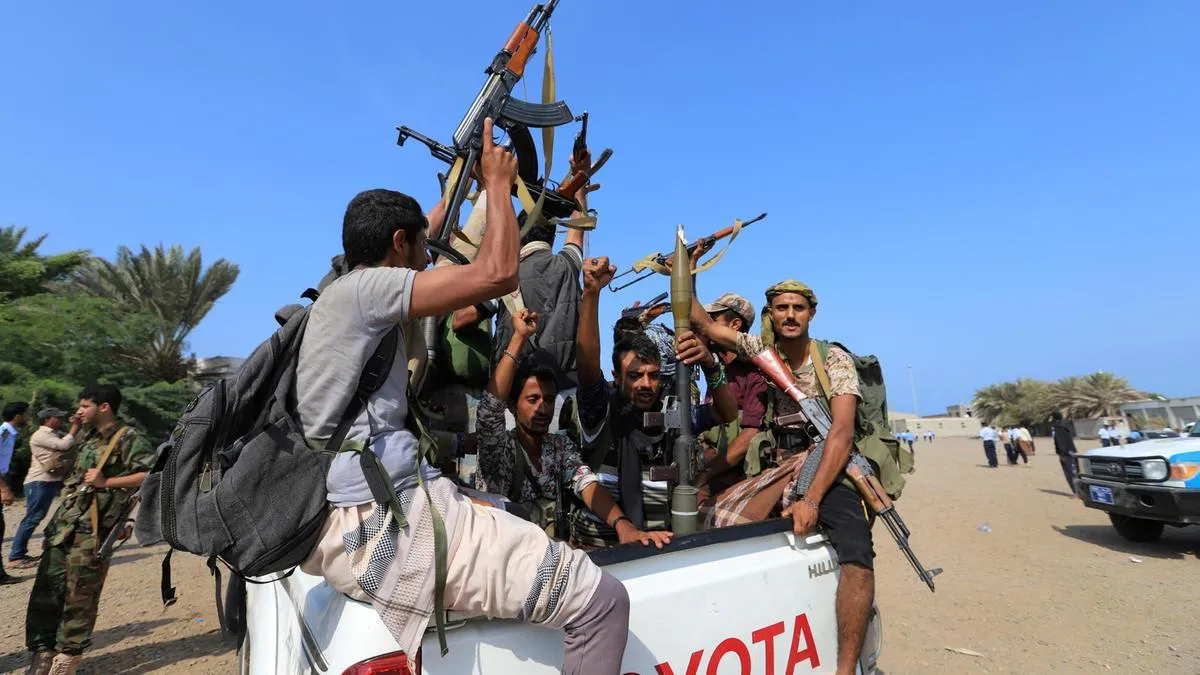
During September, Houthi forces mounted their largest territorial push in years. Associated Press reporting cited Houthi and Yemeni officials saying the movement seized Mokha and islands near Bab al-Mandab, extending its position along the Red Sea coast. On Monday, Reuters reported that five Yemeni military sources described Houthi forces pushing into the Kahboub Mountains across Taiz and Lahij provinces. Those sources said the aim was to secure the rear of coastal positions around Bab al-Mandab and preserve options for new fronts. Control of individual roads and ridges remains difficult to verify during active fighting.
The mountain push links territory to maritime reach. Coastal positions are more defensible when a force also controls the high ground and supply routes behind them. Conversely, government-aligned forces could weaken coastal gains by holding or retaking those approaches. That is why the Kahboub fighting matters beyond the immediate battlefield: the southern Red Sea entrance sits below it.
Riyadh, Yanbu and the widening military exchange
On Saturday, September 19, the Houthis fired a ballistic missile toward Riyadh, according to the Saudi-led coalition, which said the weapon was intercepted. The Houthis also claimed attacks on Saudi Aramco facilities at Yanbu. The Saudi account of the interception and the Houthi account of their intended or achieved targets come from opposing sides and should be read as attributed claims unless independently corroborated.
On Monday, Houthi military spokesperson Yahya Saree claimed Saudi Arabia had carried out 157 strikes across four Yemeni provinces that day and 917 since the escalation began. CNN said it could not verify those figures. The numbers may describe the scale the Houthis want audiences to perceive; without independent strike logs, they cannot be treated as a confirmed count.
Britain’s response has combined diplomacy with bounded military assistance. Prime Minister Andy Burnham said on Monday that Britain would deploy one Royal Air Force Voyager tanker to provide “defensive” air-to-air refuelling for Saudi jets. The mission is intended to extend the endurance of Saudi aircraft defending against missiles and drones, not to support attacks inside Yemen. Even with that declared boundary, refuelling is operational support, and Parliament and the public will be able to judge the distinction only through the mission’s actual rules and duration.
Turkey has also lined up politically behind Riyadh. Foreign Minister Hakan Fidan expressed solidarity with Saudi Arabia on Saturday and offered to meet Saudi “military needs, especially on technical issues,” according to NTV. The G7 statement is broader than either national move because it joins seven governments behind a single diagnosis and demand.
Who benefits, who loses—and where the arguments divide
Saudi Arabia gains diplomatic legitimacy and practical support. The statement validates Riyadh’s view that Houthi attacks are not only a bilateral border problem. The RAF tanker adds limited defensive capacity. But Saudi Arabia still bears the cost of interception, infrastructure protection and any renewed commitment to a Yemen war the 2022 ceasefire had contained.
The G7 gains a common policy line without committing every member to the same military role. Japan, Canada and European members can back sanctions, export controls or U.N. diplomacy even if they do not join combat operations. That flexibility helps hold the coalition together, but it also means the statement can remain symbolic unless governments agree on implementation.
Iran faces reputational and potentially financial pressure. If the G7 follows with coordinated restrictions on components, finance or shipping networks, entities accused of supporting Houthi capabilities could face higher costs. Iran’s longstanding denial of arming the movement means any punitive measure will also generate a dispute over evidence, attribution and legal authority. No Iranian response to Monday’s statement had been reported by the evening.
The Houthis gain attention but lose diplomatic space. Their battlefield advances and ability to threaten Saudi territory have forced the issue onto the G7 agenda. At the same time, seven governments have now jointly demanded that the movement stop military action, threats and attacks on civilian shipping. The Houthis’ assertion that they are retaliating for Saudi strikes does not answer questions about attacks affecting civilian crews or neutral commerce.
Yemeni civilians and commercial crews lose most directly. The United Nations condemned the attempted Riyadh strike on September 20, while the International Organization for Migration estimated that roughly 130,000 people had been displaced in Yemen in recent weeks. Displacement on that scale means pressure on food, shelter, medicine and protection in a country already damaged by years of war. At sea, civilian crews absorb the immediate risk even when ships reroute and cargo eventually arrives.
What the numbers imply for trade and oil
About 12% of world trade normally passes through Bab al-Mandab in peacetime, according to Associated Press reporting. That figure does not mean 12% of trade disappears if the route becomes more dangerous. Ships can wait, seek escorts or sail around the Cape of Good Hope. But each alternative adds time, fuel, insurance expense and scheduling pressure, and those costs move through ports, inventories and consumer prices.
Oil markets were already pricing regional danger. Brent traded around $100 to $104 a barrel on Monday after having approached $110 earlier in the escalation. The easing suggests the market had stepped back from its most severe immediate supply fears; a price near $100 still carries a substantial risk premium. Reported reductions in Saudi oil shipments and concern around Yanbu add to that sensitivity. In Britain, diesel was forecast to exceed £2 a litre, illustrating how maritime and energy risk can reach households and freight operators far from the battlefield.
The strike counts require a different kind of caution. A Houthi claim of 157 Saudi strikes in a day and 917 since escalation, even if accurate, would describe an intense air campaign. Because CNN could not verify the figures, the appropriate conclusion is not that the totals are true or false, but that independently confirmed targeting and civilian-harm data are missing. The uncertainty itself complicates diplomacy: parties are negotiating over a war whose basic operational record is contested.
The displacement estimate is less abstract. Roughly 130,000 people forced from their homes in recent weeks indicates a crisis that is already national in scale. It is also a warning against reading a shipping-security outcome as a complete solution. Even if attacks at sea stopped tomorrow, Yemen would still need a political settlement, humanitarian access and arrangements over territory, revenue and security.
What happens next during U.N. week
Iranian President Masoud Pezeshkian is attending the General Assembly, putting Iran’s response inside the same diplomatic week as the G7 demand. Tehran could repeat its denial, challenge the evidence or offer its own de-escalation proposal. The first meaningful test will be whether any response addresses observable conduct—transfers, launches, attacks and negotiations—rather than only rejecting the statement’s premise.
- Words become measures. G7 governments could coordinate sanctions, export controls, maritime enforcement or evidence releases concerning alleged weapons networks. Monday’s statement did not announce any of those steps. A policy change will be visible in formal measures, named targets and legal authorities.
- Washington keeps its military boundary. The reported reversal of prepared U.S. strikes may hold if the administration judges direct action too escalatory. A new attack causing large civilian or economic losses could reopen the debate. Confirmation would require an official order or acknowledged operation, not anonymous accounts alone.
- The coastal and highlands campaigns converge. If Houthi forces consolidate the Kahboub heights, their Red Sea positions could become harder to isolate. If Saudi-backed forces hold the approaches, the coastal advance may remain exposed. Verified control of roads and ridges will matter more than declarations.
- A negotiating channel reopens. The G7’s call to return to the political process will become substantive only if Yemeni parties accept a mechanism, timetable and confidence-building steps. A pause in attacks, humanitarian access or monitored commitments would be stronger evidence than another general appeal.
- Trade risk stays elevated. Carriers, insurers and port operators will respond to verified attacks and threat assessments. Sustained reductions in launches and safer transits would matter more than a single oil-price move.
The most likely near-term result is diplomatic pressure without immediate resolution: Iran contests the accusation, the G7 explores measures, and the military balance in Yemen continues to shape leverage. But the statement still changes the political setting. For the first time in this renewed war, all seven G7 governments have publicly tied alleged Iranian support, Houthi battlefield action, Saudi security and civilian shipping into one demand.
Whether that unity changes the conflict will be measurable. Watch for a documented Iranian response, new G7 sanctions or export controls, verified changes in Houthi launches, independently confirmed strike data, the status of the Kahboub Mountains, and any named U.N.-backed negotiating process. Until then, Monday’s declaration is a significant alignment of governments—not yet evidence of de-escalation.
Sources and reporting notes
- Reuters: G7 statement, the ministers’ quotations and the New York meeting
- CNN: G7 confirmation, Houthi and Saudi claims, and verification limits
- Reuters: Kahboub Mountains campaign and the reported U.S. strike reversal
- United Nations: condemnation of the Riyadh missile attempt and humanitarian context
Reporting cutoff: Monday evening, September 21, 2026. No Iranian or Houthi response to the G7 statement had been reported by that point. Battlefield control, strike totals, interceptions and weapons-supply allegations are attributed to the sources that made them; this report does not independently verify those contested claims.