Yanbu port attack October 2026
Yanbu port attack October 2026Yanbu oil terminal fireSaudi Arabia Yanbu port strikeHouthi attack YanbuEast-West Pipeline Saudi ArabiaSaudi oil exports Hormuz bypassYanbu North TerminalRed Sea shipping attacks 2026Yanbu crude loadings suspendedSaudi Arabia oil terminal strike
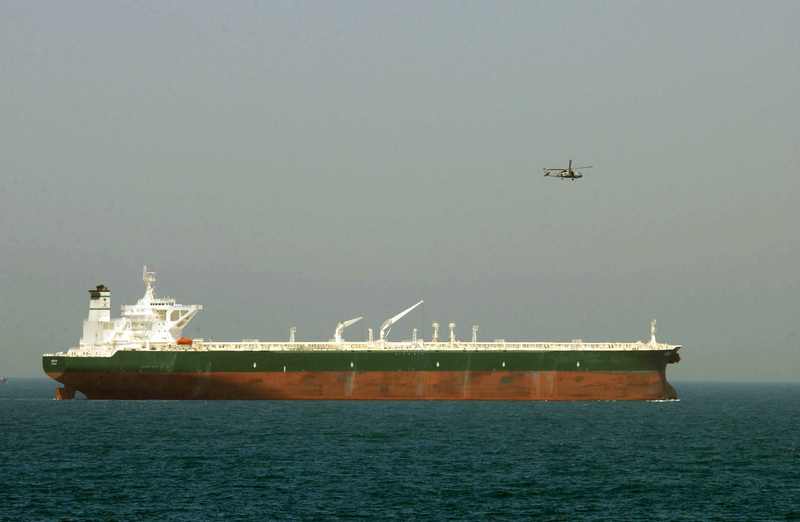
YANBU, Saudi Arabia — The reported Yanbu port attack October 2026 began on Thursday, October 1, when an unidentified projectile struck inside Saudi Arabia's Yanbu port on the Red Sea, setting off a fire near the Aramco Yanbu North Terminal and prompting port authorities to temporarily suspend crude loading operations, according to maritime security firms and shipping industry reports. Loading later resumed. No group has claimed responsibility, and neither Saudi Aramco nor Saudi port authorities have publicly confirmed what hit the port — or who fired it.
What is established comes from the shipping world rather than from governments. Maritime security firms Vanguard Tech and Clearwater Dynamics confirmed the fire and the temporary loading halt, with Clearwater reporting that the incident was first flagged by the master of a Liberian-flagged tanker at the terminal. Bystander video circulating afterward showed an isolated fire near a tank farm. SAFETY4SEA and Splash247, citing the security firms, described the event as an aerial attack. No casualties and no confirmed extent of damage to port infrastructure have been reported by any source.
That evidentiary thinness is itself the story's first lesson. In a war where every projectile arrives wrapped in competing narratives, the Yanbu incident is a rare case where almost nobody is talking: no claim, no denial, no wreckage photos, no official statement. What follows is what can honestly be said about a fire at the most important oil terminal on the Red Sea — and what it reveals about a war that keeps finding new ways to reach the world's crude supply.
What we know — and what we don't
The reported facts: a projectile, a fire, a halted loading
The core facts are narrow and well-sourced. On October 1, something — described by the security firms as an unidentified projectile — struck inside Yanbu port and started a fire. Port authorities suspended crude loadings; the suspension was temporary, and loading with the reporting vessel resumed afterward. That sequence is corroborated across multiple independent maritime outlets: SAFETY4SEA's October 2 report, Splash247's account of the same incident, and TradeWinds' reporting citing Vanguard Tech. The bystander video of an isolated fire near a tank farm adds a visual anchor, though it has not been independently geolocated by Signal Post News.
What makes the sourcing credible is its origin: the report came from a working tanker master, not a government press office. Ship masters have no incentive to invent port fires — a halted loading costs their charterers money. Vanguard Tech and Clearwater Dynamics are commercial maritime security firms whose business depends on accurate incident reporting to clients. None of that makes the account infallible, but it makes it a different evidentiary category from a belligerent's battlefield claim.
The attribution gap: no claim, no confirmation
Here is where honest reporting must slow down. As of the reporting cutoff, there has been no verified Houthi claim of responsibility for the Yanbu port strike, no public confirmation from Saudi Aramco, and no statement from Saudi port authorities identifying the projectile or attributing it to any party. TradeWinds headlined its October 2 report as a "New Houthi attack" targeting the port, citing Vanguard Tech — but that is the outlet's editorial framing, and it goes further than the underlying evidence supports. Splash247 and SAFETY4SEA were more careful, describing an "aerial attack" by an "unidentified projectile" with no confirmed attribution.
Readers should understand how unusual this silence is. In the parallel case of the alleged Medina power-station drone strike days earlier, the Saudi-led coalition at least offered wreckage evidence and an official attribution — contested, but public. Here there is not even that. The absence of a Houthi claim is notable because the movement has historically been quick to claim successful strikes on Saudi infrastructure. The absence of a Saudi statement is notable because Riyadh has every incentive to name an attacker if it can. Neither silence proves anything; together they define the boundary of what can responsibly be reported. This article will not cross it.
Why this matters
A strike inside the port crosses a new threshold
If the reports hold, this is the first reported strike inside the port of Yanbu itself — not on the pipeline feeding it, not on a tanker approaching it, but within the port complex. That distinction matters more than it sounds. The September 10 drone strikes hit pumping stations eight and nine on the East-West Pipeline, deep in the desert interior. The August strike on the Bahri VLCC Amzan happened 63 nautical miles west of Yanbu, in open water. A projectile landing inside the port means the weapon — whatever it was — penetrated the layered defenses of Saudi Arabia's most critical Red Sea facility and reached the tank farm zone, the densest concentration of flammable infrastructure in the complex.
Consider what a port fire near a tank farm implies. Crude storage tanks are among the most protected industrial assets in the world, with fire suppression systems, berms, and spacing designed for accidents — not for incoming projectiles. An isolated fire, as the bystander video showed, suggests the strike hit ancillary infrastructure rather than a full storage tank. But the margin between an isolated fire and a catastrophic tank-farm blaze is measured in meters and luck. Whoever planned this, or whatever malfunction caused it, demonstrated that the port's perimeter is not what Riyadh assumed it was.
The world's most important oil bypass is now a target
Yanbu is not just another Saudi port. Since the Strait of Hormuz effectively closed during the U.S.-Iran war that began in February, Yanbu has become Saudi Arabia's primary answer to the most consequential energy chokepoint on earth. Roughly 40 percent of Gulf crude exports now bypass Hormuz through Red Sea outlets, with Yanbu carrying the largest share. The East-West Pipeline was built in the 1980s for exactly this scenario — a Hormuz closure forcing Gulf crude westward — and for most of its life it ran at a fraction of capacity. The war turned a contingency plan into the kingdom's economic lifeline.
Attacking the bypass route itself, rather than the strait it bypasses, represents a strategic escalation regardless of who is responsible. The implicit logic of the Hormuz closure was that Saudi Arabia had an alternative; the implicit logic of a Yanbu strike is that there is no alternative left. Markets understood this instantly: the incident landed with Brent crude already above $100 a barrel, and every subsequent disruption to the Red Sea outlet tightens a supply picture that has no slack left in it.
How Yanbu became Saudi Arabia's Hormuz bypass
The East-West Pipeline's wartime second life
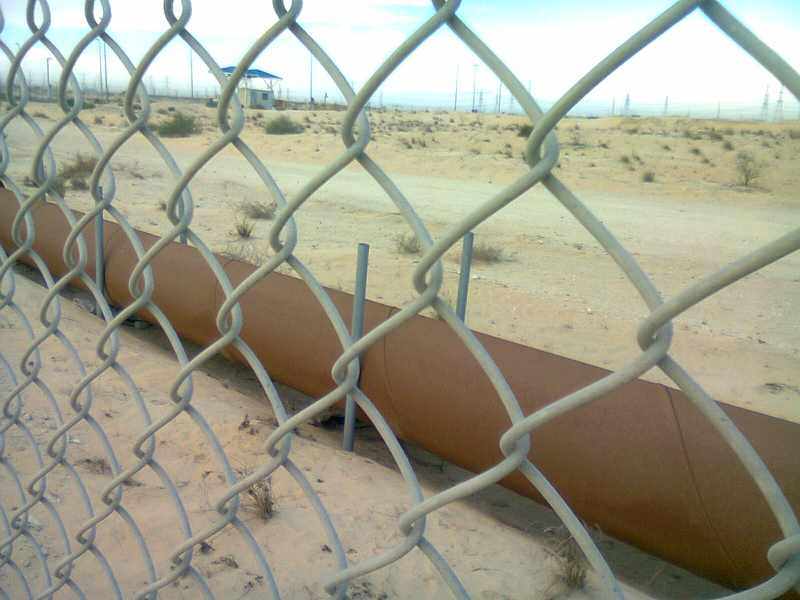
The 1,200-kilometer East-West Crude Oil Pipeline — the Petroline — runs from the Abqaiq processing center in the Eastern Province to Yanbu on the Red Sea. It was an insurance policy written during the Iran-Iraq Tanker War of the 1980s and left to gather dust at 2 to 3 million barrels per day for four decades. When the Iran war closed Hormuz in February 2026, Aramco activated its full contingency ramp-up, pushing the line toward its 7-million-barrel-per-day design maximum by late March.
That made the pipeline a target, and in September it was hit. Drone strikes damaged pumping stations eight and nine around September 10 — Bloomberg dated the initial strike there, Reuters placed the resulting shutdown on September 13 — forcing Saudi Arabia to close the line entirely. Flows restarted on September 22 at reduced rates, with the system running 2 to 2.65 million barrels per day and capacity expected to build toward 3 to 4 million. The pipeline had been back for barely a week when the projectile hit the port at its western end. The attackers, whoever they are, appear to be working systematically down the export chain: first the pipe, then the port.
Eleven tankers at once: the fragile recovery
The recovery was real and it was fast. By September 30, Yanbu was loading 11 tankers simultaneously, according to Bloomberg's Javier Blas — the port operating at a tempo it had rarely attempted even in peacetime. Satellite imagery from September 27 showed nearly 10 million barrels being loaded across Yanbu and the nearby Al Muajjiz terminal. Yanbu's crude exports were estimated at about 2 million barrels per day, with Kpler data putting September Hormuz crude flows at around 9.72 million barrels per day as Gulf movements staged a broader recovery.
That is the context that makes October 1 so damaging beyond the fire itself. The port was in the middle of demonstrating that the bypass could work at scale — 11 vessels at once, millions of barrels a day, a credible alternative to Hormuz. A single projectile, landing inside the port complex, punctured that demonstration. Even a temporary loading halt sends a signal to every tanker owner, insurer, and charterer watching the Red Sea: the alternative route is contested too.
The numbers behind the vulnerability
Two million barrels a day against a seven-million-barrel pipe
The arithmetic of Yanbu has always been uncomfortable. The pipeline can deliver up to 7 million barrels per day; the port can load far less. Yanbu North Terminal — the older facility, and the one near which the fire was reported — handles roughly 1.5 million barrels per day. Yanbu South, commissioned in 2018, adds about 3 million. Together the two terminals operate seven dedicated VLCC berths, each theoretically capable of loading some 132,000 barrels per hour at peak throughput, meaning a standard 2-million-barrel VLCC takes 15 to 16 hours to fill before berthing, scheduling, and wartime friction are factored in.
Put those figures together and the structural problem is clear: even before the October 1 strike, Yanbu was a bottleneck that the pipeline outran. Wartime operational throughput was estimated at 3 to 4 million barrels per day against a 7-million-barrel feed. The port was already the binding constraint on Saudi exports. Now it is a binding constraint under fire — and every barrel that cannot load must go into the port's roughly 22-million-barrel tank farm storage, feed the adjacent refineries, or force Aramco to throttle the pipeline back upstream.
What a sustained halt would cost the market
The October 1 halt was temporary, and loadings resumed. But consider the counterfactual the market is now pricing: a sustained Yanbu outage removes roughly 2 million barrels per day from global supply at a moment when Brent is above $100 and the International Maritime Organization had already confirmed 85 attacks on commercial shipping in and around Hormuz by September 24. For scale, the initial disruption from Russia's 2022 invasion removed a comparable volume and sent Brent to $139. The difference now is that there is no strategic petroleum reserve release left unspent and no Hormuz to fall back on — the bypass was the fallback.
The second-order costs arrive through insurance. War-risk premiums for Red Sea transits have already surged during the 2026 escalation cycle, and underwriters reprice on incidents, not intentions. A confirmed projectile inside the port — regardless of who fired it — is the kind of event that moves premiums for every subsequent Yanbu loading. Those costs flow directly into the delivered price of crude for Asian refiners, the kingdom's largest customers, and they persist long after the fire is out.
Who benefits, who loses
Who gains from a burning terminal
If the strike was a deliberate Houthi operation — and that remains unconfirmed — the gains are straightforward: it demonstrates reach into the heart of Saudi Arabia's wartime export system, pressures Riyadh at the exact moment Yemeni government forces are pressing Houthi positions around Taiz, and reminds every actor in the region that the Red Sea bypass is not a sanctuary. The timing, one day after reported Saudi interceptions at Jazan and Khamis Mushait, would suggest a coordinated multi-axis pressure campaign.
But the "who benefits" analysis must also admit its limits. Higher oil prices benefit every producer, including parties with no connection to the strike. And there is a scenario in which no one benefits: an accidental launch, a malfunctioning drone, or a projectile from an entirely different actor would produce the same fire with none of the strategic logic. Attribution determines meaning here, and attribution is precisely what is missing. Analysts who assert Houthi responsibility as fact are building strategy on an assumption.
Who pays: importers, insurers, and Riyadh's budget
The losers are easier to identify. Asian refiners — the destination for most Yanbu-loaded crude — pay through higher delivered costs and supply uncertainty. Tanker owners and their insurers pay through war-risk repricing across the Red Sea. Saudi Arabia pays twice: once in the direct cost of repairs and hardened defenses, and again in the erosion of Aramco's most valuable intangible asset, its reputation as the world's most reliable supplier. The kingdom's budget arithmetic assumes volume; every day of disrupted loadings is revenue deferred or destroyed.
There is a further, grimmer ledger. If Riyadh answers the strike with retaliation against Houthi targets in Yemen — the pattern of recent weeks, from the Taiz airstrikes to the reported Sanaa strikes — Yemeni civilians pay in a war whose toll already exceeds 800 dead and 145,000 displaced by recent counts. Escalation ladders are climbed one rung at a time, and each rung is paid for by people who never chose the war.
The shadow of the last two months
The Amzan precedent and the September pipeline strikes
The October 1 incident did not emerge from nowhere. In August, the Houthis claimed a projectile strike on the Bahri VLCC Amzan about 63 nautical miles west of Yanbu, setting fire to the vessel's main deck — a claimed attack, on the record, against Saudi-linked shipping in Yanbu's approaches. In September came the pipeline pumping-station strikes that shut the Petroline for nearly two weeks. Viewed in sequence — sea, then pipe, then port — the pattern suggests a campaign working inward toward the export system's most concentrated node, whether or not the same hand directed all three.
The pattern also explains why the "unidentified projectile" framing matters. The Amzan strike was claimed; the pipeline strikes were attributed by Saudi officials to Iraq-based actors, not the Houthis; the port strike is unattributed entirely. Three incidents, three different attribution postures. Treating them as a single Houthi campaign is tempting and may even be correct — but it is not established, and collapsing the distinctions is how misattribution cascades into miscalculation.
Interceptions at Jazan and Khamis Mushait the same day
On the same day as the Yanbu fire, Saudi forces reported intercepting attempted drone and missile strikes at Jazan and Khamis Mushait — the southern city near the Yemeni border and the airbase city in Asir province. If those interceptions and the Yanbu projectile were coordinated, it would indicate a multi-axis operation of a sophistication beyond the pinprick strikes of the summer. If they were coincidental, it would indicate something nearly as concerning: that attempted strikes on Saudi territory have become frequent enough to coincide by chance.
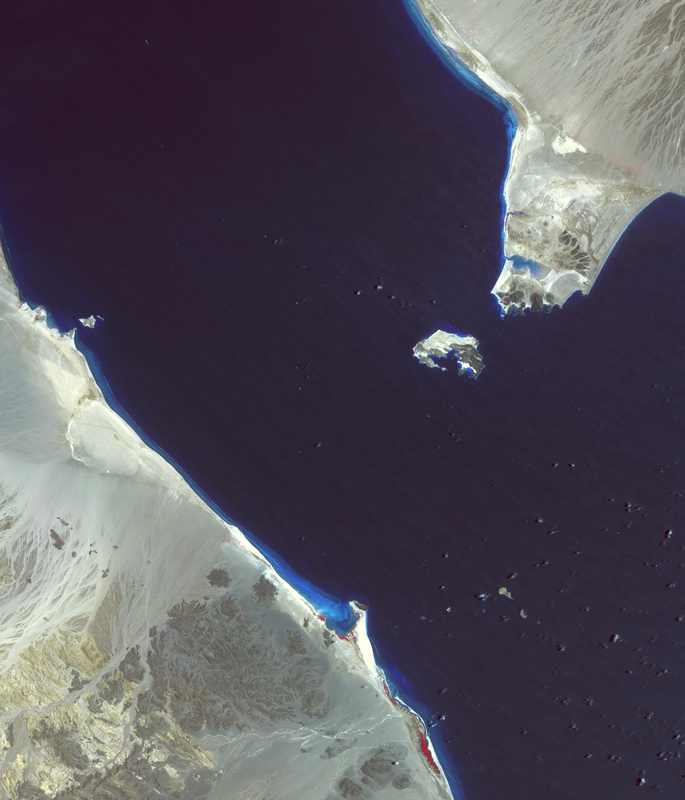
Either reading points the same direction: Saudi Arabia's air defenses are now engaged across the full depth of the kingdom, from the southern border to the Red Sea coast. Interceptions are successes, but a defense that must succeed everywhere, every time, against an attacker who needs to succeed only once, is a defense under structural strain.
What happens next
Scenario one: retaliation and a widening air campaign
The most likely near-term response is Saudi retaliation against suspected launch infrastructure in Yemen, layered onto the already intensifying Taiz air campaign — Yemeni government warplanes flew 20 strikes on Houthi targets in Taiz on October 2, according to Reuters. A Yanbu retaliation strike would fit the established pattern: infrastructure hit, attribution asserted, response delivered. The risk is the spiral: Houthi counter-retaliation against the port or the pipeline, further Saudi strikes, and the steady conversion of the Red Sea export corridor into an active theater.
Scenario two: attrition on the bypass becomes the new normal
A darker possibility is that October 1 becomes routine rather than exceptional — periodic projectiles, intermittent loading halts, a port that operates but never quite at the 11-tanker tempo of late September. In this scenario there is no single dramatic escalation, just the slow erosion of the bypass's credibility: insurers reprice upward, some tanker owners decline Yanbu fixtures, Aramco diverts marginal barrels back through whatever Hormuz capacity can be coaxed open. The 40-percent Hormuz-bypass figure quietly shrinks, and the world's spare export capacity with it.
Scenario three: quiet repairs and a return to deterrence
The least dramatic scenario is also plausible. Loadings resumed quickly; the fire appears to have been contained; no casualties were reported. If the damage proves minor and no further projectiles arrive, both sides may prefer the pre-October equilibrium — the Houthis having demonstrated reach, Riyadh having demonstrated recovery. Deterrence, after all, is a conversation, and sometimes a single exchange is enough. The pipeline restart held after September's strikes; the port's operations may hold after October's.
Four indicators to watch
Which scenario prevails will be visible in four signals. First, whether Saudi Aramco or the port authorities break their silence — an official statement would indicate the incident crossed a threshold requiring public acknowledgment. Second, whether any party claims responsibility; a Houthi claim would convert the attribution question from speculation to stated fact. Third, whether Yanbu loadings sustain the roughly 2-million-barrel-per-day tempo of late September or slip. Fourth, whether the Jazan and Khamis Mushait interception reports continue — sustained multi-axis attempts would confirm that October 1 was a campaign, not an incident. Watch those four, and the fog around Yanbu will start to lift.
Sources and reporting notes
- SAFETY4SEA, October 2, 2026 — the aerial-attack report: Vanguard Tech and Clearwater Dynamics confirmation of the fire and temporary loading halt, the Liberian-flagged tanker master's report, no Aramco or port-authority confirmation, and the September pipeline-shutdown context.
- Splash247, October 2, 2026 — the incident as reported by the tanker master, loading halted then resumed, no casualties or damage extent confirmed, Yanbu exports near 2m bpd, pipeline flows at 2–2.65m bpd, the August Amzan precedent, and IMO's 85-attack tally.
- TradeWinds, October 2, 2026 — Paul Peachey's report citing Vanguard Tech on the fire halting crude loadings; note this outlet headlined the incident as a Houthi attack, a framing that goes beyond the confirmed evidence.
- infomarine — bystander video of the explosion and fire reported at the port.
- Bloomberg's Javier Blas, via industry coverage — Yanbu loading 11 tankers simultaneously by September 30, 2026.
Reporting cutoff: October 2, 2026 at 12:15 p.m. PDT. Responsibility for the October 1 Yanbu port strike is unconfirmed: no verified claim has been issued by any party, and neither Saudi Aramco nor Saudi port authorities have publicly identified the projectile or attributed it. Casualty and damage-extent figures were unconfirmed at the cutoff. Figures for pipeline flows, terminal capacities, and tanker loadings are drawn from the cited industry reporting and should be read as estimates, not official Saudi data.