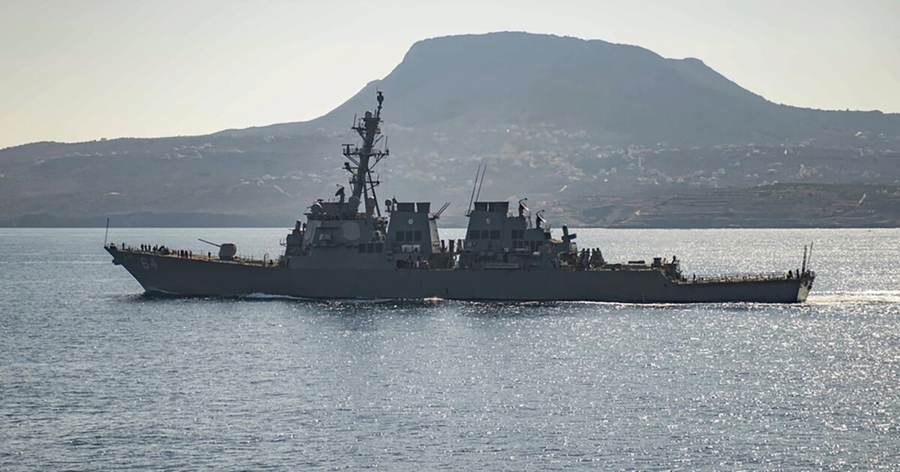
RIYADH — The prospect of a Saudi assault on Houthis Red Sea positions has moved from contingency planning toward active preparation, according to six Gulf and Yemeni officials and Western diplomats who spoke to Reuters. They said Riyadh is considering either a narrowly focused attack around Bab el-Mandeb or synchronized offensives in Al-Bayda, Marib, Taiz and Al-Jawf. Yemeni forces overseen by Saudi Arabia would lead on the ground, supported by Saudi airstrikes, and more than 100,000 Yemeni troops could be mobilized if the larger plan is chosen.
No precise launch date has been established. The six sources gave estimates ranging from within a week to after the U.S. midterm elections in early November. Saudi and Yemeni officials, the Houthis and the U.S. military did not immediately comment to Reuters on the planning. That distinction matters: preparations are reported and substantial, but an attack order, its final scale and its timing have not been publicly confirmed.
The strategic aim is clearer. The people briefed on the plans said Riyadh wants to reverse the Houthis' rapid advance down Yemen's coast last month and their seizure of Bab el-Mandeb. With the Strait of Hormuz effectively closed by the Iran conflict, the southern exit of the Red Sea is no longer a secondary route. It is the remaining hinge between Asian energy flows, the Red Sea and the Suez corridor.
Why this matters
The Bab el-Mandeb strait crisis now meets the Hormuz crisis
The Bab el-Mandeb strait crisis is about leverage before it is about territory. A force controlling the Yemeni approaches can threaten, inspect or selectively disrupt Saudi-linked shipping without permanently closing the entire waterway. Even that uncertainty is enough to lift insurance premiums, complicate naval escorts and push carriers toward the longer route around Africa. With Hormuz effectively closed by the Iran conflict, the redundancy on which Gulf exporters normally rely has narrowed sharply.
Riyadh's conclusion, as described by diplomats and a Gulf official, is that new peace negotiations would begin on intolerable terms if the Houthis retain the strait. The military plan is therefore also bargaining strategy: alter the map before returning to a table. Former U.S. ambassador Michael Ratney expects the most likely version to be comparatively modest—retaking coastal areas so normal maritime traffic can resume, rather than trying to defeat the Houthis across all Yemen.
That limited goal is attractive because it sounds measurable. It is also deceptive. A coastal operation still requires supply lines, air cover, mine clearance and forces able to hold exposed terrain after the first advance. The renewed airstrikes around Taiz show how quickly a maritime objective can reconnect with Yemen's interior fronts.
Vision 2030 collides with another war bill
For Crown Prince Mohammed bin Salman, the strategic contradiction is severe. Vision 2030 depends on investment, predictable logistics and an image of Saudi Arabia as a stable commercial hub. A renewed air campaign consumes money, exposes energy infrastructure and revives the political memory of the 2015 intervention. Yet allowing an adversary to hold the route intended to compensate for Hormuz carries its own economic cost. The MBS Yemen strategy is becoming a choice between paying to change the military balance now and paying a permanent risk premium later.
The U.S. relationship is being tested at the same time. A Western diplomat told Reuters that Washington is supplying advisers, intelligence and targeting information for Saudi air operations. Reuters also reported earlier that President Donald Trump rebuffed Mohammed bin Salman's request for direct U.S. military action, including airstrikes. That account remains attributed reporting, not a White House confirmation. For more on the broader U.S. force posture around the midterms, see our carrier analysis.
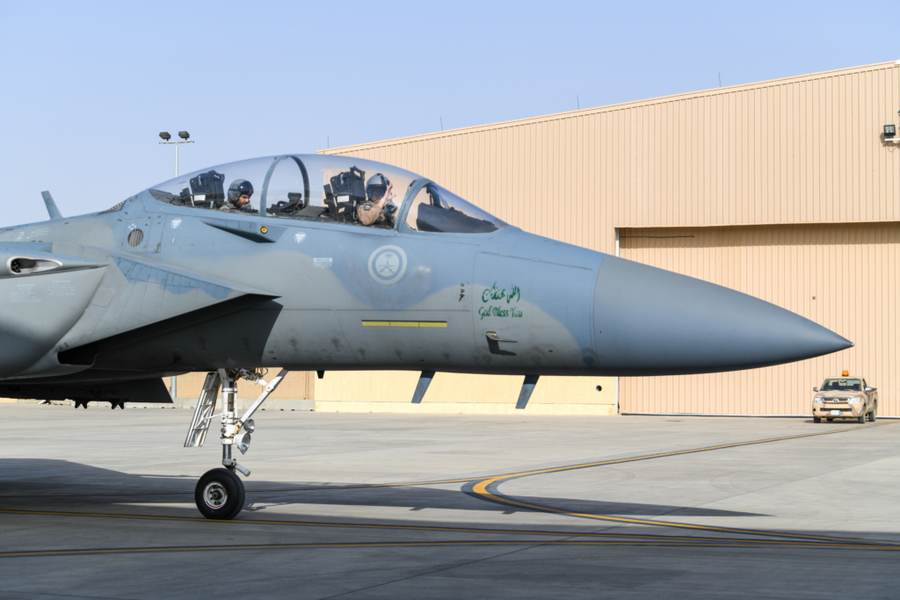
Saudi offensive against Houthis Yemen: the two plans
A limited coastal operation
The first option concentrates force around Bab el-Mandeb. It would aim to roll back recent Houthi gains, secure the coastal approaches and restore confidence in commercial transit. Its virtue is restraint: a shorter front, a defined objective and less pressure to capture or govern deep inland territory. Its weakness is that the Houthis could answer asymmetrically—using missiles, drones, mines and attacks on Saudi energy sites rather than meeting a larger force head-on.
Ratney's assessment fits this scenario. He told Reuters that Riyadh likely wants a narrower, more modest campaign than in 2015 and, ideally, a return to normal maritime traffic. But a limited operation succeeds only if the coast can be held. A tactical recapture followed by harassment, interdiction or renewed infiltration would restore neither investor confidence nor a durable negotiating position.
A multi-front campaign
The second option links the coast to pressure in Al-Bayda, Marib, Taiz and Al-Jawf. The military logic is to prevent the Houthis from concentrating reinforcements around Bab el-Mandeb. The political risk is that multiple fronts amplify every weakness inside the anti-Houthi coalition.
Yemen analyst Mohammed Albasha warned that many anti-Houthi units remain fragmented and unprepared for a sustained offensive against a disciplined opponent. That judgment follows last winter's clash in which UAE-backed southern fighters attempted a secessionist territorial move and were defeated by Saudi-backed forces. A mobilization figure above 100,000 sounds formidable; it says little about unified command, logistics, training or whether rival formations will hold together under pressure.
The current Saudi-Houthi security crisis is therefore not simply a contest of troop totals. Force quality and political cohesion may decide whether the larger number produces momentum or congestion.
Pakistan troops, Turkish drones and an alliance with limits
The Saudi Turkey Pakistan defence pact, signed last month, is being tested sooner than its members may have expected. Pakistani and regional officials told Reuters that Pakistan sent four cargo aircraft to Aden carrying air-defence systems, light artillery, drones and anti-drone equipment. Pakistani military advisers are reported to be working alongside Saudi counterparts, while Turkish drones purchased before the current war have been deployed over Yemen. Neither the Pakistani nor Turkish defence ministry commented to Reuters.
The number that will draw the most scrutiny is separate from Yemen: a Pakistani official said 30,000 to 40,000 Pakistani troops have deployed to Saudi Arabia in waves beginning last year and continuing after the latest escalation. Their stated roles are defending land borders and helping intercept missiles and drones. Islamabad, the official stressed, has made no decision to send those troops into Yemen to fight. Any suggestion that Pakistani ground forces will join the offensive should therefore be treated as possible analysis, not established policy.
Princeton scholar Bernard Haykel told the Los Angeles Times, in a report republished by Military.com, that the campaign would be mostly Saudi air power with Yemenis—and perhaps Pakistanis—on the ground, though he doubted Pakistan would move beyond border duties. His larger warning was diplomatic: Saudi leaders fear Washington could again cut a separate deal with the Houthis that excludes Riyadh's concerns.
France has announced defensive systems and troops to protect the Red Sea port of Yanbu. That distinction—defence in Saudi territory, not combat inside Yemen—is the emerging coalition formula. It can reduce Riyadh's vulnerability without making partners co-owners of a ground war.
“By God, if Turkey and Pakistan become involved, we will strike them with an iron fist.”
Mohammed al-Bukhaiti, senior Houthi official, speaking on Iraqi television
Al-Bukhaiti's warning is political messaging as well as a threat. It seeks to raise the cost of participation before Ankara or Islamabad defines what participation means. It also makes miscalculation more likely: air-defence crews stationed in Saudi Arabia could be portrayed by the Houthis as belligerents even if they never cross the border.
Background: from the 2015 intervention to the 2026 escalation
Saudi Arabia entered Yemen's civil war in 2015 at the head of an Arab coalition supporting the internationally recognized government after the Houthis drove it from Sanaa. Years of airstrikes, ground fighting and humanitarian collapse failed to dislodge the movement. A U.N.-brokered truce in 2022 largely halted cross-border attacks, but it froze rather than resolved the conflict.
That relative calm broke this year as the Iran war spilled outward. The Houthis launched missile and drone attacks on Saudi shipping and oil infrastructure. They are now Iran's most formidable regional ally after Hezbollah's degradation in Lebanon, giving Tehran a partner with territorial depth, a missile arsenal and control over a major maritime approach.
The Trump Houthi policy Yemen record compounds Riyadh's doubts. U.S. intelligence and targeting support can make a Saudi air campaign more effective, but it is not the same as a guarantee that Washington will sustain the operation or share Saudi negotiating priorities. Our earlier coverage of Houthi assurances and U.S. Red Sea policy shows how rapidly tactical understandings can diverge from allies' expectations.
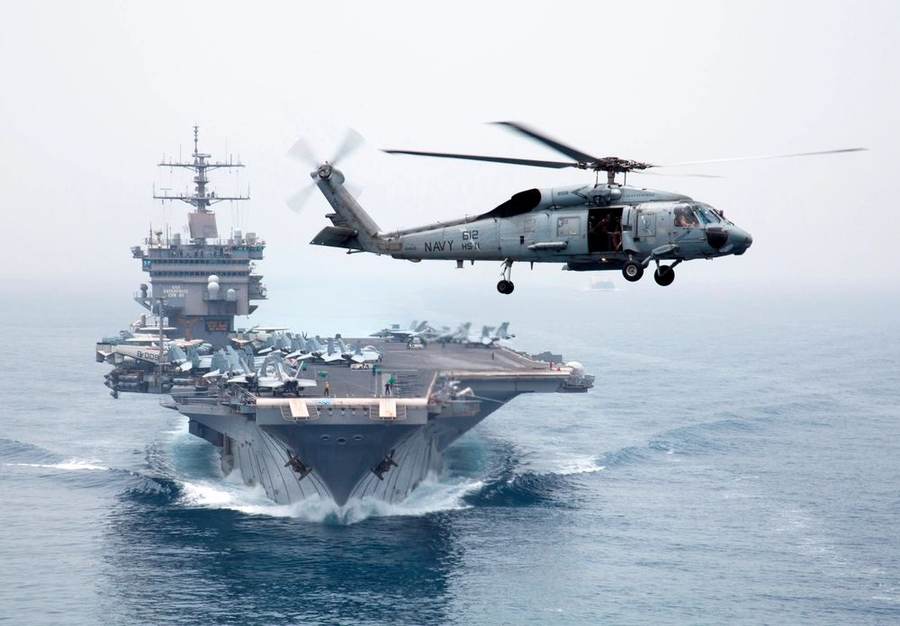
Who benefits, who loses and what critics say
Potential winners
Saudi Arabia wins if a limited campaign restores maritime access without opening a long occupation. Yemen's internationally recognized government gains territory and bargaining power. Shipping companies gain if risk assessments fall enough to bring routes and insurance costs closer to normal. Washington benefits if advisers and intelligence help an ally achieve a defined objective without U.S. combat forces.
Turkey and Pakistan may gain defence contracts and influence by helping Saudi Arabia protect its territory. Yet their leverage rises only while their role remains bounded. If equipment support turns into visible combat, the political and security liabilities grow sharply.
Likely losers
The Houthis would lose their strongest new bargaining chip if pushed from Bab el-Mandeb. Iran would lose an avenue of pressure that bypasses Hormuz. But civilians face the most immediate downside: displacement, disrupted food markets and exposure to airstrikes, missiles and landmines regardless of which force controls a district.
Critics of a wider offensive point to the first Saudi intervention's inconclusive record. Albasha's force-quality warning is not an argument that no advance is possible; it is a warning that taking ground and holding it are different military problems. Haykel's diplomatic concern adds another: Saudi forces could incur the cost of improving the map only to find Washington negotiating a Houthi arrangement on separate terms.
Data reasoning: large armies, narrow waterways and a population already hungry
More than 100,000 potential Yemeni troops versus 30,000–40,000 Pakistanis reported inside Saudi Arabia are not comparable figures. The first is a possible mobilization pool for an offensive; the second is a defensive deployment whose government says it has not been assigned to fight in Yemen. Combining them into one coalition total would overstate the force available for combat.
The same discipline applies to the Houthi Red Sea blockade. Territorial control near a chokepoint can impose risk without proving the capacity to halt every ship continuously. Markets price the credible threat, not just the physical closure. A few missile launches, drone interceptions or insurer warnings can change routes before a vessel is struck.
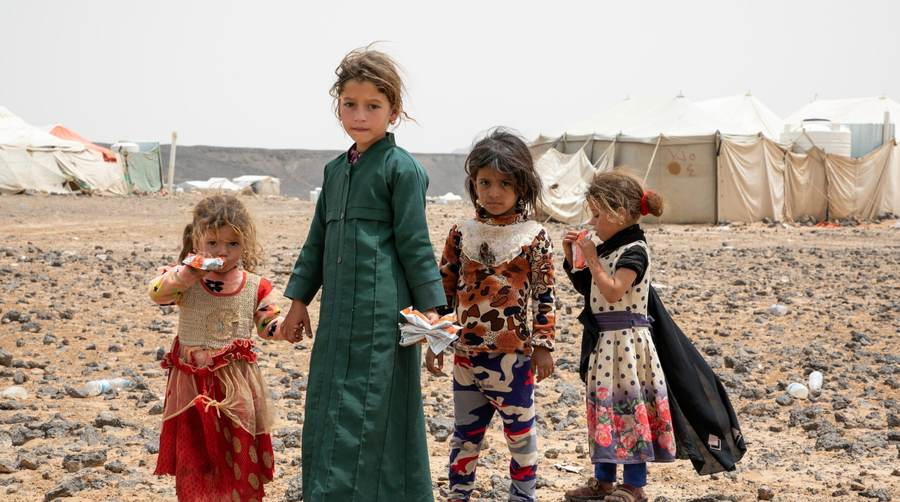
The humanitarian denominator is larger still. The World Food Programme says 74 percent of households in accessible government-held areas lack sufficient food—a record this year reached within weeks. More than 18 million people nationwide face acute food insecurity, 2.2 million children under five are acutely malnourished, and nearly 150,000 people have been displaced by the escalation. The IOM recorded 18,500 displaced in Taiz and Al-Hodeidah in 72 hours early in the crisis. War Child says more children were killed by landmines and unexploded weapons in the first half of 2026 than in all of 2025.
Those figures mean every military scenario is also a market-access scenario. Yemen imports roughly 90 percent of its food. A road closure, damaged port, interrupted fuel supply or new insurance surcharge passes rapidly into the price of flour and cooking oil. See our separate analysis of the record Yemen hunger crisis.
Houthi drone attacks on Saudi Arabia raise the retaliation risk
Riyadh's planners are asking allies for defensive systems because a ground advance could trigger retaliation against oil facilities, ports, power infrastructure and cities. The Saudi-led coalition said a September 29 drone hit the Taibah power distribution station in Medina, which supplies the Prophet's Mosque, and said wreckage analysis indicated Houthi involvement. The Houthis denied responsibility. The attribution remains contested.
The coalition also said it intercepted a Houthi ballistic missile aimed at Khamis Mushait. Local officials said missiles and drones targeted the coalition headquarters in Aden early Friday. Separately, Saudi Arabia said it intercepted a Houthi drone south of Mecca two weeks ago, describing it as the second such attempt since 2017; the Houthis denied targeting holy sites. Each claim requires attribution because access is limited and the parties are engaged in an information war as well as a military one.
The U.S. warning about Houthi ties across the Red Sea adds another dimension: pressure at Bab el-Mandeb can radiate into the Horn of Africa, shipping security and smuggling networks.
What's next: three paths from a coastal push
Scenario one: a limited coastal operation works
Saudi-backed Yemeni units concentrate around Bab el-Mandeb, Saudi aircraft suppress launch sites and defensive systems reduce retaliation. The Houthis lose coastal leverage, maritime traffic gradually returns and Riyadh enters talks from a stronger position. This is Ratney's narrow-restoration case and the least destabilizing military outcome.
Scenario two: the operation becomes a quagmire
The front widens across Taiz, Marib, Al-Bayda and Al-Jawf; rival Yemeni factions compete over command; the Houthis avoid decisive battle and strike supply lines and Saudi infrastructure. Territory changes hands without restoring shipping confidence. The cost shifts from a short campaign to recurring deployments that compete with domestic investment.
Scenario three: regional spread
A strike on Saudi infrastructure kills foreign personnel, or Turkish and Pakistani support is treated as direct participation. Retaliation then reaches beyond Yemen, forcing Ankara, Islamabad or Paris to decide whether a defensive commitment requires offensive action. In parallel, a U.S.-Houthi understanding could emerge that addresses American shipping priorities without satisfying Riyadh.
The timing around the U.S. midterms matters because it could change both political attention and military availability. It is not a confirmed trigger. Watch instead for observable indicators: large Yemeni unit movements toward the coast, sustained strikes on Houthi missile positions, formal mobilization orders, evacuation warnings, and public rules of engagement from Pakistan and Turkey.
The stakes extend to the wider oil shock. Our analysis of Iran-war gas prices and Hormuz explains how a second threatened chokepoint feeds quickly into fuel costs even before physical supply falls.
Related coverage
Sources
- Reuters — Saudis plan assault on Houthis to break Red Sea chokehold (October 2, 2026).
- Military.com / Los Angeles Times — Saudi Arabia pivots to new alliances (republished Los Angeles Times reporting).
- The Business Standard — Houthis and the contest for Bab el-Mandeb.
- UN News — Escalating fighting in Yemen deepens food security crisis (October 2, 2026).
- Reuters / WIXX — WFP says three in four surveyed families are going hungry (October 2, 2026).
- Reuters / WIXX — WFP reports 18 million acutely food insecure and 2.2 million young children acutely malnourished (September 21, 2026).
- International Organization for Migration — 18,500 displaced in 72 hours (September 7, 2026).
- War Child — Children in Yemen face deadliest fighting in years (October 2, 2026).
Reporting basis: Operational details, force estimates and accounts of allied support are attributed to Reuters' six Gulf, Yemeni and Western sources and to officials cited in its report. Exact launch timing, Pakistani participation inside Yemen, the Medina drone attribution and the reported Trump decision are not independently established here. Houthi denials are included where available. Humanitarian figures are from U.N., WFP, IOM and War Child reporting. Analysis of incentives and scenarios is Signal Post News's own. This is a fixed October 2, 2026 reporting snapshot.