Houthi Medina drone attack
Houthi Medina drone attackHouthi attack Medina power stationSaudi coalition Houthi drone strikeTaibah electricity station MedinaProphet's Mosque drone attackHouthis deny Medina attackSaudi Yemen escalation October 2026Houthi Mecca drone attemptYemen Taiz fighting October 2026Two Holy Mosques attackSaudi Houthi war escalation
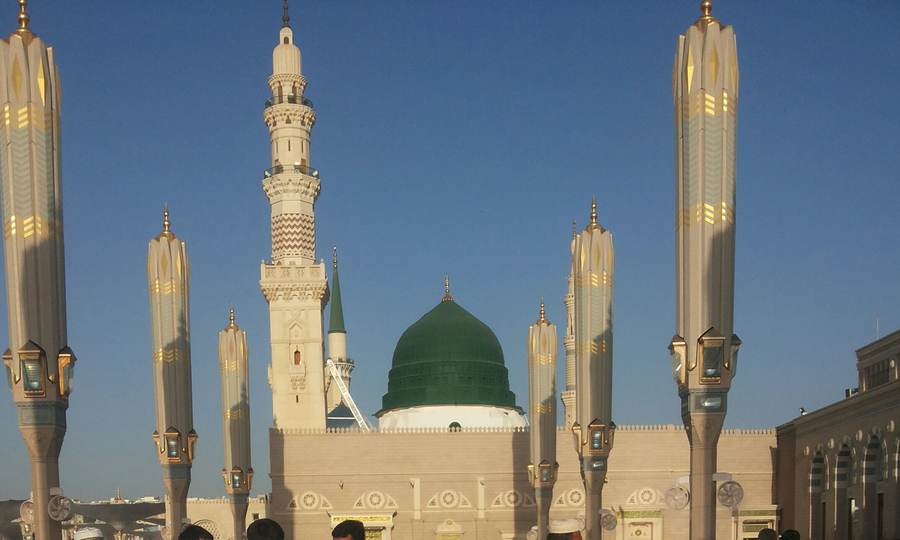
MEDINA, Saudi Arabia — A Houthi Medina drone attack struck a power distribution station serving the Prophet's Mosque, the Saudi-led coalition said Thursday, escalating a renewed war with Yemen's Houthis into one of Islam's holiest cities. The coalition said the drone hit the Taibah electricity distribution station at 5:11 a.m. local time Tuesday, September 29, taking one transformer out of service without disrupting the wider grid. A Houthi military source quoted by the Houthi-run Saba news agency denied responsibility and called the accusation a “lie.”
The coalition said an investigation, an operational review and examination of the drone wreckage established Houthi involvement in planning and carrying out the strike. That is an official Saudi-led coalition assertion, not an independent finding. No publicly released forensic report reviewed by Signal Post News identifies the launch point, flight path or technical markers tying the aircraft to a particular unit. The wreckage claim is the only available evidence offered for attribution.
Coalition spokesman Maj. Gen. Turki al-Maliki said the station supplies electricity to the Prophet's Mosque and described the incident as “a continuation of this extremist militia's attempts to target the Two Holy Mosques.” The coalition said it would keep taking measures to protect the holy sites and pilgrims. The Houthis' denial is equally central to the account: their source said Riyadh was trying to cover what he called Saudi Arabia's failure to substantiate an earlier accusation that the movement targeted Mecca.
Why this matters
A Prophet's Mosque drone attack claim changes the escalation ladder
Medina is not an ordinary strategic location. It is home to the Prophet's Mosque and the burial place of the Prophet Muhammad, giving any alleged strike linked to the city religious and political weight across a Muslim population of roughly 1.9 billion. Attacks on Islam's holy cities are extraordinarily rare. Even when physical damage is limited, the claim that a weapon reached infrastructure serving the mosque can transform a military episode into a wider question of religious security.
That is why the strike matters despite the narrow technical damage. One transformer was taken offline and the broader network continued operating, according to the coalition. There was no reported interruption at the mosque. Tactically, that points to resilience and limited immediate effect. Strategically, however, a drone reaching the Taibah electricity station Medina network exposes a route, a defensive gap or both. It may force Saudi authorities to treat substations, transmission links and other civilian systems around the holy sites as part of the protected perimeter.
The accusation also touches the Saudi state's claim to guardianship of the Two Holy Mosques. Riyadh's response therefore cannot be judged only by the number of damaged transformers. It must reassure pilgrims, deter another attempt and avoid turning a contested attribution into an uncontrolled religious confrontation. The coalition's language about attempts to “provoke Muslims worldwide” shows that it is framing the incident as both a security breach and an attack on a sacred responsibility.
What the evidence establishes — and what it does not
Saudi coalition Houthi drone strike attribution rests on its own investigation
Wreckage can be probative. Airframe components, navigation hardware, explosive residue, manufacturing marks and data recovered from electronics can help investigators identify a drone family or link it to previously documented attacks. An operational review can compare radar tracks, launch signatures and debris fields. But none of those methods automatically establishes who ordered, launched or programmed the aircraft.
The coalition has not publicly provided enough underlying material for independent experts to reproduce its conclusion. Its statement may be accurate, but the evidentiary posture remains one-sided: Saudi-led authorities control the site, the debris and the announced finding. Responsible analysis should therefore say the coalition attributes the attack to the Houthis, not that Houthi responsibility has been independently verified.
The Houthi denial does not itself disprove the allegation. The movement did not publish a technical account explaining the wreckage, identify another actor or provide evidence that the drone came from elsewhere. Its argument is political: it says Riyadh is using Medina to reinforce an earlier, disputed claim about Mecca. With both sides using sacred geography to strengthen their narratives, the absence of transparent forensic evidence leaves a dangerous information gap.
How the Saudi Houthi war escalation reached Medina
The 2022 truce restrained cross-border fire without ending the war
A U.N.-brokered truce in 2022 largely halted cross-border attacks between Saudi Arabia and the Iran-aligned Houthis. It lowered the temperature but did not produce a comprehensive political settlement. The Houthis retained control of Sanaa and much of Yemen's Red Sea coast, while the internationally recognized government remained backed by Riyadh. The military balance froze more than it resolved.
That restraint broke down sharply in 2026. The Houthis declared a naval blockade on Saudi Arabia in July and began attacking Saudi territory and shipping, while their forces made major territorial gains along Yemen's Red Sea coast. Saudi Arabia answered with airstrikes and support for Yemeni government forces. Reuters described the current cycle as the most serious fighting between Riyadh and the Houthis since the 2022 truce.
The geographic stakes extend beyond the Saudi-Yemeni border. The Red Sea and the Bab el-Mandeb connect Asian and Gulf trade to the Suez Canal. A campaign that mixes territorial advances, drone strikes and maritime pressure can raise shipping risk far outside Yemen. The Medina allegation adds another layer: Saudi defenses must now account not only for ports, oil infrastructure and border cities, but also for a globally significant religious center.
The Houthi Mecca drone attempt was already disputed
Two weeks before the Medina announcement, Saudi Arabia said it intercepted and destroyed a Houthi drone south of Mecca before it entered restricted airspace. The coalition called that the second Houthi attempt to target Mecca since 2017. The Houthis denied targeting Mecca or any other Islamic holy site.
That earlier dispute shapes every interpretation of the new allegation. Saudi officials see a pattern involving the Two Holy Mosques. Houthi officials see a sequence of unproven charges designed to isolate the movement across the Muslim world. The competing narratives raise the political cost of compromise: Saudi Arabia risks appearing passive if it does not respond, while the Houthis risk broad religious condemnation if the coalition's attribution gains independent support.
Competing claims after Medina
Houthis deny Medina attack and report Saudi strikes on Sanaa
Hours after the coalition's accusation, Houthi authorities reported Saudi strikes on Sanaa and other parts of Yemen. Saudi Arabia did not immediately confirm those reports. A spokesperson for forces aligned with Yemen's internationally recognized government said coalition forces had attacked “high-value targets” in Sanaa but offered no details. Signal Post News found no independent confirmation of the reported strikes or their targets by the reporting cutoff.
The timing matters even without a confirmed target list. If the Sanaa reports are accurate, they would suggest retaliation or an acceleration already in motion. If they are not, the claim may still shape public expectations and justify further Houthi action. In either case, the cycle of accusation, denial and counter-claim compresses decision time and increases the chance that one side acts on incomplete information.
The Iran dimension is real but does not settle attribution
The Houthis are aligned with Iran, and Yemen's internationally recognized government accused Tehran of arming and financing the group. That relationship is strategically important: Iranian technology, support networks and regional coordination can expand the movement's reach. It does not prove Iran directed this specific incident, nor does it substitute for evidence about the drone that hit Taibah.
For Riyadh, the Iran connection makes the attack part of a regional deterrence problem rather than a local infrastructure case. For Tehran, any escalation in Yemen can create pressure on Saudi Arabia and Red Sea shipping without a direct Iranian-Saudi clash. The risk is that attribution hardens at the alliance level before the public evidence catches up.
Yemen Taiz fighting October 2026 opens another front
Government forces claim six airstrikes and 468 operations
The Yemeni army said its warplanes carried out six airstrikes on Houthi positions in the Al-Akboush area and Hayfan district of Taiz province. It also reported fierce fighting in Bani Bakari in Jabal Habashi district, Himyar in Maqbanah district and the Al-Aqroud front southeast of the province.
On Wednesday, the army said it had carried out 468 operations across three fronts and claimed that “hundreds” of Houthi fighters were killed or injured. Those casualty and operation figures have not been independently verified. The Houthis did not immediately comment on the army's claims. They should be read as statements by one belligerent, not neutral battlefield totals.
The Taiz fighting shows why Medina cannot be isolated from the war's ground campaign. Saudi-backed government forces are pressing Houthi positions while the coalition reports cross-border attacks. Gains or losses in Yemen can change each side's incentive to escalate elsewhere: a force under pressure on land may use drones or missiles to widen the cost, while a coalition seeking momentum may intensify air support.
Muslim-world condemnation raises the political stakes
Turkey's foreign ministry condemned the alleged attack and voiced support for Saudi Arabia. Yemen's internationally recognized government also condemned it, explicitly linking the strike to civilian infrastructure serving the Prophet's Mosque and accusing Iran of enabling Houthi operations. Several other Muslim countries issued condemnations, according to reports reviewed for this article.
These reactions support Riyadh's effort to internationalize the issue, but they do not independently validate attribution. Governments often respond to a partner's official account before forensic material is public. The distinction matters: condemnation of an alleged attack on civilian and religious infrastructure can be categorical even while the identity of the perpetrator remains contested.
What happens next
Retaliation, tighter holy-site defenses and Red Sea spillover
The most likely near-term Saudi response is a combination of military pressure and visible protection measures. Airstrikes against drone storage, command sites or launch infrastructure in Yemen are plausible, especially if the reported Sanaa strikes are confirmed. Around Medina and Mecca, authorities can be expected to review radar coverage, electronic warfare, point defenses and backup power for systems serving the mosques and pilgrim routes.
A second scenario is a widening contest over shipping. The Houthis' July blockade declaration and attacks on Saudi-linked traffic place the Red Sea and Bab el-Mandeb at the center of escalation. Retaliation in Yemen could trigger more attempts against vessels, ports or coastal infrastructure. That would draw in insurers, commercial carriers and potentially outside navies even if neither Riyadh nor the Houthis seeks a broader regional war.
A third scenario is calibrated restraint. Saudi Arabia may release more wreckage evidence, seek a joint condemnation and use the Medina allegation to increase diplomatic pressure before launching a major campaign. The Houthis may maintain their denial while limiting attacks near holy cities to avoid a backlash that cuts across political alignments. That path would not end the war, but it could prevent sacred sites from becoming a new operational category.
Four indicators will show which direction the crisis takes: whether the coalition publishes independently reviewable forensic evidence; whether Saudi authorities confirm the reported Sanaa strikes; whether additional drones approach Medina or Mecca; and whether attacks on shipping increase near Bab el-Mandeb. The immediate grid impact was small. The strategic impact will depend on whether the September 29 strike remains an isolated, disputed incident or becomes the first step in a new phase of the Saudi-Houthi war.
Sources and reporting notes
- Reuters, October 1, 2026 — the coalition allegation, grid impact, disputed Mecca precedent and escalation since the 2022 truce.
- The News International, October 2, 2026 — Reuters pickup carrying the Houthi denial and reports of strikes on Sanaa.
- BusinessWorld, October 2, 2026 — the competing Saudi and Houthi accounts and the Yemeni government forces' statement.
- Sheba Intelligence, October 1, 2026 — Turki al-Maliki's 5:11 a.m. timeline, Taibah station damage and holy-site protection pledge.
- Cumhuriyet Daily, October 1, 2026 — Yemeni army claims about six Taiz airstrikes, 468 operations and fighting locations.
- Yemen Ministry of Foreign Affairs and Expatriates, October 2, 2026 — the internationally recognized government's condemnation and allegations against Iran.
Reporting cutoff: October 1, 2026 at 7:55 p.m. PDT. Attribution for the Medina strike rests on the Saudi-led coalition's examination of drone wreckage; no independently reviewable forensic report was public at the cutoff. The Houthis deny responsibility. Reports of strikes on Sanaa and Yemeni army casualty claims in Taiz were not independently confirmed.