Pressure by Satellite: Inside the White House Order to Slow Ukraine's Starshield
Track it live: Ukraine war map — live front-line and strike tracker.

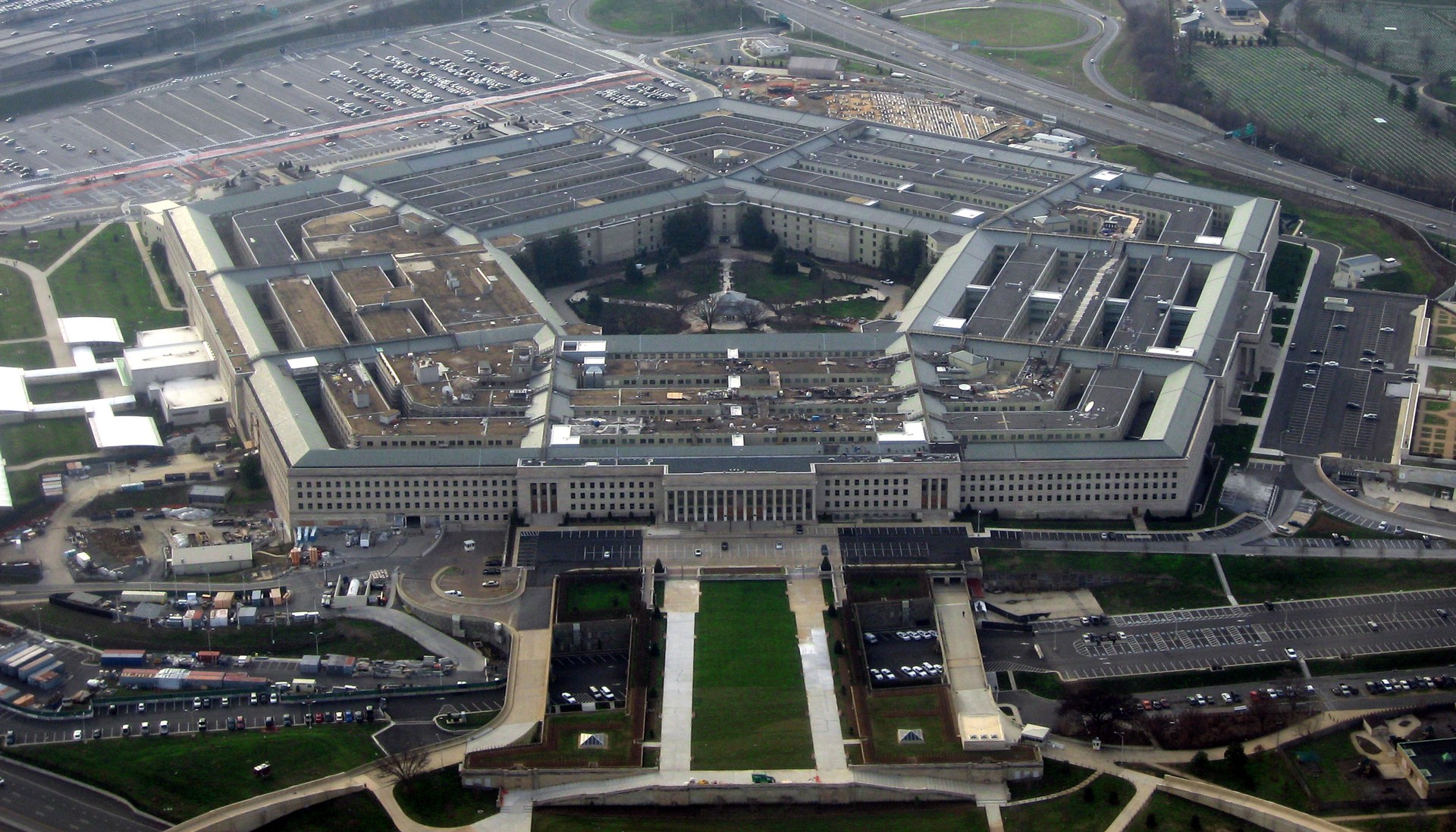
WASHINGTON, October 15, 2026 — There was no announcement, no executive order and no press release. According to Reuters, the instruction travelled the way consequential instructions in Washington often do: as a message. Two U.S. officials and one Western official briefed on the matter told the news agency that leaders at the Defense Department received word that SpaceX's Starshield service for the Ukrainian military needed to be slowed. The officials, who spoke on condition of anonymity, did not specify who inside the White House made the decision or who was responsible for implementing it. The Pentagon is Starshield's biggest customer, which gave the message a short and quiet path from a political decision to a military effect: the service Ukraine depends on is bought by the very department that was told to slow it.
What Ukraine's operators felt on the ground
Starshield is the military-grade sibling of Starlink, SpaceX's satellite internet constellation, hardened and sold to governments. In Ukraine it has become part of the nervous system of the war: it carries battlefield communications and the data links that Ukrainian drones use for onboard guidance over Ukrainian territory. Ukrainian officials said this week that military-grade Starlink receptors had stopped working when mounted on fast-moving objects, interfering with the performance of drones that rely on them. A person in Ukraine's Defence Ministry said on Thursday that the receptors were now working while in motion — but only at speeds of up to 100 miles per hour (160 kph), a ceiling that matters most for exactly the fast, low-flying attack drones the link is meant to serve.
The speed cap itself was visible before its origin was. Signal Post News covered the limit when it first surfaced in Ukrainian reporting — the terminals' behaviour, the 160 kph figure and the drone units affected — in our report on the Starlink speed limit over Ukraine. What Reuters adds is the missing half of the story: not that the throttle existed, but whose hand was on it. According to its sources, the instruction originated inside the White House and reached the Pentagon as a direction to slow the service — a decision taken in Washington and felt, within days, on Ukrainian launch rails.

A squeeze inside a pressure campaign
The restriction did not arrive in a vacuum. President Trump has spent recent weeks pressuring Kyiv to halt its attacks on Russian refineries, which he has blamed for the soaring energy prices that are denting his Republican Party's prospects in the November midterm elections. Washington announced an energy ceasefire on Sunday, assembled around a deal to import Russian diesel, and demanded Ukraine hold its fire on Russian oil infrastructure while Russian strikes on Ukrainian energy targets continued. On Thursday, President Volodymyr Zelenskyy declared the arrangement finished — "the block is out; we're done," he told the Financial Times — and Ukrainian drones hit the Rosneft refinery at Ryazan within hours, a strike Signal Post News covered as the energy truce collapsed. Read against that timeline, the Starshield message looks less like a technical adjustment than like leverage: a capability Kyiv needs, throttled at the moment Kyiv was refusing to comply.
The administration's public rationale for the pressure is itself contested. Energy experts say the surge in prices is mainly the result of the U.S.-Israeli war with Iran, which brought Iranian attacks on energy facilities and has largely shut the vital Strait of Hormuz — the chokepoint through which a fifth of the world's oil normally moves. On that account, Ukrainian strikes on Russian refineries are, at most, a secondary factor in the prices American voters are angry about. The White House position, expressed through the president's own statements, is that the refinery campaign is a driver of the spike and an obstacle to the settlement he wants. Both claims are now on the record; the Starshield order suggests the argument was not being conducted in public alone.
The denial — and its careful shape
Asked about the order, a senior U.S. official told Reuters: "No such request was ever made by the president." The White House did not respond to questions about whether other administration officials might have made the request. The distinction matters. Reuters' sources did not say the president personally issued the instruction; they said it came from inside the White House. A denial that covers the president personally, paired with silence on everyone else in the building, neither confirms nor refutes the officials' account — it answers a narrower question than the one the reporting raises. That is not proof the account is true; anonymous sourcing deserves the caution this report gives it. But the structure of the response — deny for the principal, decline for the institution — is the shape Washington answers take when a story is inconvenient rather than invented.
Why this matters
Modern war runs on commercial infrastructure, and this episode exposes what that means in practice. A satellite link provided by a private company, purchased by the Pentagon and used by an allied army can be degraded by a message — no sanctions package, no congressional vote, no public accounting. For Kyiv, the arithmetic is immediate: drones are its principal means of striking back at a larger adversary, and a guidance link that fails above 100 mph is a weapon system with a governor on it. For Moscow, anything that blunts Ukrainian drones is a battlefield gain delivered without a shot. For Washington, the episode sets a precedent allies will note: capabilities supplied through American commercial networks come with an American hand on the dial, and that hand can move for reasons — midterm gasoline prices — that have nothing to do with the battlefield they govern. And for SpaceX, the reporting places a private firm at the center of a statecraft it did not announce and cannot explain, the recurring dilemma of a company whose product has become strategic terrain.
The Starshield squeeze also does not stand alone. The same week brought CNN's report that Ukraine has run out of Patriot interceptor missiles, the one system able to reliably stop Russian ballistic missiles. Two different enablers — satellite guidance and high-end air defense — tightening around Kyiv at the same moment, one by reported instruction and one by exhaustion, is the context in which Zelenskyy's defiance at Ryazan should be read: Ukraine is being pressed by a patron whose support it cannot replace, over a campaign — refinery strikes — that Kyiv regards as its most effective economic weapon.
What happens next
Three questions now hang over the story. The first is mechanical: does the 100 mph ceiling stay, tighten or quietly lift, and will the Pentagon or SpaceX ever describe it on the record? The second is political: Zelenskyy has chosen open defiance on refinery strikes, and every further Ukrainian strike on Russian oil infrastructure is now also a test of how much pressure Washington is willing to apply to stop it — and through which dial. The third is electoral: the midterms that frame the White House's energy anxiety are weeks away, and if prices stay high, the incentive to squeeze Kyiv harder grows with them. What began as an anonymous message to the Pentagon may end as the defining transaction of this phase of the war: satellite time and interceptor missiles, traded against oil prices and an election.
Sources: Reuters, October 15, 2026; Financial Times (Zelenskyy interview), October 15, 2026.