Philadelphia airport measles exposure
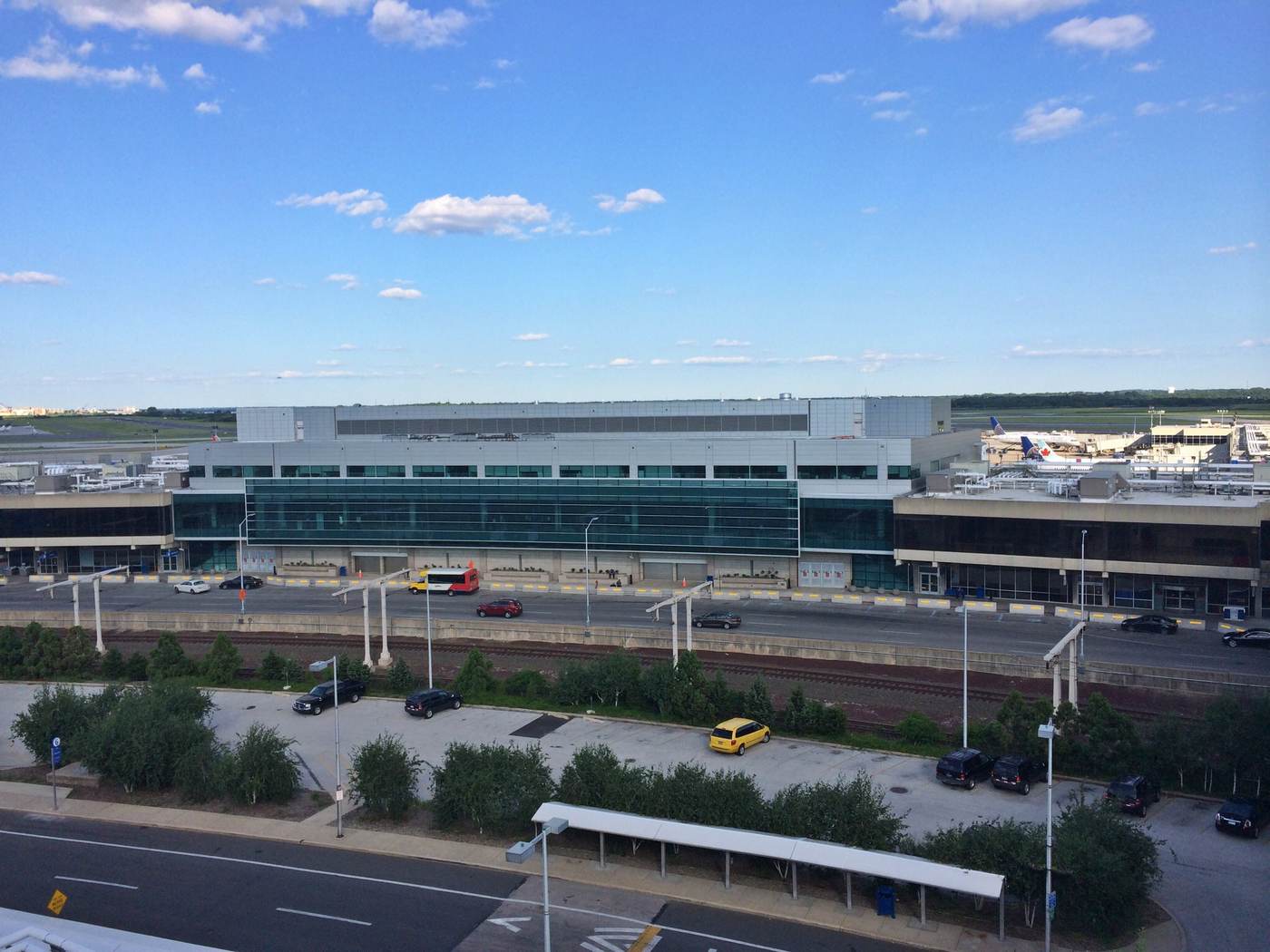
A person with measles passed through Philadelphia International Airport on Sunday, September 13, moving through Terminals B and F and the connector areas serving Terminals C, D, and E from the evening (beginning approximately 7:25–7:45 p.m., per health department advisories) until 12:05 a.m. Monday. The Philadelphia Department of Public Health announced the possible Philadelphia airport measles exposure and urged anyone who was in those areas during that window to verify their measles immunity and watch for symptoms. The traveler never left the airport — but measles does not need a boarding pass. It needs air.
What happened — the facts
The verified public-health alert is tightly drawn. A contagious traveler was in Terminals B and F and the connector areas serving C, D and E during the stated evening window, then continued onward without leaving the airport. An exposure notice does not mean every passenger was infected; it means people who shared that airspace may need to act before an illness is obvious.
Officials told potentially exposed travelers to check their vaccination records or other evidence of immunity. Anyone who is unvaccinated or unsure, as well as infants, pregnant people who are not immune, and people with weakened immune systems, should contact a healthcare provider as soon as possible rather than wait for symptoms.
Health Commissioner Dr. Palak Raval-Nelson put the warning plainly:
“This week's measles exposures are a reminder of how important it is for all of us to be up to date on our vaccinations.”
“Every Philadelphian who is fully vaccinated has little to fear from the situation at CHOP and the airport. Even more importantly, every one of those people is doing their part to help protect our most vulnerable from measles.”
The second exposure in a week — and it hit a NICU
The airport case was separate from an unrelated exposure at Children's Hospital of Philadelphia on September 11. The city's advisory identified NICU West, the NICU West Family Lounge and the main atrium from 9:30 a.m. to 4:15 p.m., along with the main cafeteria from 12:05 p.m. to 2:45 p.m.
That setting sharpens the stakes. City and state officials worked with CHOP to make sure potentially exposed infants received a preventive antibody product. Newborns may be too young for routine vaccination; other patients cannot rely on vaccination because of pregnancy or immune suppression. For them, the community's immunity is not an abstraction. It is part of the hospital's protective equipment.
Why this matters — measles was eliminated in America. Then we let it back in
The United States declared measles eliminated in 2000, meaning the virus was no longer spreading continuously inside the country. The medical tool that made that achievement possible still works: two doses of the MMR vaccine are about 97% effective.
What changed was coverage. Measles is considered the most contagious virus known; one sick person can infect roughly 12 to 18 unvaccinated people, and infectious particles can remain in the air for up to two hours. Airports amplify that advantage by mixing strangers from many places and dispersing them again before contact tracers can reach them.
The failure, then, is not medicine but reach. Only 92.4% of kindergartners received MMR in the 2025–26 school year, down from 95.2% before the pandemic. Because measles herd immunity generally requires coverage around 95%, a few percentage points are the difference between an imported case that ends quietly and one that finds a chain of susceptible hosts. The same race between prevention and exposure shapes the Ebola vaccine trial in the Democratic Republic of Congo.
The numbers behind the 2026 surge
By mid-September, Pennsylvania had recorded 792 measles cases, 155 hospitalizations and four deaths in 2026. Nationally, the CDC counted more than 3,000 cases and outbreaks in 45 states and the District of Columbia, already surpassing the previous year's total.
The comparison with the recent past is brutal: the United States recorded 58 cases in all of 2020 and 121 in 2021. Pandemic travel restrictions influenced those unusually low years, but the contrast still shows the scale of the rebound. Thousands of cases do not make every exposure catastrophic; they do make every airport warning part of a national pattern rather than an isolated scare.
Who wins, who loses, what the critics say
Nobody wins a measles exposure. Public-health officials see vaccination as the fastest way to protect both the individual and the community. Vaccine skeptics argue that agencies understate adverse events, overstate certainty or use warnings to pressure families. Those concerns should be answered with transparent evidence, not slogans — but they do not change the central numbers.
Breakthrough infections are rare but real. That is precisely why coverage near 95% matters: population immunity adds a second barrier around people for whom the first barrier may fail or cannot be used. The heaviest losses fall on infants, pregnant people without immunity and the immunocompromised. Travelers also lose something less measurable but still important: trust that a shared terminal is merely inconvenient, not medically consequential.
That obligation to protect vulnerable people before a preventable threat reaches them also informs our reporting on the sprout outbreak and recall and on King Charles's health.
What to do if you were at PHL on September 13
First, check immunity. For most travelers, that means documentation of two MMR doses or a documented prior measles infection. If you were exposed and are unvaccinated, uncertain about your status, an infant, pregnant without immunity, or immunocompromised, contact a healthcare provider as soon as possible. Post-exposure antibody treatment can help some high-risk patients when given quickly, and a clinician can determine which intervention fits.
Monitor for symptoms through early October: fever, runny nose, cough, red or watery eyes, followed by a rash. If symptoms appear, call ahead before entering any clinic, emergency department or other medical facility. That warning gives staff time to isolate the patient and protect other people in the waiting room.
What happens next
The likeliest scenario is the reassuring one: high local vaccination coverage contains both Philadelphia exposures, and investigators find few or no secondary cases. The more dangerous scenario is that one or more unvaccinated contacts become infected, travel while contagious and seed new clusters during the fall travel season.
The policy question will remain even if both alerts end quietly. National kindergarten MMR coverage is below the threshold normally associated with herd immunity, and 2026's 3,000-plus cases are a warning, not a ceiling. America still knows how to stop measles. The question is whether it will keep enough people protected to do so.
Sources
- Fox News: “World's most contagious virus” hits major U.S. airport
- New York Post: Philadelphia International Airport measles exposure alert
- Philadelphia Department of Public Health: airport exposure advisory
- Philadelphia Department of Public Health: CHOP exposure advisory
- CDC: 2026 measles cases and outbreaks
- CDC: MMR recommendations and effectiveness
Reporting basis: Fixed September 23, 2026 snapshot. Exposure details, guidance, case counts and quotations are attributed to the linked reports and official advisories; analysis is Signal Post News's.