Ukraine strikes Russian oil terminal
A large fire at Rostov-on-Don's Yug Rusi terminal during a reported drone attack has exposed the collision between Washington's diesel diplomacy and Kyiv's campaign against Russia's energy system.
Track it live: Follow the latest war developments on the Live Wars Tracker.
Track it live: Watch oil prices and the energy outlook on the Live Oil Price Forecast Tracker.
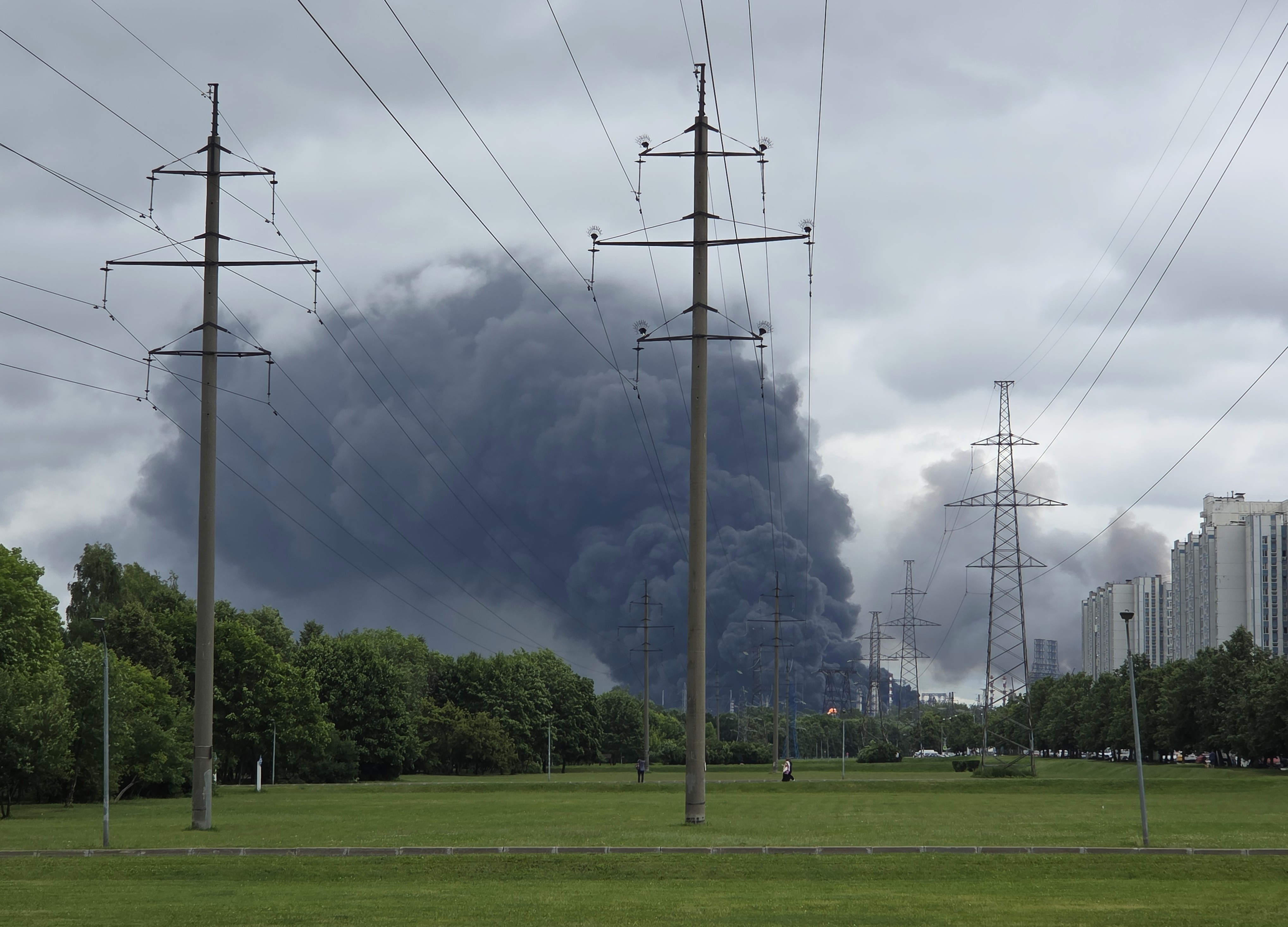
A large fire broke out overnight October 9–10 at the Yug Rusi oil-loading terminal in Rostov-on-Don's Zheleznodorozhny district amid a reported drone attack, according to the Kyiv Independent and an OSINT brief that cited the outlet and Dzerkalo Tyzhnia. Videos shared on Telegram showed high flames and thick smoke, while the monitoring channel Exilenova+ reported that the facility was still burning. The timing was almost designed to force a political confrontation: only hours earlier, President Donald Trump had announced a suspension of U.S. sanctions on Russian diesel through April 7, 2027, and promoted a supply arrangement with Vladimir Putin.
The first obligation is to separate the visible fire from the claims around it. An OSINT analyst working with the independent Russian outlet ASTRA identified the burning complex from resident footage as the Yug Rusi terminal, which handles petroleum products for export, including product from the Novoshakhtinsk Oil Refinery. But the Kyiv Independent said it could not independently verify the footage or determine the extent of damage. Russian regional authorities acknowledged a fire and air-defense activity without confirming that the terminal itself was damaged. Ukrainian military officials had not claimed responsibility at the time of reporting.
That leaves a carefully bounded conclusion: a significant fire occurred at or around a strategically relevant petroleum terminal during intense reported drone activity. The available reporting does not yet prove which munition or interception caused it, how much infrastructure was impaired, or whether operations stopped.
Why this matters
This is where Trump's energy diplomacy runs directly into Ukraine's energy-war doctrine. Washington is trying to add Russian diesel to a stressed market, lower pressure on consumers and create an economic channel that could support wider negotiations. Kyiv is trying to raise the cost of Russia's war by attacking the refining, storage and transport network that turns crude oil into usable fuel and export revenue. One policy requires stable Russian supply; the other gains leverage by making that supply less reliable.
The reported Rostov-on-Don drone attack therefore tests more than a terminal. It tests American leverage over Ukraine. Trump has urged Kyiv to stop striking Russian oil facilities, arguing that the campaign contributes to higher global diesel prices. Yet a senior Ukrainian official told the Financial Times that long-range attacks on Russian energy infrastructure would continue regardless of the new diesel arrangement. If strikes proceed, Washington will have to choose among persuasion, pressure, or acceptance that its partner's military logic diverges from its consumer-price strategy.
There is also a reciprocity dispute at the center of the argument. President Volodymyr Zelenskyy says Ukraine would stop targeting Russian energy facilities only if Moscow stopped attacking Ukrainian energy infrastructure. In Kyiv's framing, a unilateral pause would surrender leverage while leaving Ukraine's grid exposed. In Trump's framing, every damaged refinery or terminal adds risk to diesel supply and the price paid by drivers, farmers and freight operators. Both positions follow a recognizable logic; they simply rank the risks differently.
What is known about the Yug Rusi terminal fire
Rostov-on-Don drone attack: the official account
Rostov Oblast Governor Yuriy Slyusar said Russian forces had engaged more than 50 unmanned aerial vehicles from Friday evening onward. That number is the governor's air-defense claim, not a confirmed count of drones that hit targets. Slyusar also said a railway bridge was damaged, stopping train movement in both directions. ASTRA separately reported damage to a residential building in the Donskaya Sloboda complex. It remains unclear what struck the building amid the combination of drone activity and air-defense operations.
The distinction matters. During mass drone raids, falling debris, interceptions and direct impacts can all produce damage, and early official statements frequently emphasize interceptions before a full ground assessment is available. Nothing in the verified reporting establishes what caused each separate incident in Rostov.
Yug Rusi terminal fire: what the footage can and cannot show
The resident videos described by the Kyiv Independent show flames and smoke, and ASTRA's analyst matched the location to the oil-loading facility. That is useful geolocation, but it is not a damage survey. A dramatic fire can be operationally limited if it is isolated quickly; a smaller-looking strike can disable pumps, rail loading or control systems for weeks. Until satellite imagery, company statements or on-site evidence emerge, the depth of disruption is unknown.
The terminal's role increases the stakes. Dzerkalo Tyzhnia described throughput of about 2.5 million tonnes of petroleum products a year. The refinery's published specifications put the Rostov-on-Don terminal at 3.5 million metric tons in annual receiving and shipping capacity. Those figures are not necessarily contradictory: one can describe actual annual throughput while the other describes maximum designed handling capacity. Both point to a facility large enough to matter, but neither tells us how much volume is lost tonight.
How we got here: Ukraine drone strikes Russian refineries
Ukraine's pressure campaign has unfolded over months rather than in a single spectacular attack. Refineries, depots and loading terminals form a chain: crude must be processed, products stored, and diesel moved by rail, river or sea before it earns export revenue or supplies military logistics. Hitting different links creates a cumulative problem even when no one strike is decisive.
The nearby Novoshakhtinsk refinery has already been part of that campaign. Ukraine's General Staff confirmed a September 25 strike on the facility itself, as Signal Post News reported in its analysis of the Novoshakhtinsk refinery suspension. The Yug Rusi terminal handles petroleum products that include shipments from the refinery, making the latest reported attack less an isolated event than a possible follow-on pressure point in the same supply network.
Russia has banned its own diesel exports since July amid refinery damage. That policy makes every additional disruption harder to interpret politically: the Kremlin wants to protect domestic availability, while Washington now wants more Russian supply in international channels. A terminal fire does not automatically change national output, but repeated interruptions raise insurance, routing and reliability costs across the system.
The war's civilian toll continued on the same night. Russian guided bombs hit Zaporizhzhia, killing four people, including a child, and wounding 11, according to Suspilne as cited in the OSINT brief. That single line of context is essential: the energy contest is unfolding inside a wider war in which attacks are still killing civilians.

Who benefits, who loses — and what critics say
Trump Putin diesel deal: the consumer case
Trump's announced terms call for more than 300,000 tonnes of Russian diesel immediately, 500,000 tonnes in November, 1 million tonnes thereafter, and potentially another 3 million tonnes. Supporters can argue that the arrangement attacks the most politically sensitive part of an energy shock: the price households see and the freight sector passes through to nearly every product. With U.S. midterm politics approaching, a visible decline in diesel costs would be an economic and electoral win for the White House.
Russia benefits from restored market access and the political symbolism of sanctions relief. Putin can present the deal as evidence that energy necessity is reopening a door Washington had closed. Traders and fuel importers benefit if promised volumes arrive predictably.
Zelenskyy's reciprocal energy ceasefire argument
Ukraine risks losing leverage if it stops while Russian attacks continue. Zelenskyy's criticism of the arrangement is developed in Signal Post News's report on his claim that the sanctions suspension was a gift to Putin. Kyiv's position is not that energy infrastructure should be permanently exempt under all conditions; it is that restraint must operate in both directions.
Critics of Kyiv's refinery campaign say damage to Russian fuel infrastructure can tighten global supply, lift prices and complicate allied politics without necessarily changing battlefield outcomes. Critics of Trump's deal answer that purchasing or facilitating Russian diesel can soften the cost of sanctions and reduce Moscow's incentive to compromise. The disagreement is ultimately about sequencing: should energy stability create room for diplomacy, or should energy pressure remain in place until diplomacy produces reciprocal restraint?
Who loses if the strategies collide
American consumers lose if the promised supply is delayed and diesel prices remain elevated. Ukraine loses if Washington conditions broader support on ending the strike campaign without securing protection for its own grid. Russia loses if terminal and refinery disruptions prevent it from converting diplomatic relief into actual exports. European partners lose if competing American and Ukrainian strategies fracture the coalition at the moment winter makes energy security most sensitive.

The numbers: 300,000 tonnes against a 2.5 million-tonne terminal
Start with the immediate figure in Trump's announcement: more than 300,000 tonnes. Set that against Dzerkalo Tyzhnia's estimate of roughly 2.5 million tonnes of annual petroleum-product throughput at the Yug Rusi terminal. Dividing one by the other puts the immediate American tranche at about 12% of that annual throughput figure. Put differently, 300,000 tonnes is roughly six weeks of terminal volume if 2.5 million tonnes moved evenly through the year.
That comparison is scale, not a forecast. The U.S. diesel could come through different facilities, and the fire may have damaged only part of Yug Rusi's operation. The terminal's published 3.5 million-tonne receiving and shipping capacity would make 300,000 tonnes about 8.6% of maximum annual capacity. Neither ratio proves the deal is threatened. Both show why even temporary uncertainty at a hub of this size attracts attention when Russia is already operating under its own diesel export ban.
The larger promised quantities change the equation. Five hundred thousand tonnes in November is one-fifth of the reported 2.5 million-tonne annual throughput. One million tonnes is two-fifths. The possible additional 3 million tonnes exceeds that throughput estimate and approaches the facility's entire published annual capacity. Again, those volumes are not all assigned to Rostov. The useful inference is broader: Trump's headline numbers require a resilient Russian network, not merely one functioning refinery or one intact terminal.
What happens next
Scenario one: strikes continue
The clearest signal comes from the senior Ukrainian official quoted by the Financial Times: long-range attacks on Russian energy infrastructure will continue regardless of the agreement. If that position holds, expect more attempts against refineries, depots and transfer points, with Russia expanding air defenses around energy assets and Washington increasing pressure on Kyiv behind closed doors.
Scenario two: the diesel deal frays
The arrangement may survive politically but underdeliver physically. Russia can promise volume; damaged refining and logistics determine whether it ships. If fires, maintenance outages and export restrictions keep product at home, the White House may have to explain why sanctions relief did not produce cheaper diesel. The existing Trump-Putin diesel deal analysis sets out the terms and the immediate backlash.
Scenario three: Miami talks are overshadowed
Diplomatic talks in Miami are supposed to search for a wider path out of the war. The Rostov fire threatens to drag the conversation back to enforcement and reciprocity: who stops first, what counts as an energy target, and what happens after an alleged violation. A limited energy understanding could become a building block for negotiations, but only if both Russia and Ukraine believe the other side is bound by comparable rules.
Scenario four: uncertainty becomes the policy
The least dramatic scenario may be the most likely. The terminal keeps operating at reduced or undisclosed capacity; Ukraine neither claims nor denies involvement; Russia reports interceptions without publishing a detailed damage assessment; and Washington continues the diesel initiative while trying to prevent another strike from derailing it. In that world, traders react to fragments, governments preserve deniability, and civilians absorb the consequences of a war that remains larger than any single fuel deal.
The decisive evidence will be practical: satellite imagery, railway restoration, company operating notices, export-flow data and any statement from Ukraine's military. Until those arrive, the headline is a collision of strategy, not proof that one side has prevailed. A terminal burned while diplomacy promised fuel. What comes next depends on whether the fire was a disruption, a warning, or the start of a sustained campaign against the supply chain Trump's deal needs.
Sources
- OSNT brief — October 10, 2026 reporting on Rostov and Zaporizhzhia
- Kyiv Independent report syndicated by NewsBeep — Yug Rusi terminal fire
Reporting note: The footage and damage assessment were not independently verified by the Kyiv Independent at publication. Russian authorities did not confirm damage to the terminal, and Ukrainian military officials had not claimed responsibility. The 50-plus UAV figure is Governor Yuriy Slyusar's air-defense claim, not a confirmed number of strikes.