Aramco headquarters missile strike: an administrative building at Saudi Aramco's headquarters complex in Dhahran was hit late on Tuesday, October 13, hours after the Saudi-led coalition struck a fuel depot in Sanaa — the latest exchange in a week of escalating attacks.
A Missile Reached Aramco's Headquarters in Dhahran — and Riyadh Was Hurt by Falling Debris
Track it live: Middle East tracker · Live war tracker
The Dhahran complex is not a refinery or an export terminal. It is the corporate seat of the world's largest oil company and houses a major operations centre overseeing Aramco's network of onshore and offshore rigs, pipelines, refineries and export terminals — which is why a hit there, even one that killed nobody, lands differently from the airport and infrastructure strikes of the past week. Aramco employees were told to work from home on Wednesday, a source told Reuters.
What exactly struck the building is still disputed. The Energy Ministry confirmed the building was attacked and that a limited fire followed, without saying what hit it. The Reuters company source described a direct ballistic-missile hit on an office tower. The Saudi-led coalition, for its part, said it had intercepted and destroyed a missile over Dhahran and that fragments fell in a residential area. Those accounts — a direct hit, or damage from an interception — had not been reconciled in any statement published by Wednesday morning local time, and this article does not pretend otherwise.
What happened on Tuesday night
Six sources told Reuters they heard loud booms near the Aramco headquarters on Tuesday evening; the complex had been evacuated, and one source reported smoke coming from it. Civil defence in Riyadh issued an alert of potential danger in the capital, and a loud boom was heard there afterwards.
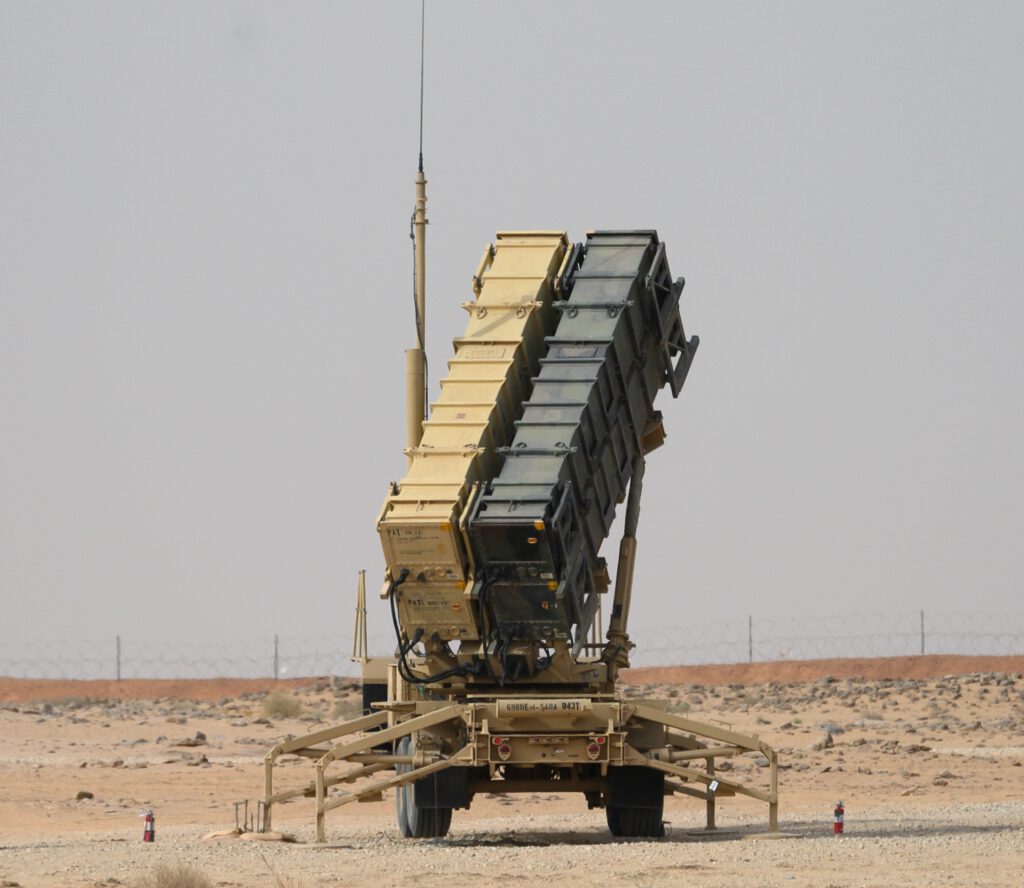
The coalition said it intercepted and destroyed three cruise missiles and two drones aimed at the Riyadh region and Saudi Arabia's south. Saudi civil defence said fragments from two intercepted missiles fell in Riyadh, injuring four people — two women, a man and a child — and causing limited damage to 15 homes. No injuries were reported in Dhahran itself.
The attacks came hours after the other half of the exchange. On Tuesday, the Saudi-led coalition struck the Yemen Petroleum Company's al-Sabaha central station, a fuel facility on the outskirts of the Houthi-controlled capital, Sanaa, along with other sites the coalition said were in Sanaa, Hodeidah and Dhamar. Coalition spokesman Maj. Gen. Turki al-Maliki said the operation was aimed at neutralising the Houthis' ability to threaten Saudi Arabia, Yemen and Red Sea shipping, and said the sites were used to supply the group's missile and drone arsenal. The coalition said it had warned civilians to leave the area beforehand — a warning Signal Post News covered earlier on Tuesday, when the Houthis answered it by naming Aramco's Dhahran headquarters among possible targets.
The Houthi side says the Sanaa strike killed two civilians and injured two. The Houthi-run Yemen Petroleum Company said the al-Sabaha facility held no petroleum stocks, and that striking it would not affect fuel reserves or supplies. Houthi military spokesman Yahya Saree had threatened a harsh response to any strike on Sanaa and renewed warnings to oil workers to stay away from sites that could be targeted. The Houthis had not, in the reports checked, issued a detailed claim for the Dhahran hit itself by the time of publication.
Why this matters
Until Tuesday night, this round of fighting had a recognisable target list: airports, air defences, fuel sites, shipping. A headquarters building is a different category. It is not where oil is produced, pumped or loaded — by every account, Saudi production and export operations were not the thing damaged on Tuesday — but it is where the company that runs all of that is directed from. Striking it tests a proposition both sides have so far left alone: that the corporate and administrative core of the Saudi state oil company sits outside the war.
There is a second, quieter significance in the Riyadh numbers. The four injured people in the capital were not hurt by a missile that got through. They were hurt, on the authorities' own account, by pieces of missiles that were stopped — over a city of millions, at night, alongside damage to 15 homes. Air defence over dense cities does not eliminate risk; it converts a small number of large impacts into a scatter of smaller ones. Tuesday night in Riyadh is the clearest illustration yet in this round of fighting, and it is the arithmetic Saudi civil defence will face on every future night of interceptions over the capital.
How the week reached Dhahran
Yemen's war reignited this summer after years of relative calm, and the past week has been its sharpest escalation. The Houthis have fired ballistic missiles and drones at Saudi airports and infrastructure in what they say is retaliation for Saudi backing of Yemen's government forces and for what they describe as a blockade of their territory. A strike on Riyadh's King Khalid International Airport on Saturday killed 13 people, by Saudi and Houthi accounts reported at the time, and the airport has been shut for days. Saudi Arabia's cabinet, chaired by Crown Prince Mohammed bin Salman, said the Houthis would bear the consequences of the attacks. Tuesday's Sanaa operation was presented by the coalition as exactly that consequence — and Tuesday night in Dhahran as the answer to it.
Each side's public logic is now explicitly reciprocal and explicitly about energy. The coalition says it struck a fuel station because the Houthis use such sites to feed missile and drone operations against Saudi Arabia and Red Sea shipping. The Houthis said in advance that a strike on Sanaa would bring a response against Saudi energy targets, and named the Aramco headquarters before it was hit. When both sides announce the category of the next target in advance, escalation stops being accidental: the question becomes whether either side can stop after delivering the blow it promised, or whether the promise of a reply to the reply is already priced in.
Who gains, who pays, and what the numbers say
On the verified numbers, Tuesday night was militarily small and politically large. Zero deaths in Dhahran; four injuries in Riyadh, all from debris; 15 homes damaged; one office tower's top three floors damaged and a fire described by the ministry as limited; two civilians reported killed in Sanaa by the side that controls the city. Set against Saturday's airport toll — 13 dead and more than 300 injured, per the accounts reported then — the Dhahran strike was not the week's bloodiest event. Its weight is in the target, not the toll.
For the Houthis, reaching the headquarters complex of Aramco — after publicly naming it — demonstrates a capability and a willingness that outlast any single night's damage, and it does so without, on current reporting, interrupting Saudi oil output. For Saudi Arabia, the interception claims over three cities and the Sanaa operation support its argument that its defences and its deterrent are both active; the debris injuries and the disputed account of what hit Dhahran cut the other way, and are the parts of Tuesday night its statements handled least specifically. For oil markets and for the Red Sea shipping the coalition invoked, the material fact is the one nobody disputes: no production, pipeline or export facility was reported damaged, and the operations centre's own staff were sent home as a precaution, not because the network it oversees had stopped.
What happens next
Watch three things. First, the forensic account: whether Saudi authorities publish evidence resolving the direct-hit versus interception-debris question in Dhahran, because that answer decides whether Tuesday was a defensive success with collateral damage or a penetration of the kingdom's most protected corporate site. Second, Aramco's own posture: how long headquarters staff stay home, and whether the company says anything publicly at all — its silence on Tuesday night, noted by Reuters, was itself part of the story. Third, the exchange rate of the escalation: the coalition framed Sanaa as neutralising launch capability, so any further Houthi launches in the coming nights will be read in Riyadh as proof the operation failed, and any pause will be claimed as proof it worked. The Houthis, having named their target and hit the complex that houses it, face the mirror-image choice. Signal Post News will update this story as the Dhahran damage account, any Houthi claim, and casualty figures are confirmed. Sources: CNN, October 13, 2026; Reuters, October 13, 2026 (headquarters reporting and the updated strike report syndicated via Devdiscourse and other outlets); Saudi Energy Ministry and Saudi civil defence statements, October 14, 2026 local time. Related coverage: the coalition's Sanaa evacuation warning and the Houthi threat against Aramco; the coalition strikes on Sanaa.