Iran shadow fleet sanctions · US sanctions Iran October 2026
Treasury blacklists 17 vessels it says ferried millions of barrels of Iranian oil and petrochemicals to Asia — the latest volley in an economic war now running alongside the shooting one.
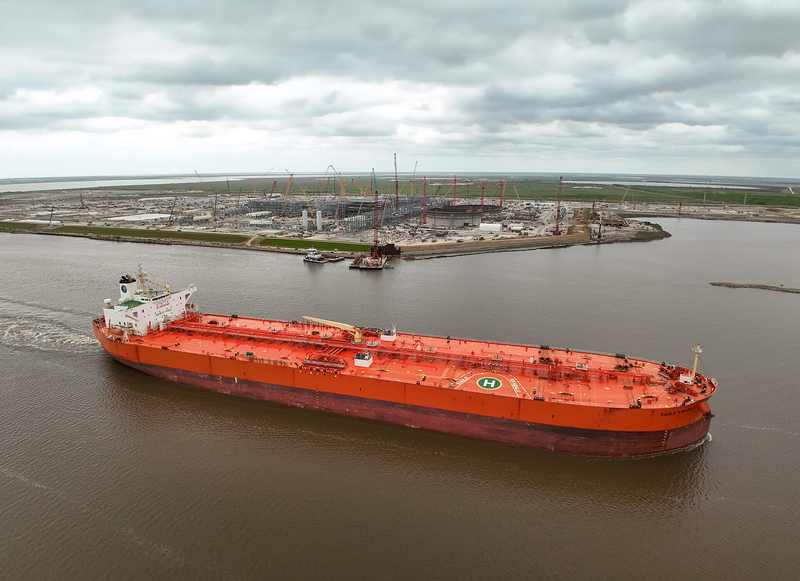
The U.S. Treasury Department announced Thursday that it has imposed Iran shadow fleet sanctions on 17 vessels it alleges are part of a clandestine shipping network Iran used to move oil around the world, circumventing American sanctions to deliver millions of barrels of crude and petrochemicals to buyers across South and East Asia. The designations landed on the same day President Trump posted on Truth Social that the United States "will not be attacking Iran at any time prior to the Midterm Elections" on November 3 — a pairing that tells you exactly where this conflict stands: the shooting may be on hold, but the economic war is accelerating.
Why this matters
Washington is making an explicit bet: that it can squeeze Iran's war chest without dropping another bomb. Treasury's stated target is "any source of the regime's illicit revenue, as well as its sanctions evasion schemes" — language that treats oil logistics as a military supply chain. In a war now in its eighth month, that framing matters. Tankers are being treated as weapons systems. The message to every flag registry, insurer, and port operator on earth is that moving Iranian crude is no longer a gray-area commercial risk; it is a sanctionable act with the full weight of the U.S. financial system behind the designation. And the timing — hours after the president publicly took new strikes off the table before November — suggests the administration wants a visible punishment it can show voters who are paying roughly $4.36 a gallon at the pump, up about 40 percent from a year ago.
How we got here: eight months of war and a blockade
The US Iran war news of 2026 did not begin with tankers. It began in February, when the United States and Israel launched strikes against Iran — the opening of a conflict that has now ground into its eighth month. As the fighting evolved, Washington added an economic front: a blockade of Iranian ports that Trump says remains "in full force and effect," and a drumbeat of Treasury actions aimed at the money behind the oil. Earlier this month Treasury hit the so-called A7 network, a Russia-Iran shadow-banking arrangement; Thursday's action extends the same logic from the bankers to the boats. Iran, for its part, is not signaling retreat: its Atomic Energy Organization said Thursday that it will not abandon uranium enrichment or hand over its stockpile — a direct defiance of the core American demand and a reminder that sanctions pressure has not moved the nuclear needle.
Inside the Iran oil shadow fleet
How shadow fleet oil tankers hide in plain sight
The mechanics of Iran oil smuggling sanctions evasion are by now familiar to sanctions lawyers and almost nobody else. A sanctioned tanker typically sails under a flag of convenience, changes its name and registered owner through shell companies, goes dark by switching off its AIS transponder near a transfer point, and offloads to another vessel in a ship-to-ship transfer far from shore. Documents are reissued; the cargo that left an Iranian terminal as Iranian crude arrives at a refinery as something with a far less interesting paper trail. The 17 vessels Treasury named Thursday are, in Washington's telling, exactly this kind of network: hulls that moved millions of barrels of oil and petrochemicals to South and East Asia, the region where the world's marginal refinery demand now lives.
Why Asia is the end of the line
Iran oil exports blocked from Western markets have one obvious destination: the refineries of South and East Asia, where buyers with large appetites and their own geopolitical calculations have historically been willing to take discounted sanctioned barrels. Every barrel that lands there is revenue for Tehran — and, in the American view, fuel for the war. Treasury sanctions Iran vessels precisely to raise the cost of that last mile: designated ships lose access to dollar-clearing, reputable insurers, and major ports, and any buyer who touches them risks secondary sanctions. The question is whether the discount on sanctioned crude is now large enough to compensate — because if it is, the fleet simply reflags and sails on.
Who benefits, who loses, what the critics say
Start with who the sanctions are supposed to help: American and allied policymakers who want leverage over Iran's nuclear program without the domestic political cost of an expanded war weeks before the midterms. Higher oil prices are the uncomfortable side effect — Brent around $103 to $104 a barrel keeps the pressure on Tehran's revenue per barrel even as volumes shrink, and that is a feature, not a bug, of the strategy: make the oil expensive for everyone and unprofitable for Iran. The losers are easy to name: Iranian state revenues, the crews and owners of the designated vessels, and American drivers paying that $4.36 average. Asian refiners sit in the middle, enjoying discounted feedstock while absorbing growing compliance risk. Critics of the sanctions approach argue, with some evidence on their side, that shadow fleets are hydra-like: sanction 17 hulls and the network buys 17 more, because the price spread makes evasion wildly profitable. Supporters counter that each round of designations raises the friction — insurance gets harder, ports get warier, and the discount Iran must offer keeps widening, which is itself a tax on the regime.
What the numbers actually say
Brent crude hovering near $103-104 a barrel is roughly where it has been through much of the blockade era — elevated, but not the runaway spike many feared when the Hormuz oil blockade began. That stability is the dog that hasn't barked: it suggests global markets believe Iranian supply is being rerouted rather than removed, with sanctioned barrels still reaching Asia through the shadow fleet. U.S. gasoline at about $4.36 a gallon, up roughly 40 percent year over year according to AAA and Reuters data, is the domestic price of that equilibrium — painful for consumers, and politically radioactive five weeks before an election. If Thursday's designations actually strand cargoes, the near-term effect should show up first in the discount Iran offers Asian buyers and only later, if at all, in global benchmarks.
What happens next: three scenarios
1. The post-midterm pivot
Trump's Truth Social post draws a bright line at November 3. After the election, the administration's options widen: renewed strikes, a negotiated off-ramp, or simply more of the same economic pressure. Markets will read every post-election signal for which path is chosen.
2. The enrichment standoff hardens
With Iran's Atomic Energy Organization publicly refusing to abandon enrichment or surrender its stockpile, sanctions alone are unlikely to produce a nuclear deal. Expect the standoff to define the next phase — and expect more Treasury actions targeting the revenue that funds it.
3. Hormuz stays the pressure point
The blockade of Iranian ports remains, in Trump's words, in "full force and effect." As long as it does, every tanker in the Gulf sails under a political risk premium, and the shadow fleet's cat-and-mouse game with U.S. enforcement continues — one designation at a time.
Sources: CNN, Reuters, USA Today.