On September 8, Houthi missiles and drones targeted southern Saudi Arabia, including Abha, Jazan and Najran. Reuters reporting put the number of injured civilians above 73, with no initial deaths reported. The strikes followed renewed escalation around Yemen and pressure on Red Sea shipping after years in which the conflict had become less intense.
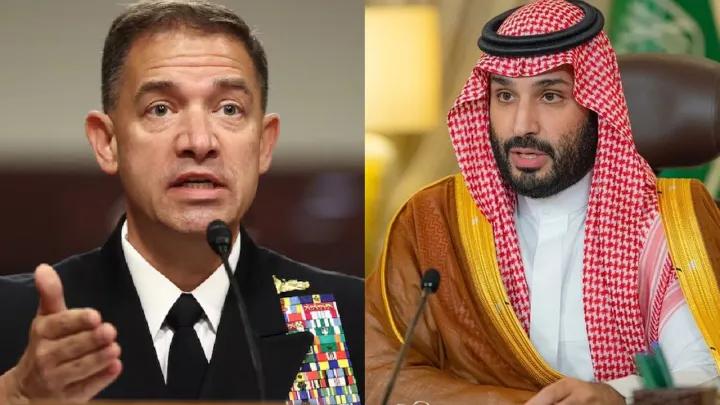
Saudi state media confirmed that Mohammed bin Salman met U.S. Central Command chief Admiral Brad Cooper in Jeddah on September 14. The meeting is the firmest public evidence of urgent U.S.–Saudi security coordination after the attacks.
The disputed phone-call account
Axios, citing two U.S. officials, reported that the crown prince called President Donald Trump twice to request U.S. strikes on the Houthis and was refused. Reuters repeated the account while stating it could not independently verify the calls; the White House and Saudi embassy did not immediately provide confirmation. That means the reported request is newsworthy but should not be written as an independently established fact.
What happened in public is clearer: Washington offered coordination and intelligence support; regional diplomacy intensified; and oil prices moved sharply before giving back much of the gain. Reuters reported a rise of more than 4% intraday on September 14, with a roughly 1% settlement gain.
Why the chokepoint matters
Bab el-Mandeb connects the Red Sea with the Gulf of Aden and carries an estimated 7% of global oil output. Disruption there increases voyage times, insurance costs and the strategic importance of alternate routes. It also exposes a central tension in Saudi policy: the crown prince has tied political legitimacy to economic transformation, yet regional conflict can redirect attention and capital back toward defense.
The confirmed story is already serious; it does not need unverified certainty added to it.
Open questions include Egypt’s response to Saudi requests for help, how Turkey and Pakistan interpret a recent defense pact, and whether the escalation can be contained. None should be filled with inference. The monarchy’s role is direct because Mohammed bin Salman is both heir to the throne and the kingdom’s de facto ruler, making decisions of court and state unusually difficult to separate.
Why this matters
The attacks test whether Saudi Arabia can maintain regional stability while pursuing its economic transformation program. Beyond the immediate risk to physical infrastructure and civilians, repeated strikes can affect investor confidence, insurance costs and project planning. Security conditions are therefore directly relevant to the kingdom’s development strategy.
How we got here
The Yemen conflict previously pulled Saudi Arabia into costly direct intervention before diplomacy reduced the intensity. Renewed strikes revive the old dilemma of deterrence versus escalation, now with Red Sea commerce and global energy markets in sharper focus. The historical parallel is uncomfortable: external force can suppress immediate threats while deepening the political conditions that reproduce them.
Winners, losers and the skeptical case
Defense suppliers and alternative shipping routes can benefit from prolonged insecurity. Saudi civilians, Yemeni civilians, carriers and import-dependent economies bear the costs through danger, insurance and delay. Critics of U.S. strikes warn of regional escalation; advocates argue that unanswered attacks invite repetition. Both positions depend on assumptions about Houthi incentives that are difficult to verify publicly.
What the numbers actually imply
More than 73 reported injuries establish real civilian harm even without initial deaths. Bab el-Mandeb’s estimated 7% share of global oil output makes it strategically important, but it also means most oil moves elsewhere; a temporary price spike above 4% that settled near 1% shows markets pricing fear and then reassessing immediate disruption. Volatility was evidence of risk, not proof of sustained shortage.
What happens next
Three scenarios matter: contained retaliation with renewed talks, a prolonged low-level exchange that raises shipping costs, or wider intervention that threatens regional energy infrastructure. The middle scenario is often politically easiest and economically corrosive because it normalizes a risk premium. Confirmed military deployments, shipping diversions and public diplomatic channels will be more informative than anonymous accounts of private calls.
Sources: The reported calls and verification caveat from Reuters, September 11; confirmed CENTCOM meeting from Reuters, September 14; wider escalation from Reuters, September 16.