will US bomb Iran after midterms
will US bomb Iran after midtermsthird aircraft carrier Iranhow many US carriers near IranUSS Theodore Roosevelt Iran deploymentUS troops Middle East 50,000Trump win the war very soonHegseth ready to go IranUS Iran war October 2026Makin Island ARG 13th MEUIran war what happens next
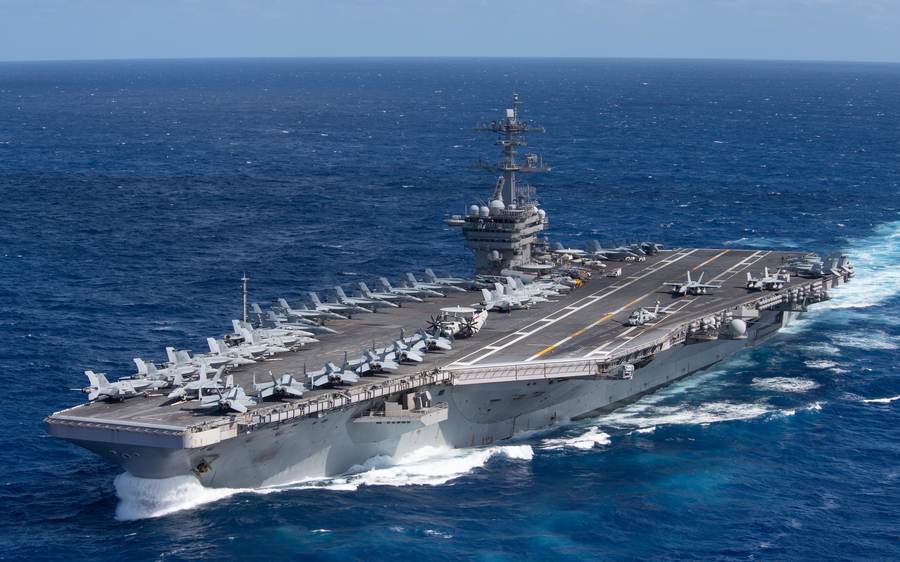
WASHINGTON — The United States is assembling three aircraft carrier strike groups within striking distance of Iran for the first time since April — and the first time three carriers have been postured this way since 2003. The buildup, confirmed by Pentagon officials and first reported by The Wall Street Journal, lands alongside the bluntest signal yet from President Trump: renewed bombing of Iran after the November 3 midterm elections is "possible," and he intends to "win the war very soon."
This is not the news report of ships moving. That story — the third carrier and 10,000 troops — is already published. This is the explainer: why three carriers matter operationally, what each ship brings, when they arrive, and what the deployment does and doesn't tell us about whether bombs fall after the midterms.
Why three carriers is a big deal
First triple-carrier posture near Iran since 2003
The Navy keeps one carrier in the Middle East almost continuously. Two is a surge. Three is a statement. Naval historians note the last comparable concentration near Iran came during the 2003 Iraq invasion buildup. The Pentagon has not had three carriers available for the Iran theater since April of this year, when rotations thinned the presence to two.
Each carrier brings roughly 70 aircraft — fighters, electronic-attack jets, early-warning planes and helicopters — plus a screen of cruisers and destroyers carrying Tomahawk cruise missiles and Aegis ballistic-missile defense. Three carriers means on the order of 200 tactical aircraft and hundreds of vertical-launch missile cells within range of Iranian targets, before counting land-based air power already in the region.
What each ship actually adds
USS Theodore Roosevelt: the third carrier
The USS Theodore Roosevelt (CVN-71) departed San Diego on Sunday with its strike group: the guided-missile cruiser USS Chosin, destroyers, and more than 7,000 sailors. The Roosevelt is a Nimitz-class carrier — older than the Ford-class but fully capable, with a air wing trained for the strike and air-defense missions this theater demands.
Already in or near the region: the USS George Washington and the USS Boxer groups. The Roosevelt's arrival gives the theater commander three full carrier air wings to rotate — one striking, one defending the fleet and regional bases, one in reserve. That rotation is what makes a sustained air campaign possible rather than a one-night strike.
Makin Island ARG: the Marines' 2,000-strong insurance policy
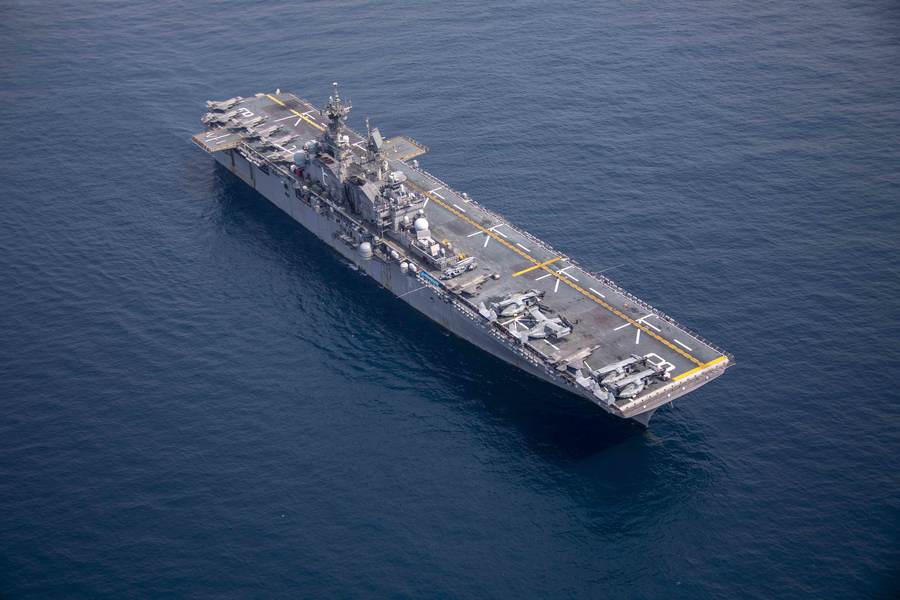
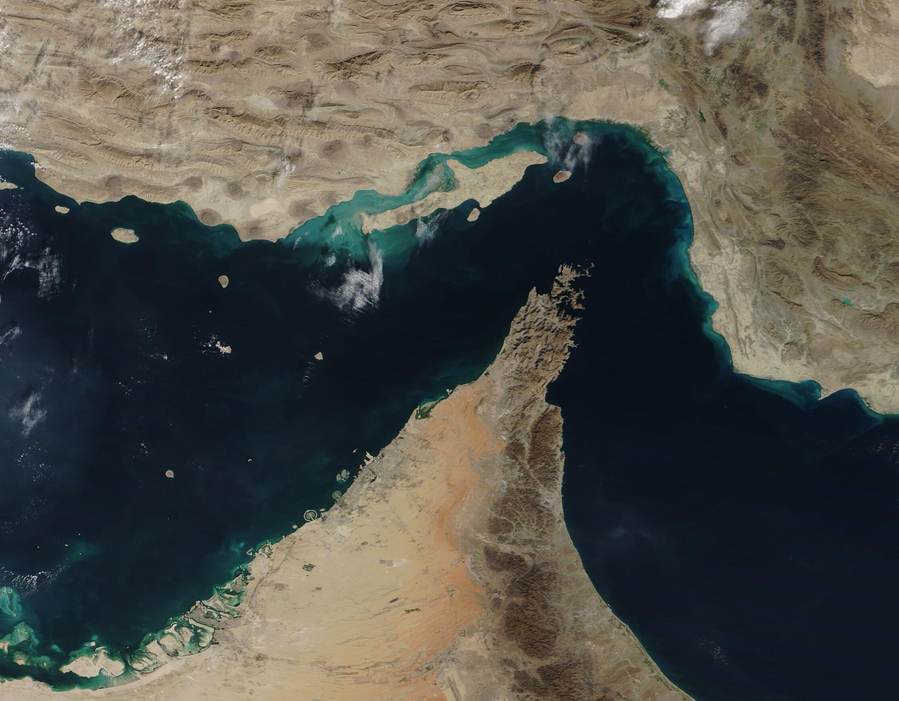
Separately, the USS Makin Island amphibious ready group — the amphibious assault ship Makin Island plus the dock landing ships USS John P. Murtha and USS Anchorage — carries the 13th Marine Expeditionary Unit, more than 2,000 Marines with helicopters, tilt-rotor aircraft and landing craft. An ARG doesn't bomb nuclear sites. It does what carriers can't: put troops ashore, evacuate civilians, seize ports, and hold ground. Its presence signals the Pentagon is planning for scenarios beyond airstrikes — including a Strait of Hormuz closure that requires minesweeping and coastal operations.
Arrival timeline: when the force is complete
End of October into November
The Roosevelt group needs weeks to transit the Pacific and Indian Oceans. Pentagon planning cited in press reporting puts the full three-carrier-plus-two-amphibious-ready-group posture in place by the end of November — with the bulk of the force, roughly 50,000 U.S. troops total in the Middle East, assembled by late October. That timeline is the reason analysts keep circling the same date: the November 3 midterms.
Does the George Washington go home to Yokosuka?
One open question is whether the USS George Washington — forward-deployed to Yokosuka, Japan — stays once the Roosevelt arrives, or rotates home. Keeping all three carriers in theater past November would signal an open-ended commitment; sending the Washington back to Japan would suggest the surge is timed to a specific window. The Navy has not announced its plans.
What Trump and Hegseth have actually said
"Win the war very soon" — and bombing "possible" after midterms
Trump told Time magazine that renewed strikes on Iran are "possible" after the midterms and has repeatedly said he intends to "win the war very soon." Defense Secretary Pete Hegseth has said U.S. forces are "ready to go" and described a "menu of options" presented to the president. On the record, that is the full extent of it: no date, no target list, no authorization announced.
The "menu of options" framing matters. It is Pentagon language for a graduated set of strike packages — from limited retaliation against proxy targets to sustained bombing of nuclear and military infrastructure. Three carriers don't pick the option. They make every option on the menu executable on short notice.
Why this matters
A triple-carrier deployment is the most expensive signal in the naval inventory — each strike group costs millions of dollars a day to operate. The United States does not assemble this much firepower as a bluff; it does it to give the president choices and to force Tehran to calculate accordingly. Iran's foreign minister has warned of a "doomsday" war if talks fail, and the Senate's 50-49 refusal to reclaim war powers means the decision rests with one person.
What happens next hinges on three dates: the Roosevelt's arrival in late October, the November 3 midterms, and whatever ultimatum — if any — Washington delivers in between. The ships will be in place. The question the whole region is asking is whether they are there to enforce a deal or to start the next phase of the war.
Sources: The Wall Street Journal (carrier scoop); Al Jazeera; Associated Press (troop levels); New York Post, Oct. 1, 2026; eaworldview; Time magazine (Trump interview); Department of Defense statements.