Russia massive strikes Kyiv October 2026

Russia massive strikes Kyiv October 2026 marked a new step in the exchange of long-range attacks early Wednesday. Russia's Defence Ministry said its forces carried out what it called a “massive strike” against targets in Kyiv and other regions. That description and the target list are Moscow's claims, not an independently measured assessment.
Kyiv Mayor Vitali Klitschko said buildings and warehouses were damaged across the capital, according to Reuters, whose witness heard explosions in the early hours. In Dnipro, regional governor Oleksandr Hanzha said an airstrike damaged an industrial facility. Russia's ministry also claimed it hit port facilities in the Odesa region and vessels used in the interests of Ukraine's armed forces. The available reports did not establish the full weapon count, interception rate or military effect.
Why this matters: a warning became an operation
The strike's importance begins with what preceded it. On October 3, Moscow formally urged foreign diplomats and nationals to leave Kyiv while warning of large attacks. The October 7 wave turns that warning from a political signal into a military event. It also extends the bridge-strike campaign around Dnipro that began October 1, adding industry and Black Sea logistics to a target set already focused on movement and infrastructure.
That warning-fulfilled dynamic can serve several purposes for Russia: demonstrate that public threats carry consequences, force Ukraine to spread air defences across multiple cities, and increase pressure before winter. It can also create a coercive message for foreign governments with personnel in Kyiv. Ukraine and its partners are likely to read the same sequence as evidence that warnings are being used to normalize broader attacks rather than narrow risk.
The phrase “massive strike” also matters doctrinally. Moscow has used large, mixed attack waves to test air defences and stress repair systems. Adding ports and vessels to energy, industry and transport suggests an effort to pressure not only Ukraine's battlefield logistics but the economic networks that sustain the state.
What happened in the October 7 wave
Russia strikes Kyiv today: buildings and warehouses damaged
The immediate picture remains incomplete. The confirmed core is that explosions were heard and Ukrainian officials reported Kyiv buildings damaged warehouses across the city. The functions of those sites, the extent of the damage and any connection to military activity were not established in the cited reporting. That distinction matters because Moscow characterizes its targets as military-linked, while Ukrainian officials focus on damage within a populated capital.
The Kyiv massive attack October 7 therefore has two layers: a physical strike whose full effects are still being assessed, and a political demonstration four days after the evacuation warning. The responsible conclusion is not that every Russian claim is proven or every Ukrainian account exhaustive; it is that the capital again sits inside a widening campaign with little time between declared intent and execution.
Dnipro industrial facility strike extends the bridge campaign
Hanzha's account of a Dnipro industrial facility strike adds productive capacity to the transport pressure already visible around the city. Since October 1, repeated attacks on Dnipro crossings have sought to complicate movement across the river. An industrial hit may affect production, maintenance or employment even when the facility's precise role is unknown.

For defenders, the challenge is cumulative. Bridges require engineering inspection and repair; industrial sites may need specialist crews; air defence must protect both. Even limited damage at several nodes can impose more strain than a single spectacular hit because restoration teams and interceptors are finite.
Russia Odesa port strike claims put shipping in the frame
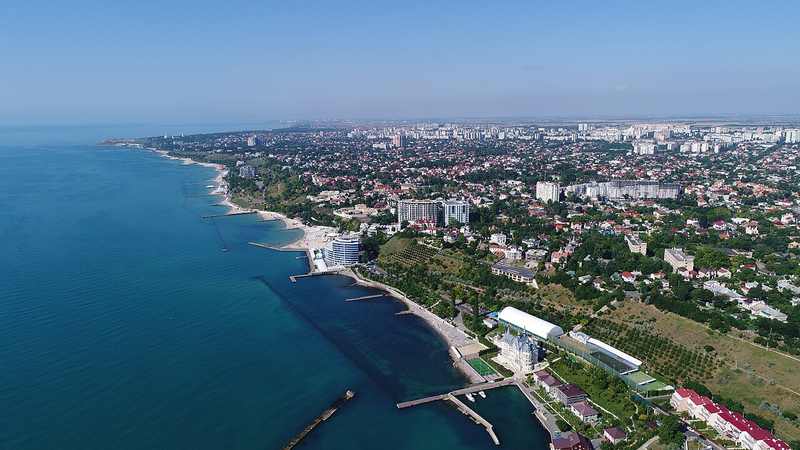
The Russia Odesa port strike claim broadens the campaign to Ukraine's maritime outlet. Russia's Defence Ministry said port facilities and sea vessels serving Ukrainian military interests were hit. Reuters' account attributes that statement to the ministry; it does not independently establish the vessels' use or the scale of damage.
Odesa's commercial role makes the claim consequential even before a damage assessment. Ports move grain, earn foreign currency and connect Ukrainian producers to customers abroad. Attacks or credible threats can raise insurance premiums, delay sailings and make shipowners more cautious. The result can be an economic effect larger than the physical damage, especially if risk pricing persists across multiple voyages.
Update: Pryluky toll rises to 13, including four children
Reuters reported that a Russian missile struck a five-storey residential building in Pryluky, in northern Ukraine's Chernihiv region. Regional governor Vyacheslav Chaus told national television that the death toll had risen to 13, including four children, while 50 more people were injured. The Times had reported a lower figure earlier in the morning; the increase shows that casualty accounting was still moving, and the totals could be revised again as rescue and identification work continued.
Ukraine's air force said, in figures carried by AnewZ, that Russia launched 130 drones, 48 cruise missiles and additional ballistic missiles overnight, and that air-defence units downed 161 targets. President Volodymyr Zelenskyy separately said the attack involved about 70 missiles, many of them ballistic, as well as Shahed drones. Those figures come from different official summaries and may count weapon categories or intercepted targets differently, so they should not be read as a single reconciled inventory.
Zelenskyy linked the timing to Russian President Vladimir Putin's 74th birthday, saying the Russian army had "'gifted' the destruction of a residential building in Pryluky." That was Zelenskyy's political framing of the attack, not an independently established explanation of Russian intent. Moscow has generally said its long-range campaign is directed at military-linked targets, while Ukrainian authorities and outside reporting documented damage in residential areas during this wave.
AnewZ's compilation of official accounts also reported a strike on the hydro-electric plant in Kremenchuk, two people killed in Kyiv's Darnytskyi district, damage to five apartment buildings in Dnipro, and casualties in Oleksandriia in the Kirovohrad region. Taken together, the reported sites indicate pressure on both energy infrastructure and populated urban areas, but damage assessments and casualty figures remained provisional on Wednesday morning.
Ukraine war October 2026: the civilian cost is distributed
The overnight attack arrived after a punishing prior day. EA WorldView's October 6 roundup said Russian attacks across Ukraine killed at least 13 civilians and injured 104. Its regional breakdown listed seven killed and 70 wounded in Kharkiv, three killed and 11 injured in Donetsk, one killed and four injured in Sumy, one killed and four injured in Kherson, and one killed and three injured in Dnipropetrovsk. The roundup also said four people, including two medical workers, were injured when a hospital in Kryvyi Rih was damaged.
Those numbers show why national totals can obscure the operational reality. The deaths and injuries were distributed across at least six regions, forcing emergency services to respond simultaneously over a broad area. Kharkiv alone accounted for more than two-thirds of the reported injuries, but no region carries the entire burden. The pattern stretches medical capacity, air-defence coverage and public attention at the same time.
The figures come from EA WorldView's aggregation of Ukrainian reporting and have not all been independently verified by Signal Post News. They are best read as attributed context for the scale and dispersion of harm, not as a final forensic count.
The retaliation cycle after the Moscow drone blitz
Wednesday's attacks came one day after Ukraine's October 5–6 drone blitz on the Moscow region. Kyiv has argued that long-range strikes on Russian energy and logistics answer Moscow's campaign against Ukrainian cities and infrastructure. Russia frames its own attacks as responses to Ukrainian operations and says it targets military-linked facilities.
That reciprocal logic is the engine of escalation. Each government describes the latest operation as an answer, not a beginning. The result is a chain in which the Moscow-region drone assault, the Kyiv and Odesa wave, and any next Ukrainian strike can all be presented domestically as retaliation. A cycle framed as defensive by both sides can still expand geographically and increase risk to civilians.
Related reporting traces the sequence from Russia's October 3 warning to diplomats in Kyiv, through the fifth day of bridge strikes and Odesa vessel attacks, to the Moscow-region drone assault and reported civilian deaths.
Who benefits, who loses
Russia's potential gain is leverage through dispersion. By threatening the capital, river crossings, industrial sites and ports, it can force Ukraine to divide interceptors and repair capacity. If maritime risk rises, pressure extends into export revenue and trade even without closing a port outright. The cost to Moscow is strategic: visible urban and commercial damage can strengthen Ukraine's case for more Western air defence and harden public resistance.
Ukraine's potential gain from its own deep-strike campaign is to impose costs on Russian energy and bring the war closer to Moscow. The cost is that Russian retaliation may widen, while Ukraine must defend more targets with scarce systems. Neither side's stated military logic removes the civilian danger created by long-range attacks near homes, workplaces, hospitals and transport networks.
Civilians, utilities and commerce lose first. Residents face injury, displacement and interrupted services. The energy grid enters winter with less margin for repeated damage. Shipping insurers price uncertainty, vessel operators reconsider calls, and grain traders face delays and higher freight costs. Farmers far from the coast can feel the effect through weaker export prices if port capacity or confidence falls.
Critics of Russia's campaign see an effort to wear down urban endurance and the economy under a military-infrastructure rationale. Critics of Ukraine's deep strikes question whether the operational gains justify the risk of an escalating exchange. Those arguments are not identical claims about responsibility, but both point to the same mechanism: each round creates political and military incentives for another.
What the numbers imply for ports and grain
The 13 killed and 104 injured in the prior-day roundup indicate a ratio of eight reported injuries for every reported death. That is not a measure of intent or weapon effectiveness; it is a reminder of how many survivors, hospitals and families remain affected after headlines move to the next city. The distribution across six regions also means national repair and medical systems cannot concentrate on one emergency.
For exports, the key number may not be a damage total but the number of voyages delayed or repriced. Ports operate as networks: berths, storage, rail access, pilots, tugboats, crews and insurers must all function. A strike on facilities or vessels can interrupt that chain, and repeated threats can reduce throughput even when individual components remain usable. Grain markets react to expected supply reliability, so uncertainty in Odesa can travel into freight rates and food-import costs beyond Ukraine.
What happens next
Winter energy war or a broader infrastructure campaign
The first scenario is a sustained winter campaign combining energy sites with transport, industry and ports. That would test whether Ukraine can protect electricity and heating while keeping bridges and export routes open. A second is a sharper retaliation cycle in which Ukrainian strikes on Russian energy are answered by increasingly broad Russian waves. A third is intermittent pressure designed to conserve missile stocks while keeping every major city on alert.
Watch air-defence allocations, repair times and shipping insurance quotes. They will reveal whether the campaign is producing durable effects beyond the immediate damage. Also watch whether Moscow supplies evidence for its claim that struck vessels served Ukrainian forces, and whether Ukrainian authorities publish more detailed assessments of the Kyiv warehouses and Dnipro facility.
Diplomacy faces an end-of-October test
Zelenskyy's October 5 coverage said the United States had proposed talks by the end of October and that Kyiv was prepared to participate. Wednesday's strike does not make diplomacy impossible, but it raises the political cost. Both sides may view battlefield pressure as a way to improve their position before talks; the danger is that leverage-building becomes self-sustaining escalation.
The decisive question is whether the strike exchange remains a bargaining backdrop or overwhelms the diplomatic track. If attacks on energy, ports and cities intensify as temperatures fall, negotiations will begin under greater civilian pressure and deeper mistrust. If the parties use the late-October window, the immediate objective may be narrower than a settlement: rules or pauses around energy and maritime infrastructure that reduce the risk of the next retaliatory round.
Sources
- Reuters, October 7 — Russia says it launched “massive” strikes on Kyiv and other areas
- Reuters, October 7 — Russia strikes Kyiv in a fresh wave of attacks
- EA WorldView, October 6 — Ukraine War, Day 1,685 casualty roundup
- Reuters, October 7 - Pryluky residential-building strike toll rises to 13
- AnewZ, October 7 - Ukrainian air-force figures and reported damage across the overnight wave
- The Times, October 7 - earlier reporting on the Pryluky residential-building strike and lower initial toll
Reporting note: Russia's “massive strike” description and target list are ministry claims. Damage accounts are attributed to Ukrainian officials and a Reuters witness. Casualty figures are attributed to EA WorldView's roundup; disputed or incomplete details are identified above.