The warning, issued Saturday, is the first Foreign Ministry-level call for foreigners to abandon the capital. It landed hours after Russian forces struck Kyiv's Northern Bridge for the third straight day of bridge attacks.
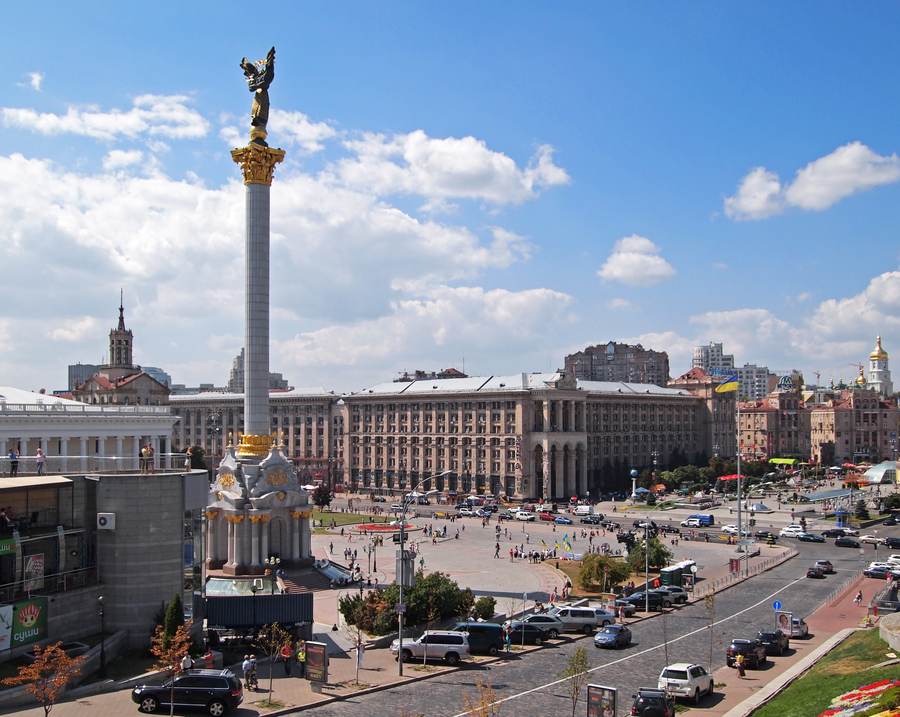
Russia warns diplomats leave Kyiv: Moscow said Saturday it would continue carrying out targeted retaliatory strikes on Kyiv and other Ukrainian cities, and its Foreign Ministry urged foreign nationals — including diplomatic mission staff — to leave the capital and not travel to Ukraine. The warning, reported by Reuters within the hour, is the first Foreign Ministry-level leave-Kyiv advisory of the full-scale war, and it landed on a morning when Russian forces were already striking the capital's bridges for a third consecutive day.
The ministry tied the two messages together: "in response to the Ukrainian Armed Forces' terrorist acts against the civilian population and civilian infrastructure of our country, the Armed Forces of the Russian Federation are continuing to systematically carry out targeted strikes on military facilities in Kyiv and other Ukrainian cities." It added: "The Russian Ministry of Foreign Affairs once again warns foreign nationals, including diplomatic mission staff, against staying in Ukraine or travelling to its territory. Responsibility for any adverse consequences lies entirely with those who ignore this warning."
Why this matters
A Foreign Ministry warning is a different instrument from battlefield rhetoric. It is the kind of statement that insurers, multinational employers, international NGOs and embassy security officers price risk from. Even if no diplomat leaves, it shifts the baseline: every foreign organization's duty-of-care calculation in Kyiv now has a written Russian threat on record.
Ukraine's Center for Countering Disinformation, headed by Andriy Kovalenko, called the statement an announcement of terror rather than military rhetoric. That is Kyiv's official read of intent — not a battlefield assessment but a signaling one — and it tells partners to treat the warning as coercion aimed at the civilian and diplomatic presence, not merely a travel advisory.
The counterpoint is already on the record: Ukraine's foreign ministry says no embassy has told it it is leaving. A warning that fails to move anyone still moves the conversation — and the staying is itself a message, one that blunts the coercive value Moscow may have intended.
Background: a warning arrives on a city already under pressure
Saturday's strikes: the bridge, Hostomel, Odesa
Hours before the ministry's statement, Russia struck the Pivnichnyi (Northern) Bridge across the Dnipro — the third consecutive day of attacks on Kyiv's bridges. Mayor Vitali Klitschko said on Telegram that traffic from the Left Bank to the Right Bank was blocked, with the road surface and overhead trolleybus lines damaged. Around 500,000 people commute daily from the Left Bank to the Right Bank, and each closure pushes that flow onto a handful of alternate crossings. Our report on Kyiv Northern Bridge Strike: Russia Targets Kyiv Bridges for Third Day tracks the damage and the engineering questions it raises.
The same morning, four people were injured in a Russian drone attack on Hostomel, northwest of Kyiv, according to Timur Tkachenko, head of the Kyiv regional military administration, writing on Telegram. Russia's Defense Ministry said it struck Ukrainian infrastructure, a logistics center in Hostomel used to store supplies for Ukrainian forces, and a dry cargo ship carrying dual-use goods bound for the Odesa port. It also claimed 218 Ukrainian drones were intercepted over Russian regions, Crimea, the Black Sea and the Sea of Azov. Independent verification of both sides' claims remains difficult — the figures are Moscow's and Kyiv's, not a neutral audit.
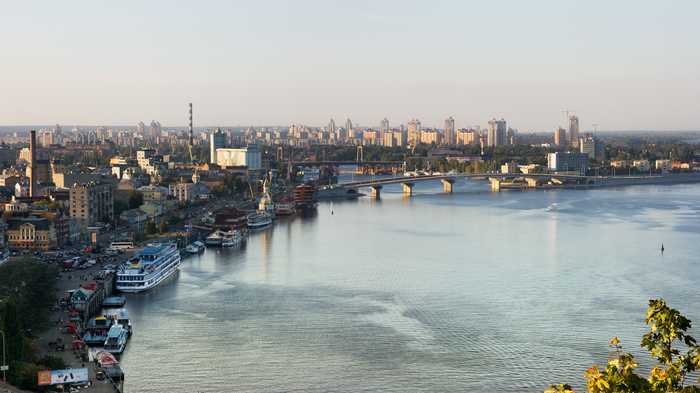
Putin's "paying the price" and the lifted restrictions
The warning did not come out of nowhere. President Vladimir Putin said this week that Ukraine was "paying the price" for its own attacks on Russia and that Moscow would continue systematically striking targets. President Volodymyr Zelenskyy says Putin ordered the lifting of previously imposed restrictions on Russia's air campaign back in September — "they can now operate without any restrictions," as Zelenskyy put it.
The exchange has an economic flank on both sides. Ukrainian drones have been hitting Russian oil refineries, while both sides have stepped up attacks on grain vessels in the Black Sea. Our coverage of Russia Ukraine Drone Strikes October 2026: One Killed, Kyiv Bridges Closed details the overnight wave that included a refinery strike in Volgograd.
Multiple angles: who gains, who loses, who doubts
Russia gains pressure without firing another shot. A ministry-level warning forces Kyiv to think about protecting embassies, international staff and the institutions that house them, alongside bridges, power plants and water systems. It tests whether Western partners will keep high-end air-defense supplies flowing, and it puts civilian morale under the same sustained load as the grid.
Kyiv's civilians absorb the cost. Three million residents are entering the winter season with a strike campaign that has already upended daily life. The grain-vessel attacks add a second front: port workers, shippers and importing countries pay when Black Sea trade is squeezed, whichever side's drone does the squeezing.
Ukraine gains a counter-narrative. By framing the statement as an announcement of terror, Kyiv turns Moscow's warning into evidence for its case that the campaign is aimed at civilians and international presence — useful with partners weighing new air-defense commitments. And the diplomats' refusal to leave blunts the coercive value: a warning that changes nothing looks less like leverage and more like posturing.
Skeptics should separate signal from strike. "Targeted strikes on military facilities" is Moscow's description; the visible Saturday record includes a commuter bridge, a suburb and a cargo ship. Russia denies deliberately targeting civilians. The available reporting establishes impacts, not intended aim points — and the 218 claimed intercepts, like Ukraine's interception claims, come from the side with an interest in publishing them.
Data: 3 million residents, half a million commuters, 218 claimed intercepts
Kyiv's roughly 3 million residents are the denominator that makes this warning matter. The campaign has already upended life in the capital ahead of winter; a ministry-level advisory is aimed as much at the international community's nerves as at any single target set.
The 500,000 daily left-bank-to-right-bank commuters explain why bridge strikes are an effective pressure tool even without structural collapse: one blocked direction on one crossing slows the whole riverside network. That nonlinearity is why transport targets keep appearing in the waves.
The casualty and interception numbers deserve the standard fog-of-war discount. Four injured in Hostomel is a Ukrainian official's report via Telegram; 218 drones intercepted is Russia's Defense Ministry claim. Both are single-source. What is verifiable is the pattern: three straight days of bridge attacks, a widening target set, and now an official warning to foreigners — a sequence that points to deliberate escalation rather than coincidence.

What happens next: winter, embassies, and three scenarios
Scenario one: embassies stay, but harden. The likeliest near-term outcome is that the diplomatic corps remains in place while insurers, employers and security teams quietly re-price the risk. Some organizations will reduce expatriate presence without announcing it. The warning becomes a standing footnote in every Kyiv travel advisory.
Scenario two: the winter campaign deepens. If the warning is the rhetorical cover for the cold-weather strike cycle Ukraine expects — substations, hydroelectric plants, water systems — then October's bridge and infrastructure strikes are the opening phase, and the ministry's statement is meant to clear the ground diplomatically before it intensifies.
Scenario three: an incident forces the issue. If a strike damages an embassy compound or an international office, or injures a foreign national, the ministry's line that "responsibility for any adverse consequences lies entirely with those who ignore this warning" becomes a legal and political confrontation — the exact escalation neither side can fully control.
Watch for four things: engineering findings on the Northern and Southern bridges, any change in embassy postures or staffing, new interceptor commitments from Ukraine's partners, and whether the Black Sea grain attacks continue alongside the land campaign. The firm conclusion is narrow: Russia's Foreign Ministry has put a leave-Kyiv warning on the record and pledged more strikes. Everything else — who leaves, what burns, how the winter goes — is still to be decided.
Related coverage
Sources
- Reuters — Russia pledges to continue massive strikes on Kyiv, urges foreign diplomats to leave city
- Sweden Herald (AFP) — Russia warns of massive attacks on Kyiv and urges diplomats and foreign citizens to leave
- Razomua — Ukraine's Center for Countering Disinformation: the warning is an announcement of terror, not military rhetoric