Putin arrives in Shenzhen in the small hours of Wednesday, and the choreography says as much as any speech will. The Russian president’s plane touched down at about 2 a.m. local time at Shenzhen Bao’an International Airport, Chinese state media reported, and waiting on the tarmac was Cai Qi — the fifth-ranking member of the Chinese Communist Party’s Politburo Standing Committee and, in effect, chief of staff to President Xi Jinping. Within hours Putin was on stage at the APEC CEO Summit, telling the region’s business elite that the European Union is losing its industrial capacity; by later on Wednesday he was sitting down with Xi himself, their fifth meeting this year. Still to come, on Thursday, is the encounter that has drawn the world’s cameras to this city: the first meeting ever held between the leaders of China, Russia and the United States at one table — Xi, Putin and President Donald Trump, who was still in the Philippines on Wednesday and due in Shenzhen later in the day.
Track it live: Wars tracker
SHENZHEN, China, November 18, 2026 — Putin arrives in Shenzhen: Russian President Vladimir Putin landed at Shenzhen Bao’an International Airport at around 02:00 local time on Wednesday (18:00 GMT on Tuesday), according to Chinese state media reports carried by the BBC and Reuters, at the start of a visit built around the Asia-Pacific Economic Cooperation summit and Thursday’s unprecedented three-way meeting with Xi Jinping and Donald Trump. Putin was received by Cai Qi, the fifth-ranking member of the CCP Politburo Standing Committee and Xi’s de facto chief of staff — a seniority of welcome that protocol watchers read as a deliberate signal of the relationship’s weight. Russian television broadcast the arrival live, Anadolu Agency and TASS reported, and an Associated Press photograph by Anupam Nath, carried by France 24, showed the Russian president stepping off his aircraft into the Shenzhen night. Chinese broadcast reporting put the visit in a longer frame: this is Putin’s 26th trip to China, and his first time attending an APEC leaders’ meeting in person in nine years, since Da Nang in 2017. Our earlier reporting on the White House confirmation of the first-ever Trump–Xi–Putin meeting in Shenzhen on November 19 sets out how Thursday’s encounter was announced.
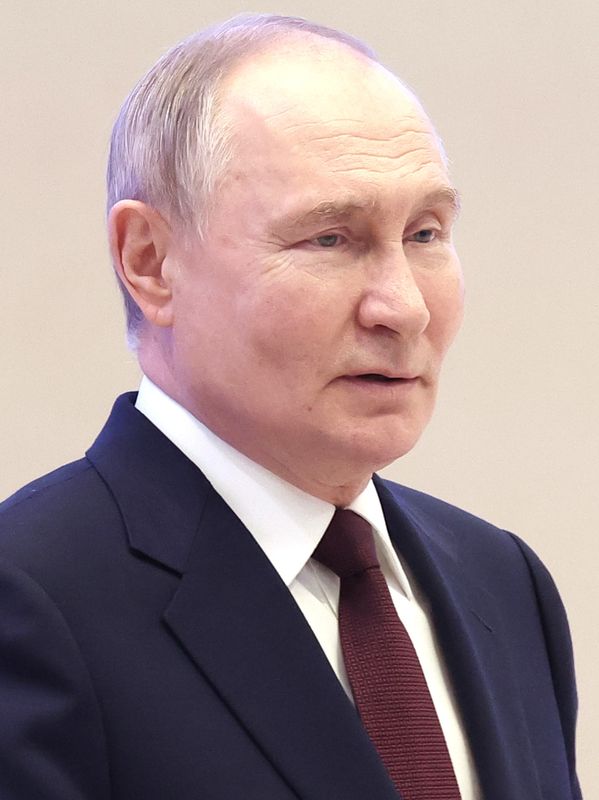
A 2 a.m. arrival, and a welcome pitched at the top of the party
Heads of government do not usually get met at 2 a.m. by a member of the Politburo Standing Committee. That Cai Qi — who runs the Communist Party’s central secretariat and Xi’s own office — was the official receiving Putin tells its own story about how Beijing wants this visit read: not as a routine summit arrival, but as the homecoming of the partner Xi has called his best friend, at the summit China has waited more than a decade to host on home soil. The live Russian television coverage underlined the point from the other side: Moscow, too, wanted the welcome seen, in full, at home.
The timing of the arrival also shaped the day that followed. Putin’s programme ran, in sequence, from the CEO Summit stage to a bilateral with Xi and then to full-scale Russia–China talks with delegations, which Interfax reported were part of the visit, citing Kremlin aide Yuri Ushakov. The Russian president is also visiting the Shenzhen campus of the MSU–BIT joint university — the Moscow State University and Beijing Institute of Technology partnership — and addressing its students, a soft-power stop that fits the visit’s wider pitch: Russia presenting itself in China not only as an energy supplier and strategic partner, but as a place to study, build and invest.
The summit China waited 12 years to host
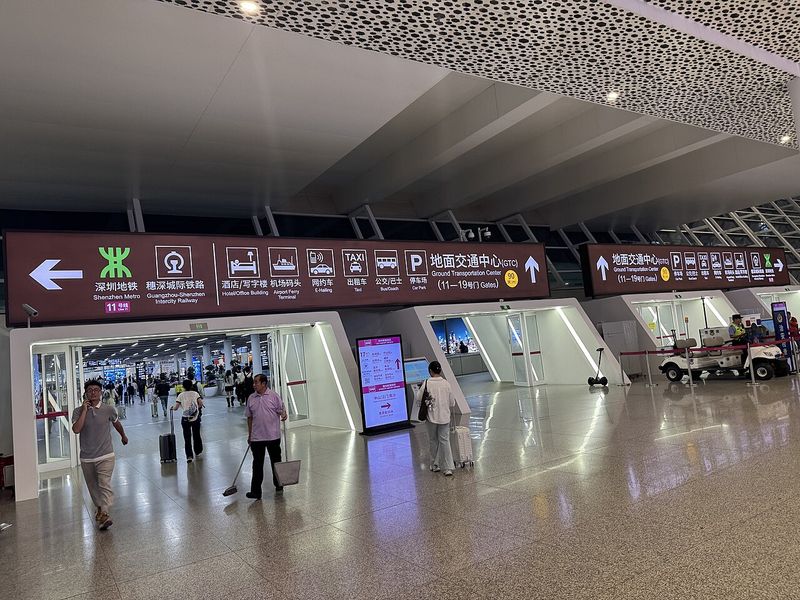
The setting is the 33rd APEC Economic Leaders’ Meeting, held in Shenzhen on November 18–19, with the APEC CEO Summit running alongside it on November 17–18. China chairs APEC in 2026 under the theme “Building an Asia-Pacific Community to Prosper Together,” and it is hosting the forum for the first time in 12 years — a gap that spans the trade wars, the pandemic and the hardening of the US–China rivalry, and that gives Beijing a home-stage week to argue that the centre of the world economy’s gravity sits in the Asia-Pacific, with China at its hub.
Shenzhen is a deliberate choice of stage. A fishing-and-market town turned megacity of some 18 million people in four decades, it is the showcase of China’s reform era — home to Huawei, Tencent and BYD, and the place Chinese leaders point to when they want visitors to see what their model produces. Putin, in his CEO Summit remarks, would pick up exactly that thread, praising Shenzhen as a symbol of transformation. For Xi, the week is also crowded with bilateral business on the summit’s edges: our coverage of Carney and Xi extending the Canada–China tariff deal in Shenzhen shows the pattern — one visiting leader after another cutting side deals with the host while the plenary cameras roll.
Xi opens the CEO Summit with a defence of open trade
Xi Jinping opened Wednesday’s CEO Summit proceedings, CNBC reported, and used the host’s first word to make the host’s core argument. According to Reuters, Xi called for free and open trade with no investment barriers, for upholding the WTO-centred, rules-based trading system, and for keeping global supply chains stable. The timing gave the words their edge: he spoke after Washington had announced further restrictions on China’s access to advanced artificial-intelligence chips of the kind made by Nvidia — the latest turn of the technology contest that now runs underneath every trade conversation between the two largest economies. It was also, notably, the first time since 2018 that Xi had addressed the CEO Summit in person, a return that itself read as a statement about how much Beijing is investing in this week.
Anwar’s jab, aimed without a name
Xi was not the only leader using the stage to push back against economic nationalism. Malaysian Prime Minister Anwar Ibrahim also criticised dominance in the global economy without naming the United States, CNBC reported, telling the summit: “You can’t say in one voice [that you’re] promoting trade and investment, but only to your country.” The line landed because everyone in the room could supply the missing name — and because it captured the week’s unusual geometry, in which the American president is the guest, the Chinese president is the host preaching openness, and the region’s middle powers are openly shopping for a trading order that does not run through Washington alone.
Putin, third to speak, tells CEOs the EU is losing industry
Putin was the third leader to address the CEO Summit on Wednesday, according to CNBC’s on-the-day reporting of the running order — not second, as Kremlin aide Ushakov’s November 16 preview had suggested he would be. The distinction is small and worth keeping, because previews and podiums diverged more than once this week, and what leaders actually did in Shenzhen is the record that matters.
His message to the region’s chief executives was a sales pitch wrapped in a verdict on Europe. “The EU is now losing its industrial capacity and it’s losing in the competition,” Putin said, in the official English translation of his remarks carried by CNBC. In a separate strand of the same address, summit summaries reported him arguing that “former dominant powers” had tried to suppress other countries’ development, and that “economic domination and coercion are now a thing of the past” — two reports of one speech, kept separate here because they reached the public through different accounts, and because the argument they build is the same one Moscow has carried to every non-Western stage since 2022: that the sanctions era has failed, and the economic map has already been redrawn.
The evidence he offered for the claim was Russia itself. Sanctions and tariffs, he said, had not held Russia back. He pointed to Russia’s ability to withstand a sharp drop in dollar- and euro-denominated transactions — the plumbing of de-dollarisation, presented to an audience of Asian executives as proof of resilience rather than isolation. He praised Shenzhen as a symbol of transformation, pitched the opportunities APEC economies could find in Russia, from technology to broader economic development, and closed the loop on the venue politics by urging support for Russia to host APEC in 2035. Read whole, it was less a speech about Europe than an application: Russia, applying in public, in China’s showcase city, for a permanent seat in Asia’s economic future.
Then the bilateral: Putin sits down with Xi
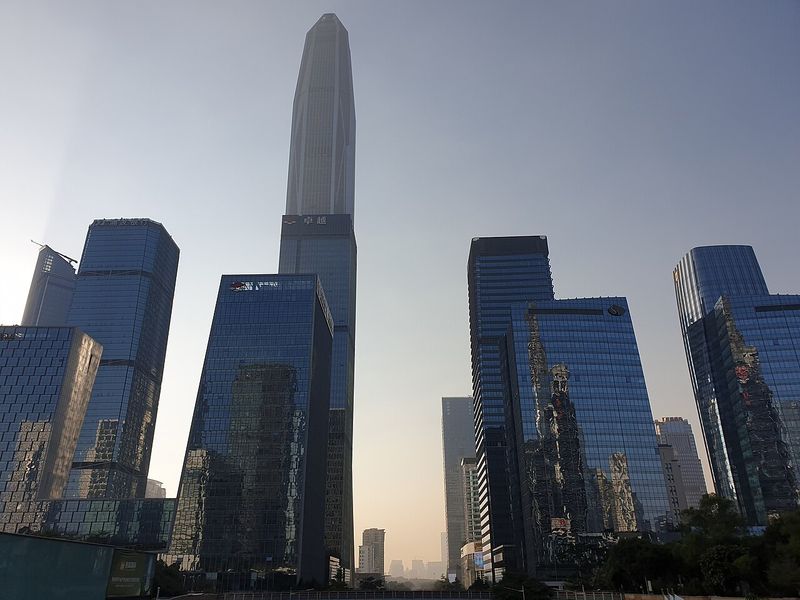
Later on Wednesday, talks between Putin and Xi began in Shenzhen, Agence France-Presse reported, citing Chinese and Russian state media. It is the two leaders’ fifth meeting this year, including one held by video link — a cadence that has become the partnership’s own kind of statement, maintained through war, sanctions and an American administration openly courting a wedge between Moscow and Beijing.
Putin told Xi that the Russia–China foreign-policy partnership is working “steadily and positively,” Reuters reported. “Amid a challenging geopolitical environment, we are taking a constructive approach to forming a fairer multi-polar world order,” he said. The language is familiar — multipolarity is the shared slogan of the partnership — but the week gives it a specific referent: within 24 hours of saying it, Putin would be sitting in a room with both Xi and the president of the United States, in a format that did not exist before this summit and that Moscow and Beijing can each present, to their own audiences, as the multipolar order made visible.
Why this matters
Three stories are running through Shenzhen at once, and Putin’s arrival sits at the junction of all of them.
For China: the host’s week
First, this is China’s stagecraft. Twelve years after it last hosted APEC, Beijing has assembled a week in which the Russian president arrives at 2 a.m. to a Standing Committee welcome, the Canadian prime minister extends a tariff deal, the Malaysian prime minister needles Washington from the host’s podium, and the American president flies in last, as a guest in China’s showcase city, for meetings held at a state villa about 10 kilometres north of the centre, as Le Monde described Thursday’s venue. None of that required a single concession from Beijing. The summit’s value to China is the picture itself: the Asia-Pacific’s leaders transacting their business in Shenzhen, under a Chinese theme about shared prosperity, while Washington’s newest chip restrictions are answered not with retaliation but with a sermon on open trade.
For Russia: a seat at the top table, in public
Second, this is Russia’s re-entry — not into the West’s institutions, which remain closed, but into the top-table photograph. A leader under Western sanctions, whose country’s trade has been re-routed east under pressure, is being received in China with the protocol of a most-valued partner and given a CEO Summit platform to argue that the sanctions project has failed and Europe is deindustrialising. Whether or not the region’s executives buy the pitch, the platform is the point: Putin’s first in-person APEC leaders’ meeting in nine years ends the visual isolation that Western capitals worked to impose after 2022, and Thursday’s trilateral completes it — the American president, meeting him not in a neutral capital but in Xi’s city, on Xi’s schedule.
For the United States: arriving last, after a hard month
Third, this is a test of Trump’s position. On Wednesday he was still in the Philippines, due to arrive in Shenzhen later in the day after his Manila meetings, Reuters and AFP reported — a sequencing that meant Xi and Putin owned the summit’s first full day unchallenged. Le Monde’s context underlines the stakes of his Thursday: it will be his fourth encounter with Xi in a single year; he is the first American president to travel to China twice in one year; and this is his first trip abroad since his party’s heavy midterm defeat. He arrives, in other words, as the leader with the most to prove and the least settled agenda — which brings the week to its central uncertainty.
An agenda nobody will describe the same way twice
Ask what Thursday’s trilateral is actually for, and the answers, all on the record, do not agree — and the disagreement is itself the most reliable guide to what the meeting can and cannot produce.
The White House’s stated focus, according to ANI reporting carried by Newsquawk, is decreasing nuclear proliferation — denuclearisation. Reuters, surveying the same meeting, lists the Iran and Ukraine wars alongside trade, artificial intelligence and nuclear weapons as Thursday’s flashpoints. On Ukraine specifically, the accounts collide head-on: US officials said Ukraine will not be discussed at the trilateral, Newsquawk reported, while the Wall Street Journal reported that Putin initiated the trilateral proposal primarily to discuss ending the Ukraine war. Both cannot be the meeting’s design. What can be said is that the war runs underneath the week regardless: Ukraine’s General Staff has claimed, in this site’s existing coverage, responsibility for the attack on the Crimean Bridge — a claim Kyiv has made and Moscow contests, and one that has not been independently verified — and our reporting on Zelenskyy’s confirmation of the Crimean Bridge attack as a seven-stage operation sets out what Kyiv says it did. A separate Trump–Putin meeting is contested in the same way: the Kremlin and ANI say one is envisaged and being finalised, while the White House has not confirmed one and a senior US official said none was scheduled, according to Newsquawk. This article therefore confirms neither a Ukraine agenda nor a bilateral that may never appear on any published schedule.
The nuclear file has its own hard fact underneath the positioning: New START, the last US–Russia treaty limiting strategic nuclear arsenals, expired in February 2026. Whatever Thursday produces or fails to produce, it will be the first time the three leaders have sat together with no arms-control framework in force between the two largest nuclear powers — which is why the White House’s proliferation framing, even if it yields nothing signed, is more than boilerplate.
Thursday: a bilateral, a working lunch, and a first in diplomatic history
The published shape of Thursday, according to Newsquawk’s summit primer, runs in two acts. At 12:45 local time, Trump and Xi hold their bilateral meeting and working lunch at the state residence. At 14:30, Putin joins them for the first-ever Trump–Xi–Putin trilateral, at Xi’s state residence. No three leaders of these three countries have ever met in this format; the novelty is the event.
Kremlin aide Ushakov has framed the talks as highly symbolic, citing the three countries’ Second World War cooperation and their roles in founding the United Nations — an 80-year reach back to the last order the three built together. Moscow is pushing for a joint communiqué to mark the occasion. That document, however, is under negotiation, not agreed; if none is reached, each leader will give his own assessment of the meeting instead — three verdicts in place of one text, which would tell its own story about how far symbolism carried and substance did not.
The sober analyst view arrived early. David Roche of Quantum Strategy told CNBC the summit is likely to yield little concrete result, but is an “almost 100% photo op” that lifts China’s status. It is a judgement worth holding against Thursday’s output measure by measure: a communiqué, if one emerges, with language all three governments can sign; any movement, even rhetorical, on the nuclear file left open by New START’s expiry; and whether the contested items — Ukraine, a Trump–Putin bilateral — surface in the readouts or are conspicuously absent from all three.
What to watch next
Wednesday ends with the board set and the last piece still in the air: Trump, departing Manila, due in Shenzhen later in the day; Putin, billeted in the host city after a day that ran from a 2 a.m. tarmac to a CEO podium to Xi’s meeting room; and Xi, who has spent the day preaching open trade to executives while his two guests’ governments restrict each other’s chips, arms and markets. Thursday’s two meetings — the 12:45 bilateral and working lunch, then the 14:30 trilateral — will be judged less by their communiqués than by their photographs, and all three leaders know it. That is precisely why each of them came.
Sources
Sources: Chinese state media via BBC and Reuters, November 18, 2026 — Putin landed at Shenzhen Bao’an International Airport at around 02:00 local time Wednesday (18:00 GMT Tuesday) and was received by Cai Qi, fifth-ranking member of the CCP Politburo Standing Committee and de facto chief of staff to Xi Jinping. Anadolu Agency and TASS — Russian television broadcast the arrival live. France 24 / Associated Press — arrival photograph by Anupam Nath showing Putin stepping off the aircraft (referenced in text; not reproduced). Chinese broadcast reporting — the trip is Putin’s 26th visit to China and his first in-person APEC leaders’ attendance in nine years, since Da Nang 2017. CNBC, November 18, 2026 — on-the-day CEO Summit running order: Xi Jinping opened; Putin was the third leader to speak; Xi’s call for free and open trade and stable supply chains following Washington’s announcement of further restrictions on China’s access to advanced AI chips such as Nvidia’s; Xi addressing the CEO Summit in person for the first time since 2018; Anwar Ibrahim: “You can’t say in one voice [that you’re] promoting trade and investment, but only to your country”; Putin, in official English translation: “The EU is now losing its industrial capacity and it’s losing in the competition”; David Roche of Quantum Strategy: the summit is an “almost 100% photo op” that lifts China’s status. Summit summaries — Putin said “former dominant powers” had tried to suppress other countries’ development and that “economic domination and coercion are now a thing of the past”; sanctions and tariffs had not held Russia back; praise for Shenzhen as a symbol of transformation; Russia’s ability to withstand a sharp drop in dollar/euro-denominated transactions; support urged for Russia hosting APEC in 2035. Reuters, November 18, 2026 — Xi’s CEO Summit remarks on the WTO-centred rules-based system; Putin to Xi: the Russia–China partnership is working “steadily and positively” and “Amid a challenging geopolitical environment, we are taking a constructive approach to forming a fairer multi-polar world order”; Trump still in the Philippines on Wednesday, due in Shenzhen later Wednesday; Reuters listing the Iran and Ukraine wars, trade, AI and nuclear weapons as Thursday flashpoints. Agence France-Presse, November 18, 2026 — Xi–Putin talks began in Shenzhen; their fifth meeting this year including once by video link. Interfax, citing Kremlin aide Yuri Ushakov — full-scale Russia–China talks with delegations; Putin’s visit to the MSU–BIT joint university in Shenzhen and address to students; Ushakov’s framing of Thursday’s talks as highly symbolic, citing WWII cooperation and the three countries’ UN founding roles, and Moscow’s push for a joint communiqué. Newsquawk summit primer — Thursday schedule: Trump–Xi bilateral and working lunch at 12:45 local, trilateral at 14:30 at Xi’s state residence; White House focus on decreasing nuclear proliferation/denuclearisation (via ANI); US officials said Ukraine will not be discussed at the trilateral; a separate Trump–Putin meeting not confirmed by the White House, with a senior US official saying none was scheduled, against Kremlin/ANI accounts that one is envisaged and being finalised. The Wall Street Journal — Putin initiated the trilateral proposal primarily to discuss ending the Ukraine war. Le Monde — Thursday is Trump’s fourth Xi encounter in a single year; the first US president to travel to China twice in one year; his first trip abroad since his party’s heavy midterm defeat; Thursday’s meetings at a state villa about 10 km north of central Shenzhen. APEC 2026 — 33rd Economic Leaders’ Meeting, Shenzhen, November 18–19; CEO Summit November 17–18; China chairs under the theme Building an Asia-Pacific Community to Prosper Together; China hosting APEC for the first time in 12 years. New START expired in February 2026. Photographs are file photos from Wikimedia Commons and do not depict the events of November 17–18, 2026; the AP arrival photograph was not used.