World · Canada · China
The Canada China tariff deal grew again on Tuesday: meeting President Xi Jinping in Shenzhen ahead of the APEC summit, Prime Minister Mark Carney won Chinese tariff relief for about C$400 million of Canadian pork and seafood — and paid for it with two more years of tariff remissions on Chinese steel and aluminium. It is the latest, most concrete step in Ottawa's effort to rebuild a trading relationship it spent years freezing out.
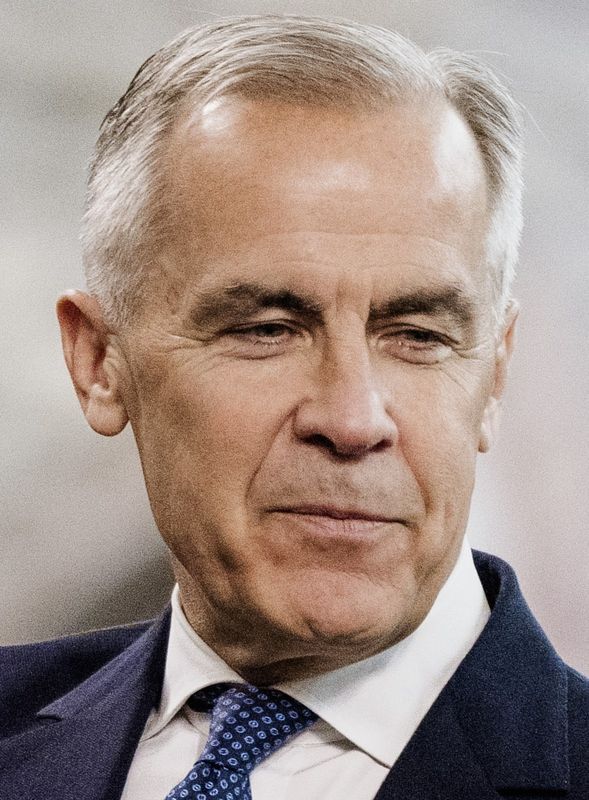
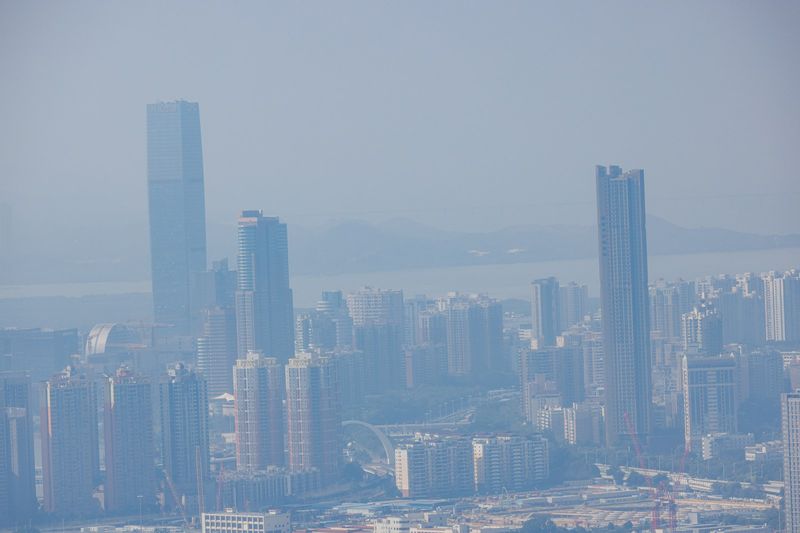
SHENZHEN — The Canada China tariff deal was extended and expanded on Tuesday as Prime Minister Mark Carney met President Xi Jinping in Shenzhen, days before the APEC summit opens in the same city. The two leaders built on the Preliminary Joint Arrangement on Addressing Bilateral Economic and Trade Issues, the framework at the centre of the strategic partnership the two countries launched in January, and added a new round of Chinese tariff relief for Canadian farm and seafood exports worth roughly C$400 million (about US$280 million), according to Reuters and the Prime Minister's Office.
Carney, who was joined in Shenzhen by Foreign Minister Anita Anand and Agriculture Minister Kody Blois, said Canada is "well ahead of schedule" toward its goal of increasing exports to China by 50 percent by the end of the decade, and pointed to "greater predictability and stability" in the relationship. "Canada and China have recalibrated our relationship to the benefit of citizens in both countries," he said. "Canada is building our strength at home and diversifying our relationships abroad so that we have the freedom to live our lives as we choose."
What was agreed, item by item
The centrepiece is new Chinese tariff relief on about C$400 million of Canadian exports, split into two blocks announced by the Prime Minister's Office:
— Frozen pork cuts account for C$116 million of the relief. — Fish and seafood account for C$285 million, covering frozen cold-water shrimp and prawns, including Pacific spot prawn; molluscs, including geoduck; sea cucumber; and Greenland halibut.
Around the tariff headline, the two governments stacked a wider package. They endorsed the Joint Outcomes of the second Canada-China Economic and Financial Strategic Dialogue. Ottawa announced a major Canadian trade mission to China in 2027 and designated 2027 a Canada-China Year of e-Commerce. Canada will fund $850,000 in scholarships for 850 Canadian students to study in China, and $8 million for the China Council for International Cooperation on Environment and Development. Air Canada will launch Vancouver–Guangzhou flights in May 2027, and Chinese airlines will increase flights to Canada. Five Canadian companies signed more than $15 million in arts and culture deals. A memorandum of understanding will create a Canada-China CEO Roundtable, organised by the Canada-China Business Council and the Bank of China, and the University of Ottawa and Shanghai International Studies University signed a dual-degree MOU. The two sides also discussed cooperation on narcotics through border and customs agencies, and on energy — oil and gas, renewables and nuclear.
Pork, seafood and the regions that gain
The relief is targeted, and its map is the map of Canada's export politics. Frozen pork cuts are a Prairie and central-Canadian industry, shipped through processing plants in Manitoba, Alberta, Ontario and Quebec; Chinese duties had squeezed exactly the commodity trade that prairie producers rely on when the American market turns hostile. The seafood block reaches both coasts. Pacific spot prawn and geoduck are British Columbia harvests, high-value and heavily dependent on Chinese buyers; cold-water shrimp, sea cucumber and Greenland halibut are Atlantic and northern fisheries, where a single tariff line can decide whether a season's catch has a market at all.
That is the political logic of the list: it is not an abstract C$400 million. It is named products, from named regions, whose producers have spent the tariff dispute watching containers go unsold or discounted. Tuesday's announcement follows the pattern of the earlier rounds — relief negotiated product by product, region by region — rather than a single comprehensive free-trade agreement, which neither government is offering.
What Canada gave back: steel and aluminium remissions
The deal was not one-directional. In exchange, Canada extended by two years its remission measures for certain Chinese steel and aluminium products that were set to expire at the end of 2026, and expanded the remissions to 32 additional steel and aluminium items in categories where Canadian supply is insufficient or unavailable, the Prime Minister's Office said.
Remissions are the quiet machinery of tariff policy: they exempt specific imports from duties, typically where domestic manufacturers cannot supply the product and the tariff would simply tax Canadian buyers. Extending them is therefore defensible on narrow economic grounds — and politically exposed on broader ones. Canadian steel and aluminium producers, already at the centre of the trade fight with Washington, can be expected to scrutinise the 32 new items closely, and opposition critics of closer ties with Beijing have a ready argument that Ottawa is trading industrial policy for farm exports. The government has presented the remissions as limited to products Canada does not make in sufficient quantity; that claim, and the item list behind it, is where the domestic argument will be fought.
Why this matters
Analysis. Reuters framed Tuesday's meeting plainly: reducing Canada's heavy reliance on the United States, which has imposed hefty tariffs on Canadian products, is a major plank of Carney's strategy, and the Shenzhen package is that strategy in its most developed form yet. The numbers explain why. Bilateral merchandise trade between Canada and China was $125.6 billion in 2025, up 5.6 percent from 2024, with Canadian exports to China of $35.1 billion. The Chinese foreign direct investment stock in Canada is $43.4 billion, the fourth largest of any country. By Ottawa's own accounting, trade with China supports more than $30 billion in revenues, $6.9 billion in GDP and hundreds of thousands of Canadian jobs.
The winners, on Tuesday's text, are exporters: pork processors, seafood harvesters on both coasts, and the canola sector whose recovery began earlier this year. The losers are harder to name but real: domestic steel and aluminium interests facing two more years of Chinese competition under remission, and the political constituency — in Ottawa and in Washington — that argues Canada is rebuilding dependence on Beijing just as it escapes dependence on the United States. Both arguments will now run in parallel, because both are partly true: diversification reduces one vulnerability while deepening another, and the government's bet is that two large markets are safer than one.
The arc matters as much as the day. In January, Carney's visit launched the strategic partnership and China cut its tariff on Canadian canola seed. Earlier this month, the two sides extended arrangements covering canola meal, peas, lobster and crab for two years. The Prime Minister's Office says that since January, more than 90 percent of the Canadian trade previously under Chinese tariff action — nearly $7.5 billion worth — has been restored. Shenzhen is the third step in a staircase, not a sudden leap.

Context: from tariff war to strategic partnership
To understand Shenzhen, start with what the tariffs did. In the dispute that preceded this year's reset, Chinese duties and restrictions fell across the Canadian export basket — canola seed, meal and oil, peas, pork and seafood among them — freezing or taxing market access that Prairie farmers and coastal harvesters had built over decades. For exporters, the damage was not only the duty itself but the uncertainty: contracts shortened, buyers in China substituted suppliers, and Canadian product was discounted to move at all.
The January strategic partnership changed the direction of travel. Beijing's canola-seed tariff cut after Carney's January visit was the first major restoration; the two-year extension earlier this month for canola meal, peas, lobster and crab was the second. Tuesday's pork and seafood relief is the third, and by the government's count it takes the restored share of tariff-hit trade past 90 percent. What remains unresolved — and what neither side detailed on Tuesday — is whether the remaining lines, and the non-tariff barriers behind them, get the same treatment, or whether the staircase stops a step short of the top.
What happens next
The diplomacy now accelerates. The APEC summit in Shenzhen is the week's main stage, where Carney's recalibration will be read alongside President Trump's Asia trip and the competing visions of Asian trade on display at the ASEAN summit in Manila, where Premier Li Qiang has been making Beijing's case to the region. On Thursday, November 19, the Trump–Xi–Putin trilateral in Shenzhen will test whether Washington's own China track undercuts or complements Ottawa's — a Canadian deal with Beijing looks different depending on whether the United States is simultaneously cutting one of its own.
Then the calendar turns to delivery: the 2027 trade mission, the Year of e-Commerce, the May 2027 Vancouver–Guangzhou flights, and the first shipping seasons in which pork and seafood exporters learn whether tariff relief on paper becomes restored contracts in practice. The scenarios branch from there. If the remaining tariff lines follow the staircase, the January partnership becomes the defining trade fact of Carney's term. If Washington retaliates against Canada's Beijing opening, or if the steel remissions ignite a domestic fight, the same staircase becomes the opposition's favourite exhibit. Either way, the direction set in Shenzhen is now the policy. Signal Post News will follow the APEC summit and Thursday's trilateral as they unfold.
What do you think — does diversifying toward Beijing make Canada stronger, or does it swap one dependency for another?
Sources
Reuters, November 17, 2026 — “Canada and China extend trade deals as Xi meets Carney ahead of APEC summit”. Prime Minister of Canada, November 17, 2026 — “Prime Minister Carney advances Canada's strategic partnership with China across trade, commerce, and culture” (pm.gc.ca).