War · World
War / World — For the first time since Russia seized Oleshky in 2022, an aid convoy reached the front-line town on Friday and residents began boarding buses out — some toward Ukraine, some toward Russia. How many left is still unknown: Kyiv’s prime minister withdrew the one number he had given parliament hours earlier.
Track it live: Live Ukraine war map
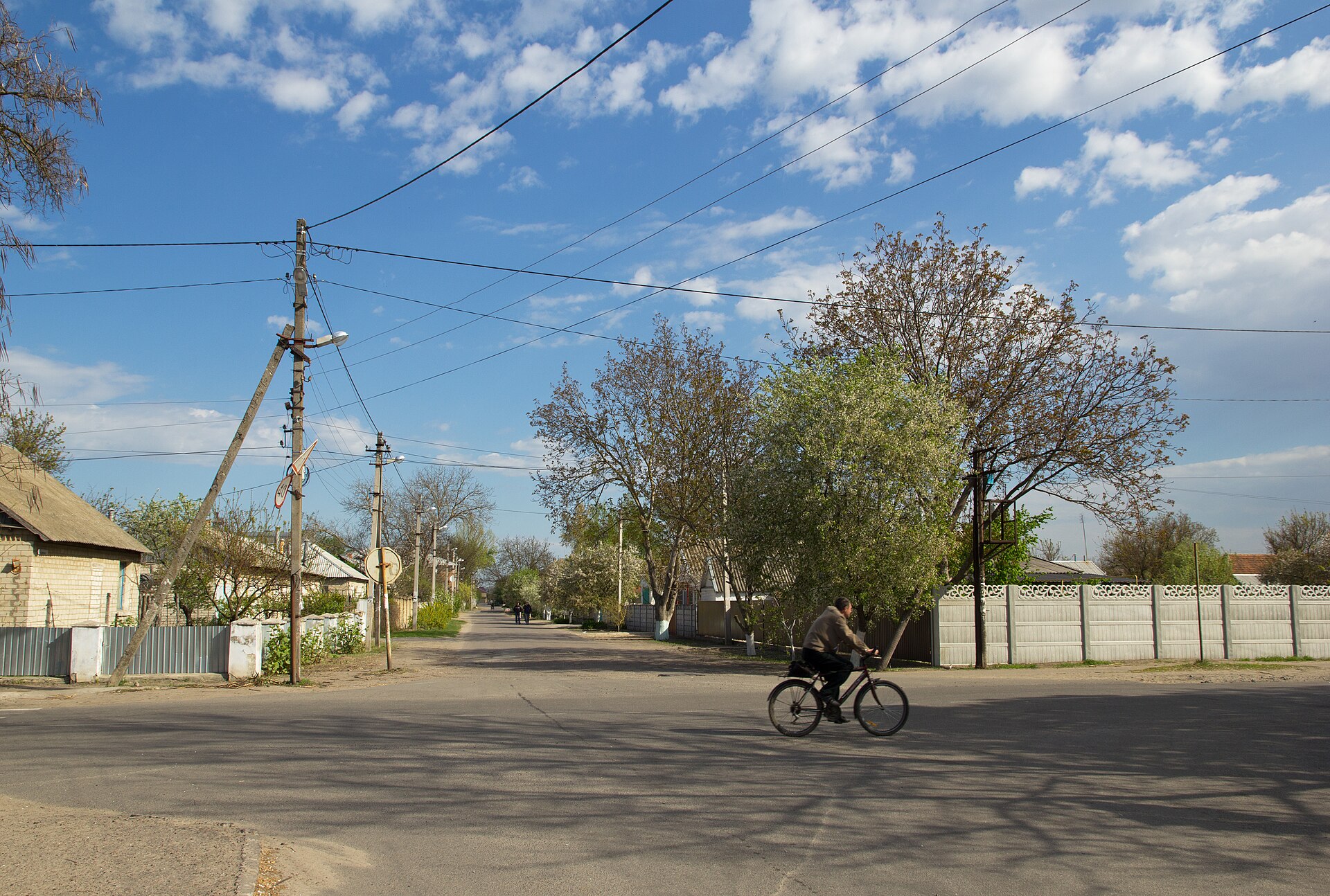
The Oleshky evacuation aid convoy stopped being a plan on Friday. An aid convoy entered the Russian-held town of Oleshky in Ukraine’s southern Kherson region, and residents began boarding evacuation buses — the first joint relief operation of its kind in four years and eight months of war, Reuters reported. Russian human rights commissioner Yana Lantratova and her Ukrainian counterpart Dmytro Lubinets appeared side by side in the town to oversee it. “We have reached an agreement to assist citizens who wish to travel to Ukraine — they will be provided with the opportunity to do so,” Lubinets said. “Likewise, assistance will be available to those who wish to travel to the Russian Federation.” Track it live: Live Ukraine war map.
A window measured in hours
Residents who wanted to leave had until 2 p.m. local time on Friday, October 30, 2026, to register and board, Lantratova said, with aid distribution to follow after 2 p.m. Twenty-five buses with at least 750 seats stood ready, alongside ambulances for people with limited mobility, special provision for roughly 30 bedridden residents, more than 50 medical personnel, and — in a detail that says much about what leaving means — a bus fitted with pet cages. Lantratova said groups of people were boarding buses on Friday, some wishing to go to Russia and others to Ukraine, and senior Ukrainian lawmaker David Arakhamia separately confirmed on Telegram that evacuations and aid deliveries had begun and that the ceasefire was holding. Lubinets, posting from the town itself, wrote: “We are in Oleshky! The ceasefire has been in effect for 80 hours and remains in place. I am currently on the ground, speaking with local residents to hear about their needs.” Reuters reported that in footage posted by Lubinets, teary-eyed residents greeted the Ukrainian delegation.
The number Kyiv gave — and then withdrew
How many people actually left is not yet known, and the one official figure offered on Friday was withdrawn within hours. Ukraine’s Prime Minister Sergiy Koretskyi first told parliament that 527 people were preparing to return to Ukrainian-controlled territory, with preliminary medical examinations due to finish by 2 p.m. He then retracted the figure. “There are no exact figures at the moment,” Koretskyi said in a later statement reported by Reuters. “The rescue operation is ongoing, and the data is changing.” Anyone citing a precise evacuation total for Oleshky on Friday is ahead of the evidence. What is confirmed is the machinery: the buses, the window, the medical teams — and that boarding began.
A route that explains the war
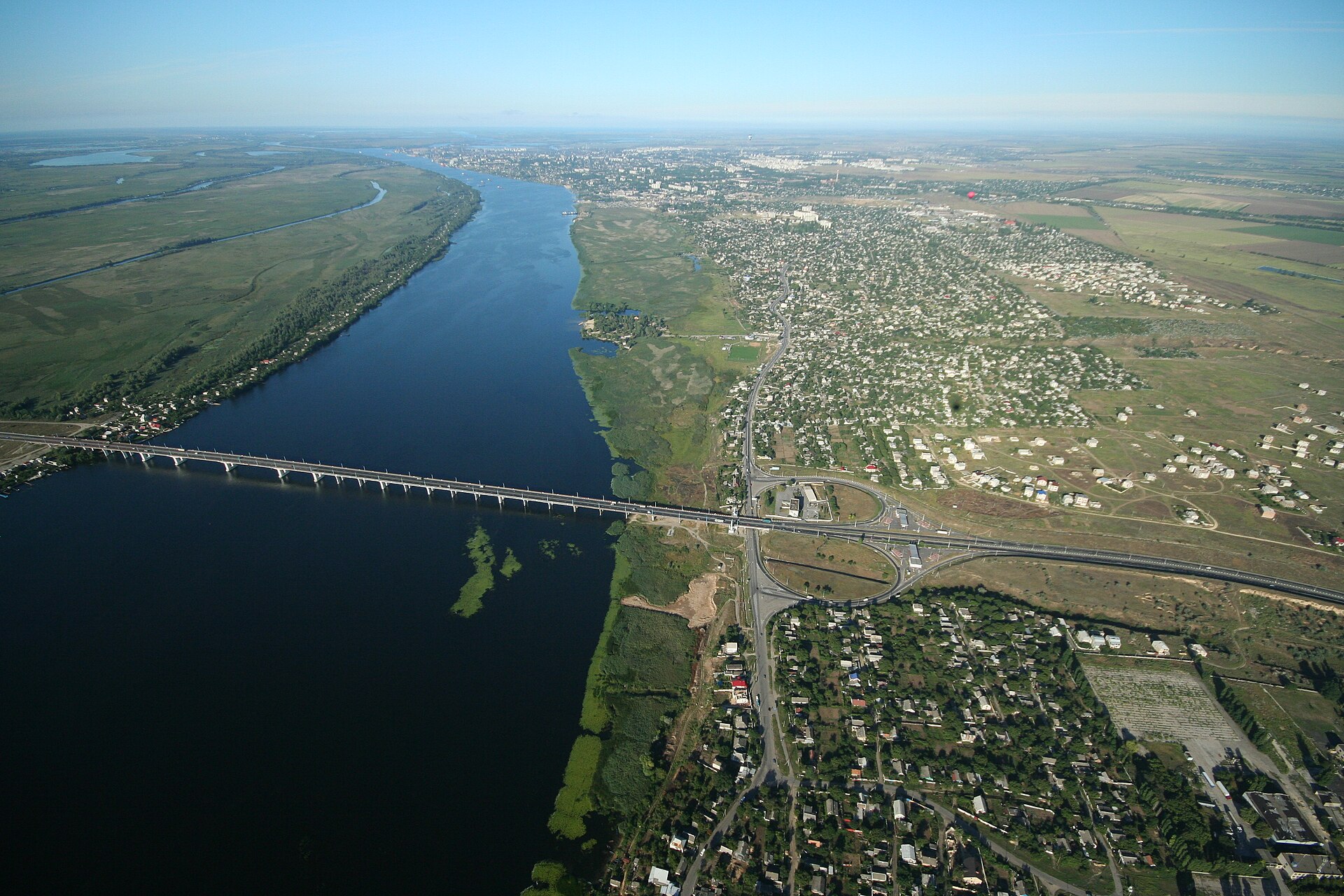
For residents choosing Ukraine, the way home does not cross the Dnipro — the destroyed Antonivka bridge and the mined front line make that impossible. Koretskyi told parliament, in remarks reported by Interfax Ukraine, that residents headed for Ukraine would travel through Russia to Belarus, and from there enter Ukraine through the Kyiv and Chernihiv regions. It is a journey of well over a thousand kilometres to cover the roughly 10 kilometres that separate Oleshky from Ukrainian-held Kherson across the river. That detour is also where the operation’s deepest anxiety sits. Ukrainian journalist Maria Semenchenko, who grew up in Oleshky, told RFE/RL’s Ukrainian Service that some residents fear “filtration” — coercive screenings and interrogations — while travelling through Russian territory, that some have experienced torture in the past, and that she knows at least one person who does not want to leave for precisely that reason. No such screening during Friday’s operation has been reported; the fear itself, documented before the buses rolled, is part of the record of what residents weighed.
What was delivered, and what it cost to clear the way
The aid was assembled, Lantratova said, “based on the specific needs reported to us; it includes food, hygiene products, essential medical supplies, fuel — everything the people require.” RFE/RL reported “tens of tons” of aid moving after demining was completed. The clearance came at a price: Lantratova said a sapper and one other person were killed during the demining operations this week. Oleshky, seized by Russian forces in the first days of the February 2022 invasion, approaches winter with no electricity, heat or running water, officials and reporters on the scene said. Estimates of how many people remain differ by scope: up to about 2,000 in the town itself, including around 50 children, according to figures cited from the First Lady’s office; Ukrainian authorities have put the figure for the city and its surrounding areas at around 6,000, including 200 children. Before the invasion, Oleshky was home to about 24,000 people.
Why this matters
Oleshky is a test of whether the narrowest channel in this war — two human rights ombudsmen, backed by a US First Lady’s mediation — can do what armies and summit diplomacy have not: move food in and people out, on time, without a shot breaking the pause. The local ceasefire — the Melania Trump Oleshky ceasefire — came into force early on Tuesday and, by both sides’ accounts, held for more than three days into Friday, in a week when the ceasefire expanded across the Kherson region — even as the wider war did not pause at all: the same week brought a Russian overnight strike that killed one person in Kyiv and left 350,000 households without power in Dnipro. The Kremlin was careful to fence the experiment in. Spokesman Dmitry Peskov praised the “high degree of coordination” between Lantratova and Lubinets, and also said Oleshky is an isolated case that should not be extrapolated to the broader settlement process. Both halves of that message matter: Moscow is presenting the operation as proof it can cooperate, and pre-emptively denying that it sets a precedent.
What happens next
The six-day ceasefire is scheduled to run through Sunday, November 1, which leaves a short margin for anyone who missed Friday’s 2 p.m. window, for aid distribution to finish, and for the Ukraine-bound evacuees to complete their long route via Russia and Belarus. Three questions will decide whether Oleshky becomes a template or a one-off. First, the count: a verified final number of who left, and in which direction, from an operation whose first number was withdrawn. Second, the return journey’s safety: whether every Ukraine-bound resident who boarded completes the trip without the filtration residents feared. Third, repetition: whether the ombudsman channel is used again — for another town, or another window in Oleshky itself — or whether, as Peskov signalled, both capitals treat Friday as an exception. For the people who stayed, meanwhile, the calculation is unchanged and stark, as SPN’s earlier reporting from inside the town documented — starve or risk the mines: inside Oleshky: winter is coming to a place with no power, no heat and no running water, and Friday’s convoy was the first relief to reach it in years.
Sources
- Reuters (October 30, 2026) — “Aid convoy sets off for Russian-held town of Oleshky in Ukraine, Izvestia says”: the convoy’s overnight departure, the 25 buses with at least 750 seats, the commissioners’ joint appearance, and Peskov’s comments.
- Reuters (October 30, 2026) — “Number of residents leaving Oleshky still unclear, Kyiv says”: Prime Minister Koretskyi’s retraction of the 527 figure and the route through Russia to Belarus, via Interfax Ukraine’s reporting of his remarks to parliament.
- RFE/RL (October 30, 2026), via Europe Says — “Humanitarian Mission In Russian-Occupied Oleshky Enters Final Phase, Ukraine Says”: the mission’s final phase, the 2 p.m. window, “tens of tons” of aid, residents’ filtration fears via journalist Maria Semenchenko, and the First Lady’s office figures of up to 2,000 people remaining in the town, including around 50 children.
- AnewZ (October 30, 2026) — “Ukraine war latest: people evacuated from Oleshky” and “Ukraine war latest: 750 people to be evacuated from Oleshky”: Lubinets’ posts from Oleshky, Arakhamia’s confirmation that evacuations had begun, and Ukrainian authorities’ figure of around 6,000 people, including 200 children, in the city and surrounding areas.
- Photos: Dmytro Petishkin (CC BY 4.0), Uaquantum at Russian Wikipedia (public domain) and Oleksandr Malyon (CC BY-SA 4.0), all via Wikimedia Commons, as credited in the captions. File photographs — none shows Friday’s convoy.