War / Ukraine
Multiple fires and columns of black smoke rose over Rosneft's Novokuybyshevsk refinery before dawn on Friday — the first Ukrainian strike on a Russian refinery in two weeks, ending an unofficial pause Kyiv had held under heavy pressure from the Trump administration, days before the U.S. midterm elections and despite European advice to wait.
Track it live: Ukraine war map — live tracker
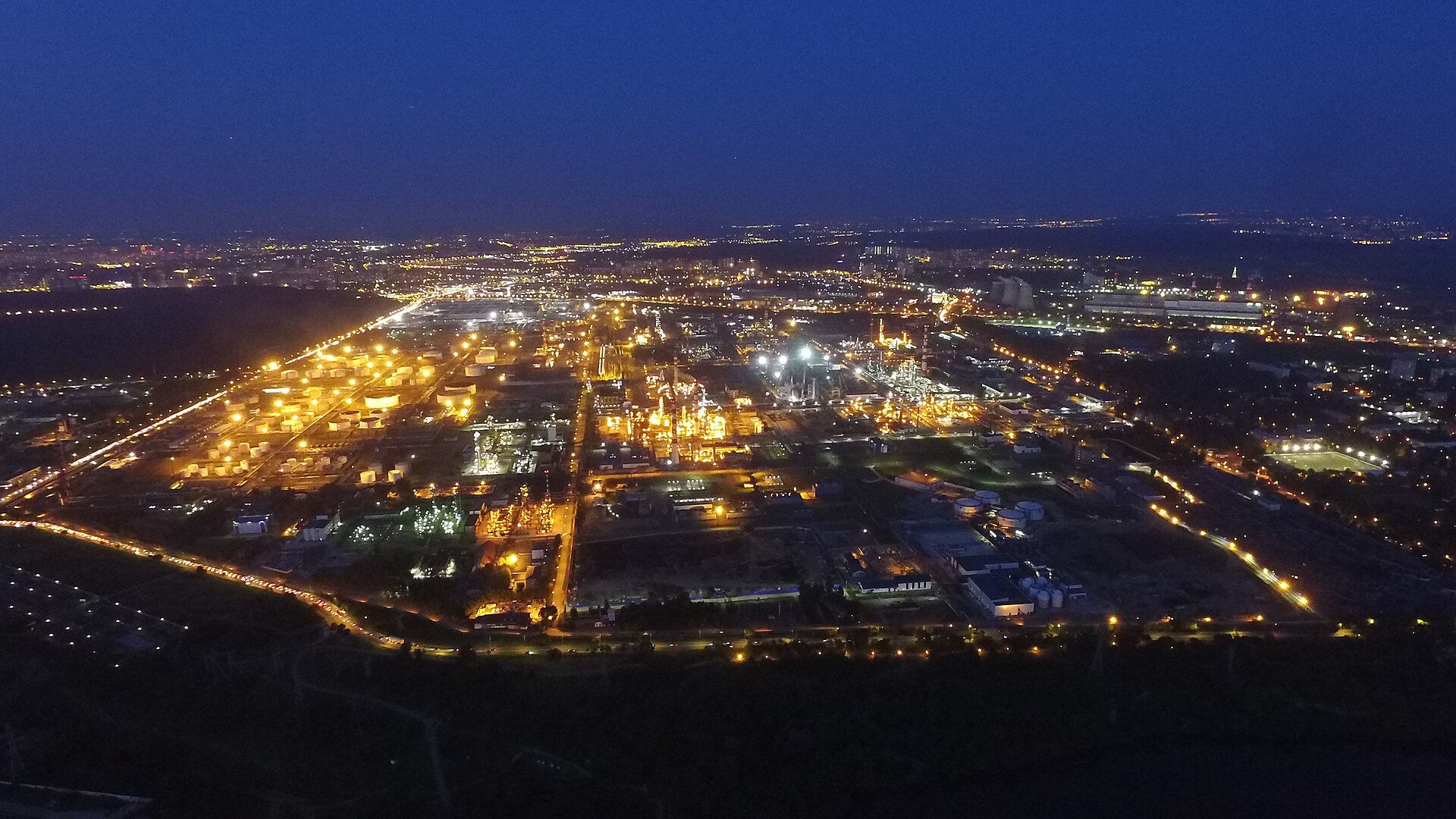
Ukraine hits Russian oil refinery targets again. In the early hours of Friday, October 30, 2026, Ukrainian drones struck the Novokuybyshevsk oil refinery in Russia's Samara region on the Volga, setting off multiple fires and sending thick black smoke over the plant, according to eyewitness footage shared online and regional officials. The Wall Street Journal reported that the strike ended a two-week pause in Ukraine's campaign against Russian refineries — a pause that had taken shape amid heavy pressure from the Trump administration — making Novokuybyshevsk a military event and a political one at the same time. The extent of the damage is unknown, no casualties have been reported, and Ukraine's General Staff had not claimed the strike when the first reports were filed. What is already clear is the timing: Kyiv resumed the campaign days before the U.S. midterm elections, after being urged by Washington and European allies alike to hold off.
What happened at Novokuybyshevsk
The attack began before dawn. Residents of Novokuybyshevsk, a refinery city in Samara region, reported hearing explosions and the sound of air-defence fire as drones reached the plant, the independent Russian outlet ASTRA reported. Multiple fires broke out at the refinery and thick black smoke rose over the complex. ASTRA noted a detail that captures how fast the attack moved: an official drone alert for the area was declared only at around 6 a.m., when the strike was already under way.
The visual record assembled in the first hours was substantial. Footage shared by Exilenova+, a Ukrainian monitoring channel, showed smoke columns rising over the plant, and the OSINT account Status-6 (@Archer83Able) counted at least six separate columns of smoke in the material it reviewed. An ASTRA OSINT analyst geolocated reader photographs to locations inside the Novokuybyshevsk refinery site itself — the strongest early evidence that the plant, and not only the city around it, was hit.
Samara Governor Vyacheslav Fedorishchev confirmed that the region was under drone attack and said air defences and mobile fire groups were operating. He did not, however, confirm that the refinery itself had been struck — a distinction Russian regional officials have maintained in attack after attack, acknowledging the raid while withholding the target. Flights at Samara airport were restricted while the attack unfolded, a now-routine precaution that nonetheless underlines its scale: this was not a single drone leaking through, but a strike package large enough to close regional airspace.
What is not yet verified
Against that outline, the unverified list is long, and it matters. The Kyiv Independent said it could not independently verify the videos or the extent of the damage, and Signal Post News has not independently verified the eyewitness footage either. Ukraine's General Staff — which normally confirms successful deep strikes — had not claimed the Novokuybyshevsk attack when the first reports were filed. No casualties have been reported by any side. Whether a distillation unit was destroyed, a storage tank burned, or the fires were largely superficial cannot be settled from smoke columns alone: refinery fires that look catastrophic at dawn have turned out to be repairable within weeks, and modest-looking hits on a single processing unit have idled entire plants.
The Fire Point claim, and how to read it
Later on October 30, the Ukrainian drone maker Fire Point said its FP-1 long-range drones had struck the refinery, claiming multiple hits, including on a diesel hydrotreating unit. That is a manufacturer's claim about its own product, made by a company with a direct commercial interest in the FP-1's reputation, and it is unverified: no imagery released with it has been independently geolocated to a hydrotreating unit, and neither Ukraine's General Staff nor any independent analyst cited in the early reporting has confirmed which unit, if any, was hit. It is recorded here as a claim — evidence that a Ukrainian producer says its drones flew the mission, not proof of what they destroyed. The picture will firm up only with a General Staff statement, satellite or fire-mapping data, and Rosneft's own operational behaviour in the days ahead.
A second target the same night
Novokuybyshevsk was not the only target. The same night, drones also struck the Konservsushprod factory in Starodub, in Russia's Bryansk region, according to photographs and video analysed by ASTRA and reported by the Kyiv Post. The plant supplies food rations to Russia's armed forces — a logistics target rather than an energy one, but part of the same pattern: the night's package reached from the Volga to the Bryansk border region, hundreds of kilometres apart, hitting both the fuel system and the supply system of the Russian military in a single operation.
The plant: Rosneft's Samara flagship
The Novokuybyshevsk refinery is not an obscure depot. Owned by Rosneft since May 2007, it is the largest refinery in Rosneft's Samara group, with primary crude processing capacity of about 8.8 million tonnes a year. It produces more than 20 types of products, including Euro-5 petrol and diesel, bitumen, petroleum coke and jet fuel used by Russia's Aerospace Forces — a product line that ties the plant directly to the air campaign Russia is flying over Ukraine. Its pedigree is older than the war by generations: commissioned in 1951, Novokuybyshevsk was the first plant in the Soviet Union to produce jet-engine fuel.
It has also been here before — repeatedly. Friday's strike was the fourth reported attack on the plant in 2026. It was last struck on August 22, 2026, when Ukraine's General Staff confirmed a fire at the site. After strikes on April 18, the refinery suspended both of its primary crude distillation units, AVT-11 and AVT-9 — the kind of damage that takes a plant out of the market rather than merely singeing it. That history is central to how Kyiv appears to run this campaign, a point the analysis below returns to: Ukrainian planners are widely reported to wait until a damaged refinery has been repaired before striking it again, so that each new attack destroys fresh repair work and forces Russia to spend scarce equipment, parts and engineering hours a second and third time.
The two-week pause, explained
To understand why one refinery fire is leading coverage on two continents, the pause it ended has to be reconstructed. The Wall Street Journal reported on October 29, citing people familiar with the operations, that Ukrainian forces last hit a refinery on October 15 and had not struck Russian oil infrastructure of any kind since October 20, when the target was an oil pumping station on the Druzhba pipeline in Russia's Tambov region. Long-range strike units were told in mid-October that the refinery campaign was effectively on hold once missions already in motion were completed. The pause was unofficial — Kyiv never announced it — and it was expected to last until after the U.S. midterm elections, potentially deeper into November.
- October 14 — SpaceX imposed speed limits on Ukraine's military Starlink service that paralysed some drone operations for 10 days, a reminder of how completely the deep-strike campaign depends on American-controlled infrastructure.
- October 15 — Ukraine's last refinery strike before the pause, per the Journal's sources.
- October 20 — The last strike on any Russian oil infrastructure, against a Druzhba pipeline pumping station in Tambov region. The same period, U.S. envoy Jared Kushner repeated President Donald Trump's demand to stop hitting refineries at a meeting with President Volodymyr Zelensky in Oslo, according to two U.S. officials cited by the Journal.
- October 24 — Full Starlink service was restored, ending the 10-day impairment.
- October 29 — The Journal reported the pause and the pressure behind it.
- October 30 — Novokuybyshevsk burns, and the pause is over.
The pressure itself was never subtle. Trump has publicly blamed Ukraine's refinery strikes for high global fuel prices — a claim the Journal notes energy experts mostly attribute instead to the U.S.–Iran war — and earlier in October he called for Zelensky's removal and blamed him for Russia's continuing war. Inside Kyiv, the pause was framed as tactics rather than obedience. Defence Minister Evgeniy Khmara told Zelensky the military had sensed it was best to hold off because of the delicate diplomatic situation. Zelensky himself told reporters in Kyiv on Tuesday: "Our guys tried to be a little more careful during these days. But they do not have an order" not to hit refineries. He has also said Ukraine wants more protection for its own energy infrastructure in exchange for halting refinery strikes — an offer that, on the evidence of the past two weeks, went unanswered. European allies, for their part, advised Kyiv to hold off until after the midterms to reduce tensions. The Journal reports the Novokuybyshevsk decision came despite that advice.
While Kyiv paused, Russia did not
The asymmetry is the heart of Kyiv's case. During the very weeks Ukraine held its fire on Russian oil, Russia's campaign against Ukrainian cities and power infrastructure continued at full intensity. Overnight on October 29–30, a Russian strike killed one person in Kyiv and left 350,000 households without power in Dnipro. That followed daylight strikes on October 29 that killed at least 19 people across Ukraine, including 14 on the platform of Dnipro's railway station. The pause, in other words, bought no reciprocal restraint: Ukraine's grid kept taking the systematic damage it has absorbed ahead of winter, while Russia's refiners got two undisturbed weeks to repair theirs. Kyiv's earlier case for the campaign rests on numbers like the one its Defence Ministry offered on October 5, when it said recent strikes had disrupted 51 percent of Russia's oil-refining capacity — a Ukrainian claim, reported by the Associated Press, that Moscow disputes, but one that explains why Kyiv treats the campaign as strategic rather than symbolic. Signal Post News has tracked that argument through the campaign's earlier phases, including Zelenskyy's previous decisions to resume refinery strikes on Russian oil.
Why this matters
The refinery campaign is close to the only asymmetric lever Ukraine holds. Kyiv cannot match Russia missile for missile, and its air defences cannot be everywhere at once; what it can do — with domestically built long-range drones — is impose cost deep inside Russia on the industry that funds the war and fuels its aircraft. Every week of the pause let Russian engineers finish repairs, return distillation units to service and rebuild the fuel stocks the campaign exists to burn down. Against that cost, Kyiv had to weigh a genuine risk. Striking days before the U.S. midterms invites Washington's anger at the worst possible moment, and the recent past offers precedent for what that anger can do: Starlink speed limits imposed on October 14 paralysed some drone operations for 10 days, and access to U.S. satellite communications and intelligence support has always rested on decisions taken in Washington, not Kyiv. A president who has publicly blamed Ukraine for fuel prices — prices that feed directly into how American voters judge his administration — and who earlier this month called for Zelensky's removal is not a neutral audience for a refinery fire on the Volga.
The market dimension cuts both ways, and it is the one Washington cares about most. Washington's case is that Ukrainian strikes tighten global fuel supply and lift prices; energy experts cited by the Journal mostly attribute high prices to the U.S.–Iran war instead. What one burning refinery in Samara region does to world prices is, by itself, close to nothing — readers can follow the market side on our oil price forecast tracker — but a resumed campaign of weekly refinery strikes is a different proposition, and both capitals know it. That is precisely why the signal matters more than the smoke: Novokuybyshevsk tells Moscow that the campaign's infrastructure, stockpiles and patience survived the pause intact, and tells Washington that Kyiv's restraint was a favour with an expiry date, not a concession.
The critics, on each side, are easy to find. In Washington's orbit, the argument is that Zelensky is gambling with American goodwill — and with the technology and intelligence his war effort runs on — to burn refineries whose loss Russia has repeatedly absorbed. In Kyiv's orbit, the counter-argument is that restraint was read in Moscow as permission: Russia used the two weeks to hit Ukrainian power stations, not to reciprocate, and a pause that only one side observes is not de-escalation but unilateral disarmament of Ukraine's most effective weapon. European governments sit uncomfortably between the two, having advised a pause they could not guarantee would buy anything. Who benefits from Friday's strike depends on what follows it: if it is a single, deliberate punctuation mark — proof of capability, then renewed restraint — Kyiv may get the leverage without the rupture. If it is the first salvo of a resumed campaign, the benefit shifts to whoever in Moscow and Washington argued all along that Kyiv cannot be managed.
What Moscow says
Russia's official account, so far, is narrow. Governor Fedorishchev confirmed a drone attack on Samara region and air-defence operations, but neither he nor federal authorities have confirmed that the Novokuybyshevsk refinery was hit, and Rosneft has issued no statement on the plant's condition in the reporting available at publication. Russian officials routinely frame Ukrainian refinery strikes as attacks on Russia's civilian economy rather than on military fuel supply, and Moscow maintains that its own strikes on Ukraine do not target civilians — a position it repeats after attacks on Ukrainian cities, including this week's, and one that Ukraine and its partners reject. Both framings are recorded here as positions, attributed to the governments that hold them; the verified facts of the night — geolocated photographs inside the refinery site, six-plus smoke columns, a regional governor confirming a drone attack — stand independently of either.
What happens next
Two scenarios now compete. In the first, Novokuybyshevsk is a warning shot: a single high-value strike that demonstrates the campaign can restart at will, after which Kyiv returns to restraint and carries the threat — rather than the fires — into its diplomacy with Washington. In the second, Friday marks a full resumption, and the two-week pause will be remembered as a tactical interlude the campaign simply outgrew. Five things will distinguish them, and all are watchable within days. First, whether Ukraine's General Staff formally claims Novokuybyshevsk, as it did the August 22 strike on the same plant. Second, satellite imagery and fire data over the refinery, which will show which units burned. Third, Russian fuel-market signals — wholesale petrol and diesel prices and any move toward export restrictions — which reveal real refining damage faster than official statements do. Fourth, Washington's reaction: a public rebuke, a quiet phone call, or any new friction over Starlink or intelligence support would show how much goodwill the strike cost. Fifth, and most decisively, whether a second refinery is hit within days. One fire is a message. A second would be a campaign.
Sources
- The Wall Street Journal (October 30, 2026) — Ukraine hits the Novokuybyshevsk refinery, ending the two-week pause and defying Trump administration pressure
- The Wall Street Journal (October 29, 2026) — Ukraine's refinery pause under U.S. pressure: the October 15 and October 20 timelines, the Kushner–Zelensky meeting in Oslo, the Starlink speed limits and the midterm horizon
- The Kyiv Independent (October 30, 2026, as syndicated) — eyewitness video from Novokuybyshevsk; the limits of independent verification; Samara airport restrictions
- The Kyiv Post (October 30, 2026) — the Konservsushprod factory strike in Starodub, Bryansk region, per ASTRA's analysis
- ASTRA (October 30, 2026) — resident reports of explosions and air-defence fire; the 6 a.m. drone alert; geolocation of reader photographs inside the refinery; Starodub footage analysis
- Meduza and The Moscow Times (October 30, 2026) — Governor Vyacheslav Fedorishchev's statements; Status-6's count of at least six smoke columns; background on the Novokuybyshevsk refinery, its capacity and its attack history