Oleshky Ukraine humanitarian crisis
Oleshky Ukraine humanitarian crisisOleshky road of deathRussian-occupied Oleshky starvationOleshky blockade food crisisDnipro frontline civilians trappedOleshky evacuation corridorKakhovka dam Oleshky floodingDmytro Lubinets OleshkyOleshky drone food deliveryKherson Oblast humanitarian crisis
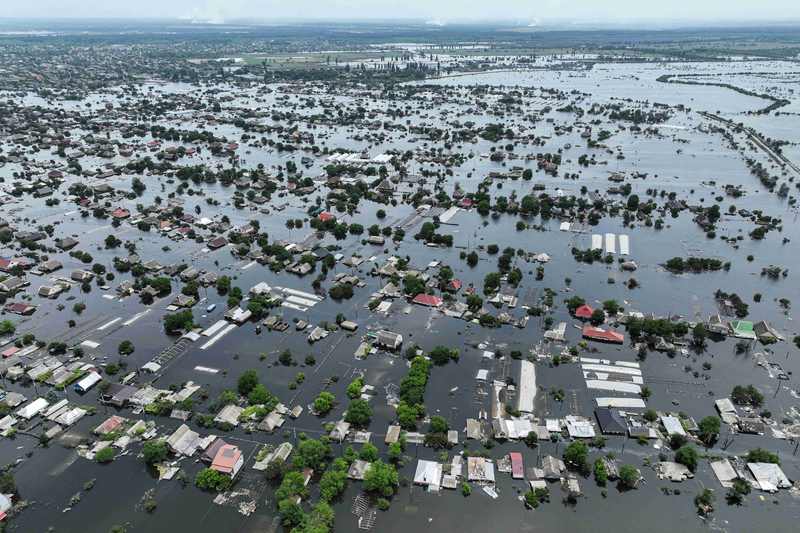
OLESHKY, UKRAINE — The Oleshky Ukraine humanitarian crisis has reduced a once-bustling tourist town of 25,000 people to roughly 2,000 trapped civilians facing an impossible choice. According to Reuters reporting published October 8, residents of the Russian-occupied town in southern Ukraine are walking for hours — on foot and by bicycle — along mine-littered roads to reach food and water, on a route locals call the “road of death.”
One woman, injured by a landmine on her way back from the village of Radensk some 20 kilometers away, told Reuters there is no safe way out. Days earlier, she said, three people had been killed on the same road. Reuters said it could not independently verify her account, an important limitation, though the description was consistent with testimony from other witnesses, officials and aid workers interviewed about conditions around Oleshky.
The human consequences are clearer than the chain of responsibility. Residents lack dependable food, medicine, water and utilities. Ukraine says Russia refused a proposed local ceasefire and evacuation arrangements. Russian officials acknowledge critical shortages but blame Ukrainian fire and obstruction for preventing deliveries and departures. Those competing claims have not been independently resolved. What can be documented is the civilian trap between them.
The “road of death”
The route described by residents does not lead toward Ukrainian-held territory. It runs deeper into Russian-controlled areas toward Radensk, through a landscape witnesses say is marked by burned-out vehicles and scars from blasts. Reuters said video footage it verified showed stretches of the road and the damage around them. Attack drones patrol overhead, adding another threat to mines, shelling and the physical exhaustion of a journey that can take hours each way.
Residents told Reuters that the last food deliveries to a local store took place in May. With ordinary supply chains severed, the road is less an escape route than a survival corridor improvised by civilians. People travel by bicycle when they can and on foot when they cannot, carrying back whatever food and water they can manage. The same route may be mined by one side, observed by the other and exposed to drones from both directions.
Ukraine's human rights commissioner, Dmytro Lubinets, summarized what he says Russia forces civilians to choose every day: “to stay — and starve to death; or to leave — and risk being blown up by a landmine.” Kyiv says it prepared a local ceasefire and evacuation routes and that Moscow rejected the proposal. Russia has acknowledged critical problems with food and medical supplies, said its military was working to resolve them, and accused Ukraine of obstructing supplies. Both statements are claims by parties to the war, not independent findings.
How Oleshky became a trap
Occupation and the Dnipro river line
Russian forces seized Oleshky in the first hours of the full-scale invasion in February 2022. The town sits on the left bank of the Dnipro across from Kherson city. When Ukrainian forces liberated Kherson in November 2022, the river became a front line. Oleshky was left wedged between the Dnipro floodplains under Ukrainian fire control and Russian positions beyond the town, caught in the crossfire of two armies.
Geography transformed what had been a regional tourist center into a military buffer. The broad river and wetlands impede large-scale movement while giving drones and artillery long sightlines. Civilians live among positions, routes and infrastructure valued by both armies. Every road can be a supply line and every bridge a target; the features that matter militarily are the same ones civilians need to eat, evacuate and receive medicine.
The Kakhovka dam, the bridge and the Oleshky blockade food crisis
The destruction of the Kakhovka dam in June 2023 submerged much of Oleshky and wrecked water, power and gas infrastructure. The causes of the dam's destruction remain disputed in public claims, but its impact on civilians is not. Flooding damaged homes, scattered mines and deepened the town's dependence on outside supplies. What survived the initial disaster entered a grinding period of occupation and frontline isolation.
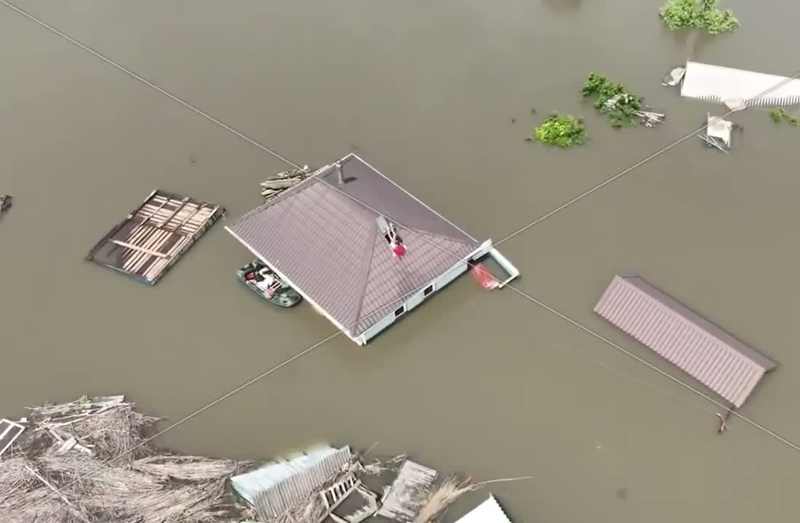
Ukrainian forces destroyed a strategic bridge near Oleshky in March 2025, leaving one intact access road. Russian occupation authorities stopped food and supply deliveries in late December 2025, citing the danger from Ukrainian drones. Residents report that meaningful overland supplies have not resumed for months. Testimony collected by journalists and aid networks describes people hunting birds, relying on garden produce and trading what little remains.
Residents also report that aid distributed through the occupation administration goes only to people who accepted Russian citizenship. That allegation has not been independently verified across the town, but it fits a wider pattern documented in occupied areas where access to services is tied to Russian documents. Moscow says Ukrainian attacks make safe delivery impossible; Kyiv says the blockade is a deliberate occupation policy. The effect is the same for civilians who cannot obtain either passport, passage or food.
Life under the blockade: Dnipro frontline civilians trapped
Roughly 2,000 people remain from Oleshky's prewar population of about 25,000. Ukrainian and UN-linked estimates put as many as 6,000 people in the wider affected area, including roughly 200 children. Most of those still in the town are elderly. Witness accounts describe no regular electricity, gas, running water or medicine. The local hospital reportedly serves only Russian citizens, while residents move among abandoned buildings to reduce the chance of being located by drones.
Between March and September 2026, Ukrainian forces delivered about four tons of food by drone. The arithmetic shows both the ingenuity and the inadequacy of that lifeline: 4,000 kilograms spread across roughly six months and 2,000 people equals about 11 grams per person per day. That is a mouthful, not a ration. It cannot replace an overland humanitarian corridor or ordinary commerce.
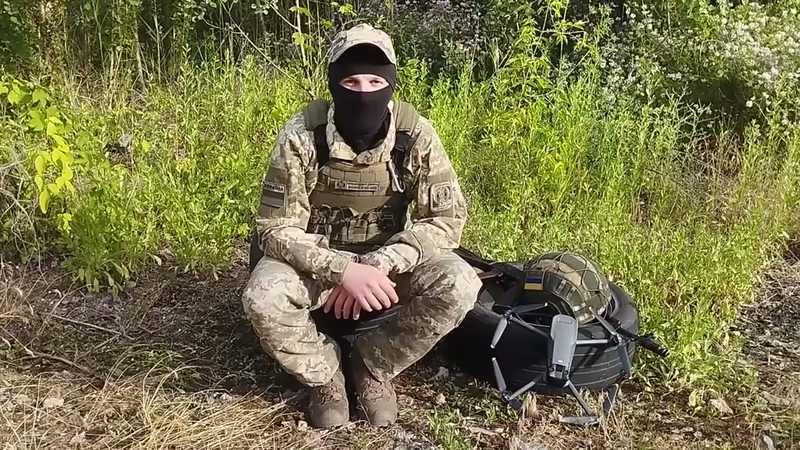
Signal Post News previously examined the limits of those drops in Ukraine Uses Drones to Deliver Food to Trapped Civilians in Oleshky. The technology can bridge a front line, but it cannot carry hospital inventories, restore pipes or feed thousands through winter. The same drone-filled sky that permits aid also makes roads dangerous and gives each military a reason to suspect movement below.
The ceasefire offer Russia rejected — and what each side says
Lubinets says Ukrainian agencies prepared evacuation procedures, including a local ceasefire, and that the International Committee of the Red Cross was willing to participate. According to his account, Russia has not confirmed readiness. He says 358 people need urgent evacuation and up to 6,000 are affected. The proposal and rejection have not been published as a jointly documented exchange, so the claim remains attributed to Ukraine's human rights commissioner.
International pressure is building. EU crisis commissioner Hadja Lahbib said on October 2 that civilians were trapped without food, medicine, clean water or basic care. Ukraine's foreign minister raised Oleshky at the UN General Assembly on September 23, accusing Russia of causing famine and demanding a humanitarian corridor. Church groups appealed to Pope Leo XIV on September 20. On September 28, Ukrainian outlet Slidstvo.Info named the 126th Coastal Defence Brigade and 331st Guards Parachute Regiment as allegedly involved in enforcing the blockade; that identification is an allegation by the outlet, not a judicial finding.
Russia's stated position is that a genuine humanitarian catastrophe exists but that Ukraine prevents departures and blocks deliveries. Its embassy in London has attributed the crisis to Ukrainian strikes. Russian commentators also argue that Ukrainian forces mine access roads and shell the town, making large deliveries impossible. Ukraine disputes that account and says Russia controls the territory, the checkpoints and the decision whether to pause fire for a monitored evacuation.
The casualty record shows why any corridor requires both sides. The UN Human Rights Monitoring Mission has recorded at least 29 civilians killed and 54 wounded in Oleshky and nearby Hola Prystan in 2026, most in drone attacks. The figure does not assign every strike to one party. It does establish that movement in the area carries a lethal risk beyond hunger and mines.
Why this matters
Starvation as a method of war — the legal frame
Ukrainian officials and some witnesses draw parallels with the Holodomor, the Soviet-era famine that killed millions of Ukrainians. The historical analogy carries enormous moral weight, but it does not by itself determine legal responsibility in Oleshky. International humanitarian law prohibits using starvation of civilians as a method of warfare. Parties must allow and facilitate impartial humanitarian relief, subject to lawful controls, and must distinguish military operations from the needs of civilians.
Applying that rule requires evidence about intent, control, military necessity and actual efforts to permit relief. Russia disputes Ukraine's characterization and blames Ukrainian attacks for the shortages. The verified facts are narrower: civilians face severe deprivation, ordinary access routes have been cut, Ukrainian officials say a ceasefire offer was rejected, and the two sides accuse each other of blocking aid. An independent corridor with monitoring would test both narratives more effectively than statements.
What the numbers actually say
The population decline from 25,000 to roughly 2,000 is about 92%. That scale of depopulation is comparable to the collapse seen in Mariupol during the 2022 siege, though the battles, periods and data quality differ. It signals not simply migration but the hollowing out of a town: schools, clinics, utilities and markets no longer have the people or systems needed to function.
The drone-delivery calculation — roughly 11 grams per person per day if four tons were divided evenly among 2,000 residents for six months — shows why dramatic images of aid drops should not be mistaken for adequate relief. Another figure points to how long the crisis has been visible: the ombudsman's office received 119 appeals concerning Oleshky in just 10 weeks from February to mid-April 2026. Residents later told volunteers linked to RFE/RL that their supplies would run out in October. October has now arrived.
Who gains, who loses
Civilians lose unambiguously. Hunger, mines, drones and winter do not care which side wins the information war. Kyiv gains diplomatic leverage by documenting the crisis at the UN General Assembly, through the EU and in appeals to the Vatican. Moscow avoids the precedent of a negotiated local ceasefire that could invite demands for additional humanitarian corridors elsewhere along the front. That may explain reluctance, but it does not prove motive.
The Red Cross and UN face a credibility test if access remains blocked. Ukrainian critics argue that international bodies issue statements without consequences while people starve. Russian commentators answer that the same institutions understate Ukrainian shelling and mining. Both criticisms should be tested against access and evidence. The humanitarian agencies cannot escort a convoy through active fire unless the armies agree to stop it.
What happens next — three scenarios
1. Winter deepens the catastrophe
No heating, little medicine and exhausted food stocks would turn exposure and treatable illness into major killers. The October deadline residents described arrives as temperatures fall. Deaths from cold and hunger could rise largely out of sight, with only fragmented testimony emerging from occupied territory.
2. Diplomacy cracks open an Oleshky evacuation corridor
President Volodymyr Zelenskyy has said the United States wants trilateral technical talks by the end of October. Oleshky could become a test case for a local humanitarian ceasefire if either side wants a low-cost confidence-building measure. A narrow arrangement — monitored routes, agreed hours, mine marking and Red Cross participation — would not settle the war. It would show that practical protection remains possible.
3. Attrition continues
The blockade could hold while drone drops continue at token scale and civilians make the road journey when hunger outweighs fear. In that scenario, Oleshky becomes a slow-motion Mariupol: documented, condemned and unchanged. Recent Russian strikes across Kyiv, Dnipro and Odesa show the wider escalation surrounding this local emergency; read Signal Post News' report on Russia's massive October 7 attack and our analysis of Zelenskyy's warning about a larger Russian strike campaign.
Whichever scenario unfolds, the public record now includes Reuters' October 8 dispatch, the ombudsman's account of a rejected ceasefire proposal, and Russia's acknowledgment that the crisis is real. The effects on the ground are no longer in serious dispute. Responsibility for causing and prolonging them remains the central contested question.
Sources and reporting notes
This report distinguishes verified conditions and imagery from claims made by Ukraine and Russia. Access to occupied Oleshky is restricted, and several witness accounts cannot be independently confirmed.
- Reuters — October 8, 2026 reporting on the “road of death,” mine injuries, food shortages and competing Ukrainian and Russian accounts.
- The Gaze — report on Dmytro Lubinets' warning, evacuation proposal and urgent cases.
- Institute for the Study of War — “Oleshky: How Russia Governs Through Humanitarian Decline,” for occupation and blockade analysis.
- AFP via The National Times — reporting on food and medicine shortages in occupied Oleshky.
- Wikipedia: Blockade of Oleshky — background timeline used as a secondary reference and checked against reported events.
- Human Rights Watch — “Under Water, Under Occupation,” background on the Kakhovka flooding and source for the hero photograph.