Lead
Thousands of Iranian-American protesters gathered outside United Nations headquarters in Manhattan on Tuesday, September 22, demanding an end to political executions in Iran and the overthrow of the Islamic Republic, in the largest diaspora opposition demonstration of UN General Assembly week. The rally, led by the National Council of Resistance of Iran (NCRI), filled Dag Hammarskjöld Plaza — directly across from the UN — hours before President Donald Trump's address to the General Assembly, in which he warned he was weighing whether to "annihilate the Islamic Republic" or "drive them into hell."
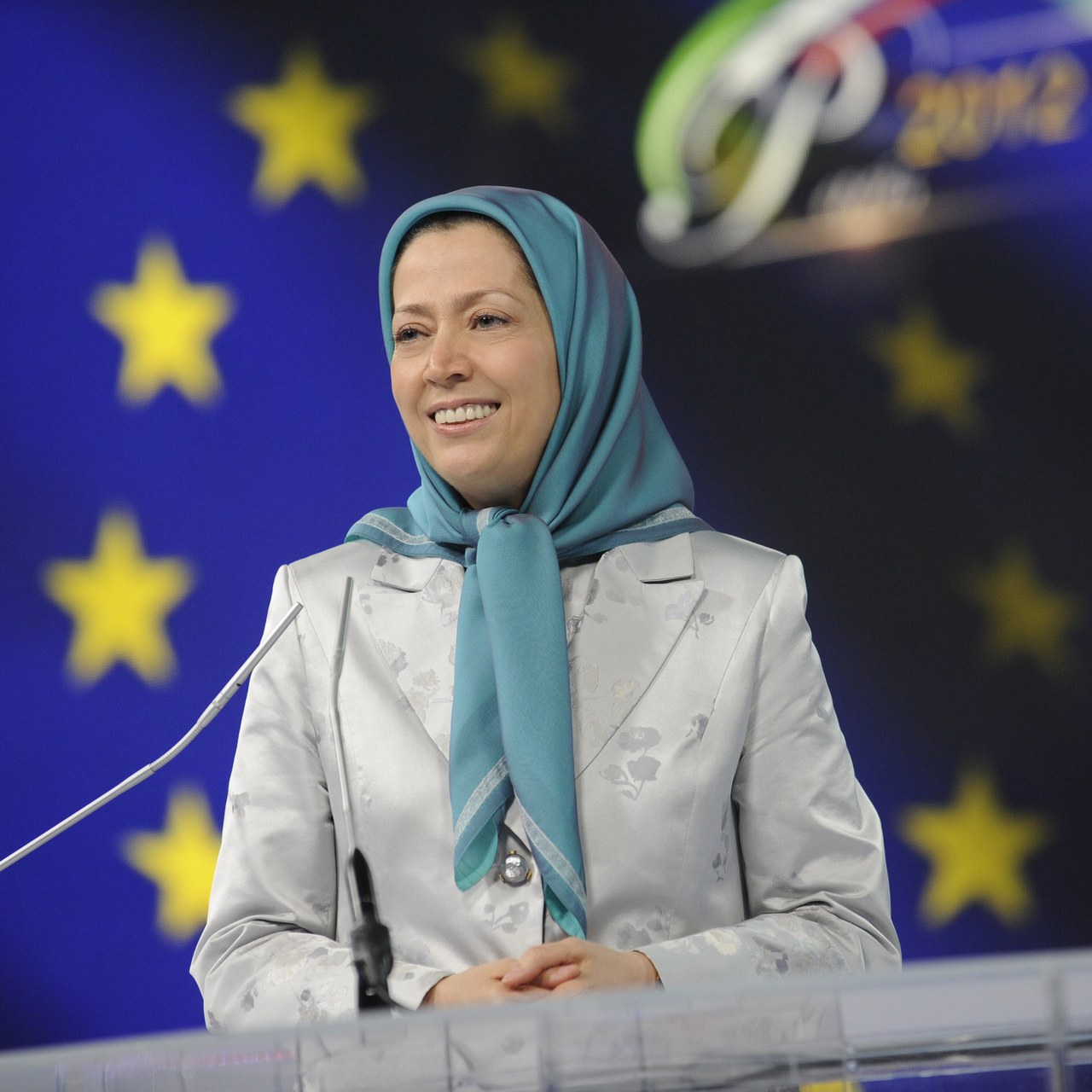
Maryam Rajavi, the NCRI's President-elect, addressed the crowd through a video call-in, denouncing the presence of Iranian leaders — including President Masoud Pezeshkian, who arrived in New York for the General Assembly — at the world body's annual gathering. "As long as this regime remains in power, repression, executions, terrorism, and warmongering will continue," Rajavi said. "The solution is regime change by the Iranian people and their organized Resistance."
What happened
According to the New York Post, which had reporters and photographers on the scene, the demonstration began Tuesday morning at Dag Hammarskjöld Plaza at Second Avenue and 47th Street. The Post reported thousands in attendance. A video report by APT News described hundreds of protesters singing the Iranian national anthem, waving flags, and holding signs reading "FREE IRAN," while criticizing Pezeshkian's presence at the General Assembly. An AFP video report showed Iranian-Americans waving flags, holding signs, and chanting as the high-level week of the 81st UN General Assembly got underway.
The rally was the centerpiece of a two-day campaign organized by the NCRI's U.S. representative office and allied groups. A media advisory issued September 15 announced rallies for Tuesday, September 22, and Wednesday, September 23, starting at 9:00 a.m., with organizers expecting thousands of Iranian Americans and supporters from across the United States. The September 22 gathering was timed to coincide with the U.S. president's address to the General Assembly; the September 23 rally is planned for the day Pezeshkian is expected to address the assembly.
Demonstrators carried Lion and Sun flags — the emblem of pre-1979 Iran — banners reading "Stop Executions in Iran," and portraits of people they identified as victims of the 2026 Iran uprisings and political prisoners. The crowd's slogans, documented by the NCRI-affiliated outlet Iran Freedom, included "No to Shah, No to Mullahs, Yes to Free Iran," "Rajavi, Yes, Mullahs, No," and "Death to the oppressor, whether the Shah or the Supreme Leader." One protester interviewed by APT News, Mike Khodadost of Michigan, spoke of being unable to return to Iran for decades and his wish to visit his parents' graves.
The Tuesday rally followed a smaller demonstration Monday outside the New York hotel where Pezeshkian is staying, where protesters opposed the Iranian president's presence on U.S. soil and demanded an end to executions — described by organizers as a prelude to the two main rallies.
Why it matters
This was not a routine diaspora protest. The timing and scale turn it into a three-sided power play at the center of the week's diplomacy. Consider the calendar: on the same day, Trump used the General Assembly podium to threaten the Islamic Republic's annihilation, prompting the Iranian delegation to walk out; U.S. special envoys Steve Witkoff and Jared Kushner spent three hours in back-channel talks with Iranian officials on the UN sidelines; and Pezeshkian — the highest-ranking Iranian official to set foot on American soil since the U.S.-Israeli war with Iran began in late February — prepared to address the assembly on Wednesday.
Into that crowded field stepped the NCRI with a deliberately simple message: neither bombs nor backroom deals, but regime change "by the Iranian people and their organized Resistance." Rajavi's framing is aimed squarely at the policy debate now consuming Washington and European capitals — whether the endgame in Iran is a negotiated settlement with the current government or its replacement. By staging thousands of flag-waving supporters across the street from the UN on the week the world is watching, the NCRI is bidding to be treated as the democratic alternative-in-waiting, complete with a governing program: Rajavi's Ten-Point Plan, which calls for a democratic, secular, non-nuclear republic based on free elections, gender equality, separation of religion and state, abolition of the death penalty, and an end to oppression of ethnic and religious minorities.
The rally also matters because it exposes the regime's dual-front problem. Tehran is simultaneously fighting a war with the United States and Israel, managing a shattered economy, and now facing an execution surge at home that has made its human-rights record the subject of a UN fact-finding mission's finding of crimes against humanity. A mass opposition rally at the UN during the president's visit — complete with demands that world leaders condemn the Iranian delegation — undercuts Pezeshkian's diplomatic mission before he delivers a word.
Background: the movement and the moment
The NCRI was founded in Tehran in July 1981, a month after the onset of nationwide resistance to the clerical regime, as an umbrella coalition of Iranian opposition organizations. Its principal member is the People's Mojahedin Organization of Iran (PMOI/MEK). The MEK's history is fiercely contested: it was once designated a terrorist organization by the United States and the European Union, designations both later lifted, and it retains a devoted following among segments of the Iranian diaspora alongside vocal critics who question its internal culture and the depth of its support inside Iran. Acknowledging that dispute is essential to honest coverage of the group.
The rally's immediate backdrop is Iran's execution surge. According to the United Nations, at least 56 people have been hanged on national security-related charges since March 19, following the regime's brutal crackdown on protesters in January. UN human rights chief Volker Türk warned last month that more than 100 people were facing death sentences. Among those recently sentenced to death was Leila Abolhasani, 43, a mother of two whose offense, per the Post's reporting, was filming a retail store burning during the January protests. On September 17, the UN Independent International Fact-Finding Mission on Iran said it had reasonable grounds to believe Iranian authorities committed crimes against humanity during the protest crackdown — findings Signal Post News has previously reported.
This is not the first time the NCRI has used a UNGA week to confront an Iranian president in New York; its supporters staged week-long rallies against then-President Ebrahim Raisi's 2022 visit. The difference in 2026 is the war. With U.S. and Iranian officials openly discussing both escalation and a deal, the diaspora opposition is no longer protesting at the margins of diplomacy — it is competing with it.
The numbers in context
Start with the executions, because they are the rally's stated cause. At least 56 hangings on national security charges since March 19, and more than 100 people currently on death row, according to UN figures cited by the Post. Those numbers describe an execution pace that human-rights organizations rank among the world's highest per capita — and they land in a year when the regime's domestic legitimacy is already strained by war and economic collapse. The regime's calculation appears to be deterrence through terror: exemplary punishment of protest-adjacent offenses, like the filming that condemned a 43-year-old mother of two. The opposition's calculation is the inverse — that each execution becomes evidence for the international case against the regime.
On turnout, precision is impossible and honesty requires saying so. The Post reported "thousands"; APT's video report described "hundreds." Organizers announced in advance that they expected thousands, and the event stretched across a full plaza with a stage, video screens, and coordinated chanting — consistent with a rally in the low thousands rather than the hundreds. Crowd-size disputes are a permanent feature of protest coverage; what is verifiable is that this was a large, organized, multi-hour demonstration with national media coverage on the opening day of UNGA high-level week, and that a second rally is scheduled for Wednesday.
Put the rally beside the diplomacy it is trying to influence. Trump told the General Assembly he faces "a big decision" on Iran — deal or annihilation. Witkoff and Kushner's three-hour sideline session suggests the administration is still testing whether a deal exists. The NCRI's intervention is a bet that the administration's "regime change" rhetoric will need a civilian face — and that the group can be that face.
Who wins, who loses — and what critics say
Winners: The NCRI itself, which converted UNGA week into its largest American stage of the year, with mainstream press coverage, a direct video address by Rajavi, and a message — "regime change by the Iranian people" — calibrated to resonate in Washington. U.S. hawks pushing a maximalist Iran policy also gain a visible constituency for the argument that the Iranian people want the regime gone. And the broader Iranian opposition benefits from any event that keeps the execution surge on the international agenda during a week dominated by war diplomacy.
Losers: The Iranian regime, which absorbs a legitimacy hit on the eve of its president's General Assembly speech — protesters literally across the street demanding world leaders condemn its delegation. Pezeshkian personally: his New York trip was meant to project a functioning state engaged in diplomacy; instead he was greeted first by a hotel protest and then by a mass rally against his government's executions. Ordinary Iranians facing death sentences gain visibility but no protection; history suggests regimes under external pressure sometimes accelerate, rather than pause, domestic repression.
What critics say: Skeptics of the NCRI — including some Iran analysts and journalists — argue that the group's disciplined, well-funded diaspora mobilization overstates its actual support inside Iran, and they point to the MEK's hierarchical internal culture and controversial history as reasons Western governments should keep their distance. Supporters counter that no other opposition force can put thousands of organized demonstrators in front of the UN on demand, and that the Ten-Point Plan is the most detailed democratic-transition program any Iranian opposition group has published. Both claims can be partially true: organizational capacity is not the same as popular legitimacy, and the absence of reliable polling inside Iran means the argument cannot be settled — only weighed. Readers should hold both in mind.
What happens next
The immediate test comes Wednesday, September 23, when the second rally coincides with Pezeshkian's expected address to the General Assembly. If Tuesday's turnout is repeated or exceeded while the Iranian president speaks, the visual — a mass opposition rally outside, the regime's president inside — will be difficult for Tehran's diplomacy to escape. Watch also for any response from the Iranian delegation, which has historically denounced NCRI demonstrations as the work of a "terrorist cult."
Beyond the plaza, three tracks will decide whether this rally was theater or turning point. First, the U.S.-Iran talks: if Witkoff's back channel produces a framework, the NCRI's maximalist message loses oxygen; if talks collapse toward escalation, the group's relevance grows. Second, the execution surge: another wave of hangings would validate the rally's urgency and likely trigger fresh Western sanctions debates. Third, the domestic situation in Iran: the regime's January crackdown bought quiet at the cost of deepening hatred, and UN investigators have now put the "crimes against humanity" label on it. Quiet is not consent.
The deeper question the rally poses — to Washington, to European capitals, and to Iranians themselves — is the one Rajavi stated outright: whether Iran's future will be decided by deals between governments, by bombs, or by the Iranian people. Tuesday's crowd was the NCRI's answer. It will not be the last word.
Sources and reporting notes
- New York Post, Sept 22, 2026: "Protesters gather outside UN to demand an end to Iranian regime, political executions" — on-the-scene reporting, thousands in attendance, Rajavi video call-in and quote, UN execution figures
- AFP video, Sept 22, 2026: "Protest against Iranian government outside the UN as UNGA high-level week gets underway" — Iranian-Americans gathering outside the UN; Pezeshkian due to speak Wednesday
- APT News video, Sept 22, 2026: "'Free Iran': Hundreds Protest Against Iranian Government Outside UN Headquarters" — anthem, flags, "FREE IRAN" signs, protester interviews
- CNN-News18 (N18G) live stream, Sept 22, 2026: "Free Iran Rally" at Dag Hammarskjöld Plaza coinciding with the opening day of UNGA high-level debate
- NCRI-US media advisory, Sept 15, 2026: Sept 22–23 rallies, 9:00 a.m., Dag Hammarskjöld Plaza; Ten-Point Plan; call for recognition of NCRI Provisional Government
- Iran Freedom, Sept 21, 2026: Monday rally outside Pezeshkian's New York hotel; slogans and banners documented
- New York Post, Sept 22, 2026: Trump's UNGA address — annihilation/"hell" threat, Iran and Cuba walkouts, three-hour Witkoff–Kushner sideline talks
Reporting cutoff: September 22, 2026, 3:00 p.m. PDT. Attendance figures differ between outlets (the Post reported thousands; APT described hundreds); organizers announced an expectation of thousands. The Wednesday, September 23 rally and Pezeshkian's address had not yet occurred at publication. The lead image is an archival file photo of Maryam Rajavi (Villepinte, 2012), not from Tuesday's rally. NCRI and MEK history and the Ten-Point Plan are described from the organizations' own published materials and press advisories; criticism of the group is attributed to analysts and journalists. UN execution and death-row figures are as reported by the Post citing UN sources; the September 17 UN fact-finding mission findings were previously reported by Signal Post News.