Published September 30, 2026 at 12:00 p.m. PDT
Iran executes two protesters
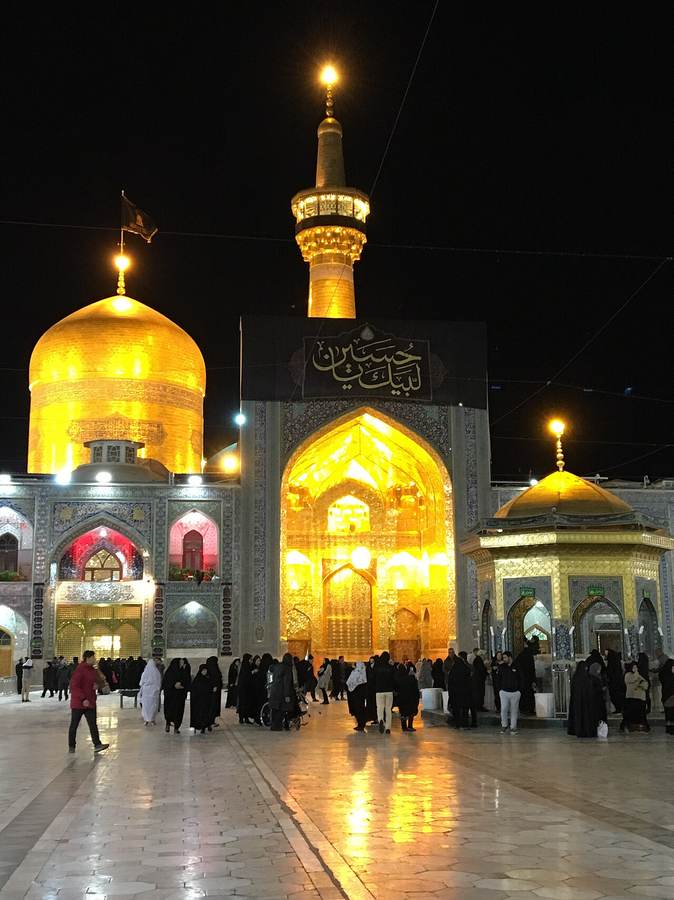
MASHHAD, Iran — Iran executes two protesters, Ali Hemmati and Majid Nik-Andish, by hanging on Wednesday, September 30, after the judiciary said their conduct during the January 2026 anti-government protests caused the deaths of four members of the Basij and other security forces in Mashhad. The announcement by the judiciary’s Mizan Online service said the Supreme Court upheld both death sentences and that all legal procedures had been completed.
The hangings are the latest turn in a much broader Iran protest crackdown in 2026. They also land at a moment when punishment at home, war with the United States and the continuing crisis around the Strait of Hormuz have become parts of the same political message: the state intends to show that neither external pressure nor internal revolt can force it to retreat.
What happened in Mashhad
According to the official case narrative, Hemmati — also identified in reports as Ali Hemmati Sistani — and Nik-Andish were active in Mashhad’s Tabarsi area on January 8, when the national uprising reached one of its most violent points. The judiciary said their actions led to four deaths among Basij and security personnel. It described the two as “field operatives” or “field agents” in what authorities have called an attempted coup and a wave of foreign-backed riots.
Mizan’s account said Hemmati set fire to a chain store with a Molotov cocktail, used a soil truck to block a roadway and stabbed a Basij member twice. It said Nik-Andish carried three Molotov cocktails and a knife, filmed the unrest and sent footage abroad, set fire to a bank and looted a store. Rights groups challenge the reliability of confession-based evidence in Iranian security cases, saying statements are often extracted under coercion and that defendants can be denied a genuinely independent defense.
That dispute is central, not incidental. “Ali Hemmati executed” and “Majid Nikandish executed” are now facts of state action; the contested question is whether the proceedings that produced those outcomes met an evidentiary standard the outside world can trust. The judiciary says the Supreme Court review and completed procedures settled that issue. Its critics say formal completion cannot cure an opaque trial process.
Why this matters
These Mashhad executions do more than punish two defendants. They communicate to several audiences at once. To Iranians considering renewed protest, the message is deterrence: violence against state personnel will bring the ultimate penalty even months later. To the security establishment, the executions signal that the leadership will stand behind those enforcing order. And to foreign governments, Tehran is insisting that wartime pressure will not dictate its domestic judicial choices.
The timing gives that signal unusual weight. The U.S.-Iran war began in February 2026, and tensions around Hormuz remain unresolved. Iran has floated a route to reopen the waterway within seven days if negotiations advance, a proposal examined in our report on Iran’s Strait of Hormuz offer. Executions tied to a movement the government depicts as foreign-backed allow officials to merge dissent, sabotage and external attack into one national-security frame.
But the same tactic carries strategic costs. It may harden domestic fear in the short term while narrowing Tehran’s diplomatic space abroad. Governments negotiating over shipping, sanctions or a wider ceasefire face pressure to answer executions as a human-rights issue. At home, the economic collapse that helped ignite the uprising has not been solved by punishment. The Iranian rial’s record low under tighter U.S. sanctions is a reminder that deterrence cannot repair household purchasing power.
Background: how the January protests began and what they became
The protests began in late December 2025 with a familiar grievance: the cost of living. Prices were rising, the currency was weakening and ordinary households were being asked to absorb another round of economic pain. What started as anger over daily survival widened into direct opposition to the political order, spreading across cities and social groups.
January 8 and 9 marked the peak. Those dates matter because the government’s legal cases are built around specific acts committed during the most chaotic phase, while the opposition sees the same forty-eight hours as the center of a nationwide state crackdown. The Mashhad case is tied to January 8 in the Tabarsi area, where the judiciary says four security personnel were killed.
The official label “foreign-backed riots” is designed to collapse the movement’s economic origins into an external-security story. Foreign involvement and organized violence are legitimate matters for investigation, but they do not erase the original public grievances. A state can face genuine attacks on its personnel and still owe a credible accounting for lethal force used against protesters. Both propositions can be true, and serious reporting should resist the pressure to choose only one.
The numbers: what the death tolls and execution counts actually imply
Iranian authorities have reported more than 3,000 deaths, blaming many of them on U.S.- and Israeli-linked “terrorist acts.” The U.S.-based Human Rights Activists News Agency, or HRANA, has recorded more than 7,000 killings, mostly protesters, and warns that the true total could be higher. The gap of at least 4,000 is not a rounding error. It reflects incompatible systems of attribution, access and verification.
The state count is part of a prosecutorial narrative in which armed disorder and foreign direction dominate. The HRANA Iran executions record is part of a rights-monitoring narrative focused on people killed or condemned by the state. Neither number should be casually blended with the other. What can be said with confidence is that both totals describe mass violence, and the distance between them shows how little transparent, independently testable accounting exists.
Rights monitors say that since wartime executions resumed in March, 31 men have been hanged over the January protests, along with two men linked to the 2022 protests. Dozens more face risk. Those Iran death sentences in September 2026 sit within a country that has long ranked among the world’s most prolific users of capital punishment. The post-March pace suggests the state is not merely clearing an old docket; it is using executions as continuing political enforcement.
Who benefits, who loses, what the critics say
The immediate beneficiary is the security state. It can point to four dead personnel, court judgments and completed appeals, then tell its own ranks that attacks will be answered. That logic may strengthen cohesion inside the Basij and police at a time of war. It may also discourage some would-be protesters from confronting security forces directly.
The losers are broader. Families lose sons without a process they can independently scrutinize. Iranians accused in future cases confront a legal climate in which disputed confessions may carry fatal weight. Diplomats trying to reopen channels over Hormuz or sanctions inherit another obstacle. And exiled opposition groups gain a powerful case against engagement while still facing questions about their own claims and political agendas.
Critics of Iran judiciary hanging protesters focus on due process: access to counsel, the conditions under which confessions were obtained, whether courts tested forensic evidence and whether appeal review was substantive rather than procedural. The government’s strongest case for legitimacy would be to publish the evidence and permit genuine outside scrutiny. Secrecy may produce speed, but it does not produce confidence.
What happens next
The immediate danger extends beyond these two men. Rights organizations say dozens of detainees remain at risk. The Center for Human Rights in Iran reports nine women facing execution on political or national-security charges. Deutsche Tageszeitung has reported that a woman prisoner identified as Shahbani pleaded, “I beg everyone” to act, and was moved to solitary confinement after making the call.
President Donald Trump added political pressure in April when he reposted a claim that eight women faced death by hanging and urged that they be spared. That intervention raises the visibility of individual cases, but it also gives Tehran an opening to portray rights advocacy as an extension of U.S. pressure. The diplomatic problem is therefore circular: silence abandons prisoners, while loud intervention can be repurposed by the state as proof of foreign involvement.
For U.S.-Iran diplomacy, the executions will not by themselves decide talks over Hormuz, sanctions or military de-escalation. They will, however, raise the political cost of compromise in Washington and deepen mistrust in Tehran. If more sentences are carried out, the execution wave could become inseparable from the war dossier. If cases are paused or commuted, that would be a meaningful signal that the leadership is preserving room for negotiation. The next decisions will show whether Wednesday’s hangings were intended as the crest of the crackdown or another step in an accelerating campaign.
Sources
Reporting basis: Published September 30, 2026. The judiciary’s allegations and legal claims are attributed to Mizan Online and Iranian state media; rights-group figures and coercion allegations are separately attributed to HRANA and other monitors. Signal Post News has not independently reviewed the trial files. Analysis is the World Desk’s.