Orange Order Garvaghy Road parade
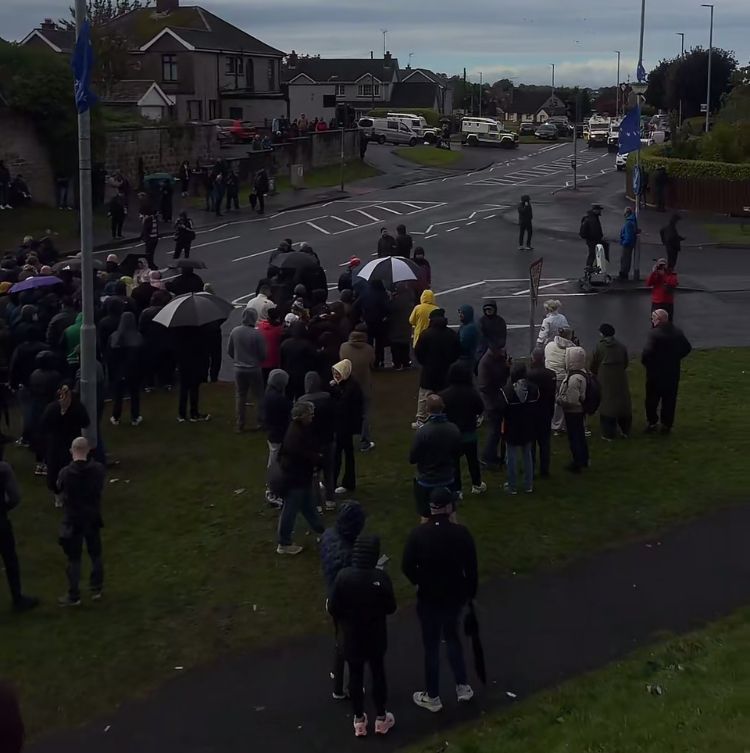
PORTADOWN, Northern Ireland — The first Orange Order Garvaghy Road parade in nearly 30 years never made it past the starting line. Around 2,000 protesters gathered in the rain overnight on Garvaghy Road and were still there at 8 a.m. Sunday, blocking the route of 35 Orangemen from Portadown District LOL No. 1 after a late-night High Court ruling in Belfast cleared the march to proceed. Police officers stood between the two sides as the scheduled start time came and went, the marchers held back at Drumcree Church. Among the protesters: Northern Ireland's own first minister, Michelle O'Neill, and Sinn Féin leader Mary Lou McDonald — an extraordinary image in any democracy, the region's most senior elected official physically blocking a court-cleared parade.
Why this matters: a stress test for the peace itself
This was never really about 35 men walking a few hundred yards of suburban road. It was about whether the machinery built to keep Northern Ireland's peace still functions when tested all at once — and this weekend it was tested all at once. In 72 hours, the Parades Commission reversed a near-30-year ban, the High Court blocked the march, the Court of Appeal unblocked it, another late-night court sitting confirmed it, and then some 2,000 people rendered the entire legal edifice moot by standing in the road. Both governments that co-guarantee the Good Friday Agreement — London and Dublin — were forced to intervene publicly, and they did not even agree: Prime Minister Andy Burnham appealed for “calm on all sides” while accepting the process; Irish premier Micheal Martin called the underlying ruling “incomprehensible” and “wrong.” When the two guarantors of a peace deal publicly disagree about a parade ruling on the morning of the parade, the story is no longer the parade. The most important number of the day may be zero: as of midday, police reported no violence — the outcome everyone feared, and the one the whole architecture was built to prevent.
72 hours of legal whiplash
Friday — the Commission says yes
The Parades Commission, the body created during the Troubles to regulate marches, issued its determination: Portadown District LOL No. 1 could march the disputed stretch of Garvaghy Road on Sunday, but under heavy restrictions — 35 marchers only, though the Order had applied for 60; between 8:00 and 9:30 a.m.; no bands; no supporters lining the route. It was the first reversal of the long-standing ban, welcomed by unionist parties and met with outrage by nationalists and republicans.
Saturday — injunction, appeal, reversal
Garvaghy Road residents challenged the decision, and High Court judge Patricia Smyth granted a temporary injunction, warning during a six-hour hearing that “the level of mistrust between the residents and the Portadown Orange lodge cannot be overstated” and urging both sides to “be big enough to step back from the abyss.” The Orange Order appealed that night; the Court of Appeal overturned the injunction, with Lady Chief Justice Dame Siobhan Keegan ruling that Smyth had “unfortunately erred in law.” Then, in a late-night Belfast sitting running into the early hours of Sunday, the High Court dismissed the residents' application. The march was on.
Sunday — the road fills up
It wasn't. Thousands of protesters, many there since overnight in the rain, filled Garvaghy Road. Fireworks went off nearby about five minutes before the 8 a.m. start; police warned over loudspeakers that the counter-demonstration was unlicensed and participants risked arrest. The two sides faced each other with officers between them, neither willing to disperse. By midday, at police request, the Orangemen were still waiting at Drumcree Church. A parade cleared by the courts three times in 24 hours had been stopped by people standing still.
The road that haunted the peace process
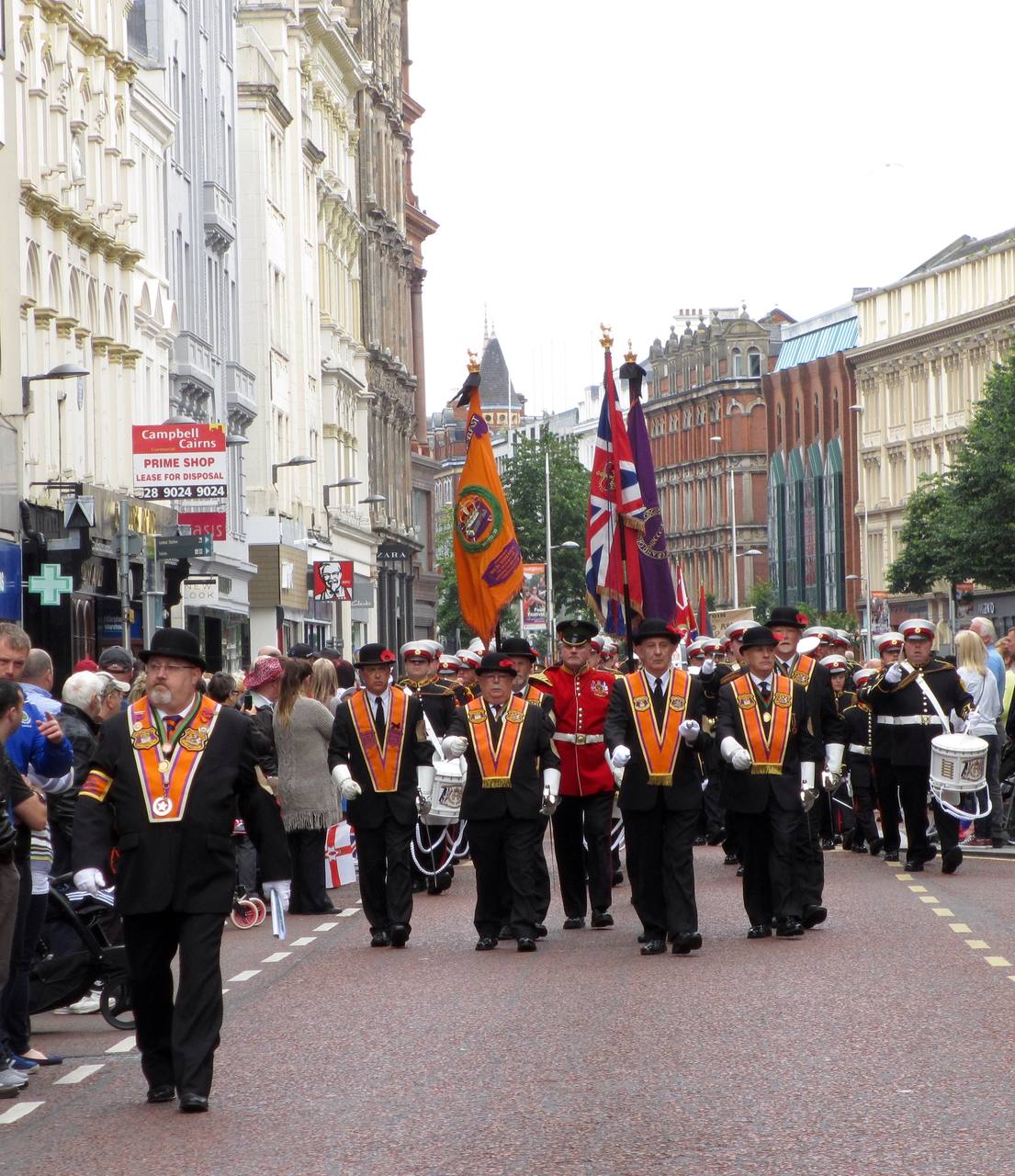
Garvaghy Road runs through a predominantly Catholic, nationalist enclave in the largely Protestant town of Portadown, and for generations formed part of the return route of the Orange Order's annual Drumcree church parade. In the summers of the 1990s the dispute over that route became one of the defining flashpoints of the Troubles: yearly standoffs, major security operations, unrest spreading across Northern Ireland. The route was banned in 1998 — the same year the Good Friday Agreement largely ended three decades of violence that killed some 3,600 people and wounded around 50,000. Ever since, the Orange Order has applied year after year, unsuccessfully for more than a quarter of a century, for permission to complete the walk it last made in 1998. Friday's ruling was the first crack in that wall. Sunday was the wall pushing back.
Who wins, who loses — and what each side is really saying
The residents: “primitive” and “incomprehensible”
McDonald called the scenes “madness” and “primitive treatment of any community in the year 2026,” declaring it “intolerable.” O'Neill told the crowds: “There must be no march through this community. This is how we restore calm, this is how we restore confidence.” The nationalist case in essence: a 28-year settlement, endorsed by commissions and courts for a generation, should not be overturned for 35 marchers.
The Order: “the law is on our side”
DUP MP Carla Lockhart called O'Neill's rhetoric “outrageous,” accused the first minister of “whipping up hysteria,” and insisted “the law is on our side.” The unionist case: the courts repeatedly upheld the march, the Commission applied its legal tests, and a right delayed 28 years is a right denied. Loyalist voices stressed before the ruling that there would be no disorder from the Order's side whatever the Commission decided.
The governments: united on calm, divided on the ruling
Burnham told the BBC there had been “big gains made in Northern Ireland, and we don't want to see things go backwards.” Martin shared the call for calm — then torched the ruling itself. Dublin and London co-guarantee the Agreement; on Sunday morning they could not agree on what it required.
The institutions in the middle
The Commission's reversal survived every legal challenge yet could not put 35 men on a road. The courts issued three rulings in 24 hours and were overruled by a crowd. Only the police, under Chief Constable Jon Boutcher — who urged “those with influence to encourage people to comply with the law” and reported no disorder — can claim the day went as planned.
The numbers, in context
Start with the ratio that decided the day: roughly 2,000 protesters against 35 marchers — the crowd outnumbered the parade nearly 60 to one. The Commission had already cut the Order's requested 60 marchers nearly in half and stripped the parade of bands and supporters, de-escalation by miniaturization that satisfied nobody. The calendar number is 28: years since Orangemen last walked this route. The historical numbers give the road its weight: about 3,600 dead and some 50,000 wounded in the Troubles — the reason a few hundred yards of tarmac in Portadown can dominate a Sunday news cycle in two capitals. And the number that matters most: zero reported incidents of violence by midday. In the 1990s, Drumcree summers meant riots. In 2026 the worst reported was fireworks and a loudspeaker warning. That is the peace working under maximum strain.
What happens next: three ways this ends
The most likely near-term outcome is peaceful dispersal: Boutcher's police have kept both sides apart without force, and both governments are heavily invested in exactly that ending. The second possibility is the one the residents' leader openly dared — Breandán Mac Cionnaith told the crowd: “We are not going to let these'uns down the road. If they have to use force against us, then let them use it.” A forced clearance of 2,000 people, including a first minister, would be the images of the year in Northern Ireland. The third outcome plays out over months: the legal door is now open. The Commission reversed a 28-year ban and the courts upheld the reversal; next year's application — and every July after — will cite this weekend as precedent. Northern Ireland Secretary Chris Bryant, who left the Labour Party conference for Belfast on Sunday, holds a rarely used power: if police ask, he can order a review of the determination to prevent serious public disorder. And then there is Stormont: a first minister who marches against her own courts' rulings has made a powerful statement to her community — and handed opponents a permanent talking point about whether power-sharing's leaders respect the rule of law. The parade didn't happen. The argument it started is just beginning.
Related coverage
- Trump, Burnham and the pressure on the US–UK relationship
- Zelenskyy warns Russia could attack Europe
- RAF Fairford bomb plot arrests put Britain on alert
Sources
- Reuters — “Protesters block Orange Order from marching through Catholic area in Northern Ireland,” September 27, 2026
- Associated Press — “Tensions run high in Northern Ireland after contentious parade given go-ahead,” September 27, 2026
- The Times — “Protesters delay Orange Order march allowed for first time in 30 years,” September 27, 2026
Reporting basis: Fixed September 27, 2026 snapshot. Reported chronology, quotations and crowd figures are attributed to the linked Reuters, Associated Press and Times coverage; analysis is Signal Post News's.