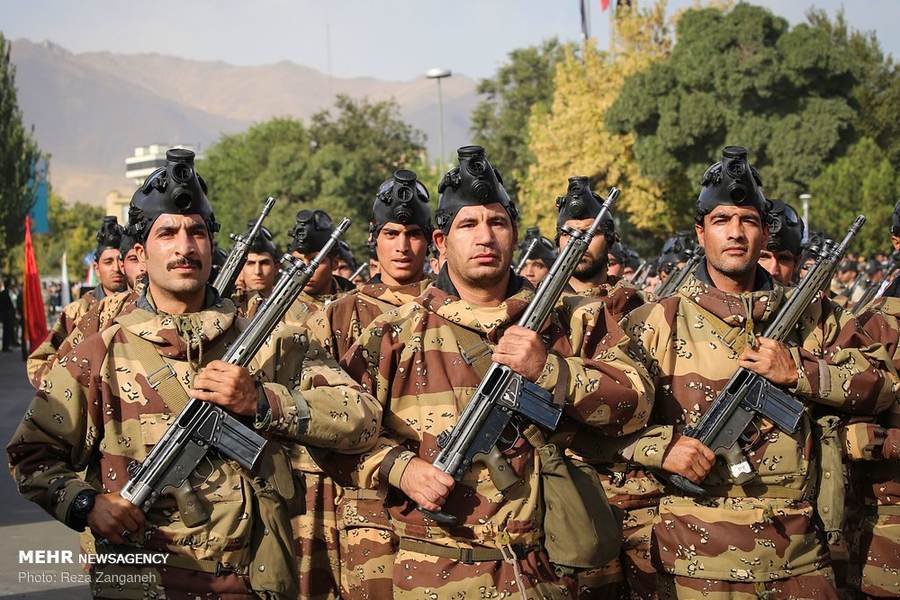
TEHRAN — Iran recruiting child soldiers as young as 12 is no longer only an allegation drawn from isolated checkpoint photographs. The Janfada, or “self-sacrifice,” campaign says Iranians aged 15 and older have begun military training under the Basij paramilitary force and that, because of demand, “special training appropriate for younger ages will also be arranged.” The reported curriculum includes observation, surveillance, intelligence measures, drone piloting and shoulder-fired weapons alongside local-security and general war preparation.
Campaign spokesperson Sasan Zare made those claims to the Iranian Labor News Agency, or ILNA, according to reports by the New York Post and The Algemeiner. CBN News and Iran International also reported the rollout. The campaign's slogan is: “We have one life, and we give it for Iran.”
The distinction between registration, training and deployment matters. So does the distinction between government claims and independently verified facts. Zare's figure of 31 million enlistees has not been independently substantiated. Photographs reviewed by Amnesty International, however, showed children carrying AK-pattern rifles beside Islamic Revolutionary Guard Corps and other forces at checkpoints and on patrols. AFP and AP reporting has separately documented the wider militarization of civilian life during the conflict.
Why this matters: deterrence theater can still cross a red line
The strategic message is aimed at more than the children being recruited. Tehran wants Washington and its regional opponents to see a society capable of generating resistance far beyond the regular armed forces. A televised mass mobilization can raise the imagined cost of invasion even if most participants never become combat-ready. It can also reassure supporters at home that the state retains depth after months of strikes, sanctions and pressure.
But deterrence theater does not make the method harmless. Putting minors at checkpoints, on patrols or inside a military logistics chain exposes them to targeting, coercion and trauma. A child does not need to fire a weapon to be used by an armed force. Guarding a road, gathering security information, carrying supplies or supporting operations can make that child part of the conflict in practical and legal terms.
This is the moral boundary Tehran's description of “support” roles cannot erase. Cooking, medical care and help with damaged homes may sound civilian when listed separately. Once organized by an armed structure and mixed with surveillance, patrols and weapons training, the category changes. The state is not merely teaching emergency preparedness; it is building a pool of minors into a wartime security system.
Background: Iran's war preparations and the invasion narrative
The campaign is unfolding during the 2026 US-Israeli war against Iran, not in a vacuum. President Donald Trump extended a pause on bombing Iranian power plants while warning that the wider confrontation could resume. Tehran says the conflict with the United States may widen, Iran's army has moved to a readiness footing for another attack, and the Strait of Hormuz standoff continues to shape military and economic calculations.
Signal Post News has reported on Trump's threat at the UN General Assembly to “annihilate” Iran, Iran's army readiness and the Hormuz confrontation, and the economic pressure campaign Tehran calls “D-Day”. Janfada belongs to that same escalation ladder: it is simultaneously a military program, a propaganda instrument and a domestic organizing network.
Iranian state television has framed the mobilization as preparation for a possible US ground invasion. That scenario is far more demanding than surviving airstrikes. A government expecting raids, sabotage or an amphibious or airborne operation would need local observers, road security, casualty response and distributed logistics. The Janfada website, where people register for military and wartime training, translates that narrative into a nationwide list of volunteers.
From March checkpoints to September training
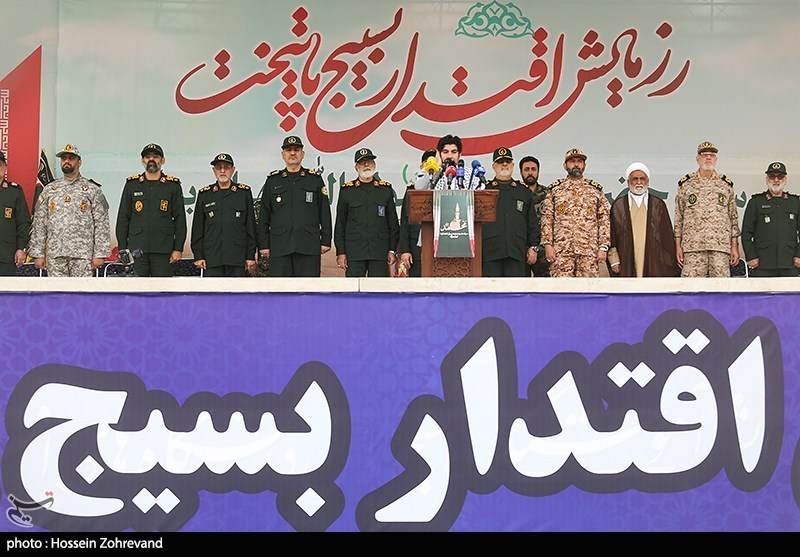
The timeline suggests escalation rather than a single publicity event. In March 2026, IRGC official Rahim Nadali told state television that the minimum age for Basij checkpoint and patrol volunteers had been lowered to 12 because children “wanted to participate.” On September 18, thousands of men, women and children joined a military-style mobilization exercise in Tehran, with teenagers shown carrying weapons. Zare's later description of organized training for those 15 and older, followed by tailored instruction for younger ages, moves the policy from permissive volunteering toward a structured pipeline.
That sequence matters: first normalize children at security posts, then display them in a mass exercise, then announce a curriculum. Each step can be defended as limited. Taken together, they describe Basij military training for children and a broadening institutional commitment.
The historical shadow of Basij child volunteers
Iran's leaders know the image this revives. During the 1980–88 Iran-Iraq war, young Basij volunteers were sent into some of the conflict's most punishing operations. Accounts of mass infantry assaults and boys carrying symbolic plastic keys to paradise became central to how critics described the Islamic Republic's willingness to turn revolutionary devotion into expendable manpower. Historians still debate details and propaganda surrounding individual episodes, but the broad record of minors participating in that war is not in serious dispute.
For the state, the memory is framed as sacrifice that preserved the revolution and the country. For many Iranians and international observers, it is a warning about what happens when martyrdom culture outruns a child's capacity to consent. Reviving the language of self-sacrifice now is therefore not neutral branding. It summons one of the regime's most powerful founding myths and one of the deepest charges against it.
The parallel does not prove that Tehran plans 1980s-style human-wave tactics in 2026. Modern drones, surveillance and urban security operations create a different battlefield. The more immediate danger is a dispersed version of the same logic: treating a large supply of young bodies as strategic depth, then describing their exposure as voluntary patriotism.
Three competing readings of the Iran Janfada campaign
Tehran's case: homeland defense and revolutionary deterrence
The official logic is coherent on its own terms. Iran has been attacked, its leaders expect more attacks, and a state facing a technologically superior adversary has reason to organize civil defense and local resilience. A population visibly prepared to observe, report and support could complicate an invader's planning. The ideological emphasis on sacrifice also fits the Islamic Republic's long-standing claim that social commitment can offset conventional military disadvantage.
Critics' case: desperation, coercion and domestic control
Rights advocates see a government blurring civil defense with armed recruitment while exploiting minors who cannot give adult consent. They also point to the Basij's domestic role. The force helped lead the crackdown on January protests, meaning a network promoted as defense against foreign invasion can also monitor neighborhoods, staff roadblocks and enforce political control at home. In that reading, the Iran Basij checkpoints teenagers have joined are as much about regime security as national defense.
Activists have criticized what they describe as silence from the United Nations and UNICEF. UNICEF, Save the Children, Amnesty International and Human Rights Watch have long treated children's use in patrols, guarding, checkpoints and logistics as child-soldier recruitment, not an acceptable loophole. Any institutional response should be judged by whether it addresses the documented roles and ages, not only whether the children are formally enrolled in a regular army.
Washington's likely reading: capability matters less than intent
US planners are unlikely to accept the 31 million figure at face value, but they will still study the campaign. A vast registry can support intelligence collection, civil-defense messaging and rapid local mobilization even if only a small fraction receives meaningful training. Televised armed teenagers may be intended to deter a ground operation; they may instead convince Washington that Iran is embedding military activity inside civilian areas, raising the risk of misidentification and civilian casualties.
The numbers: what does a claim of 31 million mean?
Zare said 31 million Iranians had enlisted, roughly one-third of a population near 90 million, and that 26% selected military or security duties. On its face, that would imply millions volunteering for security-related roles. Such a total is implausibly large if “enlisted” means vetted, equipped and trained personnel. It may include website registrations, expressions of interest, repeat or loosely verified records, or people who selected noncombat support categories.
Credible public estimates of active Basij strength vary widely because Iran mixes full-time cadres, paid or organized members, reserve formations and nominal participants. Numbers often run from hundreds of thousands of active personnel to several million broader members; the regime has historically claimed far larger totals. That definitional fog is useful. It lets officials present mass support without revealing how many people can report for duty, operate equipment or remain under command.
The real metric is conversion. How many registrants attend? How many complete courses? How many receive weapons, communications gear or assigned posts? A sign-up counter is political theater; a training roster and deployment map are force generation. The March-to-September progression is significant because it supplies the first outline of that conversion process, especially for minors.
Child soldiers and international law
Rome Statute Article 8 defines conscripting or enlisting children under 15 into national armed forces or using them to participate actively in hostilities as a war crime in international and non-international armed conflicts. The 12-to-15 bracket is therefore the clearest legal red line. Jurisdiction depends on the facts, location and applicable court authority, but the prohibition itself is a foundational rule of international humanitarian law.
The UN Convention on the Rights of the Child's Optional Protocol on the involvement of children in armed conflict sets a broader protective standard. It requires states to take all feasible measures so members of their armed forces under 18 do not take direct part in hostilities and bars compulsory recruitment below 18. For armed groups distinct from state forces, recruitment or use under 18 is prohibited. The status of the Basij within Iran's state security architecture, whether participation is genuinely voluntary, and what duties teenagers perform would all matter to a legal assessment.
That is why the 15-to-18 range cannot be treated as legally or morally safe merely because it sits above the Rome Statute's under-15 war-crime threshold. International law uses different thresholds for different obligations. Domestic labels such as “support” do not settle whether a teenager is participating in hostilities.
What happens next
Scenario one: deterrence bluff
The campaign could remain mostly performative: large registration claims, staged exercises and selective footage designed to make invasion look costly. If training stays short, weapons remain controlled and teenagers do not appear in operational deployments, Janfada will function primarily as signaling. The harm to children and the legal questions do not disappear, but the military effect may remain limited.
Scenario two: genuine invasion preparation
A renewed US attack or a sharper Hormuz confrontation could turn registrants into checkpoint staff, observers, drone assistants and local patrols. Watch for training footage that shows weapons handling, unit organization, communications instruction and identifiable commands; watch whether Basij deployment patterns expand around ports, energy sites and transport routes; and watch US force posture in the Gulf for signs that each side is preparing for more than air and maritime pressure.
Scenario three: internal-security theater
Janfada may also become a domestic-control mechanism. Registries, neighborhood units and surveillance training can be redirected toward protest monitoring and roadblocks. The next test is whether the campaign's public language shifts from foreign invasion to “saboteurs,” dissent or internal enemies. Any renewed Basij role in suppressing protests would strengthen the argument that the mobilization was never only about war.
Conclusion: the test is deployment, not slogans
Iran's leaders can plausibly argue that a country under attack has the right to prepare its population. They cannot make childhood disappear by calling armed duties support. The strongest evidence now points to a program moving down an escalation ladder: 12-year-olds admitted to checkpoints and patrols, teenagers displayed with weapons, formal training for those 15 and older, and promised instruction for younger ages.
The next facts to watch are concrete: whether Tehran releases training footage, where Basij units deploy, whether minors receive weapons or operational assignments, how US forces adjust around the Gulf, and whether the UN or UNICEF issues a specific response. Until then, the 31 million claim should be treated as propaganda rather than manpower. The child-recruitment policy should be treated as real.
Sources
Reporting basis: Published September 30, 2026. The campaign's enrollment figures and training claims are attributed to Sasan Zare and ILNA. Reporting was cross-checked against the New York Post, The Algemeiner, CBN News, Iran International, AFP and AP; the legal and child-protection analysis reflects standards described by Amnesty International, Human Rights Watch, UNICEF and Save the Children. Signal Post News has not independently verified the claimed 31 million registrations.