US sanctions Iran airlines
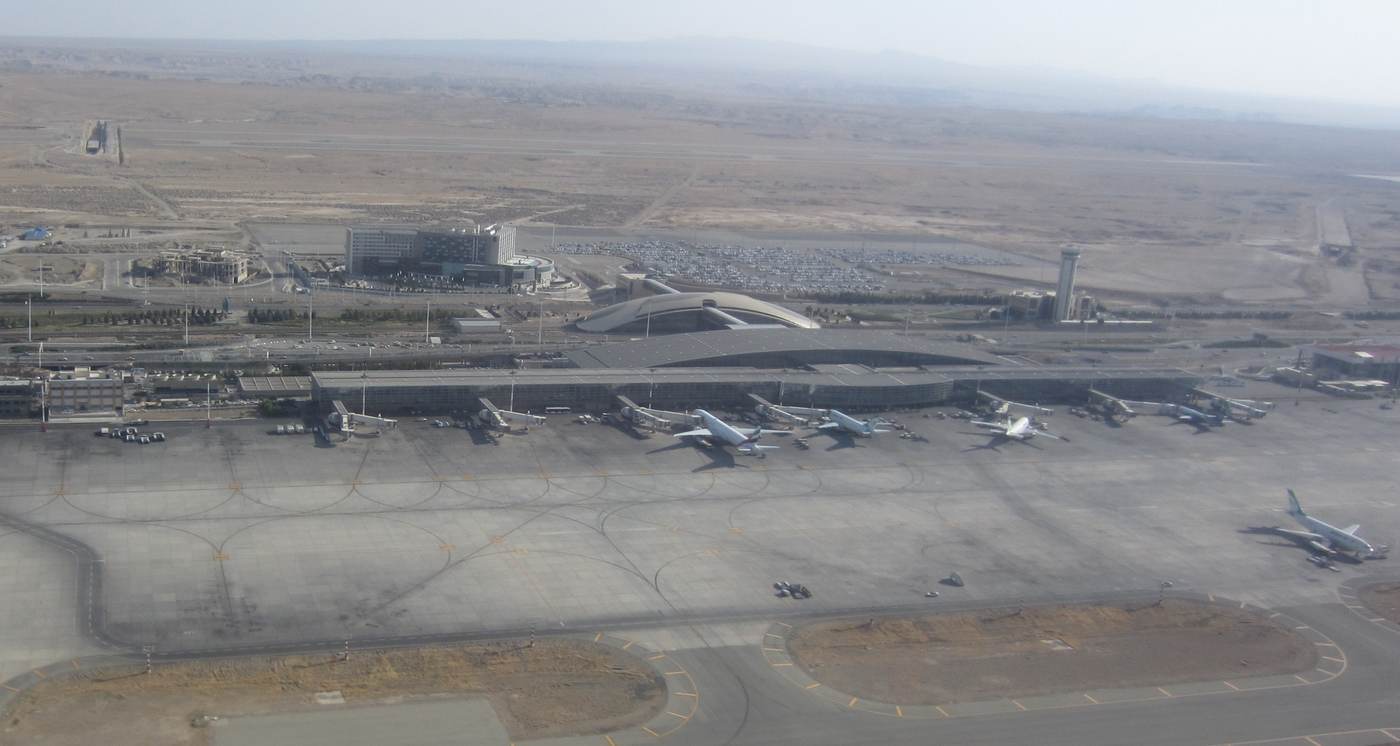
US sanctions Iran airlines moved from threat to visible disruption on Thursday after the Treasury Department’s September 23 deadline passed: Iranian services disappeared from the public arrival and departure listings of Dubai and Abu Dhabi, while Iran said it had stopped flights from the United Arab Emirates using its airspace.
The immediate changes are the first operational test of what President Donald Trump has called an economic “D-Day.” The stated American objective is unusually sweeping — to ground Iran’s entire civilian aviation fleet by making the companies that fuel, receive, sell tickets for or otherwise serve Iranian aircraft fear secondary sanctions of their own. In an economy already squeezed by war and a U.S. sea blockade of Iranian ports, air connectivity is becoming another front.
Reuters reported that Iran’s ISNA news agency said all flights to the UAE had halted as of midnight. No Iran arrivals or departures were visible on the Dubai or Abu Dhabi airport websites on Thursday, and the websites of Iranian carriers Qeshm Air and Varesh Airlines showed their UAE flights canceled. The UAE General Civil Aviation Authority and Dubai Civil Aviation Authority did not respond to Reuters requests for comment.
Why this matters
This is not simply another airline restriction. It is an attempt to make access to the global aviation system conditional on choosing between Iran and the U.S.-linked financial system. Aircraft need far more than permission to fly: they need fuel, ground handling, landing rights, maintenance, payment processing and ticket distribution. Treasury Secretary Scott Bessent warned providers of those services that they could face secondary sanctions if they continued working with designated Iranian airlines.
For Washington and Israel, widespread compliance would create leverage without requiring a new battlefield breakthrough. Reuters described the U.S.–Israeli war with Iran as having remained largely stalemated on the battlefield for months, prompting Washington to intensify pressure through secondary sanctions. Trump compared the campaign with the Allied D-Day landings in Nazi-controlled France during World War II — rhetoric meant to present economic enforcement as a decisive strategic offensive rather than an administrative measure.
The losses fall first on Iranian civilians who use the remaining routes for work, family visits, medical travel and onward connections. They also fall on regional carriers that must reroute, cancel or absorb compliance costs, and on Gulf states that face both U.S. financial pressure and Iranian threats. A retired teacher in Tehran captured the civilian experience in a sentence quoted by Reuters: “We are living in an open-air prison.”
The map shows a Gulf cutoff, not complete isolation
The geography is important. At Dubai and Abu Dhabi, the visible Iran schedule went to zero. Yet Imam Khomeini International Airport still listed destinations in Afghanistan, Armenia, China, Iraq, Pakistan, Tajikistan and Turkey on Thursday — seven non-Gulf countries. That contrast suggests the first enforcement shock is concentrated in the Gulf, where airports and carriers are deeply connected to global finance and U.S. sanctions exposure, rather than proof that Iranian aviation has already been grounded everywhere.
Even those surviving links are vulnerable to the politics of transit airspace. A flight bound for Tajikistan turned back after Turkmenistan closed its airspace, Reuters reported. Iran, meanwhile, barred UAE flights from Iranian airspace on Thursday. Flydubai services to Baku diverted over Iraq and Turkey, demonstrating how a bilateral restriction can lengthen routes well beyond the countries directly involved.
A deadline backed by a wider sanctions net
The September 23 cutoff did not arrive without warning. On September 8, the U.S. Treasury sanctioned 27 airlines and related entities across the UAE, Turkey, China, India, the United Kingdom and Malaysia. That network matters because Iranian carriers cannot be isolated solely by designating companies based inside Iran; they depend on foreign intermediaries and airport services that can be pressured where aircraft actually land.
AGBI reported on the UAE suspension as the sanctions threat approached its deadline. The operational evidence now visible on carrier and airport websites indicates that the threat is changing schedules. But silence from the UAE regulators leaves important questions unanswered, including whether the disruption is a formal government ban, a carrier-level compliance choice, or a temporary safety response to the escalating dispute.
Signal Post News first covered September 21 how Treasury’s ultimatum could work through fuel, ticketing and airport access. Thursday’s evidence shows the first stage of that mechanism: airlines do not have to be physically seized for routes to disappear; the surrounding commercial infrastructure can withdraw instead.
Threats turn compliance into a security calculation
Iran raised the cost of compliance on Wednesday by threatening to make the airports of neighboring countries that follow the U.S. order “unusable.” That warning makes Gulf governments more than passive sanctions enforcers. They must weigh financial exposure to Washington against the possibility of retaliation, disruption and wider conflict.
Tehran’s airspace ban on UAE flights is one form of reciprocal pressure. It can impose longer routings, higher fuel use and schedule complexity without a direct attack. The threat against airports, however, introduces a much more dangerous possibility: economic coercion could create military or security consequences for hubs that serve millions of travelers with no connection to the conflict.
The escalation also sits beside increasingly severe language elsewhere in the confrontation. Trump’s warning that Iran could face “annihilation,” examined in our report on his UN General Assembly message, and the regional military pressures described in our reporting on British refueling support for Saudi operations around Yemen show how quickly aviation, maritime and battlefield risks can overlap.
The argument over reach and civilian harm
Critics of secondary sanctions see extraterritorial overreach: Washington is using access to U.S. markets and finance to dictate the behavior of foreign airports, service companies and carriers even when their own governments have not imposed the same restrictions. They also argue that measures aimed at civilian aviation can punish ordinary travelers more directly than political or military elites, especially when overland and sea options are already constrained.
Washington’s counter-case is that civilian carriers and service networks can provide revenue, logistics or access that sustains the Iranian state during war, and that economic isolation creates leverage without the destruction and casualties of additional strikes. The administration’s theory is deterrence through network effects: once a few major hubs comply, insurers, suppliers and smaller airports may decide the Iran business is not worth the risk.
Both propositions can be true at once. Sanctions may generate pressure on the state while also imposing broad civilian costs. The policy test is therefore not whether Thursday produced cancellations — it plainly did — but whether the pressure changes Tehran’s strategic behavior faster than it deepens humanitarian damage and retaliation.
Background: from Operation Epic Fury to economic warfare
Reuters places the sanctions drive in the war that began in February with the U.S.–Israeli campaign known as Operation Epic Fury. Months of fighting have not produced a decisive battlefield settlement. The turn toward aviation restrictions and the continuing U.S. sea blockade of Iranian ports show Washington shifting more of the contest into trade, transport and financial access.
A sustained flight ban would compound Iran’s economic crisis by narrowing business travel, tourism, remittances and access to regional connections. The pressure may be strongest not because every route is closed, but because the Gulf hubs provide efficient links to the rest of the world. Losing them transforms the surviving destinations into a thinner, more fragile network.
Three paths from here
Compliance cascade. More airports, fuel suppliers and ticketing companies follow the UAE pattern, fearing secondary sanctions. Iranian carriers retain a small number of routes but lose the connective tissue that makes an international network useful. Washington and Israel gain bargaining leverage while Iran’s civilian economy absorbs the immediate cost.
Retaliation spiral. Iran expands airspace restrictions or acts on threats against neighboring airports; Gulf states tighten security and reroute more traffic; Washington answers with new designations or military protection. The sanctions campaign then stops being a contained financial tool and becomes another pathway to regional escalation.
Negotiated off-ramp. The deadline becomes leverage in talks, with selective route restoration or service waivers exchanged for verifiable Iranian commitments. This would require both sides to convert maximalist rhetoric into specific terms — a difficult prospect, but the only scenario that can reduce civilian isolation without abandoning enforcement entirely.
Signal Post News projection
Analysis: the most likely near-term outcome is an uneven compliance cascade rather than an immediate global grounding. Major Gulf hubs and internationally exposed service providers have strong incentives to comply quickly, while some airports in countries with weaker U.S. financial ties may continue handling Iranian aircraft. That creates a patchwork network: smaller, costlier and prone to abrupt closures whenever an airspace authority, insurer or ground handler changes course.
The decisive indicator will not be one day of canceled flights. It will be whether the seven non-Gulf destinations visible at Imam Khomeini remain bookable and operable over the next several weeks — and whether the UAE restores any service without U.S. relief. If those routes begin disappearing too, Washington’s “economic D-Day” will have moved from a Gulf shock to the global aviation siege it promised.