Economy / Markets / India
A violent repricing of oil, money and risk pushed India's benchmarks through key supports. The question now is whether 22,000 becomes a floor—or merely the next line to break.
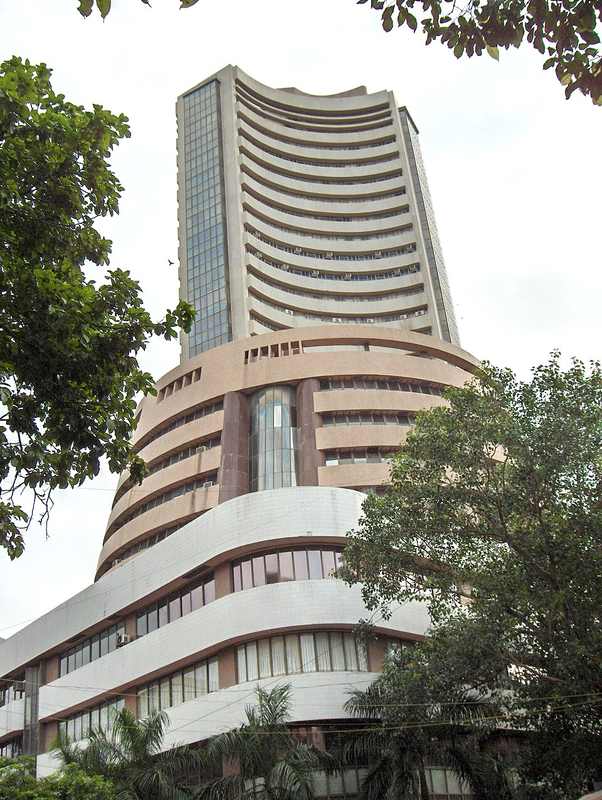
Sensex crashes 1000 points was the line that captured Thursday's shock, but the deeper story was a collision of pressures that had been building for weeks. The BSE Sensex plunged 1,045.46 points, or 1.44%, to close at 71,593.24 after touching 71,327.75. The Nifty50 shed 371.25 points, or 1.64%, to settle at 22,231.80, after an intraday low of 22,179.90—a fresh 52-week low. Brent crude surged more than 4% beyond $104 a barrel, the rupee weakened to 96.88 per dollar, and foreign investors kept pulling money from Indian equities.
This was not a single-headline selloff. It was a repricing of the three variables that matter most to an oil-importing growth economy: the cost of energy, the cost of capital and the price of the currency. When all three move against India at once, even strong company results struggle to hold the tape. TCS, for example, reported consolidated second-quarter profit after tax of ₹13,934 crore, up 14.8% from a year earlier, and declared a ₹12-per-share second interim dividend. Yet the broader market still sank.
The close confirmed the severity. Adani Enterprises fell 5.36%, JSW Steel 4.46%, ITC 4.03%, Max Healthcare 3.81% and InterGlobe Aviation 3.55%. Only a thin defensive pocket remained: Infosys gained 0.50%, Tech Mahindra 0.34% and Axis Bank 0.20%. The dispersion suggested investors were not abandoning every Indian asset indiscriminately; they were cutting the sectors most exposed to expensive fuel, leverage, discretionary demand and a slowing economy.
Why this matters
A 1,000-point Sensex decline is visually dramatic, but the more consequential signal is the Nifty's breach of a year-long floor. A 52-week low tells investors that everybody who bought the index over the previous twelve months is now, on average, confronting a loss or a smaller cushion. That changes behavior. Long-only funds face redemptions, leveraged traders receive margin calls, and retail investors who treated every dip as an opportunity begin to wonder whether the regime has changed.
The market also closed below its monthly 50-period simple moving average after breaking support in the 22,550–22,600 zone and then 22,400. Technical levels do not cause wars, central-bank decisions or currency pressure. They do, however, concentrate orders. Once widely watched floors fail, algorithmic selling, stop-losses and hedging can amplify a move that began with fundamentals. That is why 22,000 now matters: not because it is mystical, but because it is the next round-number area around which investors can organize risk.
The economic transmission goes beyond trading desks. India imports most of the crude it consumes. Oil above $104 pushes up the prospective bill for fuel, freight, aviation, plastics, chemicals and fertilizers. If those costs reach consumers, inflation rises. If companies absorb them, margins fall. Either outcome narrows the Reserve Bank of India's room to support growth. The stock market is therefore discounting not only weaker quarterly profits but also a less forgiving policy mix.
How we got here: oil, the RBI, foreign selling and the rupee
Oil turns a geopolitical shock into an Indian inflation shock
Brent crude jumped roughly 4% to 4.25%, trading above $104 and at points beyond $105 a barrel as traders priced fears around the U.S. oil-export blockade of Iran. Tankers were still moving through the Strait of Hormuz in record numbers, but flows to and from Iran had effectively stopped. At the same time, Hurricane Isaias forced Gulf producers to shut in about 1.3 million barrels per day. One shock was geopolitical, the other meteorological; together they tightened the prompt supply picture.
For India, the relevant question is not whether crude stays above $105 every hour. It is how long the average import cost remains elevated, how quickly refiners and fuel retailers pass it through, and whether the government chooses to cushion consumers through taxes or fiscal support. Each option carries a cost. Full pass-through threatens inflation and demand; subsidies or tax cuts weaken public finances; forcing companies to absorb the increase damages earnings.
The RBI removed the rate-cut safety net
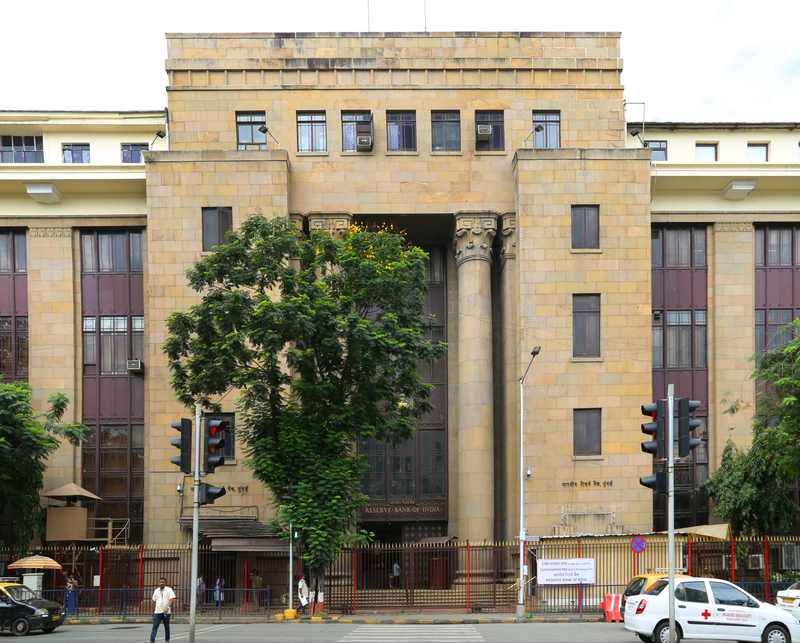
On Wednesday, the Reserve Bank of India raised its benchmark repo rate by 25 basis points to 5.50%, its first increase in nearly four years. The message was as important as the move: rate cuts are off the table while inflation and currency stability dominate. Critics argue the timing risks making a supply-driven oil shock worse by squeezing borrowers without producing a single additional barrel. Higher policy rates hit mortgages, business loans and consumption at the moment energy costs are already draining purchasing power.
The RBI's defenders answer that the central bank cannot ignore the second-round effects. A weaker rupee makes imported oil more expensive, and higher fuel costs can spread into wages and services. Keeping rates too low could accelerate capital flight and force an even more painful adjustment later. The debate is not between painless choices; it is about which risk—slower growth now or entrenched inflation and currency weakness later—is harder to reverse.
Foreign money and the rupee form a feedback loop
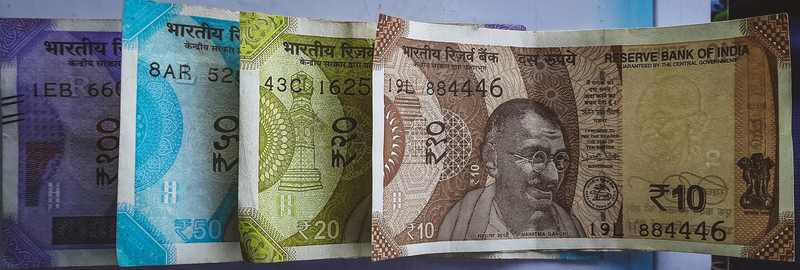
Foreign institutional investors withdrew nearly $5 billion in only nine trading sessions. That selling pressures stocks directly, but it also increases demand for dollars as proceeds leave the country. The rupee fell another 13 paise to 96.88 per U.S. dollar, near record lows. A weaker currency then raises the local-currency cost of imported crude, reinforces inflation anxiety and makes foreign investors less willing to hold assets whose gains can be erased by exchange-rate losses.
This feedback loop helps explain why apparently attractive valuations do not always bring immediate bargain hunters. A foreign investor can be right about a company and still lose money in dollars if the rupee drops faster than the stock rises. Domestic institutions can offset some overseas selling, but doing so indefinitely becomes difficult when households are also reacting to falling portfolios and higher borrowing costs.
Who loses, who benefits—and why panic is contested
The obvious losers are airlines, paint makers, chemical companies, logistics firms and other businesses with large energy inputs. InterGlobe Aviation's 3.55% fall reflected that arithmetic. Highly leveraged companies also face more expensive refinancing after the RBI hike. Consumer businesses can be squeezed twice: operating costs rise while households spend less. Banks may initially gain from wider lending spreads, but only if credit quality holds; a deeper slowdown eventually raises delinquencies.
Export-oriented technology services can fare better because they earn dollars and report in rupees. That helps explain the relative resilience of Infosys and Tech Mahindra. Upstream energy producers may also benefit from higher crude, while cash-rich companies with pricing power can use a correction to consolidate market share. Even so, “benefit” is relative: a broad risk-off episode can pull down good businesses alongside weak ones.
Critics of panic-selling note that a 52-week low is not itself proof that earnings have collapsed. India's structural case—formalization, infrastructure investment, a deep domestic savings pool and long-run consumption growth—does not disappear in one session. TCS's profit growth illustrates that distinction. Sellers may also be overestimating how long both the blockade premium and hurricane outages will last.
But the opposite warning deserves equal weight. “Buy the dip” worked best when inflation was contained and central banks could ease. Thursday's setup is different: oil is above $104, the RBI has just tightened, the rupee is near a record low and foreign investors are still leaving. A cheap market can become cheaper when the discount rate rises. The rational response is not blind panic or blind optimism, but smaller positions, stronger balance sheets and a clear time horizon.
The data in context: painful, but not yet a historical rupture
Investors lost around ₹11 lakh crore in market value during October's first stretch. That is a huge nominal sum—roughly ₹11 trillion—but market-cap losses are not cash physically destroyed or withdrawn from the economy. They are the repricing of claims on future profits. India has experienced larger wealth reversals during pandemic panic, the global financial crisis and other shock episodes, when multi-session declines were steeper and liquidity itself seized up.
The distinction matters. A 1.44% Sensex fall and a 1.64% Nifty decline are severe daily moves, yet they remain far below the double-digit crashes associated with systemic emergencies. What makes Thursday significant is accumulation: a 52-week low, repeated support failures, nearly $5 billion of foreign outflows and a worsening macro backdrop. This is less like a single earthquake than a fault line moving across several linked markets.
Cross-country comparisons also require care. Oil exporters can receive a terms-of-trade windfall from a crude spike; oil importers such as India, Japan and much of Europe face a tax on national income. The United States sits between those categories because it is a major producer but its consumers still pay higher fuel prices. India's additional vulnerability is currency depreciation: the same dollar barrel costs more rupees before any change in the global price is counted.
A 52-week low is therefore a signal, not a forecast. It records where the market has been, not where it must go. Some lows mark capitulation; others are pauses in a longer decline. History offers examples of both, which is why valuation, earnings revisions, liquidity and policy responses matter more than the label alone.
What happens next
Scenario one: 22,000 holds and the selloff becomes a reset
If Brent retreats as hurricane production returns, the blockade premium stabilizes and foreign selling slows, the Nifty could build a base near 22,000. A recovery would first have to reclaim 22,400, the broken support that now becomes resistance, and then 22,600. Better-than-feared earnings—especially from large technology and financial companies—could help separate balance-sheet strength from macro fear.
Scenario two: oil stays high and 22,000 breaks
A sustained move above $105 crude, renewed rupee weakness or another burst of FII withdrawals would keep pressure on the index. A decisive close below 22,000 could trigger another wave of technical and leveraged selling. The next downside zone would depend less on round numbers than on how quickly analysts cut earnings estimates and whether domestic funds continue absorbing supply.
Scenario three: policy credibility restores two-way trade
The most constructive outcome would not necessarily be an immediate rally. It would be a return of two-way markets in which good earnings are rewarded and weak balance sheets punished, rather than everything being sold together. Clear RBI guidance on inflation, credible fiscal management of fuel costs and calmer global rate expectations from the Federal Reserve could restore that discrimination.
Investors should watch five things: Brent's closing levels rather than intraday spikes; the rupee around 96.88 and beyond; daily foreign-flow data; earnings commentary on margins and demand; and the Nifty's behavior at 22,000, 22,400 and 22,600. The Fed matters because higher U.S. yields make dollars more attractive. The RBI matters because its next words will reveal whether Wednesday's increase was insurance or the start of a cycle.
Uncertainty remains unusually high. The duration of the Iran blockade, the restoration of Gulf output after Isaias and the response of global central banks cannot be known from one close. Thursday did establish one fact, however: the Indian market can no longer rely on cheap money and benign oil to cushion every disappointment. It must now prove that earnings can outrun a harsher macro environment.
Sources and related coverage
Market levels and session reporting were cross-checked against The Hindu BusinessLine's October 8 market live page, Nation Press's closing report, and updates from Business Today India.