stock market today October 8 2026
Wall Street faces a lower open as an oil shock, a 2002-era Treasury yield and fresh doubt about the durability of record stock valuations converge across U.S., European and Asian markets.
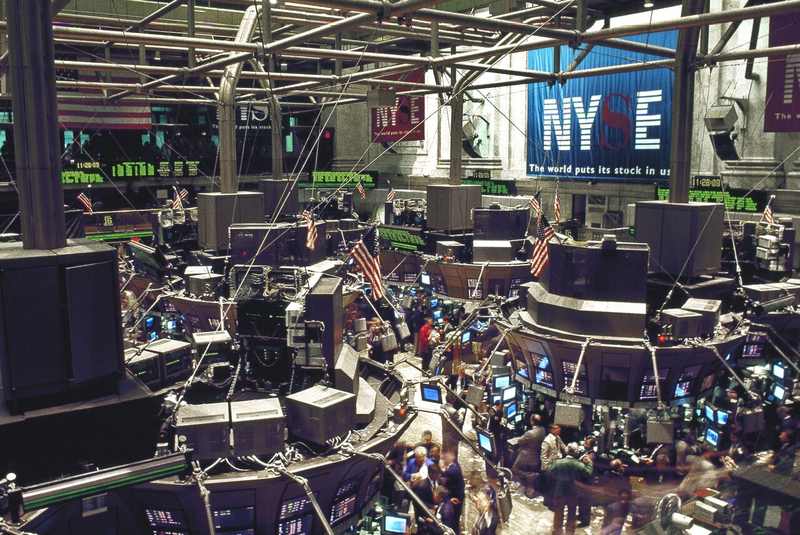
Stock market today October 8 2026: U.S. equity futures were pointing sharply lower before Thursday's open, with Dow Jones futures off about 1%, S&P 500 futures down roughly 0.6% and Nasdaq futures today lower by about 0.8%. Oil futures climbed more than 3% on two simultaneous supply risks: reports that the White House asked the Pentagon to prepare options for renewed strikes on Iran before the November 3 midterm elections, and Hurricane Isaias threatening Gulf of Mexico production.
The selloff is not simply another bout of geopolitical nerves. The 10-year Treasury yield was near 5.35%, just below Wednesday's 5.37% peak and its highest level since 2002. That leaves investors confronting both sides of the classic stagflation squeeze: energy can lift inflation and reduce consumer spending, while high bond yields raise the discount rate applied to corporate profits. Gold futures near $4,136 an ounce and bitcoin around $82,500, below roughly $87,000 earlier this week, underline how uneven the search for shelter has become.
Why this matters
Dow futures today are warning about more than one bad open
The importance of Thursday's setup is the combination, not any single number. Equities can often look through a temporary oil spike if growth is firm. They can also digest high bond yields if earnings estimates keep rising. But oil above its prior path, yields at a 24-year high and futures falling immediately after record closes create a much less forgiving equation. Investors are being asked to pay elevated prices for future earnings while the risk-free alternative offers more than 5% and an energy shock threatens both margins and household demand.
That combination also tests the market's narrow confidence in mega-cap growth. The S&P 500 and Nasdaq pulled back Wednesday after setting record closes Tuesday. A one-day retreat does not invalidate a bull market, but it reveals where the burden of proof has shifted. At these valuations, a company no longer gets rewarded merely for beating estimates. It must beat them by enough to offset more expensive capital, a stronger inflation risk and a Treasury market that competes directly for investors' money.
S&P 500 futures and nasdaq futures today face a valuation reset
The S&P 500 futures decline is smaller than the Dow's, but the Nasdaq's 0.8% drop shows that technology is hardly insulated. Long-duration growth stocks derive more of their value from profits expected years into the future, so they are especially sensitive to changes in the discount rate. The unusual wrinkle is that technology demand itself still looks strong: Applied Digital shares were gaining after a massive revenue increase, a bullish signal for artificial-intelligence infrastructure, and TSMC's third-quarter revenue of TWD 1.49 trillion beat expectations of TWD 1.46 trillion.
The market is therefore separating demand from price. AI infrastructure can remain a powerful business trend while AI-linked stocks still struggle if their valuations assume too much future success. That distinction matters because strong industry revenue does not guarantee that every shareholder earns a strong return at every entry price.
Background: how record highs met war risk and a bond selloff
From Tuesday's records to Thursday's risk-off turn
Tuesday's record closes in the S&P 500 and Nasdaq reflected confidence that earnings growth and technology spending could outrun restrictive monetary conditions. Wednesday's pullback began to challenge that confidence as Treasury yields pushed higher. Thursday adds an energy shock to the same debate. Markets have moved in forty-eight hours from celebrating nominal growth to asking whether the price of that growth—through inflation, rates and geopolitical risk—is becoming too high.
The Dow's larger indicated loss also makes sense. It carries more exposure to industrial, financial and consumer businesses whose margins and demand can respond quickly to fuel costs and borrowing rates. The Nasdaq is more rate-sensitive, but parts of technology still have a revenue cushion from AI spending. The S&P 500 sits between those forces, which is why its futures decline is meaningful even though it is smaller.
Oil prices surge Iran fears as Hurricane Isaias threatens the Gulf
Oil's move above 3% reflects a two-front supply calculation. Reuters carried a report, originally from The Atlantic, that the White House asked the Pentagon to draw up options for renewed strikes on Iran before the November 3 midterm elections. A military plan is not the same as a decision to strike, and markets should preserve that distinction. Yet the risk premium rises because any escalation involving Iran could threaten production, shipping or insurance costs across the region.
At the same time, Hurricane Isaias is threatening Gulf offshore output. An Earth Science Associates consulting model estimated that about 11.2 million barrels of production could be lost across the Gulf through the storm, versus 7.1 million barrels affected by Tropical Storm Bertha in July. That comparison suggests a potentially larger physical disruption even before any geopolitical outcome is known. The oil market is pricing probability, not certainty, but two independent risks can reinforce each other faster than either would alone.

The 10-year treasury yield brings back a 2002 hurdle
Near 5.35%, the 10-year Treasury yield is only two basis points below Wednesday's 5.37% peak. That is not a cosmetic difference. A yield at its highest since 2002 reprices mortgages, corporate debt, acquisition financing and every discounted cash-flow model on Wall Street. It also gives pension funds, insurers and income investors an alternative that did not exist during the near-zero-rate era.
The comparison with 2002 is instructive but incomplete. Then, technology markets were digesting the dot-com collapse and the economy was emerging from recession. Today, the pressure arrives after record index highs and during extraordinary capital spending on chips and data centers. The common thread is that an expensive market eventually has to compete with the cash yield available elsewhere; the difference is that today's leading companies generally have stronger current profits than many dot-com-era favorites did.
Who wins, who loses
Energy producers and cash-rich savers gain leverage
Oil producers can benefit from higher crude prices if the increase lasts and their own facilities remain operational. Cash-rich companies face less refinancing pressure, while savers and bond buyers can lock in yields that would have seemed implausible several years ago. Gold's roughly $4,136 price shows continued demand for a traditional hedge, although its performance must still compete with high real yields and a strong dollar.
Some technology infrastructure suppliers can also win on company-specific evidence. Applied Digital's revenue jump points to persistent demand for computing capacity. TSMC's beat suggests advanced-chip demand remains substantial. These are not blanket buy signals; they are reminders that a difficult macro backdrop can coexist with genuine pockets of exceptional growth.
Consumers, banks and long-duration stocks take the pressure
Consumers lose purchasing power when fuel costs rise, particularly lower-income households that spend a larger share of income on transportation and utilities. Airlines, shippers and manufacturers can face higher input costs. Highly indebted companies must refinance at rates that can erode earnings even if revenue holds steady. Long-duration technology shares are vulnerable because a higher discount rate reduces the present value of distant profits.
European banks illustrate the ambiguity. Higher rates can widen lending margins, but they can also weaken borrowers, slow loan demand and reduce the value of bond portfolios. The STOXX 600 today fell 0.9% to 624.24, while European banks traded near three-month lows. That is the market saying the credit and growth risks are beginning to outweigh the simple benefit of charging more for loans.
Samsung Q3 earnings show why a huge increase can disappoint
Samsung Electronics reported preliminary third-quarter operating profit of KRW 107.4 trillion, up 783% from a year earlier, with revenue of KRW 195 trillion. Yet both figures were below expectations of KRW 108.7 trillion and KRW 199 trillion, respectively, and memory shares slipped. The lesson is brutal but familiar: markets price expectations, not adjectives. A "surge" can still disappoint when investors have already paid for an even bigger surge.
PepsiCo offered the consumer-sector version of the same problem. The company topped expectations but reduced its profit forecast. In an environment of costly commodities and pressured consumers, an earnings beat about the past can be overwhelmed by caution about the future. Critics of the bull market argue that this is precisely what expensive indexes obscure: headline profits may remain healthy while forward guidance quietly weakens.
What the numbers actually imply
Asia markets today split between semiconductor demand and rate fear
The Nikkei 225 fell back below 70,000, South Korea's KOSPI was pressured by Samsung, and Hong Kong and Shanghai were subdued as mainland trading resumed after a week-long hiatus. TSMC's revenue beat did not lift the entire region. That cross-country pattern matters because it shows the technology cycle is not moving as one trade. Taiwan's foundry demand, Korea's memory expectations and Japan's high-valued equity market are responding to different earnings baselines and different sensitivities to global yields.
A KRW 107.4 trillion operating profit can rise 783% and still miss consensus by KRW 1.3 trillion. TSMC can beat by TWD 30 billion and still trade inside a global risk-off environment. The absolute numbers are enormous; the market reaction depends on the gap between reported performance and what was already embedded in prices.
Gold price today and bitcoin reveal different kinds of safety
Gold futures near $4,136 remain elevated, but bitcoin around $82,500 is more than 5% below the roughly $87,000 highs seen earlier this week. That divergence is a useful stress test. Gold is responding to geopolitical and inflation risk, while bitcoin is still behaving more like a volatile liquidity asset when bond yields rise. Neither price alone proves what happens next, but together they suggest investors are not treating every alternative asset as an equivalent haven.
The yield comparison is even more direct. A 5.35% nominal return on a 10-year Treasury is known in advance if the bond is held to maturity and the government pays as promised; an equity or cryptocurrency return is not. That does not make Treasurys automatically superior—stocks can deliver growth and inflation protection—but it raises the return investors must reasonably expect before taking additional risk.
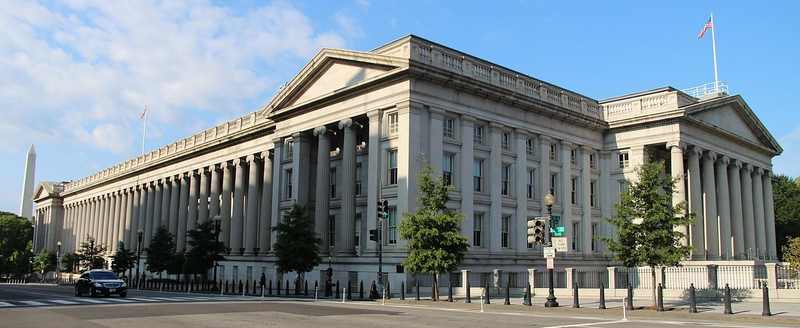
Fed minutes rate hikes leave policy and markets pulling against each other
Federal Reserve minutes showed officials divided over further rate increases. That division matters more with the 10-year yield already doing substantial tightening. If policymakers raise the federal funds rate while long yields remain near 5.35%, they risk amplifying stress in housing, banking and corporate credit. If they pause while oil keeps climbing, they risk appearing complacent about a new inflation impulse.
The ECB's meeting accounts are due Thursday, and ECB and Fed officials along with Bank of England Governor Andrew Bailey are scheduled to speak. Their words will be read against the same global backdrop. Europe is weaker at the index level, Japan has fallen below a major round-number milestone, and U.S. futures are retreating from records. Central banks are not making decisions in isolated national markets anymore; each signal changes currencies, yields and imported inflation elsewhere.
What happens next
Scenario one: oil and yields rise together
This is the most damaging near-term combination. Another leg higher in crude could revive inflation expectations, keep the 10-year yield near or above 5.37% and pressure both cyclical companies and expensive growth shares. Under that scenario, the Dow could remain vulnerable through industrial and consumer exposure, while the Nasdaq would face a renewed valuation compression. European banks could stay under pressure if investors conclude that higher rates are weakening credit rather than improving margins.
Scenario two: the hurricane shock fades but geopolitical risk remains
If Isaias causes less production loss than modeled, some of oil's weather premium could unwind. The Iran premium would be harder to remove because it depends on policy decisions and military signaling. A partial oil reversal could stabilize inflation expectations without resolving the broader geopolitical uncertainty. That would be the most plausible path to a futures rebound that does not require a dramatic change in Fed rhetoric.
Scenario three: earnings overpower the macro pressure
Strong company reports could keep the selloff selective rather than systemic. Applied Digital and TSMC show that AI-related demand can still surprise positively. But Samsung and PepsiCo show the higher bar: investors are demanding both strong current results and confidence in future margins. The next phase of the market will be decided less by whether revenue grows than by whether it grows fast enough to beat expectations after financing and input costs are included.
For Thursday's session, the key sequence is oil, the 10-year yield and market breadth. If oil holds its gain but yields retreat and more stocks participate in a recovery, the market may be treating the shock as manageable. If oil and yields climb together while losses spread beyond the Dow into technology and small caps, Tuesday's records will look less like a foundation and more like a peak reached before the macro arithmetic changed.
Sources
- Reuters — European shares, bank stocks, oil risks and global market context.
- Investopedia — U.S. futures, Treasury yields, commodities and company moves before the open.
- Newsquawk — Asia, Europe, central-bank speakers and corporate results.
Reporting note: Futures, yields and commodity prices are early October 8, 2026 readings and can change before or after the opening bell. Analysis and framing are by Signal Post News.