World — Israeli forces pushed into Hebron on Saturday, October 24, 2026, and forced around 1,200 Palestinians to leave their homes in the Al-Jaladah and Ein Deir Baha neighbourhoods, one day after two Palestinian gunmen killed two Israeli soldiers at a military checkpoint near the city. The military said the operation was a search for militants and weapons, with demolitions to follow. Palestinian officials called it collective punishment — three days before Israel goes to the polls.
Track it live: Israel–Gaza war map, live — Signal Post News tracker
HEBRON, West Bank — The Israeli military forced around 1,200 Palestinians to leave their homes in Hebron on Saturday, a Palestinian official told Reuters, as the large-scale operation Prime Minister Benjamin Netanyahu had promised a day earlier moved from announcement to execution in the largest Palestinian city in the occupied West Bank. The displacement came a day after two Palestinian gunmen opened fire at a military checkpoint near the city, killing two Israeli soldiers before both gunmen were shot dead — the attack we reported in full on Friday, as Netanyahu ordered Hebron sealed and the West Bank readied for closure.
Netanyahu said on Friday that the military would launch a large-scale operation in response to the killings, and the Associated Press reported that he described an operation on a scale not seen since Israel first occupied the West Bank in 1967, in the Six-Day War. By Saturday, that promise had a street address: the Al-Jaladah and Ein Deir Baha neighbourhoods, near the military checkpoint at the entrance to Hebron in front of which Friday’s attack unfolded. The military said the operation in the two neighbourhoods was to search for militants and weapons, and said in a statement that it would also carry out demolitions. What residents experienced, by their own account to Reuters, was something broader: soldiers emptying street after street, including the homes of many people with no connection to the attackers.
What Happened on Saturday
The clearances began in the neighbourhoods closest to the checkpoint and, in Ein Deir Baha, in the middle of the night. The Associated Press, in reporting carried by Euronews, said Israeli forces had displaced up to 250 families, some of them ordered out in the dark, in a neighbourhood set between two hills where buildings were marked with X’s once they had been cleared of people. Streets in the area were left deserted of residents and cars, with only Israeli military vehicles moving through them. Buildings marked, families out, streets emptied: by the time the city woke, the shape of the operation was visible from any rooftop.
The Palestinian Prisoners’ Club, a non-governmental organisation that tracks detentions, said Israeli forces had arrested around 70 Palestinians on Friday and Saturday, according to Reuters. Israeli officials had not commented on any arrests. The military’s own statement kept to its stated purpose: the Al-Jaladah and Ein Deir Baha operation was a search for militants and weapons, and demolitions would follow. It did not say how many homes would be demolished, how long residents would be kept from returning, or what would happen to the families put out in the night — the three questions that now hang over the two neighbourhoods.
Hebron’s municipality was left to count the displaced and find them shelter. Yousef Zouhair Al-Jabari, the head of the municipality, told Reuters that around 1,300 more people faced losing their homes in addition to the 1,200 already displaced, and that the military had demolished shops, factories, homes and roads. Residents leaving the affected neighbourhoods were directed through designated exit points and security checks. For the families concerned, the immediate arithmetic is simpler than the politics: a house marked with an X, a bag packed in the night, and no date for going back.
Two Accounts of the Same Operation
The military’s stated purpose: militants, weapons, demolitions
The Israeli account begins with Friday. Two soldiers were killed at a checkpoint by gunmen who, on the military’s earlier telling, arrived with a rifle, a handgun and a large quantity of ammunition — the signature, Israeli officials argue, of a planned attack rather than a spontaneous one, and a reason to believe others may have been involved. On that logic, the operation in Al-Jaladah and Ein Deir Baha is a search: for militants, for weapons, and for anyone who armed, directed or sheltered the two dead gunmen, followed by demolitions of the kind Israel has long used against attackers’ homes and what it calls militant infrastructure. Netanyahu framed the scale himself on Friday, promising an operation of a size unseen since 1967, and the government’s position is that a state whose soldiers are killed at a checkpoint is entitled — obliged, in its telling — to answer at scale, and that residents displaced temporarily by searches are a consequence of the attackers’ choice of ground, not of the military’s.
The Palestinian account: collective punishment
The Palestinian account begins with who was actually put out of their homes. Hebron Governor Khaled Dudin told AFP that around one-third of Hebron had been targeted by the operation. “They started in the neighbourhood from which the people who carried out the attack came, but there is no guarantee that the operation will not expand,” he said. “This amounts to collective punishment being imposed on civilians who have nothing at all to do with this.” The Palestinian Authority, which administers parts of the West Bank, used the same words, criticising the operation as “collective punishment.” Al-Jabari called the response disproportionate and unjustified, pointing to demolished shops, factories, homes and roads — damage, he argued, that falls on livelihoods far removed from two gunmen. And residents told Reuters the military had expelled many people with no connection to the Palestinian attackers, a claim the military has not directly answered. Between the two accounts sits a factual gap neither side filled on Saturday: the military has not said what its searches have found, and Palestinian officials have not disputed that the gunmen came from the city. The argument is over the blast radius of the response, and it will be settled, if it is settled, by what the searches produce and how long the displaced stay displaced.
Sunday update: election-day closure of all West Bank crossings announced — Katz puts Hebron displacement at about 2,000
UPDATE — October 25, 2026: Israel will close all West Bank land crossings on Tuesday, October 27 — Knesset election day — barring Palestinian workers from jobs inside Israel and the Jordan Valley settlements for the day, according to reporting by the BBC and AFP on Sunday. The closure lands on a city already emptying: Defence Minister Israel Katz said on Sunday that about 2,000 people have been displaced in Hebron — a higher figure than the roughly 1,200 given on Saturday by Hebron municipality head Khalil al-Jabari via Reuters. The two numbers come from different officials on different days of a fast-moving operation and are presented here as a rising, differently sourced count, not a settled total.
BBC footage from Hebron appears to show a whole street flattened by the operation. Hebron's mayor, Youssef al-Jaabari, said the operation was "driven by the elections" — his attributed claim about its motive. Prime Minister Benjamin Netanyahu, in an i24 interview, promised a "very big surprise" for the Palestinian Authority — again, his words, reported as said. On Saturday night, thousands rallied in Tel Aviv against the operation and the government, a protest organised by the October Council and joined by opposition leaders including Gadi Eisenkot.
Why This Matters
Scale is the first reason. Operations in the West Bank are not rare; one publicly promised in advance by a prime minister, at a scale he himself benchmarked against 1967, is a different category of event. When a government announces the size of an operation before it begins, the size becomes part of the message — to Palestinian factions, to Israeli voters, and to every capital watching the region. The second reason is geography. This is not a raid on a refugee camp on the territory’s edge; it is a clearance operation inside the largest Palestinian city in the West Bank, a city whose division into Israeli- and Palestinian-controlled zones was supposed, under the 1997 Hebron Protocol, to have settled how it is policed. The third reason is sequence: the operation lands in the same week as a fragile Gaza ceasefire’s anniversary period and three days before an Israeli general election, two facts that guarantee every demolished wall in Hebron will be read far beyond Hebron. None of that determines whether the operation was justified — that judgment turns on evidence about the attackers’ network that has not yet been produced in public. It does determine that the consequences will not stay inside the two neighbourhoods where the X’s were painted.
Context: A Divided City
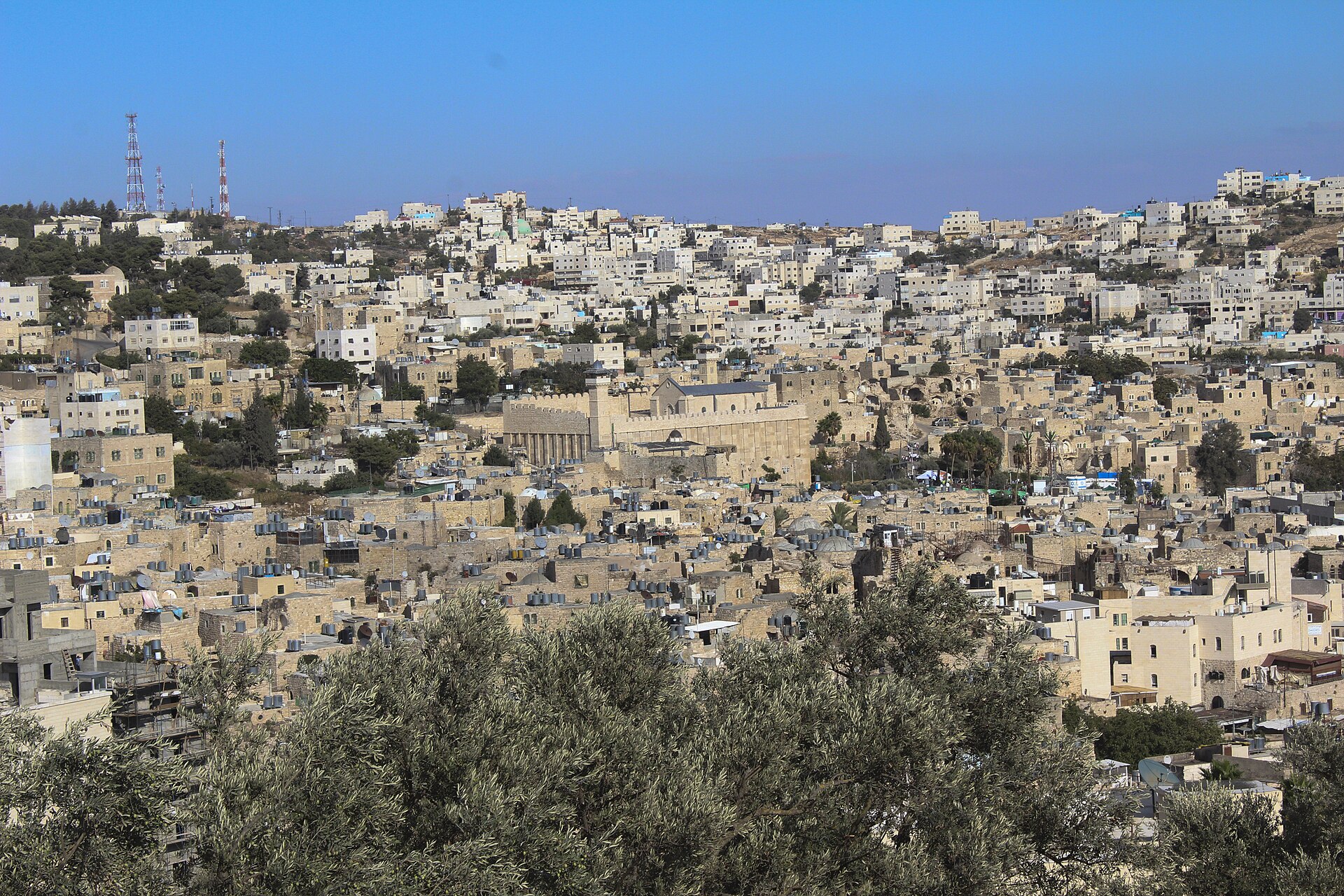
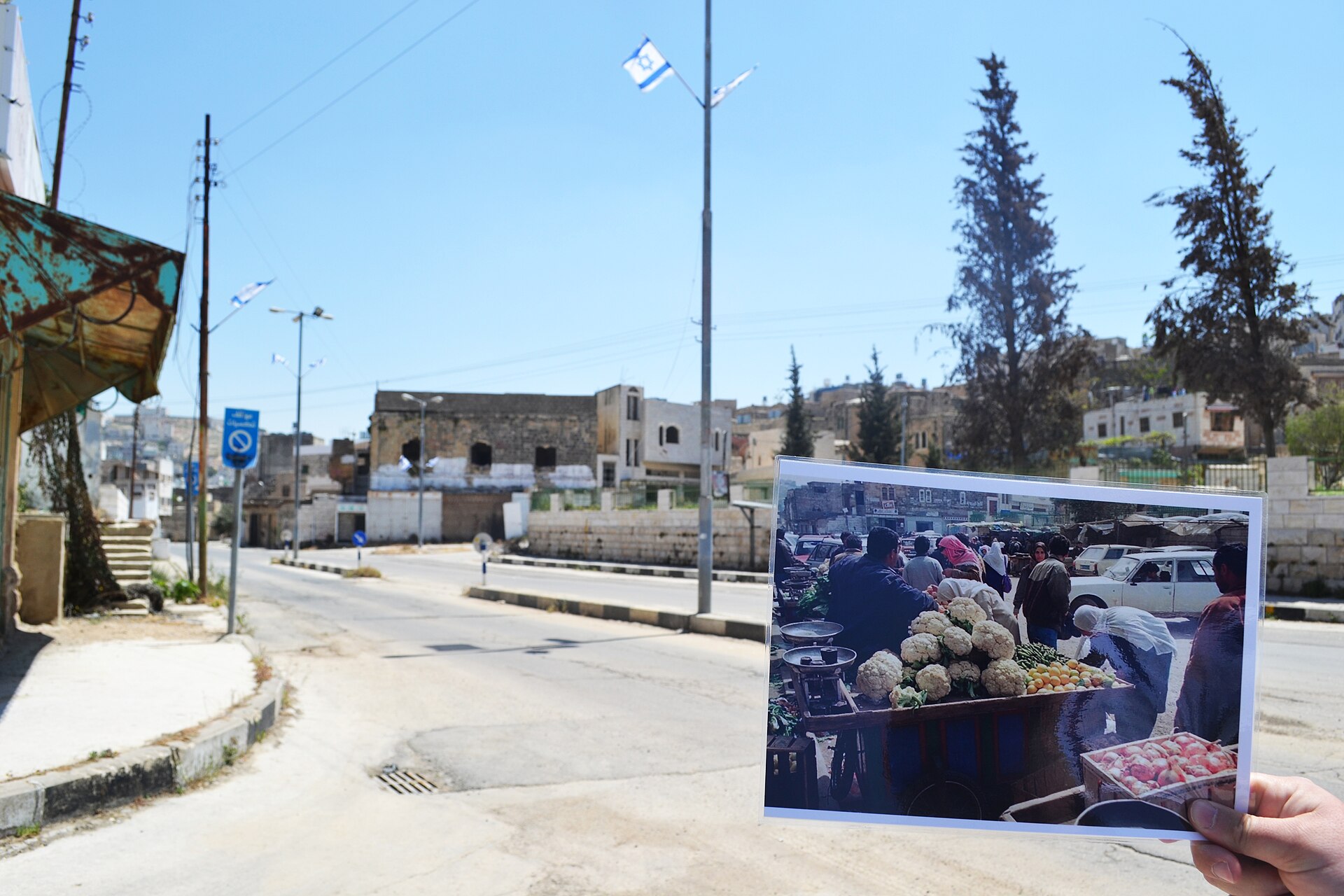
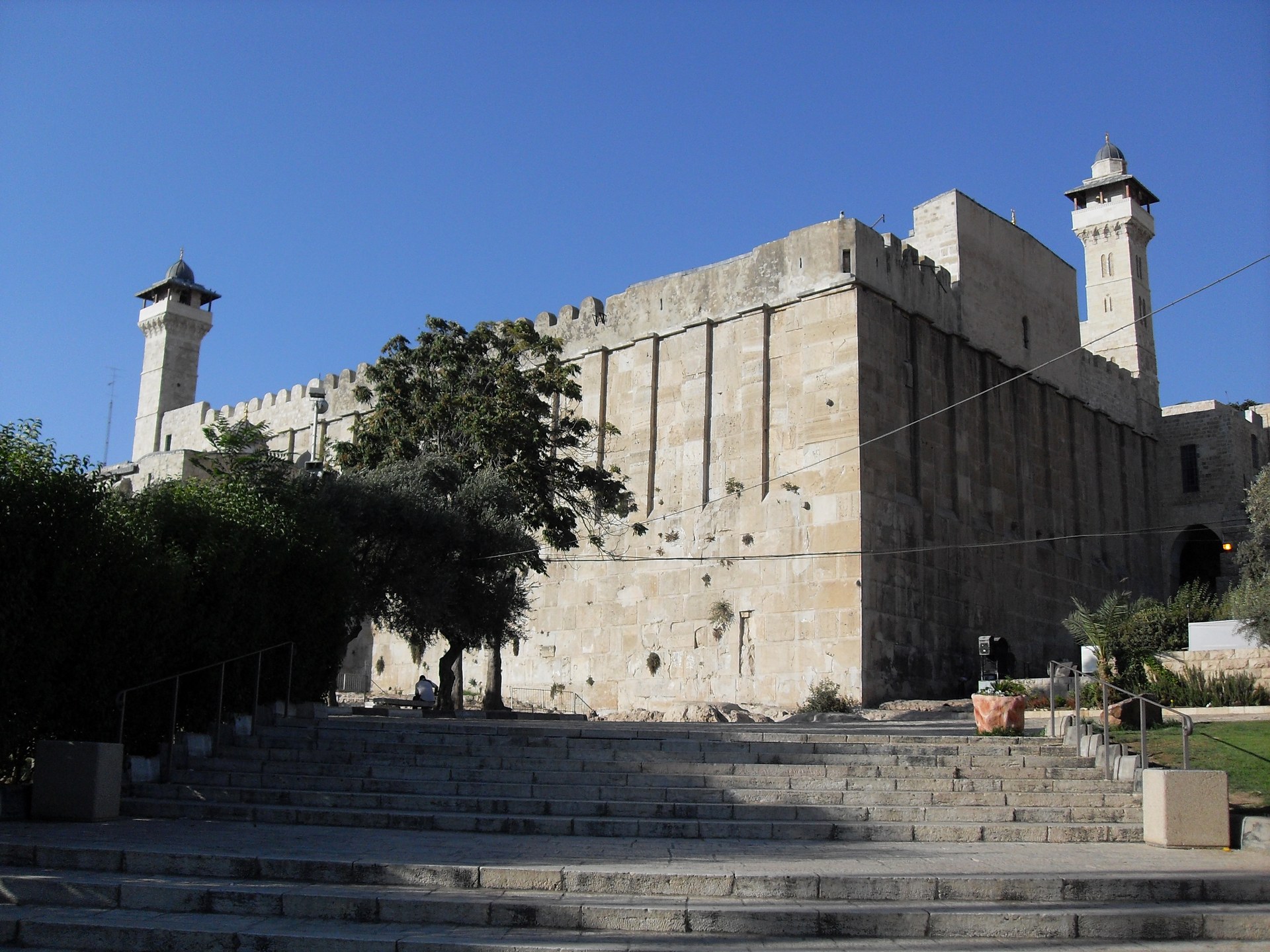
Hebron is the West Bank’s standing exception. It is the largest Palestinian city in the territory, home to more than 200,000 Palestinians, and the only major Palestinian city with Israeli settlers living inside it — a few hundred settlers in compounds in and around the Old City, guarded by a substantial military presence, surrounded by the Palestinian population of the city. The arrangement was formalised by the 1997 Hebron Protocol, which split the city into H1, roughly four-fifths of it under Palestinian Authority administration, and H2, the remainder — including the Old City and the shrine at its centre — under Israeli military control. At the centre stands the building both faiths claim: the Cave of the Patriarchs to Jews, the Ibrahimi Mosque to Muslims, the traditional burial place of Abraham and his family, sacred to both and administered, uneasily, by both. Shuhada Street, once the city’s commercial spine running toward the shrine, has been closed to Palestinian vehicles and most Palestinian pedestrians for decades, its shops shuttered — the single most cited symbol of what the division does to ordinary urban life.
Large operations have precedents elsewhere in the territory, and the government has cited them itself. In Jenin, in the northern West Bank, Israel has repeatedly mounted major operations against armed groups in the city and its refugee camp — a large incursion in 2023 and the extended “Iron Wall” operation from January 2025, which emptied much of the Jenin camp and kept forces inside it for months, with parallel clearances in Tulkarm and Nur Shams. Netanyahu invoked that model on Friday for the attackers’ home area. What is new in Hebron is the combination: a Jenin-style clearance method applied not to a camp of thousands but to neighbourhoods of the territory’s biggest city, under a division-of-control agreement that was meant to keep exactly this kind of operation negotiated rather than imposed. Whether the Jenin precedent reassures or alarms depends on which of its lessons is drawn — the military’s, that sustained presence suppresses armed cells, or its critics’, that the camps were emptied, the cells dispersed rather than eliminated, and the residents are still not home.
What the Numbers Say
The figures come from different officials, count different things, and should be read as a range rather than a single ledger. The displacement figure with the widest circulation — around 1,200 people forced from their homes — is a Palestinian official’s count given to Reuters. The Associated Press counted differently, in households: up to 250 families displaced. The two are broadly consistent; at typical household sizes, 250 families is on the order of 1,200 to 1,500 people. Al-Jabari’s figure is forward-looking: around 1,300 more people at risk of losing their homes on top of those already out, which would put the potential total near 2,500. The arrest figure, around 70 Palestinians detained on Friday and Saturday, comes from the Palestinian Prisoners’ Club; Israeli officials have not commented on arrests, so it stands unconfirmed and uncontradicted. Dudin’s one-third figure describes not displacement but targeting — the share of the city he says the operation has reached. Set against the city’s population of more than 200,000, even the highest displacement estimate is a small fraction of Hebron as a whole. That is the wrong denominator for the families involved, for whom the relevant figure is simpler: in two neighbourhoods, the clearance was close to total. Both things are true, and honest coverage has to hold them together — a citywide minority, a neighbourhood-level uprooting, and numbers that will move again before the operation ends.
The Election Question
“Trying to win as many votes as possible” — a claim, attributed
The timing is a fact; the motive is a claim, and it is reported here as one. Israel votes on Tuesday, October 27, and opinion polls show Netanyahu’s right-wing coalition in a tight race in which it may lose its majority, with the opposition bloc led by former military chief Gadi Eisenkot challenging it. Against that backdrop, Al-Jabari alleged directly that the operation was motivated by the election: “Netanyahu and the radical ministers in his government are trying to win as many votes as possible from the settlers,” he told Reuters. Palestinian officials making that argument note, as Reuters’ background reporting does, that Netanyahu’s government has presided over an expansion of West Bank settlements, and that settler voters are a constituency the coalition courts. The government’s answer is embedded in the sequence it presents: two soldiers were killed on Friday, and the operation followed the attack, not the campaign calendar; security responses, officials argue, are not scheduled by pollsters. No evidence has been produced publicly that settles the question either way, and the same events support both readings — a response any Israeli government would order after a deadly checkpoint attack, delivered at a scale and with a publicity that any campaign would also welcome. What can be said without speculation is narrower: the operation will be part of what voters weigh on Tuesday, the opposition will have to answer it as well as the government defends it, and the displaced of Al-Jaladah and Ein Deir Baha will cast no votes in the election that now frames their eviction.
What Happens Next
The first unknown is expansion. Dudin’s warning — that the operation began in the attackers’ neighbourhood but carries no guarantee it will not expand — is the scenario Hebron’s remaining residents are now planning around, and the 1,300 people Al-Jabari says are next in line are its measure. The second is demolition: the military has said demolitions will be carried out, and their scope will determine whether Saturday’s displacement reads, in retrospect, as a search that ended or a clearance that stayed. The third is duration. Friday’s closure order was framed to run at least until after Tuesday’s election; whether the neighbourhood clearances lift on the same schedule, or outlast it, is the clearest test of the operation’s stated purpose. Beyond Hebron, the strain runs in two directions. A West Bank operation of this size tests the Palestinian Authority’s ability to administer the territory it governs while its cities are entered at will — and it presses on the regional atmosphere in which the Gaza ceasefire, whose first anniversary we marked this month in our account of a year of a fragile truce, continues to hold without quite becoming peace. Escalation in the West Bank has repeatedly been the ceasefire’s unpriced risk. Tuesday’s vote will produce a government; the morning after, the families of Ein Deir Baha will still be asking the same question they asked on Saturday night: when do we go home, and to what?
Sources: Reuters (Oct 24, 2026) — displacement figure, Al-Jabari and residents’ accounts, Prisoners’ Club arrest figure, settlement-expansion background; Associated Press reporting carried by Euronews (Oct 24, 2026) — 250 families displaced, Ein Deir Baha clearances and marked buildings, Netanyahu’s 1967 comparison, election context; AFP remarks by Hebron Governor Khaled Dudin as reported in the AP/Euronews account (Oct 24, 2026). Displacement and arrest figures are Palestinian officials’ and the Prisoners’ Club’s counts as cited; the Israeli military had not commented on arrests, and had not published its own displacement figures, at the time of publication.