A violent cockpit altercation turned a routine Dubai–Tel Aviv flight into a regional security emergency, sending the jet sharply downward, triggering the international hijack code and leaving Israeli passengers in a Saudi airport.
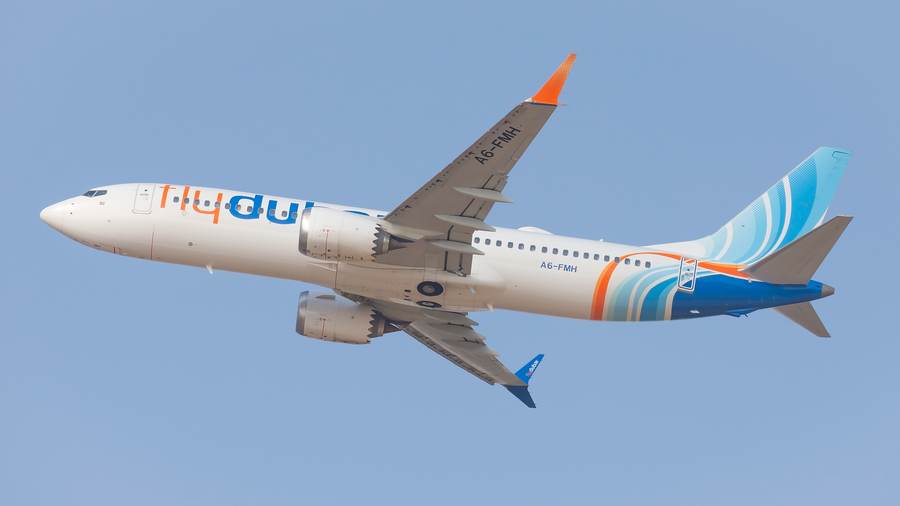
TABUK, Saudi Arabia — The Flydubai FZ1073 pilots fight diverted a Dubai–Tel Aviv flight to northwestern Saudi Arabia on Wednesday after the aircraft transmitted first a general emergency code and then the international signal for unlawful interference. Israeli fighter jets scrambled as officials initially treated the flight as a possible hijacking. The Boeing 737 landed safely at Tabuk Airport, and Flydubai said all passengers were safe and accounted for.
Update (September 30, 2026)
The wounded captain has been identified as Smit Machchhar, an Indian national with about 10,000 flight hours. Reporting on his professional record says he spent 11 years with SpiceJet before joining flydubai in 2022. The Indian Embassy in Riyadh said Machchhar was stable in a Tabuk hospital and receiving “necessary medical attention.”
Israeli Prime Minister Benjamin Netanyahu named Machchhar in a post on X and called him a “true hero” who showed “extraordinary bravery.” Netanyahu wrote: “Despite being stabbed and seriously injured, he fought back, resisted, opened the cockpit door, and enabled passengers and crew to overpower the attacker — preventing a catastrophic mid-air disaster.”
Passenger Almog Italie told Reuters that the jet dropped for 20 to 30 seconds at a time, leveled out and then began dropping again. Video filmed onboard and verified by Reuters shows two bloodied men on the cockpit floor; a Hebrew voice identifies one as the pilot “they tried to murder.” Doron Spielman, a spokesman for the Israeli prime minister’s office, told Reuters that the wounded captain used “the last moments of his energy” to release the cockpit door. Spielman said passengers entered and found the attacker “standing over the control panel, bashing the control panel.” A passenger subdued him, and two off-duty pilots took control and landed the aircraft at Tabuk.
Israeli officials told Reuters that their current assessment is an attempted “terror attack,” rather than an incident related to mental health. Saudi authorities detained the attacker for questioning. Officials have not formally named him. The Jerusalem Post and Israel’s N12, as relayed by the New York Post, reported that he is an Omani national who had worked for flydubai for less than a year; that identity and employment history remain media reports, not officially confirmed facts.
Latest update — September 30, evening (PDT)
The co-pilot at the center of the suspected flydubai terror attack attempt has been arrested in Saudi Arabia and is being questioned, Israeli Prime Minister Benjamin Netanyahu confirmed in a video statement on Wednesday afternoon.
Netanyahu gave the most detailed official reconstruction yet: “During the flight, as they were approaching Israel, one of the pilots stabbed the other pilot and, apparently, tried to crash the plane with its passengers on board.” He added that “all passengers are out of harm’s way” — almost all of the roughly 150 to 180 people aboard were Israeli. Quoting a passenger, Netanyahu said that after the aircraft “entered a tailspin and began to dive,” several passengers and a crew member forced their way into the cockpit and found the co-pilot “trying to sabotage the plane’s systems.”
Two Israeli officials told Reuters the government now believes the episode may have been an attempted terror attack by one of the pilots, and that the co-pilot stabbed the captain before cabin crew entered the cockpit and took control. Defense Minister Israel Katz went further, calling the incident a “jihadist terrorist attack attempt” that “was thwarted only thanks to the bravery of several Israeli passengers who broke into the cockpit, overpowered the terrorist and, with their own hands, restored control of the plane to another flight crew who was present there.” Katz said the attacker’s intent was unambiguous: “According to the initial information in our possession, the terrorist had one intention: to crash the plane with all its passengers.”
The FZ1073 plunge may have been even more violent than first reported. Flight-tracking data cited by Mannie Fabian and the New York Post shows roughly 14,000 to 18,000 feet lost in under 30 seconds — far faster than the two-minute descent first estimated — alongside damage to the Boeing 737 MAX 8’s rudder. Former Shin Bet flight-security chief Arik Zer said the damage could not have been caused by any external object. Passenger video shows panic spreading through the cabin during the descent.
Flydubai said on-duty crew members who were traveling as passengers secured the aircraft and diverted to Tabuk Airport in Saudi Arabia; the airline said motives were unknown and a formal investigation was underway. Israel temporarily closed its airspace as the alert unfolded, and Netanyahu convened his defense chiefs. The passengers were later flown on alternative flights and landed at Tel Aviv’s Ben Gurion Airport, where they were greeted with Israeli flags; one blood-covered passenger who helped subdue the attacker met Netanyahu.
Signal Post News notes the standing caveats: motives remain officially unknown, and early reports carried conflicting claims about the pilots’ nationalities — an Israeli official identified the alleged assailant as an Omani national via AP, a detail still carried as an attributed report rather than a confirmed identity.
Why it matters. If the terror framing holds, FZ1073 would be the first suspected in-cockpit terror attempt on the Abraham Accords’ flagship commercial air corridor — a route that exists because of the 2020 normalization between Israel and the UAE, and one flown daily by Israeli tourists. The corridor’s entire commercial premise is that a Dubai–Tel Aviv flight is routine; a deliberate attack from inside the cockpit would shatter that premise more completely than any external threat could.
The security questions. Cockpit doors keep attackers out; they cannot protect against a threat that begins among the crew. The investigation will now probe cockpit access discipline, crew screening and medical oversight on Gulf carriers, and Israel’s air-defense response to the 7500 squawk — the code that forced fighter jets up before anyone knew who was flying the plane.
Who faces pressure. Flydubai and the wider Emirates group face questions about how an alleged attacker ended up in the right seat of a 737 MAX. Saudi authorities hold the suspect and control the criminal case. And Israel’s government, which moved fast to frame the event as terrorism amid its ongoing conflicts, will need the investigation to support that framing — or manage the cost if it does not. For the latest on Israel’s security posture, see our coverage of the Gaza strikes and the diplomatic fallout in Ramallah.
What to watch. The formal investigation’s findings on the control inputs during the dive, the legal treatment of the suspect — terrorism charges in Saudi Arabia or extradition — and whether Dubai–Tel Aviv traffic, the Accords’ most visible commercial symbol, takes a lasting hit.
Latest update — September 30, night (PDT)
Hours after confirming the co-pilot's arrest in Saudi Arabia, Israeli Prime Minister Benjamin Netanyahu took the FZ1073 story to Fox News' Hannity on Wednesday night — and used the appearance to name and praise the passenger who helped retake the cockpit: Yaniv Hayoun, an Israeli plumber who had been seated in row 16. "He acted with a coolness of judgement and heroism that prevented another 9/11," Netanyahu said. "He's an incredible hero. Look at what he did under impossible circumstances." And: "Without his courage, we'd have faced a disaster of unbelievable proportions." (Quotes: Netanyahu on Hannity, as reported by the New York Post.)
Netanyahu said he met Hayoun after the passengers returned to Israeli soil — Hayoun was "completely stained with the blood" — and that the plumber told him "he just had to do it" after jumping into action. The prime minister also said he spoke with Hayoun's children, who were aboard the flight, and that they told him they "flew to the ceiling" during the violent descent.
Notably, Netanyahu stopped short of formally calling the incident a terrorist attack on air, even as his defense minister has already used that language. But he tightened the frame around one suspect: "We'll get to the root of this attacker, whether he had accomplices, whether Iran was behind it. I think we'll find out, very soon." Putting Tehran — and any accomplices — inside the story's official frame on American prime-time television, before investigators have released their findings, is not a casual remark. Motives remain officially unknown. (Sources: New York Post, Sept 30, 2026, and the Fox News Hannity interview clip.)
Why this matters. A prime minister publicly naming Iran on American prime-time TV, roughly four weeks before Israel's October election and ahead of any formal findings, opens the accountability narrative on the government's terms. The stakes of that framing are existential for the investigation: if evidence ties the co-pilot to Iran or its proxies, FZ1073 becomes a state-linked attack on a civilian airliner on the Abraham Accords' flagship Dubai–Tel Aviv corridor — a route whose entire commercial premise is that it is routine. If it does not, the prime-time accusations become a political liability of the government's own making.
Who faces pressure. Flydubai and the wider Emirates group now face head-of-state-level questions about how an alleged attacker reached the right seat of a 737 MAX. Saudi investigators hold the suspect and control what the public learns next. And Netanyahu's government must convert tonight's prime-time claims into evidence — or manage the gap between what was said on Hannity and what the inquiry proves. For the day's earlier developments, see our companion coverage of the terror probe and the heroes named; on the stakes with Tehran, see our coverage of Iran's Hormuz standoff.
What to watch. The formal investigation's findings on the dive and control inputs, whether any legal terrorism designation follows — in Riyadh or elsewhere — and whether the Dubai–Tel Aviv corridor, the Accords' most visible commercial symbol, takes a lasting hit in bookings and political symbolism.
The core facts are extraordinary without embellishment. Flight FZ1073 departed Dubai for Ben Gurion Airport carrying between 150 and 180 passengers, many of them Israeli, according to reports reviewed by Signal Post News. Flight-tracking data showed the aircraft turn away from Israel, descend rapidly and transmit codes 7700, then 7500, then 7700 again before landing in Tabuk. An Israeli official told Reuters that the emergency signals followed a physical altercation between the pilots. Israel's prime minister's office said the incident was not believed to be a hijacking.
In the first hours after the landing, Flydubai and government authorities had confirmed an internal personnel incident and a safe diversion but had not publicly confirmed passenger accounts describing screams, blood and a knife. Later on September 30, Israeli officials confirmed the stabbing and told Reuters that their assessment was an attempted terror attack. Those statements establish the Israeli government’s position; a full aviation and criminal investigation is still needed to determine the precise sequence, weapon, motive and control inputs.
Why this matters: the threat no cockpit door can stop
Modern airline security is designed primarily to keep an attacker out of the flight deck. FZ1073 raises the inverse problem: what happens when the threat begins among the people already authorized to control the aircraft? A reinforced cockpit door can protect pilots from an intrusion, but it can also delay intervention when a crisis develops inside. That does not mean the security model has failed; it means crew selection, medical oversight, two-person coordination and rapid communication are as important as the barrier itself.
The episode also shows how quickly an ambiguous cockpit event becomes an international military problem. A passenger flight heading toward Israel broadcast the one four-digit code guaranteed to be read as a potential hijacking. It did so over a region where air defense decisions are made in minutes and where the diversion airport sat in a country that has no diplomatic relations with Israel. Controllers, militaries and political leaders had to act before they knew whether the aircraft had been seized.
The immediate success was that the jet landed and no passenger was reported injured. The institutional test comes next: whether investigators can establish who selected each emergency code, what disabled normal communications, who retained control during the descent and whether cockpit procedures contained or intensified the danger.
Squawk 7500 hijack code explained: why four digits scramble fighter jets
Aircraft transponders identify a flight to air-traffic control and can also broadcast standardized emergency codes. Code 7700 means a general emergency. Code 7500 signals unlawful interference, the category that includes hijacking. It is not a verdict about what happened; it is a high-priority warning designed to let a crew communicate danger even when speaking openly over radio may be impossible.
On FZ1073, Flightradar24 data cited by Reuters showed a sequence of 7700, 7500 and then 7700 again. Investigators will need to determine who selected the codes and why. Reuters reported that it was not immediately clear whether either pilot deliberately transmitted the unlawful-interference signal. A brief 7500 transmission could reflect a purposeful alert, confusion during the struggle or another sequence that only cockpit and avionics records can resolve.
That ambiguity explains why jets scramble for a 7500 squawk. The code tells authorities to prepare for the most dangerous plausible interpretation, not to wait for courtroom-level proof. Fighter aircraft can identify and monitor the airliner, establish visual contact, protect nearby airspace and be ready to respond if the jet turns toward a sensitive target. Scrambling fighters is therefore evidence that the alert was taken seriously, not proof that a hijacking occurred.
Israel's response: jets scrambled as Netanyahu convened his security chiefs
Israeli Prime Minister Benjamin Netanyahu and Defense Minister Israel Katz held a security consultation as the alert unfolded. Israel's military said Chief of Staff Eyal Zamir conducted a situational assessment with the air force commander and other senior officials. An Israeli military spokesperson told CNN that fighter jets were scrambled after the emergency signal.
The response matched the uncertainty. Reports said officials temporarily struggled to establish contact with the cockpit, while the aircraft deviated from its path and descended over northwestern Saudi Arabia. Until the plane was safely on the ground, decision-makers could not assume that the 7500 code was accidental or that the crew had restored control.
After landing, Netanyahu's office said the situation was “under control” and that measures were being taken to return Israeli passengers safely. That statement narrowed the event from a possible attack against Israel to a complicated aviation, law-enforcement and diplomatic incident.
What passengers and officials say happened — and what remains unconfirmed
The most vivid accounts came from passengers and relatives, not from official investigative findings. An unnamed passenger told Israel's Channel 12, in an account carried by The Sun, that people heard screams, saw blood after the cockpit opened and believed a pilot had been stabbed with a pocketknife. A passenger identified as Noam said travelers understood that one pilot was seriously wounded and that the plane began to dive. The outlet also reported that passengers and crew helped restrain an attacker.
Reuters separately quoted Yasmin Abu Kasis, whose daughter Miriam was aboard. Abu Kasis said her daughter told her that she heard screaming and that a man took a knife, put a pilot on the floor and that there was blood. These are material eyewitness or secondhand accounts, but they do not establish who held a knife, who was injured, whether the object was a pocketknife or what caused the confrontation.
Israeli officials subsequently told Reuters that their current assessment is an attempted terror attack, not an episode related to mental health, and confirmed that the captain had been stabbed. Flydubai, Saudi authorities and Emirati authorities had not publicly released independent investigative findings at the time of this update. Officials have not formally named the attacker; reports from The Jerusalem Post and N12, cited by the New York Post, describe an Omani national employed by flydubai for less than a year, but Signal Post News treats those details as attributed media reports rather than confirmed identity. Cockpit recordings, medical evidence and interviews remain necessary to establish the full sequence and motive.
FZ1073 Tabuk emergency landing: the descent in numbers
CNN's review of flight-tracking data found that the aircraft descended 17,400 feet, from about 34,000 feet to around 16,600 feet, in just over two minutes at approximately 1:20 a.m. Eastern time. It transmitted an emergency signal at 1:32 a.m. and landed shortly before 3 a.m. ET. The Times reported that the plane had crossed into Jordanian airspace before turning back toward Saudi Arabia and flying at about 15,000 feet.
A rapid descent can be a deliberate response to several emergencies, including depressurization, smoke or a need to get the aircraft lower quickly. Flight-tracking data alone cannot show who was controlling the jet, why the maneuver began or whether passengers experienced the entire altitude change as a dive. What the numbers do establish is that the emergency involved a major and abrupt change from normal cruise flight.
The aircraft's changing track and transponder codes widened the response. A Dubai to Tel Aviv flight emergency already crosses multiple air-traffic jurisdictions; turning over Jordan and landing in Saudi Arabia brought additional authorities into the chain. Investigators will need synchronized radar, radio and aircraft records to reconstruct the sequence minute by minute.

Israelis stranded in Saudi Arabia: a diplomatic first
The landing placed a large group of Israelis in Saudi Arabia at once, under emergency conditions, despite the absence of formal diplomatic relations. CNN described it as a rare mass arrival. Saudi Arabia opened its airspace to Israel-bound flights and Israeli airlines in 2022, but overflight access is not the same thing as consular relations or routine entry.
This was not the first Israel-linked Flydubai diversion to the kingdom: Reuters noted that a Dubai–Tel Aviv flight made a medical-emergency landing in Riyadh in September 2025. FZ1073 was different in scale and security context. Instead of one passenger needing care, an entire planeload needed protection, processing and onward transport while two governments without diplomatic ties coordinated indirectly.
The arrangement also tests the practical side of regional normalization. Riyadh says it will not establish diplomatic relations with Israel without an independent Palestinian state. Yet aviation geography creates situations in which Saudi and Israeli authorities must still cooperate through airlines, controllers and intermediaries. The safe landing shows functional channels exist even when formal politics remain frozen.
Pilots fight in cockpit mid-air: the questions for Flydubai and regulators
Flydubai said only that FZ1073 “experienced an incident while en route,” landed safely in Tabuk and that all passengers were safe and accounted for. It said its teams were working with the relevant authorities and promised further updates as verified details became available. That restraint is appropriate during an investigation, but the airline will face demanding questions.
First is command: who was pilot flying, who was pilot monitoring and who controlled the aircraft during the rapid descent? Second is access: how did cabin crew or passengers become involved, if the passenger accounts are accurate, and was the cockpit door opened under established emergency procedures? Third is signaling: who selected 7700 and 7500, and did either code accurately reflect what the selector believed was occurring?
Regulators will also examine duty history, medical fitness, training and any prior conflict between the pilots. Those are normal investigative avenues, not evidence that a particular cause has already been found. The cockpit voice recorder and flight-data recorder should help distinguish between an argument, an assault, an incapacitation and any alleged attempt to interfere with control of the aircraft.
The episode will inevitably revive debate over the “two-person cockpit” principle and the ability of a crew member outside the flight deck to gain emergency access. The wrong lesson would be to redesign security around an unverified narrative. The right sequence is evidence first, then procedural change targeted at the failure investigators actually identify.
What happens next: investigation, jurisdiction, and repatriation
The immediate priority is repatriation. Flydubai was expected to arrange another aircraft to take the passengers onward to Israel. Saudi authorities had responsibility for the plane and people on the ground, while the United Arab Emirates, as the airline's home jurisdiction, and aviation investigators connected to the aircraft and its operator were likely to have central roles in determining the cause. The exact lead and participating authorities had not yet been publicly detailed.
The evidence list is clear even if jurisdiction is not: cockpit voice and flight-data recordings, transponder selections, radio calls, crew schedules, medical examinations, airport security records and passenger video. Investigators must separate three questions that were fused during the emergency — whether there was a physical fight, whether a weapon was used and whether anyone intended to seize or crash the plane.
For passengers, the decisive fact is that the Tabuk airport emergency landing ended safely. For Flydubai and regulators, that outcome cannot be allowed to obscure how close an internal crew crisis may have come to overwhelming the systems built to contain aviation threats. The next credible update should come from evidence, not the most sensational version circulating while the aircraft was still in the air.
Sources
- CNN — “Violent incident” between pilots sparks diversion of Israel-bound flight to Saudi Arabia
- Reuters via Devdiscourse — Israel-bound flight diverted to Saudi Arabia after brawl between pilots
- Reuters — A pilot brawl, then a rapid descent: passengers recount chaos on flydubai flight
- New York Post — Follow-up reporting on the FZ1073 cockpit attack
- The Times — Hijack alert on flight to Israel “triggered by fighting pilots”
- The Sun — Passenger accounts and reported cockpit violence
Source note: The diversion, emergency-code sequence, cockpit altercation and safe landing are supported by official statements and multiple reports. Israeli officials have since confirmed the stabbing and told Reuters that their current assessment is an attempted terror attack; Reuters separately verified onboard video of the aftermath. The account of the cockpit-door release and the attacker striking the controls is attributed to Israeli prime minister’s office spokesman Doron Spielman, while the aircraft’s repeated plunges are attributed to passenger Almog Italie. The attacker has not been formally named by officials; the reported Omani nationality and flydubai employment history come from The Jerusalem Post and N12 via the New York Post. Reporting used for this update also includes The Times, Circuit Magazine and AnewZ.