Miami airport shots fired September 2026
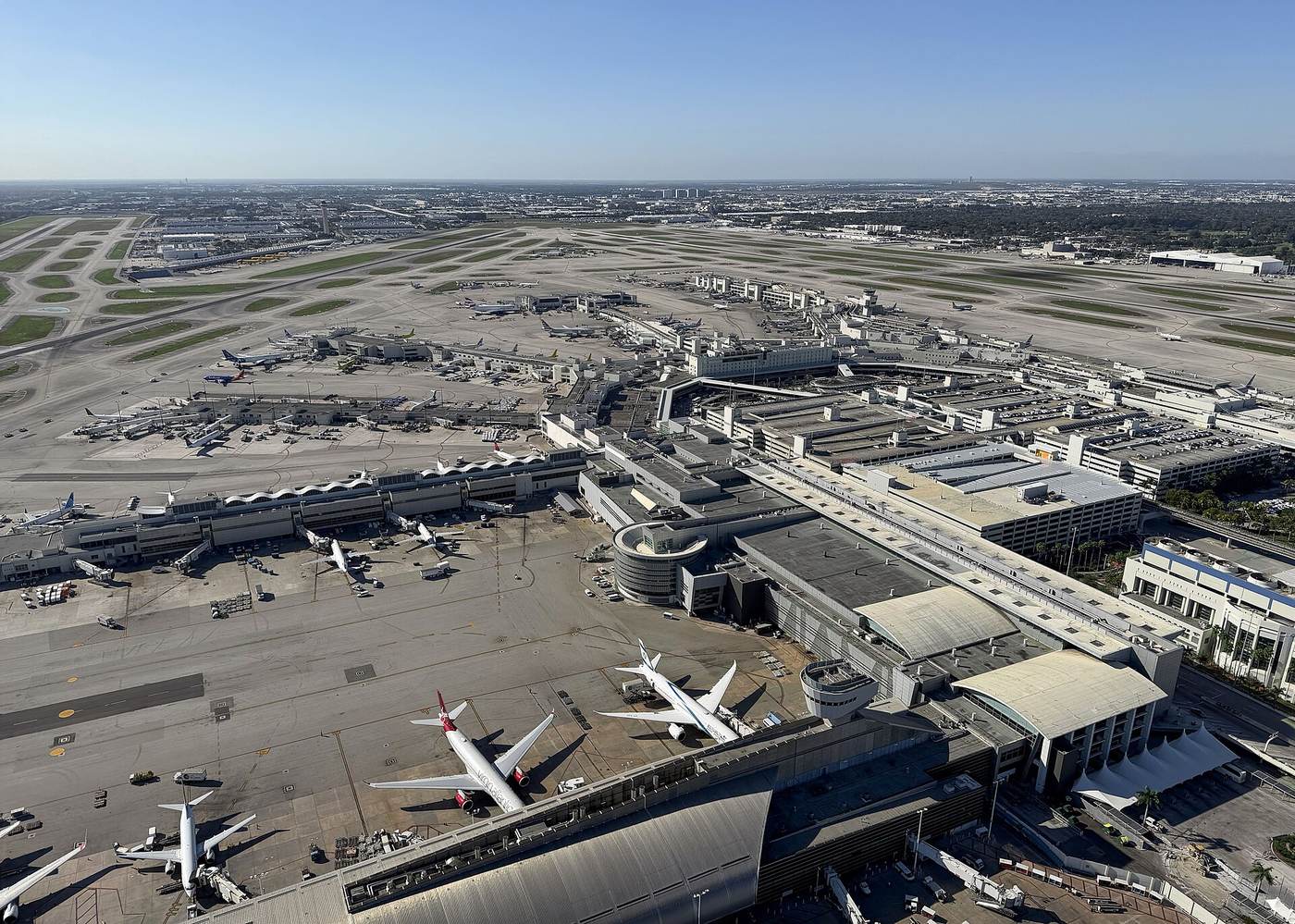
Miami airport shots fired September 2026 reports triggered a major police response at Miami International Airport shortly after 4 p.m. Eastern Time on Wednesday, September 23. Miami-Dade Sheriff’s Office deputies arrived with tactical units and rifles, while yellow crime-scene tape cordoned off areas outside the airport. One man was taken into custody and was being questioned, according to officials cited in local reporting.
No injuries were reported. Miami-Dade Aviation Department officials said passengers and employees were safe, and authorities said there was no active shooter and no ongoing threat to the public. The departure level from doors 12 through 17 and the roadway’s outer lanes were temporarily closed, with vehicle traffic diverted to the arrivals level. Officials later said the departure level and affected roadway lanes had reopened and airport operations had returned to normal.
Those facts define both the seriousness and the limits of what was known at the reporting cutoff. A discharge of gunfire at a major airport demands an immediate, visible response because authorities cannot initially know whether an event is isolated, accidental, targeted or part of a wider attack. But the official conclusion that there was no active shooter, combined with the absence of reported injuries and the reopening of the roadway, indicates that the immediate public-safety phase had ended even as the investigation continued.
The identity of the man in custody had not been released. Neither charges nor a motive had been announced, and officials had not said whether a weapon was recovered. A witness’s cell-phone video showed a bearded man in handcuffs being escorted by deputies, but an image of detention is not proof of criminal responsibility. The accurate description at this stage is that a man was in custody and being questioned.
What officials said about the MIA shots fired
Officials cited by NBC 6 South Florida said the shooter fired gunshots in a parking-lot area and also fired at a garbage can. It remained unclear how many shots were fired. That uncertainty matters: without a confirmed count, recovered evidence or an official reconstruction, witness impressions cannot establish the full sequence.
Multiple witnesses reported hearing gunfire. One described moving to the first level and hearing a large “boom,” then seeing a man dive behind a car. The account captures the confusion of the first moments, when travelers and workers reacted before authorities had determined whether the danger was continuing. It does not, by itself, establish who fired, why the shots were fired or whether anyone else was involved.
The Miami-Dade Sheriff airport response was extensive. Deputies, tactical personnel and officers carrying rifles converged on the area, while tape created a controlled perimeter outside the terminal. That scale should not be read as evidence of multiple attackers or casualties; it reflects the high-consequence setting and the need to secure a crowded transport complex quickly while information is incomplete.
Miami airport suspect in custody: what remains unknown
The phrase “Miami airport suspect in custody” can sound more conclusive than the verified facts support. Officials said one man was actively being questioned. They had not publicly identified him, announced charges, described a motive or confirmed that a firearm had been recovered. Those gaps are not minor details. They determine whether investigators are examining a criminal shooting, an unlawful discharge, a weapons offense or another set of circumstances.
Investigators will need to establish the location and direction of each shot, identify any bullet impacts, collect physical evidence, compare witness accounts and review available surveillance or cell-phone video. They will also need to determine how the detained man came to their attention and whether evidence connects him to the gunfire. Until authorities disclose those findings, reporting should avoid turning detention into conviction or filling an information vacuum with speculation.
The absence of an announced weapon recovery is especially important. It does not mean that no weapon existed; officials said shots were fired. It means only that the public had not been told whether investigators found one, where it may have been located or whether ballistics could connect it to evidence at the scene. The same discipline applies to motive: no public evidence supported claims about terrorism, personal conflict, mental state or any other explanation.
MIA departure level closed doors 12–17
The most visible operational impact was concentrated on the terminal frontage. The departure level from doors 12 to 17 was closed, as were the outer lanes of the departure-level roadway. Drivers were redirected to arrivals. The restrictions narrowed access around the scene while keeping another level available for vehicle movement.
Officials later reopened the departure level and roadway lanes and said airport operations had returned to normal. The sequence—targeted closure, diversion, then reopening—shows how an airport can isolate a specific landside zone without necessarily shutting down the entire aviation system. Travelers still needed to navigate congestion and uncertainty, but the response did not become an airport-wide suspension in the facts released publicly.
For passengers, the practical lesson is to distinguish roadway access from flight status. A curbside or parking-area closure can delay drop-offs, pickups, employee access and ground transportation even when aircraft continue to move. Travelers caught in such an incident should follow airport and airline instructions, allow extra time and avoid entering a restricted perimeter. Our guides to U.S. flight-delay rules and the FAA Northeast outage explain a different class of disruption: system or operational delays rather than a localized police scene.
The airside and landside distinction
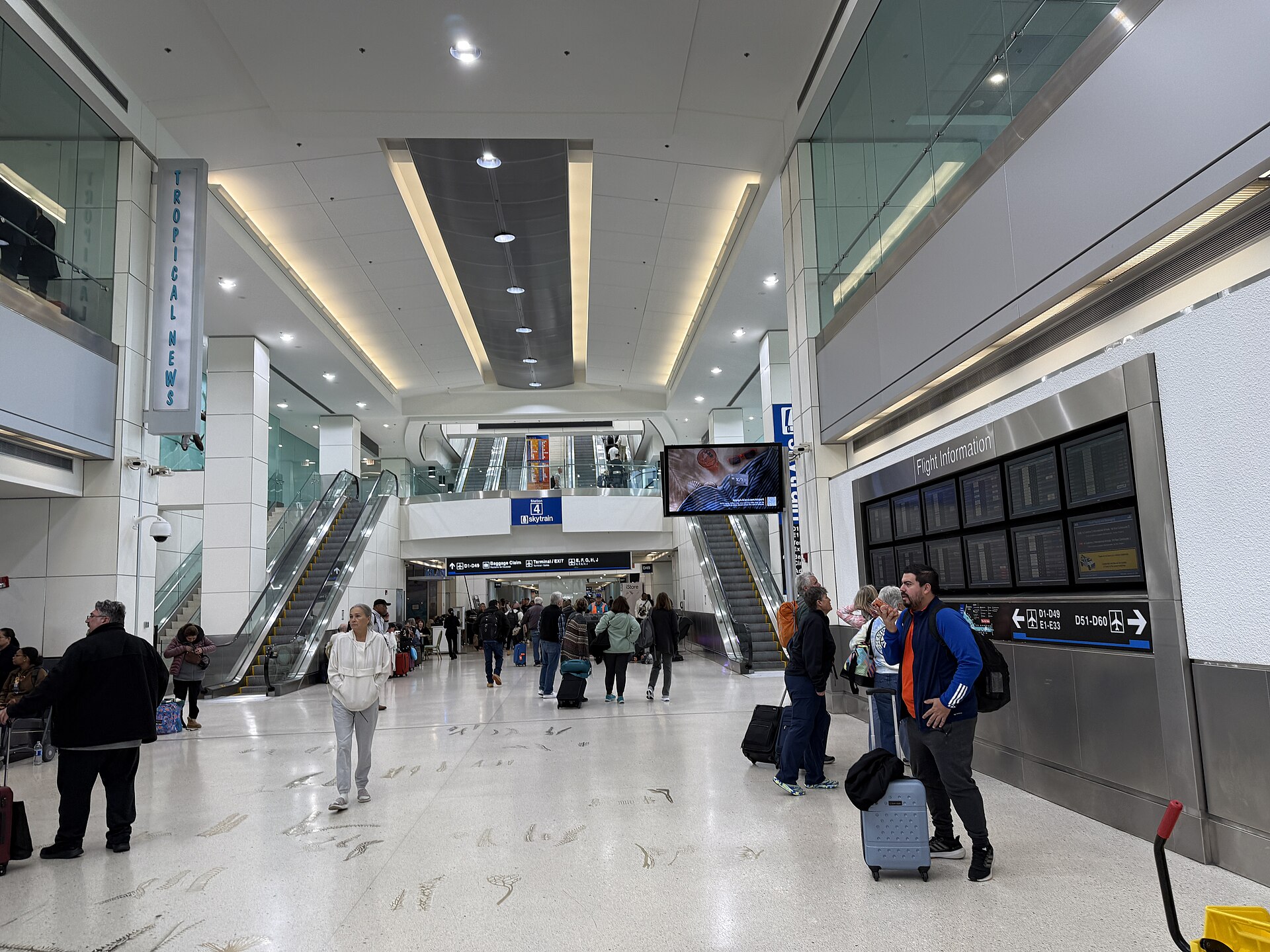
Airports are often spoken about as if they were one sealed security zone. They are not. The airside is the controlled area beyond passenger screening and other access controls: gates, aircraft stands, taxiways and operational spaces. The landside includes public-facing roads, curbs, parking facilities, ticketing areas and other spaces reached before security screening.
The reported Miami International Airport incident was in a parking-lot area, and the closure affected departure-level doors and roadway lanes. On the information released, it should therefore be understood as a landside or curbside security incident, not as evidence that someone breached a screened airside zone. That distinction helps explain why police focused on road access and the exterior perimeter while officials were later able to say normal airport operations had resumed.
Landside spaces are difficult security environments because they must remain broadly accessible. Airports depend on constant flows of private vehicles, taxis, rideshare cars, buses, delivery traffic, employees and people meeting passengers. Security cannot be organized there exactly as it is at a screened checkpoint. The operating model instead relies on observation, rapid reporting, law-enforcement presence, traffic control and the ability to create distance around a scene.
A police response outside a terminal can still affect the whole passenger journey. A blocked lane can cause queues that ripple across entrances. A taped-off zone can force workers and travelers to reroute. Conflicting social-media posts can make an ended threat appear active long after officials have contained it. Clear language—where the event occurred, what remains closed and whether a threat is continuing—is therefore part of the security response, not an afterthought.
Why this matters at a major U.S. gateway
Miami International Airport is a major U.S. gateway, connecting South Florida with domestic and international destinations. Its role magnifies even a geographically limited disturbance: many travelers are transferring, working to fixed departure times or navigating the airport in a language other than English. Airport employees, airline crews, concession workers, ground-transport drivers and family members meeting passengers all share the same access network.
The incident matters first because gunfire in any crowded public transport setting creates immediate risk. It matters second because authorities must make high-stakes decisions before they possess a complete account. A light response could leave people exposed; an unnecessarily broad shutdown could strand travelers and obstruct emergency access. The Miami-Dade response used visible force and a focused traffic closure, then lifted restrictions after officials said there was no continuing threat.
This is also why the no injuries MIA shooting outcome should be stated precisely. “No injuries reported” is an official status at a particular time, not proof that the event was harmless. People may experience fear, missed connections or workplace disruption without appearing in an injury count. At the same time, the phrase should not be inflated into a casualty narrative that officials did not report.
The broader security question is whether the response revealed a vulnerability that requires a change. A single parking-area discharge does not automatically demonstrate a failure of passenger screening because screening protects a different boundary. The relevant review is likely to focus on landside patrols, camera coverage, reporting speed, vehicle routing and how quickly accurate information moved among deputies, airport managers, airlines, workers and the public.
Who was affected
Travelers faced uncertainty and rerouting. People approaching the departure level between doors 12 and 17 had to adjust to the closure, while drivers were diverted to arrivals. Even after lanes reopened, residual traffic and confusion could outlast the formal restriction.
Airport workers operated inside a changing perimeter. Employees had to follow security directions while continuing essential functions in a complex that officials said returned to normal. For frontline staff, the event combined public-safety responsibilities with the practical work of guiding passengers.
Law enforcement had to treat ambiguity as risk. Deputies could not assume at the outset that the gunfire was contained. Tactical units and rifles reflected the need to be prepared for a high-threat scenario until officers could rule it out. Once authorities said there was no active shooter, the mission shifted toward preserving evidence, questioning the detained man and restoring access.
Families and drivers needed reliable instructions. Roadway diversions affect people who may never enter a terminal but are part of the airport system. Reopening information is as important as closure information because it prevents congestion from continuing after the security need has passed.
What the numbers and locations imply
The known numbers are limited but meaningful. One person was taken into custody. No injuries were reported. Six numbered departure doors—12 through 17—fell within the closed stretch, and only the outer departure-roadway lanes were specified. The event began just after 4 p.m. Eastern Time, and the affected areas later reopened.
Those details point to a focused incident rather than an airport-wide active-shooter emergency. They do not reveal how many shots were fired, how close anyone was to danger or whether the detained man will face charges. The geographic detail is more useful than speculation: parking-area gunfire led authorities to control the adjacent public roadway and doors, while preserving broader access through the arrivals level.
The response can be compared with another type of urban security interruption, such as the Chrysler Building bomb-threat evacuation. In both settings, officials must create a perimeter before the nature of the threat is fully known. The comparison is procedural, not factual: the Miami event involved reported gunfire, while the New York event involved a different allegation and response.
What investigators will determine next
The investigation must answer a short list of factual questions. Who fired? From precisely where? How many shots were discharged? What was struck? Was a firearm recovered, and can forensic evidence connect it to the scene? Did surveillance or witness video capture the sequence? What was the detained man’s role, if any? Only after those questions are answered can authorities responsibly address charges or motive.
Airport managers and law enforcement will also be able to review the response itself: when the first report arrived, how quickly deputies located the scene, whether the perimeter was the right size, how diversions were communicated and whether passengers or employees entered a restricted area. A review does not imply that procedures failed. It is how a high-volume transport hub tests whether a response that ended without reported injuries can be made faster, clearer or less disruptive next time.
Any security-policy change should match the location and evidence. Expanding airside screening would not necessarily answer a landside parking-area event. More relevant measures could involve patrol patterns, cameras, lighting, emergency communications or traffic-control plans—but recommending any one measure before investigators publish the sequence would be premature.
A contained emergency, an open investigation
By the time officials reopened the departure level and roadway lanes, the immediate emergency had been contained. Passengers and employees were reported safe; there was no active shooter and no ongoing threat. That outcome explains why operations could normalize. It does not close the case.
The public record remained narrow at the reporting cutoff: gunshots in a parking area, including shots reportedly fired at a garbage can; an unknown number of discharges; one man detained for questioning; no reported injuries; a temporary closure and diversion; and a return to normal operations. Everything beyond that—identity, charges, motive, weapon recovery and a complete sequence—remained unresolved. The responsible account of this airport security incident in Florida is therefore both reassuring and unfinished.
Sources
- NBC 6 South Florida: local reporting and official updates on the airport response.
- WSVN 7News report republished by TimesNG: witness account, custody and roadway closures.
- NBC News: national reporting context.
Reporting cutoff: September 23, 2026 at 7:45 p.m. PDT. Officials had not released the detained man’s identity, announced charges or motive, stated whether a weapon was recovered, or confirmed how many shots were fired. This article does not infer any of those facts.