UK · Preparedness · War
World / United Kingdom — If Britain's electricity grid failed completely, the BBC would keep broadcasting from a small protected emergency studio, transmitters running on diesel, carrying pre-written government scripts. The plan is real, the government stresses there is no specific threat — and the detail, revealed by the BBC itself, shows how far official thinking about a total blackout has now gone.
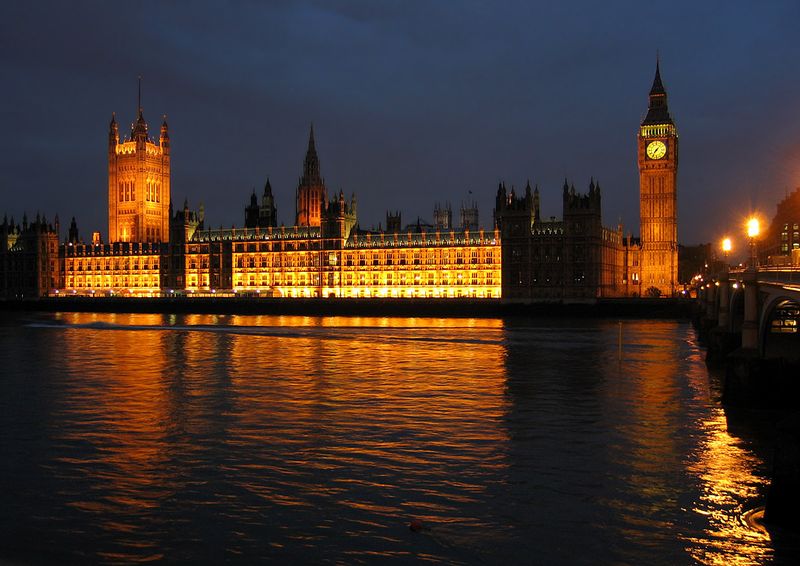
Track it live: Live war and conflict tracker
LONDON, November 7, 2026 — Somewhere inside the BBC there is a small radio studio that almost nobody outside a tiny circle may know about in full. According to the BBC’s own reporting, published on Saturday by its media and arts correspondent David Sillito, about 100 BBC staff are designated to run it in the event of a “Black Sky” — the civil-contingency term for a catastrophic, prolonged failure of the national electricity grid. The studio’s communication lines do not depend on the internet. It holds fuel, water and food for at least three days. And its job, in the worst week Britain could have, would be narrow and vital: to keep one trusted voice on FM radio, broadcasting pre-arranged government messages, at the moment when water supplies, card payments, mobile phones and trains have all stopped.
The caveat belongs at the top, in the government’s own words. The Cabinet Office told the BBC: “The UK has one of the most resilient electricity systems in the world, and there has never been a complete outage in the grid’s 75-year history.” Officials say — and both the BBC and LADbible state it explicitly — that there is no specific threat to the grid. Nothing in this article suggests an attack or an outage is expected. What has changed is not the danger, so far as anyone will say on the record; what has changed is that the planning for the unthinkable is now being described in public, in operational detail, by the national broadcaster itself.
So what is being planned for? Andrew White, chief executive of Harberry Limited and a telecommunications and data-centre expert, gave LADbible the working definition: “A ‘black sky event’ is typically characterised as a catastrophic, long-duration failure of critical national infrastructure, especially the electric grid, lasting weeks or months, triggered by extreme natural hazards or deliberate attacks.” The cascade is the point. Electricity is the service underneath the services: water is pumped, sewage is moved, shops take card payments and restock from just-in-time supply chains, mobile networks run on battery backup measured in hours, rail signalling and petrol pumps need power. Remove the grid for long enough and the failures stop being electrical. They become everything else, all at once.
Inside the emergency studio
The detail Sillito assembled is striking precisely because it is so practical. Around 100 BBC staff would operate the special emergency studio, on secure lines of communication that are not dependent on the internet, with fuel, water and food to keep it running without resupply for at least three days. Other information would be broadcast via satellite vehicles by a select number of journalists positioned at emergency centres around the UK, continuing “as long as the diesel lasts.” Teams would stay in touch by satellite phone; if those failed, there are pre-agreed protocols and meet-up points. This is not a plan for making programmes. It is a plan for remaining reachable — a skeleton service whose entire purpose is that, whatever else has failed, the radio still works.
A note on sourcing, because it matters here. Sillito is transparent that he reconstructed the arrangement from internal briefings rather than from a published document: “Only a small number of staff know the full details, but from what I have gleaned…” The figures in this section — the roughly 100 staff, the three days of supplies — should therefore be read as reported orders of magnitude from inside the building, not as lines from a government white paper. No public document confirms them, and Signal Post News presents them on exactly that basis.
What would the studio actually say? Largely, things that have already been written. The broadcasts would carry pre-arranged government messaging — and some of it is not secret at all. On December 16, 2025, the government and the four UK Chief Medical Officers published pre-written emergency radio broadcast scripts online, including guidance as granular as daily drinking-water requirements and how to dispose of human waste when toilets will not flush, the BBC reports. The transmitters that would carry those scripts are isolated from the internet and hold diesel tanks of between 5,000 and 40,000 litres, enough — FM transmission is power-hungry — to keep broadcasting for three days without the grid.
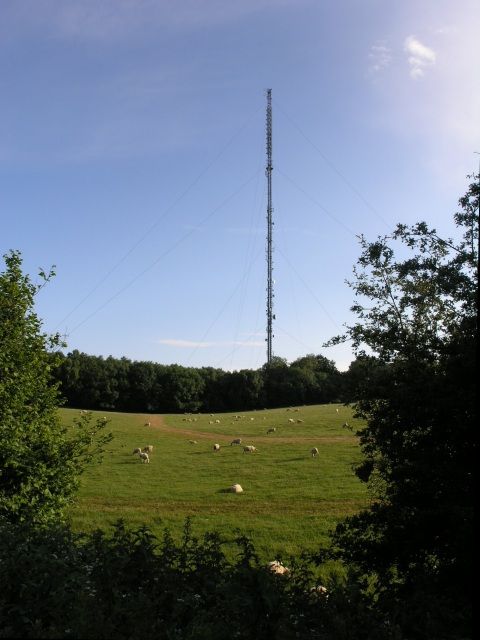
The 72-hour line
Three days is not an arbitrary number, and the reasoning behind it is the most revealing part of the BBC’s account. At a recent UK resilience summit — the reporting does not date it, and neither will we — the working focus was on the country being able to withstand a Black Sky event for a minimum of 72 hours. A BBC source explained the revision: “It was originally thought we should plan for five to seven days… The latest advice from Neso [the National Energy System Operator] is that they will probably be able to get the power back on in two to three days.” The emergency studio’s stockpile, in other words, is sized to the grid operator’s expected restoration time, not to the definition of the disaster itself.
That gap is where the honest argument sits. The formal definition of a black sky event runs to weeks or months of disruption. The plan covers two to three days, because that is how long Neso advises a total failure would probably last. Andrew White, the Harberry chief executive, put the sceptical case to LADbible without flinching: “I do not know if the studios and transmitters are capable of withstanding such a prolonged disruption.” Both things are true at once: the 72-hour standard is a reasonable plan for the expected case, and it is not a plan for the worst case the term itself describes. Readers should hold those two facts together, because the reporting does.
Lancaster, 2015: the night Britain rehearsed by accident
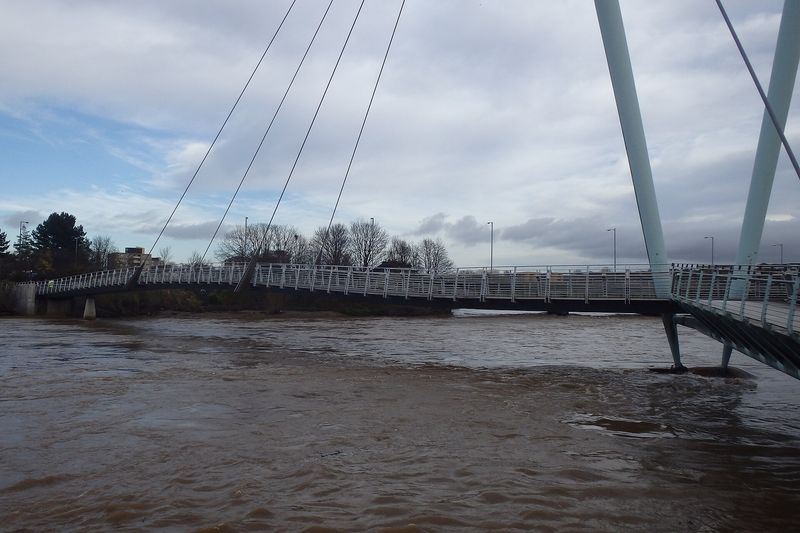
Britain has never had a national blackout. But it has had a local one that behaved like a national one in miniature, and it remains the reference point for everyone in this field. At 22:45 on December 5, 2015, during Storm Desmond, the River Lune burst its banks in Lancaster and flooded the substation; the electricity supply to 61,500 people in the city went with it. It was a Saturday night in early December, and engineering professor Roger Kemp — who would lead the review of what happened — realised something was very wrong. What followed was the cascade in real life: water supplies began to fail because they relied on electric pumps; rail services, petrol stations, shops, cash machines and traffic lights failed across the city.
Two communication systems kept working. One was the copper-wire landline telephone, which carries its own power down the line. The other was FM radio: the local station, The Bay, broadcasting on a generator, became the city’s information lifeline. That pairing — copper and FM, the two oldest networks in the country — is the empirical seed from which the entire Black Sky communications plan grows. Lancaster also left the planners a phrase and a warning. The shorthand is “nine meals from anarchy”: the observation that a modern city, fed by just-in-time logistics that assume power, refrigeration and electronic payment, is only a few days of empty shelves away from a very different kind of emergency. Lancaster got its power back before the phrase could be tested in full. The plan exists for the version where it cannot be.
‘We’ve lost the backup systems’
The sharpest analysis in the BBC’s reporting comes from Lord Harris, chair of the National Preparedness Commission. “People need to know power cuts are about more than just the lights going out,” he told the BBC. “It’s likely to stop the water supply because unless you happen to be located neatly downstream of a reservoir, that requires electricity.” Sewage is worse: “that then causes blockages, the whole thing backs up, you get sewage flowing out, flowing back up the system.” And his structural point is the one that explains why a 2015-style cascade would bite harder now than it did then: “In the drive towards efficiency over the last five decades, we’ve lost backup systems.” His example is the emergency services’ own migration away from dedicated radio communications toward mobile-network technology — more capable on a normal day, and wholly dependent on the networks a blackout takes down.
The analogue cliff is dated, which makes it more uncomfortable. The copper landline network — one of Lancaster’s two survivors — is being switched off: BT and Openreach’s PSTN shutdown completes on January 31, 2027, after which landlines ride on the same powered, internet-based infrastructure as everything else. The other survivor, FM radio, is itself under government review, its long-term future undecided. The state is not unaware of the hole this leaves. The BBC reports a £70 million government programme for HAPS — high-altitude platform systems, aircraft circling over the UK that would provide at least a week of emergency mobile phone and internet connectivity if the ground networks failed. It is, in effect, an attempt to rebuild in the sky a fraction of the resilience that copper and FM provided from the ground — and an admission, priced at £70 million, that the backup systems really have been lost.
The household end of the plan
The same doctrine now reaches into people’s kitchens. The Cabinet Office’s Be Ready campaign, launched on October 22, 2026 as a three-year effort, asks households to hold three days of supplies — the household mirror of the studio’s three days of fuel and food. On the official essential list, alongside bottled water, a torch, tinned and non-perishable food and alternative heating, sits a wind-up or battery-powered FM radio: the receiving end of the emergency studio’s transmissions, deliberately specified as a device that needs no mains and no internet. We set out the campaign’s full checklist in our Be Ready report.
Secondary reporting, attributed as such, fills in the older scaffolding beneath Saturday’s reveal. The standing national-blackout plan is reported to be called Programme Yarrow, launched in 2021 and tested in 2022, with scenarios running up to a week; the “black sky” terminology itself dates to 2010s-era planning circles, including the EIS Council. None of that is the news. The news is the combination that landed this week: the BBC describing its own emergency studio in public, a 72-hour national threshold stated on the record, and all of it arriving a fortnight after the government began telling every household in the country to keep three days of supplies and a wind-up radio.
Why this matters: the next rung of the ladder
Read in sequence, the last month of British preparedness messaging forms a ladder, and Saturday’s story is its next rung. First came the soldiers: the Chief of the General Staff, General Sir Roly Walker, warned that the public must prepare for war, in coverage we reported as UK Army Chief Warns Public to Prepare for War: ‘Frank Conversation’ on Sacrifice Is Coming. Then came the political clock: Streeting warned Britain has a little over 1,000 days to be ready to fight and win. Then, on October 22, the ladder reached households, with Be Ready. Now it reaches the infrastructure itself: the state is no longer only telling citizens to prepare for disruption; it is describing, in detail, how it would talk to them through the worst disruption of all — complete grid failure — using pre-written scripts about drinking water and sewage.
Two analytical points deserve separating from the drama. The first is Lord Harris’s efficiency-versus-resilience trade: five decades of optimisation stripped out the slack — copper lines, analogue radio, cash, stockpiles — that once absorbed shocks for free. Almost everything in the Black Sky plan is an attempt to buy a small amount of that slack back, deliberately, at the exact points where its absence would hurt most. The second is that none of this requires an enemy. On April 28, 2025, the Iberian Peninsula suffered a national-scale blackout across Spain and Portugal with no attack involved at all: a modern, well-run grid failed nationally, in peacetime, on an ordinary spring day. That is the sober core of the British planning. The question it answers is not “who would do this to us?” but “what still works if it happens?” And the answer is FM — because FM receivers sit in kitchens, cars and wind-up torches across the country, need nothing but batteries or a crank, and ask nothing of the grid or the internet. It is the last mass medium that works when everything else is dark.
What happens next
Several concrete markers will show whether the 72-hour line hardens into doctrine. The government’s review of FM radio’s future now carries a weight its authors cannot have expected: switching off the transmitters the plan depends on would retire the plan with them. The £70 million HAPS programme will be watched for whether it moves from project to capability. The National Risk Register’s treatment of total grid failure — its likelihood language and its restoration assumptions — will show whether Neso’s two-to-three-day expectation survives official scrutiny. And if the 72-hour standard becomes published public guidance rather than a summit talking point, the household advice and the studio plan will finally be the same document.
It is worth ending where the government insists on ending. On the public record, this plan has never been run at full scale. There has never been a complete outage in the grid’s 75-year history. The government maintains there is no specific threat. Preparedness is the story here — a state quietly rebuilding, in public, the ability to speak to its citizens with the power off — and not an impending blackout. The studio is dark, staffed only on paper, and everyone involved hopes it stays that way.
Would your household cope with 72 hours without power — and would you know to reach for an FM radio if the phones went dark? Follow Signal Post News for continuing coverage of Britain’s preparedness drive, and share your view in the comments.
Sources
BBC News, David Sillito, media and arts correspondent, November 7, 2026 — the emergency studio, the 72-hour summit focus, the Neso advice, the transmitter diesel figures, the December 16, 2025 Chief Medical Officers’ scripts, the Lancaster account, Lord Harris and the £70m HAPS programme; BBC-internal details are as reported by the BBC, and its staff and supply figures are a reconstruction from internal briefings, not a published government document: BBC reporting, full text as republished. LADbible, November 7, 2026 — the black sky definition and studio assessment of Andrew White (CEO, Harberry Limited), and the official essential-supplies list including wind-up FM radios: ladbible.com. Cabinet Office statement to the BBC on grid resilience; gov.uk, Be Ready campaign (launched October 22, 2026); UK government and the four Chief Medical Officers, pre-written emergency broadcast scripts (December 16, 2025); National Energy System Operator (Neso), restoration advice as reported by the BBC; National Preparedness Commission (Lord Harris), via the BBC. Photographs: Wikimedia Commons, as credited in the captions.