UK army chief prepare for war: General Sir Roly Walker, the Chief of the General Staff, has told some 700 soldiers at Catterick Garrison that Britain's political leaders will "very soon" begin a "frank conversation" with citizens about preparing for war — asking the public to "consent to sacrifices to prioritise defence and security" and to back soldiers to "take the fight to the enemy" — even as a new Ipsos poll finds 48 per cent of Britons say there are no circumstances in which they would fight for their country.
Catterick / The Army chief tells 700 soldiers the nation will soon be asked to consent to sacrifice — as half the country says it would never fight
Track it live: follow the wars and military flashpoints shaping Britain's threat picture on the Signal Post News Live Global Wars Tracker.
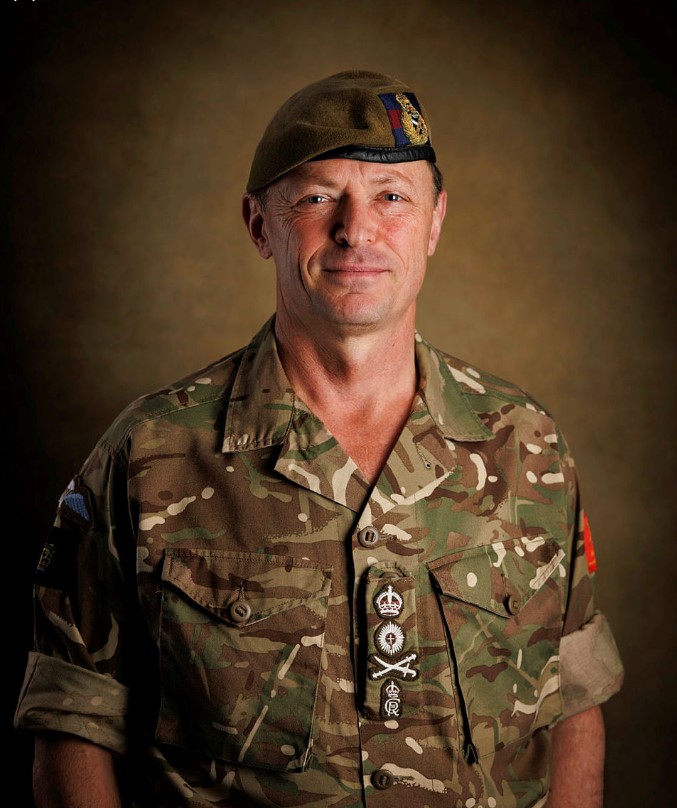
CATTERICK, North Yorkshire — The UK army chief's prepare-for-war warning was striking less for its content than for its audience. Walker did not announce it in Parliament or trail it in a Sunday interview. He told soldiers — an assembly drawn from across 1 (UK) Division, the Army's light, high-readiness global response force, including paratroopers — that the burden of the next crisis would fall on them, and that the country behind them has not yet understood what is coming. "There was a time that our nation didn't want to think of a time when it would need its soldiers to fight in a war," he said. "But as anyone who is studying the trajectory of world affairs and the geopolitical system within which our nation sits and thrives will realise, there is extreme jeopardy in the world at the moment, and the business of soldiering is coming back into the nation's psyche."
What Walker told the soldiers
The core of the speech, as captured by BFBS Forces News cameras, was a prediction about politics as much as about war. "Indeed, very soon, the political leaders of this country will start to have a frank conversation with the citizens of this country about just what is going on and where the risk lies," Walker said. "They are going to try and explain to our citizens that our citizens have got to consent to sacrifices to prioritise defence and security." He went further, describing a public that barely thinks about its army at all: ministers would ask "those citizens, for whom we are not necessarily at the front of their mind, that they too need to play a part in the defence and security of this country." And he closed the loop between the hall at Catterick and the country outside it: "Ultimately we are going to need them to back us, to back you, to do the one thing that you do that nobody else gets to do and that is to take the fight to the enemy." In another passage reported by The Times, he told the troops: "There is no other environment to my mind where the burden of fighting is placed squarely on the shoulders of our most inexperienced and junior soldiers than in our land forces. And I'm looking at you because it's on you that the defence of this nation will rest, if ultimately, you are called to fight."
A 'very dangerous time': the threat picture behind the speech
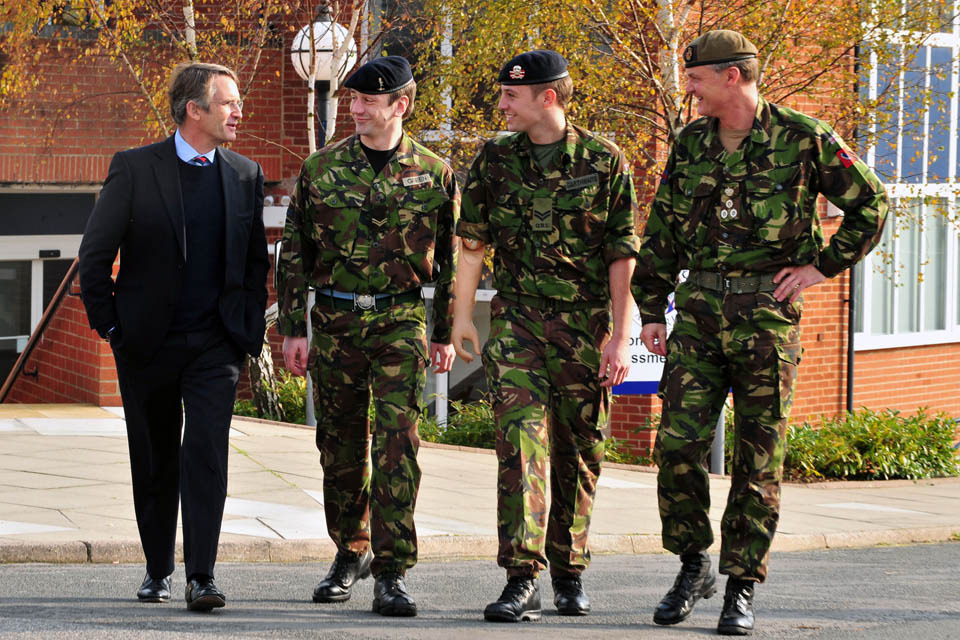
Walker framed the moment, in words repeated across the coverage, as "a very dangerous time." The threats named in the surrounding reporting are familiar but converging: Russia, whose war on Ukraine has been accompanied by fears of hybrid attacks on British infrastructure and a possible stress test of NATO's Article 5 guarantee; China; and Iran, which in recent months has openly threatened RAF bases on UK soil in retaliation for American warplanes using them as staging posts — a threat environment Signal Post News has tracked in its coverage of the alleged Iranian plot against RAF Fairford. The Army's argument is that deterrence now depends on visible readiness: an adversary calculating whether Britain would actually fight reads its politics as closely as its order of battle. That is why a speech about public consent sits inside a military strategy. Walker has made versions of this case before — on taking over in the summer of 2024 he warned the Army had to be ready to fight within three years — but this week's remarks were the first to put a timetable on the public side of the equation: the conversation starts "very soon."
The public he has to persuade
The polling Walker is up against landed in the same week. Ipsos surveyed 1,090 British adults between September 29 and October 1, publishing on October 14: 48 per cent said there are no circumstances in which they would be willing to take up arms and go to war for Britain; 36 per cent said there are circumstances in which they would; 16 per cent were unsure. Those numbers are essentially unchanged from April 2025 (48 per cent and 35 per cent), despite a year and a half of official warnings. Men were the only group in which more said they would fight than would not (48 to 40 per cent); most women, and most people aged 35 to 54, said they would not. Yet the same survey found a public that will pay, if not serve: 51 per cent backed increasing defence spending even if it meant extra borrowing, higher taxes or cuts elsewhere — nearly double the 28 per cent who backed an increase in June 2022 — against just 12 per cent who want spending reduced. Willingness has limits, though: 44 per cent oppose higher defence spending if it raises their own taxes, and 44 per cent oppose it if public services fall, while the single most popular funding option, at 46 per cent, is higher income tax on earnings above £125,000. Ipsos research director Caroline Paskell summarised the tension: the public recognises the demands on the armed forces and backs investment, but "the public mood remains finely balanced when faced with the direct trade-offs required to fund this expansion."
Why this matters
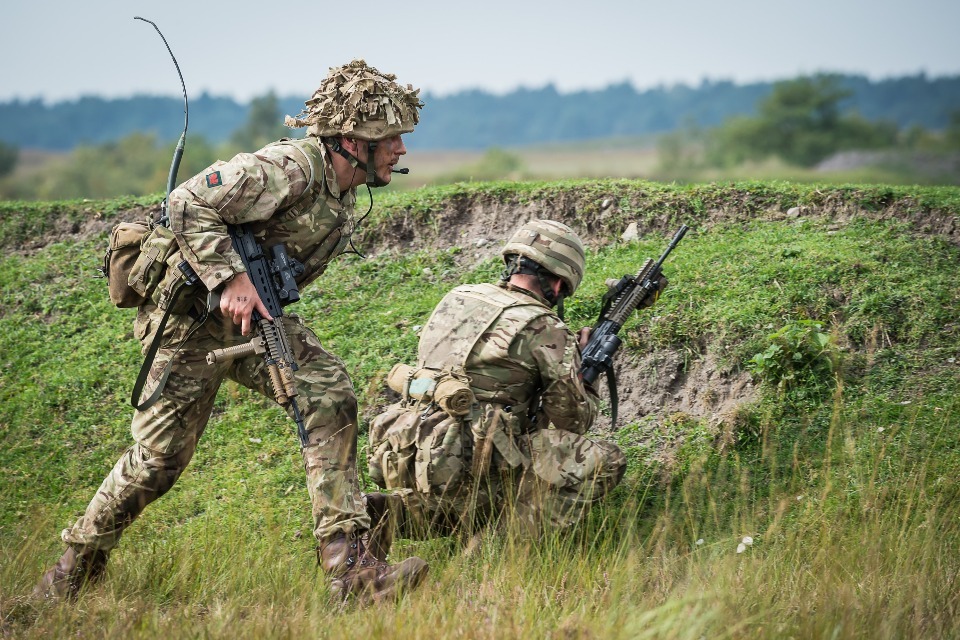
Strip the speech down and it is about a bottleneck that money cannot fix. Britain has already settled the spending argument in principle: the government is committed to 3.5 per cent of national income on core defence by 2035, up from about 2.6 per cent now, in line with the NATO commitment agreed under pressure from Washington. What it has not settled is the consent argument — whether voters will accept what that number does to taxes, borrowing and every other department's budget over a decade, and whether a society in which half the public rules out fighting under any circumstances can credibly deter an adversary who assumes it would not fight at all. Walker's speech is best read as strategic communication, not a policy leak: no announcement accompanied it, no new policy was unveiled, and nothing in it commits the government to conscription, national service or any specific measure. Its function is to prepare the ground — to make the Budget and the ministerial statements expected over the coming months land in a country that has already heard, from its most senior soldier, why they are coming. The second significance is institutional. Walker is not the only chief talking this way: the Chief of the Defence Staff, Air Chief Marshal Sir Rich Knighton, has separately argued that preparing for a future crisis will require the whole of society — civil society and the emergency services, not just the armed forces — and the government is updating its "war book," the cross-departmental crisis playbook, for the first time in decades. Defence, in this doctrine, stops being something the military does and becomes something the country is. Walker's Catterick speech is that doctrine spoken out loud, to the people who would have to execute it.
How we got here
The "frank conversation" has been promised before. Under Sir Keir Starmer, the government pledged more than 18 months ago to hold a national conversation on defence; the conversation never quite happened, and Starmer's defence plans were criticised — by the opposition, by some of his own MPs and, in the end, by his own defence secretary, John Healey, whose resignation in June 2026 accused Starmer of budget choices that risked making the United Kingdom "less safe," a departure that accelerated the prime minister's fall. Prime Minister Andy Burnham, who took over in July pledging to rebuild Britain's armed forces and defence industry, inherited both the 3.5-per-cent-by-2035 pledge and the undelivered conversation. Pressed at Prime Minister's Questions this week on when defence spending will reach 3 per cent of national income, Burnham told Conservative leader Kemi Badenoch to wait for the Budget on October 28 — the fiscal event at which the government is expected to set out the timeline, and around which reports suggest a wider public preparedness campaign is being readied. Le Monde has reported that the service chiefs previously warned Downing Street of a £28 billion shortfall in the commitments needed to prepare for open or hybrid conflict with Russia; the shadow defence secretary, James Cartlidge, has dismissed the government's offer as "too little, too late," noting that much of the capability it buys will not be in service until the 2030s. In short: the military's diagnosis has outrun the government's delivery, and everyone in the argument knows it.
Both sides: readiness, or alarmism?
The case for saying it plainly. Walker's defenders — and the logic of the doctrine behind him — argue that deterrence is a psychological contest: a Britain that has visibly debated sacrifice, funded readiness and organised its civil society is harder to intimidate than one that has not, and that the real risk is a public ambushed by crisis because its leaders were too polite to warn it. On this view, the Ipsos numbers are the reason for the speech, not a rebuttal of it: better to argue about consent in peacetime than to discover its absence in an emergency.
The case for caution. Critics of the drumbeat note what the polling does and does not say. Hamish Mundell, an associate fellow at the Royal United Services Institute (RUSI), cautioned that peacetime answers are a poor predictor of wartime behaviour: the binding constraint on mobilisation, he told the Press Association, is not finding people willing to fight but being able to train and equip them, adding, "I can't see the number of people willing to fight decreasing if the UK started suffering at the hands of a foreign power during a conflict." Others question whether speeches substitute for spending: on the opposition's account, the government still has not funded the readiness it describes. And there is a civil-liberties edge to any "whole of society" doctrine — asking citizens to "play a part" can mean resilience volunteering, or it can drift toward obligations the public never voted for, which is precisely why the consent Walker describes has to be won in argument rather than assumed.
What is not on the table. For the avoidance of doubt, because these speeches travel fast on social media: Walker did not announce conscription, no minister has announced conscription, and no policy of any kind was unveiled at Catterick. The speech announced a conversation. What is actually being decided in the next few months is money and organisation — the pace of the rise toward 3.5 per cent, the state of the reserves, and how far civil preparedness extends.
What happens next
The sequence Walker predicted now has dates attached. The Budget on October 28 is the first test: Burnham has told the Commons the defence timeline will be set out there, and The Times reports that ministers are planning a series of public statements over the following months on building resilience in society, including explaining why tens of billions of pounds must be diverted from other departments to the defence budget. The updated "war book" — requiring every department to plan its crisis response — is expected to be complete by the end of the year, according to former armed forces minister Al Carns, whose work it is. Beyond Whitehall, the politics will be fought on the Ipsos fault line: a public that backs higher spending two-to-one over cuts, but splits evenly when the bill is addressed to them personally. Walker has told his soldiers the nation is going to need them. The frank conversation will reveal whether the nation agrees — and the answer, on present polling, is a country willing to pay for defence, unsure about fighting for it, and about to be asked, formally and repeatedly, to decide.
Sources: LADbible, Oct. 17, 2026 (speech text, Catterick assembly of ~700 soldiers, BFBS footage, Ipsos toplines); The Times, Oct. 2026 (fuller speech text; ministers' planned resilience statements; 3.5% of national income by 2035 vs 2.6% now); Brit Brief, Oct. 2026 (speech summary; Knighton whole-of-society remarks); LADbible, Oct. 14, 2026, and Great British PAC, Oct. 2026 (Ipsos detail: 1,090 adults, Sep 29–Oct 1, published Oct. 14; April 2025 and June 2022 comparators; Mundell/RUSI and Paskell/Ipsos comments; PMQs exchange and Oct. 28 Budget; war book update per Al Carns); Le Monde, July 1, 2026 (Defence Investment Plan criticism; £28bn shortfall warning attributed to the service chiefs; Healey resignation, June 11). Verification note: every direct Walker quotation above is carried verbatim by at least two of the outlets listed (LADbible, The Times, Brit Brief and The Independent's syndicated coverage agree on the wording); the speech is reported as strategic communication about readiness — it announced no policy, and this article reports it as such. Related on Signal Post News: Burnham attributes RAF Fairford plot to Iran's IRGC · Ukraine War, Day 1697 briefing.