World / United Kingdom — Writing in The Telegraph, the Defence Secretary has given Britain a deadline: a little over 1,000 days to be ready, alongside its allies, to fight and win a war — because by 2030, he argues, Britain’s adversaries may be in a position to attack.
Britain’s Defence Secretary has put a number on the country’s war preparations, and it is not a comfortable one. Writing in The Telegraph, Wes Streeting warned that the capacity of Britain’s adversaries has changed, and that by 2030 their force strength and their war economies could put them in a position to attack. “That gives us a little over 1,000 days to complete our mission: to be ready with our allies to fight and win,” he wrote. “To prevent the worst, we have to prepare for it.”
The article is the most explicit statement yet in a deliberate sequence of warnings from Britain’s defence leadership this autumn — from the head of the Army telling soldiers the nation will “need you,” to the launch of a household resilience campaign asking every family to keep three days of supplies at home. This report sets out what Streeting said, the argument behind the 1,000-day figure, and the criticism — from Parliament, pollsters and the public — that readiness rhetoric is running ahead of funded capability.
Track it live: Live Global Trackers — Wars and armed conflicts
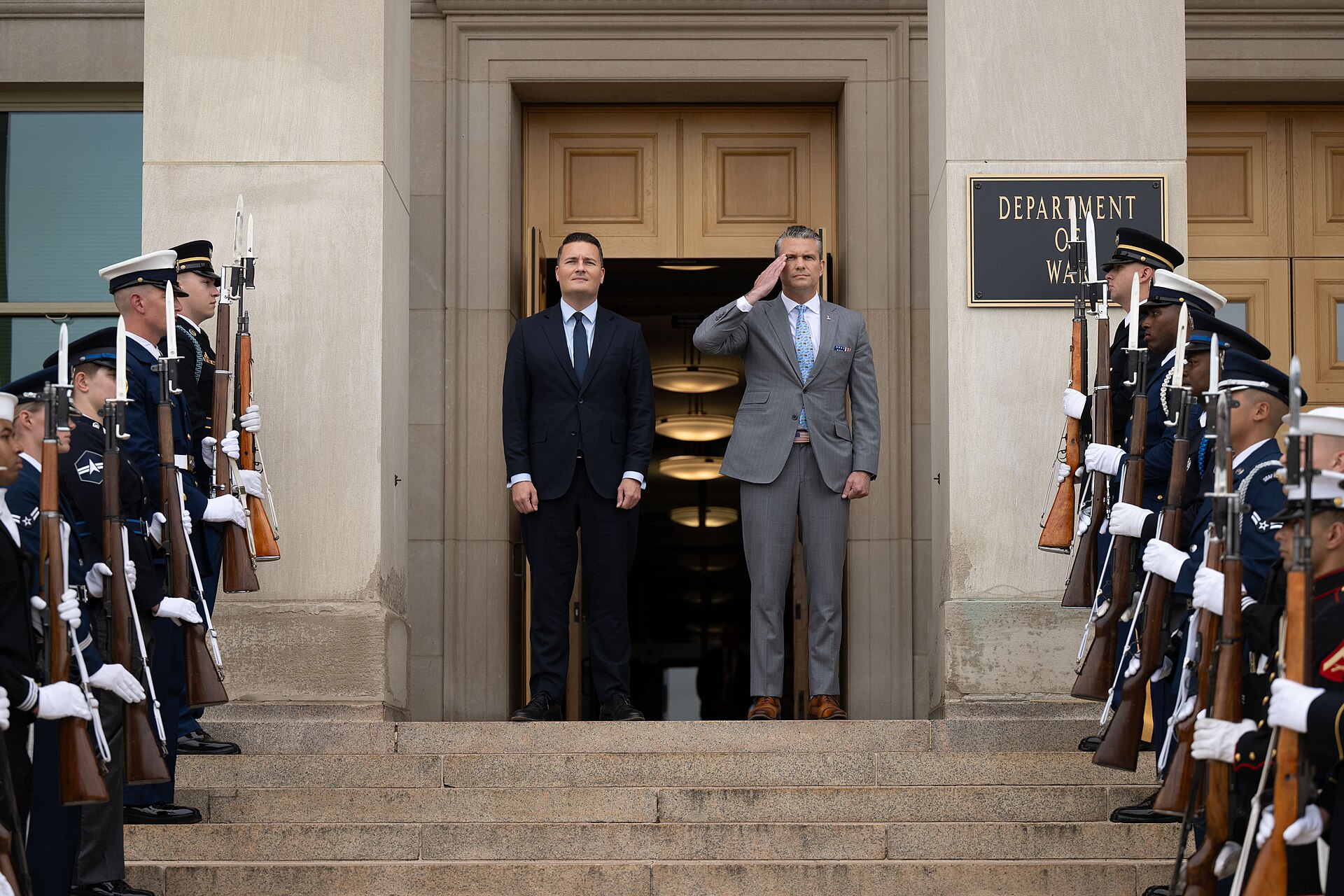
What Streeting actually said
The Telegraph piece rests on a simple chain of reasoning. First, the threat has moved: the ability of hostile states to generate military force — troops, ships, missiles, drones and the industrial base behind them — is no longer the fixed quantity British planning once assumed. Second, the trajectory points to a window around 2030 at which those adversaries could judge an attack worth attempting. Third, deterrence only works if the readiness is real before the window opens, not promised for after it.
Streeting’s formulation — “a little over 1,000 days” — converts that window into a countdown. A thousand days from this autumn lands in the summer of 2029, months ahead of the 2030 date NATO planners use, which is presumably the point: the deadline he is describing is not the day war might come, but the day by which preparation must be complete if it is to have any deterrent value at all.
The wording also matches, almost exactly, the evidence he gave Parliament less than two weeks earlier. On October 13, Streeting told the Commons Defence Committee: “NATO says we need to be able to fight and win a war against our adversaries by 2030. That is not because NATO wants a war — quite the opposite. We do not seek conflict with Russia. We do not seek escalation. We do not seek to provoke Russia. But we know that every single day Russia is testing us and testing our allies.” In the same session he described sabotage, targeted assassinations and state-backed terrorism as the daily reality behind the sanitised label “hybrid threats,” and argued that warfighting readiness should be the Ministry of Defence’s organising principle.
The through-line: Walker, then Streeting, then your kitchen cupboard
The Telegraph article did not arrive on its own, and it is best understood as the third step in a sequence the government has been building for weeks. The first step came from the Army. General Sir Roly Walker, the Chief of the General Staff, told soldiers at Catterick Garrison that citizens must “consent to sacrifices to prioritise defence and security” — and, addressing the troops directly, that “our nation is going to need you.” It was an unusual message for a serving army chief to deliver in public: not a complaint about budgets, but a claim on the public’s willingness to pay, in every sense, for defence. Signal Post News covered Walker’s address earlier this month.
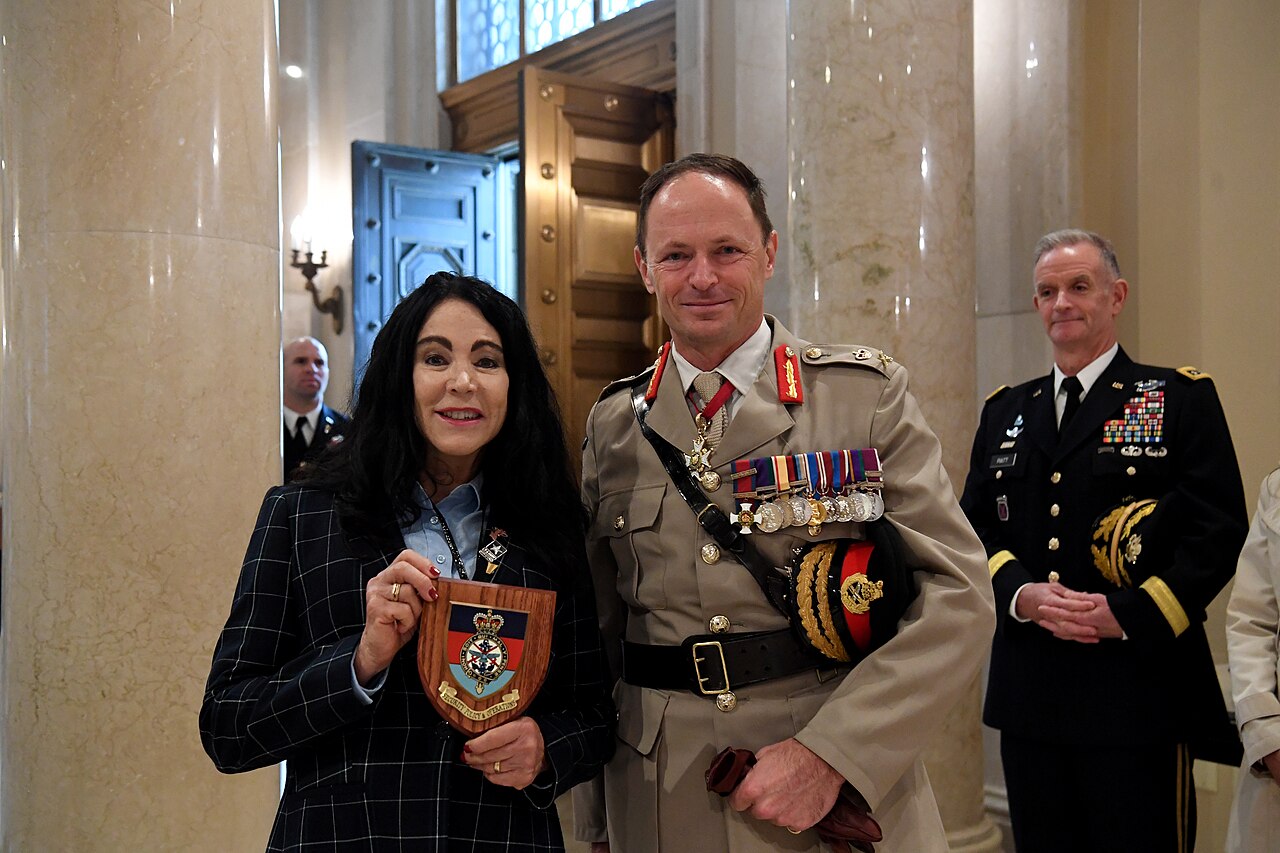
The second step was Streeting’s public embrace of his army chief. On Thursday, the Defence Secretary endorsed Walker’s remarks and said the service chiefs should be “in front of the microphones” as part of a national conversation about being ready to fight and win — a defence secretary explicitly licensing his generals to make the public case for rearmament, rather than leaving it to ministers. The same week, opening a tank gun barrel plant in Telford that restores large-calibre weapons production to Britain for the first time in two decades, Streeting warned that Russia’s campaign against British infrastructure amounted to “state-sponsored terrorism,” and that the threats were “not hypothetical but real, and not somewhere else but increasingly here.”
The third step brought the argument into people’s homes. The government’s “Be Ready” campaign, launched on Thursday, asks every household to build up three days of essentials — nine litres of bottled water per person, three days of food, blankets, cash, a first-aid kit, a torch and a wind-up radio — against the day power, water or phone networks go down. Our full report on the Be Ready checklist is here. Read together, the sequence is coherent: the Army chief frames the sacrifice, the Defence Secretary endorses the framing and takes it to the country’s biggest conservative newspaper, and the Cabinet Office hands households a shopping list. The Telegraph’s 1,000 days is the deadline placed on top of all three.
Nor is Streeting the only senior figure talking this way. Earlier this month, MI5 Director General Sir Ken McCallum used his annual threat address to press a whole-of-society argument — that national security can no longer be treated as the business of the security services alone. When the spy chief, the army chief and the defence secretary are all, in their different registers, telling the public that resilience is now a civic duty, the pattern is the story.

Why this matters
Deadlines change politics in a way that warnings do not. British defence debate has run for years on open-ended language — “in the coming years,” “by the early 2030s” — that lets every government agree with the diagnosis and defer the bill. A countdown of a little over 1,000 days does the opposite: it creates a date against which ministers, and their successors, can be measured. If Britain is not visibly more ready by the summer of 2029, Streeting’s own words will be the yardstick used against the government of the day.
The second significance is industrial. Readiness by 2030 is not primarily a question of recruiting posters; it is a question of whether Britain and its allies can manufacture at wartime rates — shells, missiles, air-defence interceptors, drones — and sustain stocks beyond the first weeks of a conflict. The Telford barrel plant matters to this argument precisely because it is the kind of capacity that cannot be improvised inside 1,000 days if it does not exist at the start of them. Ukraine’s war has taught every European general staff the same arithmetic: modern high-intensity war consumes in weeks what peacetime industry produces in years, and the side whose war economy is organised first holds the advantage Streeting is warning about.
The third significance is the consent question Walker raised. Britain’s defence settlement — like every NATO ally’s — ultimately depends on voters accepting higher defence spending in competition with health, welfare and tax cuts. A defence secretary writing countdowns in The Telegraph, and an army chief asking citizens to “consent to sacrifices,” are both, in the end, addressing that voter. The 1,000-day frame is an attempt to make the trade-off feel urgent enough to survive contact with a budget.
The other side: gaps, money and a sceptical public
The criticism comes in three forms, and each has evidence behind it. The first is capability. The Commons Defence Committee has warned of “glaring gaps” in Britain’s military capability in the High North, where Russian activity threatens undersea cables, energy infrastructure and the sea lanes around the nuclear deterrent. The Royal Navy’s escort fleet — five Type 23 frigates and six Type 45 destroyers — represents only just over half the requirement of 19 vessels, and the Ministry of Defence has accepted a serious gap in anti-submarine warfare. The committee’s chairman, Tan Dhesi, put the opposition case in terms that mirror Streeting’s own logic: if the government means what it says — that Russia could attack NATO as soon as 2030 — “then work to rectify these vulnerabilities cannot start soon enough.”
The second criticism is money, and it has already cost the government one defence secretary. John Healey — now Chancellor, and Streeting’s predecessor at the Ministry of Defence — resigned in June 2026 saying the proposed Defence Investment Plan settlement “falls well short of what is required for defence and the country at this dangerous time.” The plan itself was published a year later than first promised. Suppliers have complained publicly that orders discussed with the Army have been frozen for lack of funds, hollowing out the very industrial base the readiness argument depends on. Against that record, critics ask whether a 1,000-day countdown announced in a newspaper is a plan or a posture.
The third is public opinion. Polling published by Ipsos on October 13 found substantial public resistance to funding higher defence spending through tax rises or cuts to public services — the two routes by which the money would realistically be found. And when Streeting defended the Russia warning on BBC Question Time this week, the reaction was hostile enough to make headlines of its own, with viewers accusing ministers of reaching for the defence budget while everyday pressures go unmet. The government’s problem is symmetrical: the threat argument polls well in the abstract, and the bill for it polls badly in the particular. Walker’s word “consent” identifies exactly the gap ministers have not yet closed.
Supporters of the government’s approach answer that candour is the precondition for everything else: that allies from Warsaw to Helsinki have made the same argument to their publics, that Sweden and Germany hand their citizens crisis guidance as a matter of routine, and that a defence secretary who waits for perfect public consent before naming a deadline will never name one. On that view, the sequence of the last month — Walker, the Telford remarks, Be Ready, and now the Telegraph countdown — is what a serious whole-of-society conversation looks like when a government actually starts it.
What happens next
Three tests will show whether the 1,000 days is a programme or a slogan. The first is the one Streeting himself trailed at Telford: the promised addresses by military chiefs to the nation in the coming months, making the case for diverting billions of pounds of taxpayers’ money to defence. If they happen on schedule, and are as frank as Walker’s Catterick remarks, the national conversation Streeting endorsed will be real. The second is money: the next spending decisions will show whether the Defence Investment Plan grows toward the readiness date or continues to slip behind it — and whether the frozen supplier orders that have dogged the plan are released. The third is the household test Be Ready has set itself: whether a campaign built on gradual, step-by-step preparation actually changes what British families keep in the cupboard, measured the next time a storm, flood or cyber incident takes the power down.
What is not in doubt is the direction of the official argument. Britain’s defence leadership is no longer describing war as a remote contingency to be insured against in general terms. It is describing a dated risk, a dated deadline, and a public that must be persuaded — by generals on microphones, by ministers in newspapers, and by a checklist on the kitchen table — to be ready to meet it. The countdown Streeting announced this weekend runs whether the country joins it or not.
Sources
The Telegraph, Wes Streeting, October 23–24, 2026 (“a little over 1,000 days… to be ready with our allies to fight and win”); UK Parliament, Defence Committee oral evidence, “The work of the Secretary of State for Defence,” October 13, 2026 (transcript, committees.parliament.uk); GOV.UK / Cabinet Office, “Households encouraged to take small, simple steps to stay prepared in an emergency,” October 22, 2026, and the Be Ready campaign site, beready.campaign.gov.uk; The Guardian, reporting of Streeting’s Telford Rheinmetall remarks, October 22–23, 2026; BFBS, General Sir Roly Walker’s address at Catterick Garrison; MI5, Director General Sir Ken McCallum’s annual threat update, October 2026; House of Commons Defence Committee, reporting on High North capability gaps, October 2026; Ipsos, polling on defence spending trade-offs, October 13, 2026.