World / Three people who each lived in the United States for more than 20 years — and who won protection from US immigration judges precisely because judges found they were more likely than not to face torture or abuse if sent home — are now in Sierra Leone, a country none of them comes from, facing exactly the return those judges barred. Amnesty International on Friday urged Sierra Leone to halt their expected repatriation. The US position is that the removals are lawful: withholding of removal protects a person from return to one specific country, not from removal altogether. The critics’ position is that flying someone to a third country that then sends them home anyway defeats the protection entirely.
The case of the US deportees Sierra Leone received on October 12 changed on Friday, October 23, when Amnesty International named three of them in an urgent action — Abalo Agba of Togo, Alfred Kamara of Liberia and Fatou Traore of Ivory Coast — and warning that all three face imminent repatriation to the countries they fled. US Immigration and Customs Enforcement removed eight people to Sierra Leone that day, according to Amnesty. The three named had each lived in the United States for more than 20 years, and each has children under 18 still in the US.
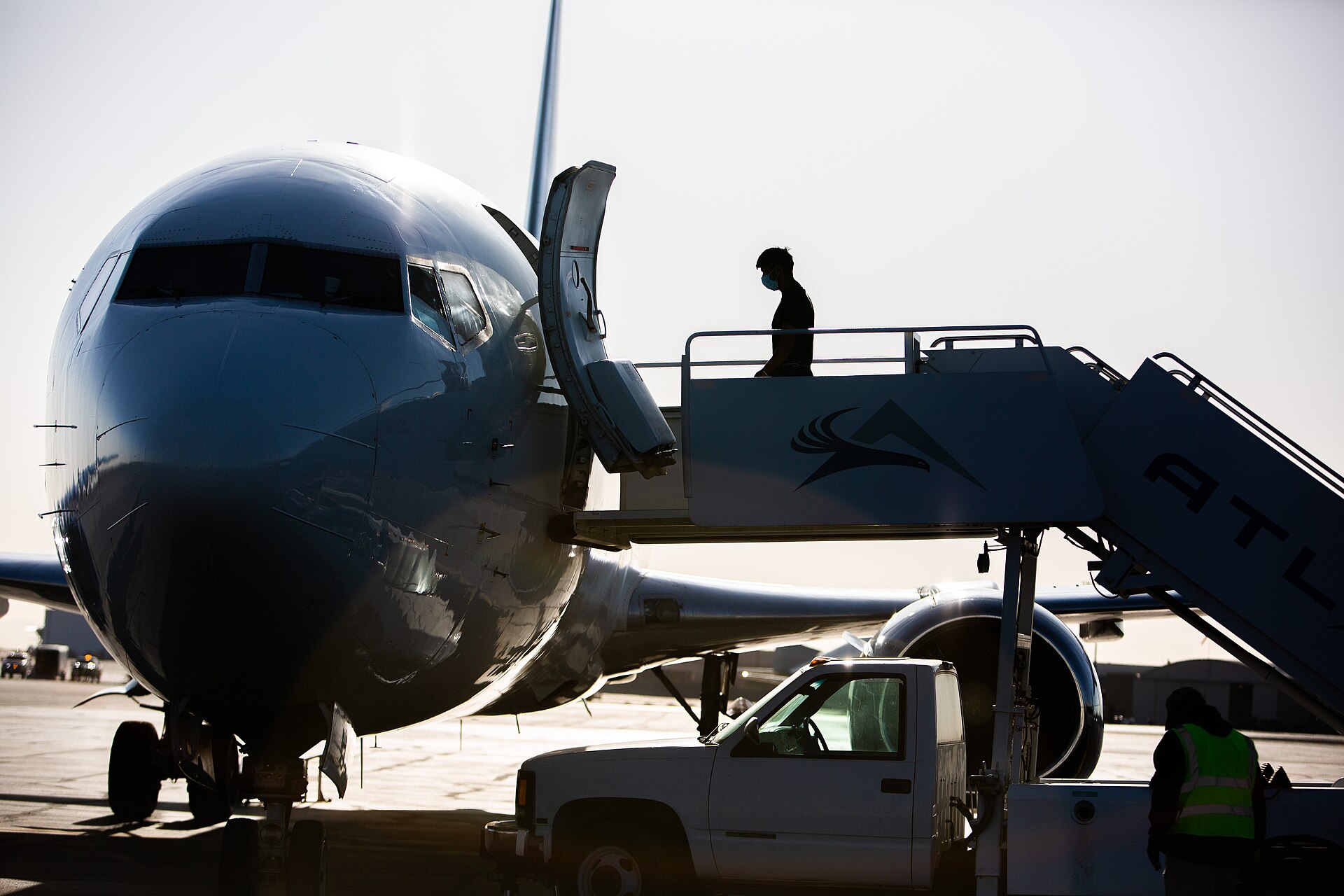
What happened: a flight on October 12, an urgent action on Friday
On October 12, ICE removed Abalo Agba, Alfred Kamara, Fatou Traore and five other people to Sierra Leone, Amnesty International said in its urgent action of October 23 (document AFR 51/1599/2026). None of the eight is Sierra Leonean. They arrived under a standing arrangement — the Third Country National Agreement — under which Sierra Leone has agreed to accept West African nationals removed from the United States even though Sierra Leone is not their country of origin. The Sierra Leonean human rights network HRDN-SL, in a statement dated October 14, described the same group arriving on October 13: two people from Ghana, two from Nigeria, and one each from Côte d’Ivoire, Liberia, Senegal and Togo. The two accounts describe the same eight people, and the nationalities match — including one Togolese, one Liberian and one Ivorian, the three people Amnesty named.
What Amnesty asked for on Friday was specific and limited. Sierra Leone, it said, must immediately stop the repatriation of the deportees to their countries of origin, and must allow them access to fair and effective asylum procedures and to independent legal counsel. The group said all eight people removed on October 12 are at immediate risk of unlawful return, not only the three it named. It also placed the October flight in a pattern: migrants previously deported to Sierra Leone under the deal, Amnesty said, were quickly repatriated to their home countries — a practice it criticised as a “revolving door.” Reuters, which reported the urgent action on Friday, sought comment from both governments involved: a Sierra Leone government spokesperson and the US State Department did not immediately respond to requests for comment. As of Friday, neither government had stated what it intends to do with the eight people now in Sierra Leone, and nothing in the record says a repatriation flight has been scheduled. What Amnesty describes is an expected repatriation, based on what it says happened to earlier groups under the same deal.
Three lives, more than twenty years each
The three named people are not abstractions in a policy dispute. Abalo Agba is from Togo. Alfred Kamara is from Liberia. Fatou Traore is from Ivory Coast. Each of the three lived in the United States for more than 20 years before ICE removed them on October 12. Each has children under the age of 18 who are still in the United States. Those three facts — two decades of residence, minor children left behind, and a judicial finding of likely harm at home — describe, in compressed form, the entire argument about third-country removals: the longer a person has lived in the removing country, and the deeper their family roots there, the more a transfer to an unfamiliar third country resembles exile rather than a routine change of venue.
HRDN-SL’s account of the wider group adds texture that the bare removal figure hides. Several of the eight, the network said, had lived in the United States for more than 20 years and were separated from partners and children when ICE detained them. Some reportedly held sole custody of children left behind in the United States — including children as young as three years old. And HRDN-SL reported that seven of the eight had been granted withholding of removal under the United States’ obligations under the Convention Against Torture. Amnesty’s phrasing was broader: before their removal, US immigration judges had granted the deportees protection from repatriation to their countries of origin because they face serious harm there. The two statements agree on the essential point — most or all of this group carried US judicial protection against being sent home — and differ mainly in how precisely they count it.
The legal crux: what withholding of removal does — and does not — protect
Everything in this dispute turns on one legal instrument, so it is worth explaining precisely. Withholding of removal is a form of protection in US immigration law. An immigration judge grants it when an applicant shows they are more likely than not to face persecution — or, under the Convention Against Torture variant, torture or other abuse — if returned to a particular country. Reuters summarised the finding in these three cases exactly that way: a US immigration judge found Agba, Kamara and Traore were each more likely than not to face torture or other abuses if forced home. Withholding is not asylum, and it is not a green card. It does not forgive a removal order; a person granted withholding typically remains subject to a final order of removal. What it does is narrow the order’s geography: the United States may not execute the removal by sending that person to the country where the judge found the danger to be.
That narrowing is the crux. The US government’s position, in the third-country programme generally, is that removals of people with final orders are lawful enforcement, and that a grant of withholding bars return to the specified origin country — a country to which, in these cases, the United States did not send anyone. Sierra Leone is not Togo, Liberia or Ivory Coast; on the government’s reading, the protection was honoured in full, because the flight landed somewhere else. The critics’ reading starts one step later in the journey. If the receiving country then repatriates the person to the very country the judge named — quickly, as Amnesty says earlier deportees under this deal were — the end result is identical to the return the judge barred, achieved in two flights instead of one. International refugee and torture law has a word for that outcome: refoulement, the return of a person to a place where they face persecution or torture, including by an indirect route. Amnesty’s urgent action uses the language of risk rather than verdict — the three are, it says, “at immediate risk of being unlawfully returned” — and that distinction should be preserved: no court has ruled on these three cases, and Signal Post News does not state as fact that any person’s rights have been violated. What can be stated as fact is the structure of the disagreement. One side measures legality flight by flight; the other measures it by where the person finally ends up.
Why Sierra Leone’s own decision is now the decisive one
Notice where Amnesty addressed its urgent action: not to Washington, but to Freetown. That choice reflects the legal reality the critics themselves emphasise. Whatever the United States did in removing the eight, the act Amnesty is asking to stop — repatriation from Sierra Leone to Togo, Liberia and Ivory Coast — would be Sierra Leone’s act, taken by Sierra Leonean authorities on Sierra Leonean soil. Sierra Leone is a party to the same international instruments that prohibit refoulement, and it controls the asylum procedures Amnesty is asking it to open. The United States chose the destination; Sierra Leone chooses what happens next. And the government being asked to act has not yet said, publicly, whether it accepts the premise that these eight people are its responsibility at all.
The deal: how Sierra Leone became a destination for other countries’ deportees
The arrangement that brought eight West Africans to a country most of them had never lived in was not improvised. According to Human Rights Watch’s October 8, 2026 report, “To Scare People,” Sierra Leone’s Ministry of Foreign Affairs sent a note verbale to the US embassy in Freetown on November 20, 2025, agreeing to accept up to 300 citizens from West Africa per year from the United States. The United States reportedly paid $1.5 million as part of the arrangement — a figure HRW attributes to its reporting and which neither government confirmed to Reuters on Friday. Reception on arrival is handled not by a government agency but by a private company, Kenvah Solutions, contracted to provide reception services and temporary accommodation at two hotels near the airport. According to the head of Kenvah Solutions, cited by HRW, deportees are accommodated in those hotels for two weeks, or in exceptional circumstances up to 30 days. What happens at the end of that fortnight — asylum processing, voluntary departure, repatriation, or something else — is precisely the question Amnesty is now pressing.
The October flight was the fifth HRW counts to Sierra Leone under the arrangement. Nine people arrived on May 20, 2026 — five from Ghana, two from Guinea, one from Senegal and one from Nigeria. About 12 more arrived on June 18. Ten third-country nationals arrived on July 30, and a fourth flight in late August carried four. The October group of eight brings the running total on HRW’s flight list to 43 people — a long way below the 300-per-year ceiling Sierra Leone agreed to, which cuts both ways in the argument. For the deal’s defenders, the numbers show a modest, managed programme: a formal agreement, voluntarily signed by a sovereign government, with a private reception contractor, hotel accommodation and a defined cap. For its critics, the same numbers show a programme still small enough to stop — and a two-week hotel clock that functions, in Amnesty’s account of earlier cases, less as a reception procedure than as a countdown to repatriation. Sierra Leone is not a passive landing strip in this debate. A government that signs a note verbale, accepts a reported payment and contracts a reception firm has made a policy choice, for reasons — diplomatic goodwill with Washington, revenue, regional positioning — that are its own to weigh. The criticism from HRDN-SL, a Sierra Leonean network rather than a foreign one, is directed at that choice from inside the country: the government, it argues, has not provided adequate public information about the agreement’s terms, the deportees’ legal status, or the protections available to them.
Nor is Sierra Leone an isolated case, which is why a story about eight people is being watched well beyond Freetown. Since taking office in January 2025, the Trump administration has struck a series of deals with African governments willing to accept migrants from other countries, and the legal architecture underneath them was tested at the highest level when the Supreme Court allowed third-country deportations to restart, a ruling Signal Post News covered in September. Sierra Leone also arrives in this story with its own complicated recent history in the news — including the dispute in which the EU cut Sierra Leone aid in a row over a cocaine kingpin said to be sheltered in the country.
Why this matters
Strip the case to its principle and it is this: a protection that can be routed around by adding a stopover is a protection whose value depends entirely on the goodwill of the stopover. Withholding of removal exists because a judge, hearing evidence, concluded that a specific person would more likely than not be tortured or abused in a specific place. That conclusion does not change when the person’s itinerary does. If the practical effect of a third-country transfer is delivery — via a two-week hotel stay — to the very border the judge closed, then the judicial finding has been treated as a routing instruction rather than a safeguard. That is the critics’ core claim, and it raises a wider question: if court-granted protection can be defeated by geography, what is any such grant worth? The counterargument is equally structural, and it should not be waved away. Removal orders are also court orders. The people transferred under these deals are, in the US government’s account, people with final orders of removal whom their home countries’ danger findings made otherwise undeportable — a category that, without third countries, would be removable nowhere, indefinitely, whatever the underlying order says. A government elected on a promise to execute removal orders will describe the third-country programme not as evasion but as the only lawful way to give those orders any effect at all, executed through agreements that receiving states signed voluntarily.
Who benefits and who loses maps cleanly onto that divide. The US administration gains a functioning enforcement channel for a class of cases that had stalled, and a deterrent signal — the title of HRW’s report, “To Scare People,” is the critics’ summary of that signal’s purpose. Sierra Leone’s government gains a reported $1.5 million, a closer relationship with Washington, and a programme small enough, so far, to administer through two airport hotels. The losers, on the critics’ account, are the deportees themselves — separated from partners and from children as young as three, in HRDN-SL’s description of this group, and held in a legal limbo where the country they are in is not theirs and the country they fear is a short flight away — and, less visibly, the receiving country’s own asylum system, which is asked to improvise fair procedures for people it never agreed to protect individually, under a clock set by a reception contract. There is also a regional dimension: the deportees’ home countries are Sierra Leone’s West African neighbours and fellow ECOWAS members, in a region built on free movement of people — and making one member state the transfer point for returning the others’ nationals to countries where judges found danger is a new kind of friction inside that system.

What the numbers actually say
HRW’s count gives the programme its scale. Between January 20, 2025 and August 5, 2026, the group counted 536 people transferred by the United States to African third countries — countries where they were neither citizens nor habitual residents — and nearly 28,000 people transferred to more than 50 countries worldwide under the same policy. Sierra Leone’s 43 arrivals on the flights HRW lists are a small share of the African total, and the 300-per-year ceiling it accepted is itself a cap, not a quota anyone is obliged to fill. First, at the current pace — five flights, 43 people in the programme’s first eleven months — Sierra Leone is receiving a fraction of the volume its agreement permits, which undermines any picture of a mass pipeline while leaving the per-person stakes exactly as high as Amnesty describes. Second, the reported $1.5 million payment, divided across 43 arrivals, is not a per-head bounty in any simple sense; it is better understood as the price of standing up a reception system — a contractor, two hotels, a government-to-government channel — whose existence, once built, makes each additional flight administratively easier than the last. Programmes like this rarely announce their expansion; they normalise, one eight-person flight at a time — which is why rights groups contest the early flights rather than waiting for the ceiling to be reached.
What happens next: the two-week clock and three scenarios
The immediate question is a date. On HRW’s account of the reception arrangement, deportees are accommodated near the airport for two weeks, extended to 30 days only in exceptional circumstances. For the October 12 group, the standard window closes around October 26 — three days after Amnesty’s urgent action. What happens at the end of that window, for these eight people, is the test of every claim made about the programme. The first scenario is the one Amnesty asked for: Sierra Leone suspends any repatriation, opens fair and effective asylum procedures with independent legal counsel, and decides each case on its own facts. In that scenario, Sierra Leone becomes a country of asylum for people the United States removed, and the “revolving door” account is broken by the country best placed to break it. The second scenario is the one Amnesty fears: the three named deportees, and possibly others of the eight, are repatriated to Togo, Liberia and Ivory Coast on the pattern the group says earlier cohorts followed. That outcome would not end the argument; it would relocate it to courts and to the ECOWAS system, where challenges to a sister agreement, in Ghana, have already been filed, and it would hand critics their clearest documented case of a judicial protection defeated by a stopover. The third scenario is drift: no announcement, no asylum procedure, no flight — the eight remain in limbo past the hotel window while two governments that did not answer Reuters on Friday continue not to answer. Drift is the most common outcome in programmes like this, and for people separated from children under 18, it is not a neutral one.
What to watch is short. Any public response from the Sierra Leone government or the US State Department — both were silent on Friday — will signal which scenario is forming. Any statement from Sierra Leone about asylum access or legal counsel for the eight would mark a genuine policy shift, because it would concede the premise Amnesty and HRDN-SL share: that people transferred under the deal carry protection claims that travel with them. And any reporting of a repatriation flight in the coming days will answer the question the immigration judges in the United States already answered once — what happens to Abalo Agba, Alfred Kamara and Fatou Traore if they are forced home. Three people, twenty years each in the United States, three sets of children still there. The law, on paper, already decided they should not be sent back. The coming days will show whether that decision survives the journey it was never written for.
Sources
Reuters, “Trump deportees to Sierra Leone risk being forced home, rights group says” (October 23, 2026) — the Amnesty urgent action, the three named deportees’ 20-plus years in the US and children under 18, the withholding-of-removal findings, the 300-per-year agreement, the “revolving door” criticism, and the non-responses from the Sierra Leone government and the US State Department. Amnesty International, urgent action AFR 51/1599/2026, “Sierra Leone: Risk of repatriation for three US deportees: Abalo Agba, Alfred Kamara, Fatou Traore” (October 23, 2026) — the October 12 ICE removal of eight people, the judges’ protection grants, and the demands to halt repatriation and provide fair asylum procedures and independent legal counsel. Human Rights Defenders Network Sierra Leone (HRDN-SL), “HRDN-SL Expresses Concern over Arrival of Eight More Deportees from the United States” (statement dated October 14, 2026) — the October 13 arrival, the eight deportees’ nationalities, family separations including sole custody of children as young as three, and the reported withholding-of-removal grants under the Convention Against Torture. Human Rights Watch, “‘To Scare People’: US Expulsions of Third-Country Nationals to Countries in Africa” (October 8, 2026) — the November 20, 2025 note verbale and 300-per-year ceiling, the reported $1.5 million payment, the Kenvah Solutions reception arrangement and hotel periods, the earlier flights of May 20, June 18, July 30 and late August 2026, and the counts of 536 people transferred to African third countries and nearly 28,000 to more than 50 countries worldwide between January 20, 2025 and August 5, 2026. All figures attributed to Human Rights Watch are that organisation’s counts and reporting.