Politics / Virginia — Louise Lucas indicted was the headline nobody in Richmond expected to read twelve days before a midterm election: the Virginia Senate's president pro tempore, in office since 1991, surrendered on Thursday morning to face federal racketeering, marijuana-distribution and money-laundering charges.
Virginia state Sen. L. Louise Lucas, 82, surrendered to federal authorities on Thursday morning, October 22, after a grand jury in the Eastern District of Virginia indicted her and six other people — including her two daughters and her grandson — on charges that she led a multi-year criminal marijuana enterprise and used her seat at the very top of Virginia politics to protect it. Lucas is the president pro tempore of the Virginia Senate, its longest-serving member, and the chair of the Senate Finance and Appropriations Committee, the panel that controls the state's money. Federal prosecutors say that position was not incidental to the alleged scheme. In the Justice Department's telling, it was the scheme's shield.
An indictment is an allegation, not a conviction, and Lucas has not entered a plea. CNN reported it had attempted to reach her for comment; NBC News said it had reached out to her office, her legal counsel and Democratic Gov. Abigail Spanberger. What follows is what the indictment and the Justice Department allege, what Lucas and her allies have said about the investigation that led here, and why a case that began under a previous administration has landed, with maximum political force, less than two weeks before Americans vote.
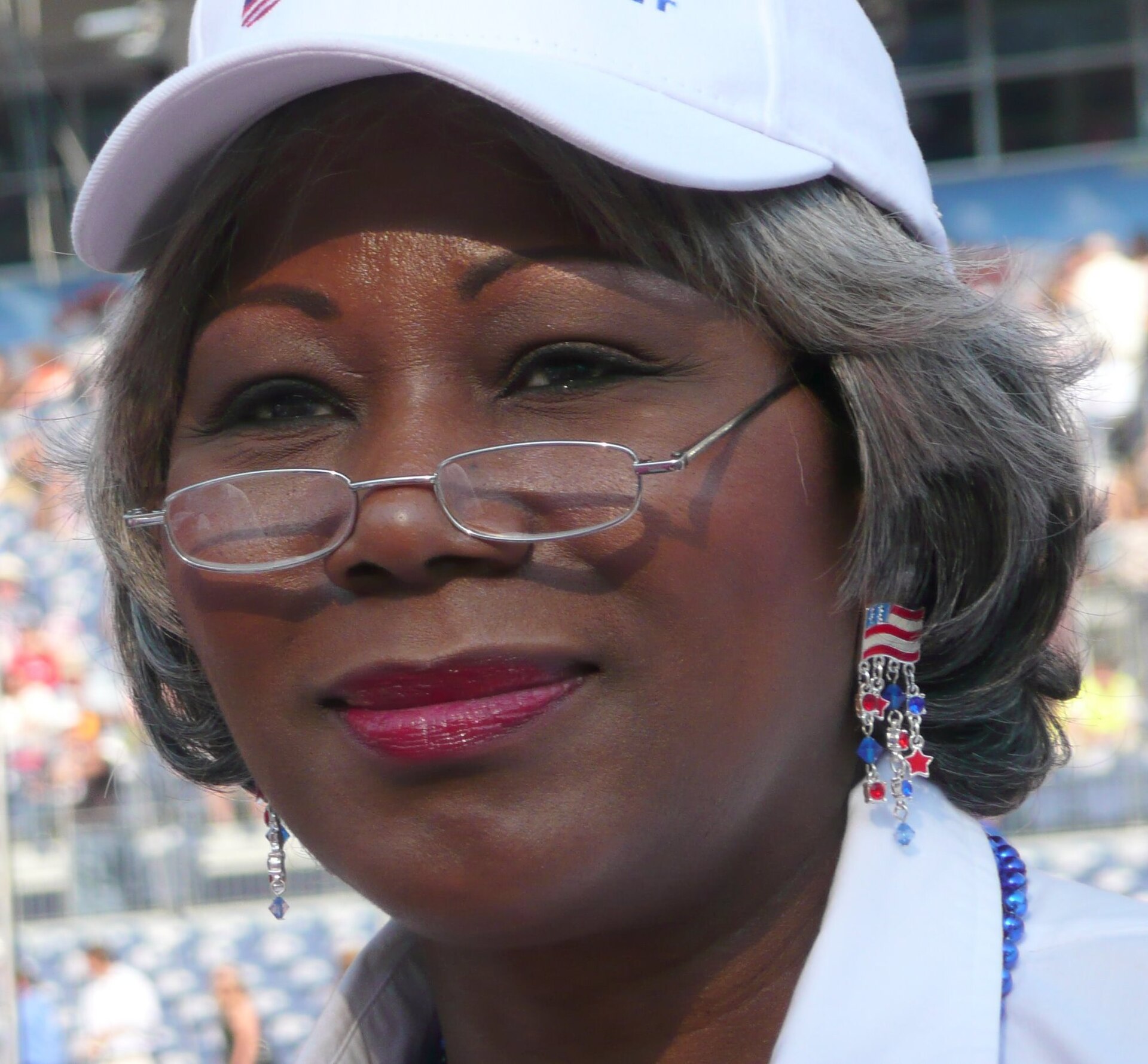
What the indictment alleges: the 'Lucas Enterprise'
According to the Justice Department and the reporting of CNN, the Wall Street Journal, NBC News and Fox News, prosecutors allege that Lucas led what they call the "Lucas Enterprise" — a close-knit group of family members and associates — in a scheme running since at least 2019 to buy and sell illegal quantities of marijuana through businesses she co-owned, including The Cannabis Outlet, a shop on High Street in her hometown of Portsmouth, and to launder the proceeds through a web of business entities. The Justice Department said Lucas was directly involved in the acquisition and distribution of 100 kilograms or more of marijuana. When FBI agents searched two of her marijuana shops earlier this year, they recovered marijuana and firearms from both stores, according to the indictment as reported by CNN.
The charges against the seven defendants include racketeering conspiracy, conspiracy to possess and distribute marijuana, conspiracy to launder money, and fraud, with firearms charges also listed in the case. Daily Caller, citing CBS News and the 45-page indictment, reported that Lucas herself faces five of the indictment's eight counts. Her daughters Lisa Lucas-Burke and Theresa Lucas-Lamb and her grandson Ryan Eichelberger were indicted alongside her, according to the same reporting; the Wall Street Journal and the Justice Department's own summary confirm the group included her two daughters and a grandson, among seven people in total.
The most politically explosive allegation is not about marijuana at all. Prosecutors say Lucas used her position — FBI Director Kash Patel's statement put it as using her role as chair of the Senate Finance and Appropriations Committee — "to insulate the enterprise from criminal scrutiny and influencing legislation to financially benefit themselves." Attorney General Todd Blanche said in the Justice Department's statement: "Louise Lucas has served in a position of public trust in the Commonwealth of Virginia for over three decades. The charges alleged in this indictment reveal the behavior of a public servant who put her own financial interests before the people she was elected to serve."
The $750,000 payment and the licence that was never disclosed
One strand of the case reads less like a drug prosecution and more like a classic public-corruption indictment. Lucas is accused of paying $750,000 for a 100 percent stake in a shell holding company that prosecutors allege was created so that a co-conspirator could obtain a Virginia licence to sell marijuana. Prosecutors allege she later received what the Justice Department called a "bribery payment" from that co-conspirator for her efforts — and that she failed to report the interest on the Statement of Economic Interests forms she was required to file as a legislator. The Justice Department alleged she met the co-conspirator in her office at the Capitol complex to receive a partial repayment, and spoke with other officials, including legislators, about the co-conspirator's qualification for a recreational marijuana licence in connection with that payment. If prosecutors prove a sitting committee chair took money tied to a licence while hiding the interest from disclosure forms, that strand alone would be a career-ending corruption case even without a single plant.
'I've got too old to not be greedy'
Every major corruption indictment has one line that escapes the courtroom and defines the case in public. This one's arrived within hours. In an intercepted phone call on February 9, 2026, with an unindicted co-conspirator, Lucas allegedly described the venture as their "last chance at generational wealth," adding — in NBC Washington's rendering of the indictment — "I've gotten too old to not be greedy." The detail that a reporter's communications were also swept up matters beyond colour: NBC Washington reported that a WAVY-TV reporter received a notification letter showing his calls with Lucas's number had been captured by the wire, and Rep. Suhas Subramanyam said his own communications with her were monitored. Wiretaps on a sitting state senator's phone, running for months, are a measure of how long and how seriously this investigation was built.
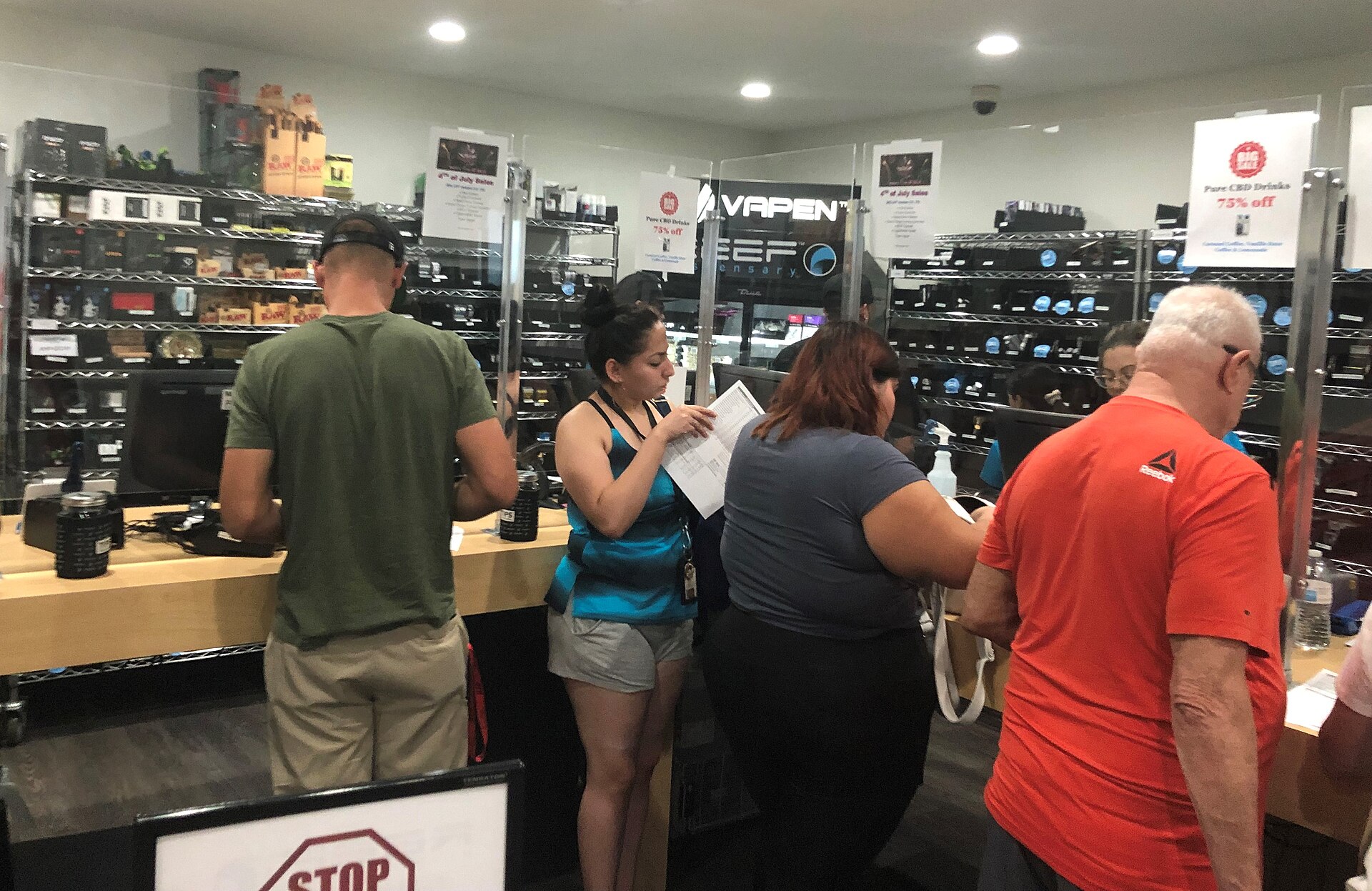
How we got here: the May raids and an investigation older than this administration
Thursday's surrender was the second act, not the first. In May 2026, federal agents searched Lucas's hometown political office in Portsmouth and The Cannabis Outlet next door, in raids that Lucas immediately framed as political retaliation: the search, she said, fit "a clear pattern from this administration: when challenged, they try to intimidate and silence the voices of those who stand up to them." In a June interview with NBC Washington, she noted the timing followed her push to redraw Virginia's congressional districts in Democrats' favour — a voter-approved plan to add blue-leaning seats, struck down by Virginia's Supreme Court in May — and observed pointedly: "No arrests, no charges made, nothing."
Two facts complicate any simple partisan reading, and both are in the record. First, the investigation itself began under President Joe Biden, as CNN and NBC News both reported — the wiretaps, the business records and the May searches grew out of a probe that predates the current administration. Second, the charging decision landed on October 22, twelve days before the November 3 midterm elections, a timing NBC News noted is unusual: federal authorities have traditionally avoided overt steps against political figures this close to an election. Lucas is not herself on the ballot this year, but she is one of the most powerful Democrats in a swing state whose races are on it, and Blanche and Patel scheduled a Thursday-morning press conference in Norfolk to announce the case personally — a level of Washington visibility rarely given to a state-level indictment.
The marijuana context matters too. Virginia legalised possession of small amounts of marijuana in 2021 under legislation Lucas herself championed; she sponsored the push to legalise the drug, and The Cannabis Outlet — a medical-marijuana business, in a state that still does not allow recreational retail sales — opened the same year. Marijuana remains illegal under federal law outside limited research, though Washington has long tolerated state-legal businesses absent other alleged criminal conduct. The indictment's theory is precisely that this was not a state-legal business operating in a grey zone, but an enterprise selling illegal quantities, moving the money through shell entities, and leaning on its owner's office to keep scrutiny away. That is the distinction prosecutors will have to prove, in court, beyond a reasonable doubt.

Why this matters
Strip away the election calendar and this is still a landmark case: the sitting president pro tempore of a state senate, and the chair of its money committee, accused by a federal grand jury of running the kind of enterprise — racketeering, drug distribution, money laundering, an undisclosed licence payment — that anti-corruption law exists for. Virginia's Senate has 40 members; Lucas is its longest-serving, a former shipfitter from the Norfolk Naval Shipyard who entered the chamber in 1991 and has held the president pro tempore's gavel since 2020. There is no modern Virginia precedent for a figure of that seniority facing a RICO-style indictment while in office, and whatever the verdict, the institution will spend years answering for the oversight questions the indictment raises: a licence-linked $750,000 stake, allegedly undisclosed, held by the very senator who wrote the state's marijuana laws.
For the marijuana industry, the case is a stress test of the federal truce. Hundreds of state-legal cannabis businesses operate on the assumption that compliance with state law keeps federal prosecutors away. Prosecutors here are at pains to argue the opposite lesson: that the charges target quantities, laundering and office-abuse, not state-legal commerce. How the evidence holds up will be read closely by every operator and every state regulator in the 24 states with legal markets — especially those, like Virginia, where the lawmaker writing the rules also owned a shop.
And then there is the politics, which cannot be separated from the timing. Twelve days before a midterm, the Justice Department's two most senior law-enforcement figures personally fronted the indictment of a prominent Trump critic who had just led a redistricting fight against the president's party. Supporters of the prosecution point, correctly, to the investigation's Biden-era origins and to a grand jury's independent vote. Critics point, also correctly, to the calendar, the Norfolk press conference, and the wiretap notifications landing on a congressman and a journalist. Both things can be true at once: a case can be built on real evidence and still be announced for maximum political effect. Voters in Virginia's competitive races will decide for themselves which half of that sentence matters more; the jury that eventually hears the evidence will be instructed to care only about the first half.
Both sides: what Lucas's allies say, and what prosecutors say
Lucas has not yet commented on the indictment itself. Her documented position, from May and June, is that the investigation is retaliation for her redistricting leadership and her criticism of the president — a framing Rep. Subramanyam extended on Thursday, saying the Justice Department had become Trump's "own personal law firm, with his former personal attorney carrying out vendettas on Trump's political enemies," and disclosing that his own communications with Lucas were monitored. Gov. Spanberger's office had not commented at the time of reporting, per NBC News. Prosecutors' counter is on paper and unusually specific: a 45-page indictment, a stated quantity threshold of 100 kilograms or more, named family co-defendants, a dated wiretapped quotation, and an alleged paper trail — the $750,000 stake, the unfiled disclosure, the Capitol-office meeting — that a defence team will have to answer document by document. Neither side's rhetoric changes what a jury will see; the documents, if they exist as described, will be the whole argument.
The numbers in the case
Some figures, placed side by side, show the scale prosecutors are claiming. Seven defendants, one enterprise, at least seven years (2019 to 2026). One hundred kilograms or more of marijuana allegedly acquired and distributed — a threshold that, in federal sentencing terms, separates a licensing scandal from a major drug case. One payment of $750,000 for a shell-company stake, allegedly tied to a state licence and never disclosed. Thirty-five years in the Senate (1991–2026), six years as president pro tempore, one committee chairmanship controlling the state budget. And twelve days between the surrender and a national election — the smallest number in the case, and the one that will dominate the coverage of it.
What happens next
Procedurally, Lucas's surrender begins a familiar sequence: an initial appearance and arraignment in federal court in Norfolk, conditions of release, and then the long machinery of a multi-defendant racketeering case — discovery built on wiretaps and financial records, motions, and a trial that would not conclude quickly. Three scenarios frame the months ahead. In the first, Lucas resigns or is stripped of her chairmanship while insisting on her innocence, and Virginia Democrats spend the post-election session reorganising their leadership. In the second, she holds her seats and fights, arguing selective prosecution and pointing to the probe's timing — a defence that plays well politically but must still survive the documents in a courtroom. In the third, some co-defendants plead and cooperate, tightening the case around the family members who do not. Which scenario unfolds will depend less on press conferences than on the evidence the May searches and the February wiretap actually produced — evidence the public has so far seen only as prosecutors choose to describe it. Until a plea or a verdict, the correct description of Louise Lucas is the one this article has used throughout: indicted, accused, and presumed innocent.
What is not yet known
Lucas's plea and any statement from her counsel; the full identities and roles of all seven defendants beyond the family members named in reporting; the evidence behind the 100-kilogram figure; whether Virginia Senate leaders will move against her chairmanship or her seat; and any response from Gov. Spanberger. This article will be updated as those facts are confirmed by named sources.
Sources
Reporting drawn on for this article: CNN, "Virginia state Sen. Louise Lucas indicted on drug and fraud charges" (October 22, 2026) — https://www.cnn.com/2026/10/22/politics/va-senator-louise-lucas-indictment ; The Wall Street Journal, "Virginia Democratic Lawmaker Charged With Alleged Marijuana Conspiracy" (October 22, 2026); NBC Washington / NBC News, "Feds charge Louise Lucas with racketeering, marijuana conspiracy" (October 22, 2026); Fox News, "Virginia state senator indicted, accused of leading a marijuana distribution enterprise" (October 22, 2026), summarising the U.S. Department of Justice statement by Attorney General Todd Blanche and FBI Director Kash Patel; New York Post, "Feds indict prominent Virginia lawmaker Louise Lucas and family for marijuana criminal 'enterprise'" (October 22, 2026); Daily Caller (October 22, 2026), citing the 45-page indictment and CBS News on count allocation and co-defendant names. All allegations are the Justice Department's and remain unproven; Lucas is presumed innocent unless convicted.
Related coverage: Musk's $366 million midterm spending · Reuters/Ipsos poll: the midterm enthusiasm gap · Supreme Court blocks Missouri map in the redistricting fight