Anthropic Says Claude Found a CRISPR-Like Enzyme. Scientists Aren’t So Sure.
Claude CRISPR discovery: Last month Anthropic, the AI company behind Claude, announced that its new biology research lab had used AI agents to discover what it calls a “novel enzyme system” — a CRISPR-like signature hidden in the DNA of viruses, with what could be a new gene-editing mechanism. CEO Dario Amodei touted the finding on X, saying it offered great scientific potential. Anthropic said the discovery was made “with only high-level direction from our scientists,” and shares of companies developing gene-editing technology fell shortly after the announcement.
The claim lands at the intersection of two high-stakes contests: AI labs racing to prove their models can do real science, and biologists guarding the standards — and the credit — of discovery. Both are now in open dispute.
What was announced
Anthropic says it gave Claude a broad prompt: search a massive database of DNA sequences for interesting new examples of reverse transcriptase, or RT — an enzyme that copies RNA into DNA. Some 950 AI agents, which the company says can independently plan and execute tasks, spent 21 hours searching the data, picked out 3,500 RTs and narrowed the pool to the 20 most compelling. Analysis of that scale can take an experienced scientist weeks to months, Anthropic noted.
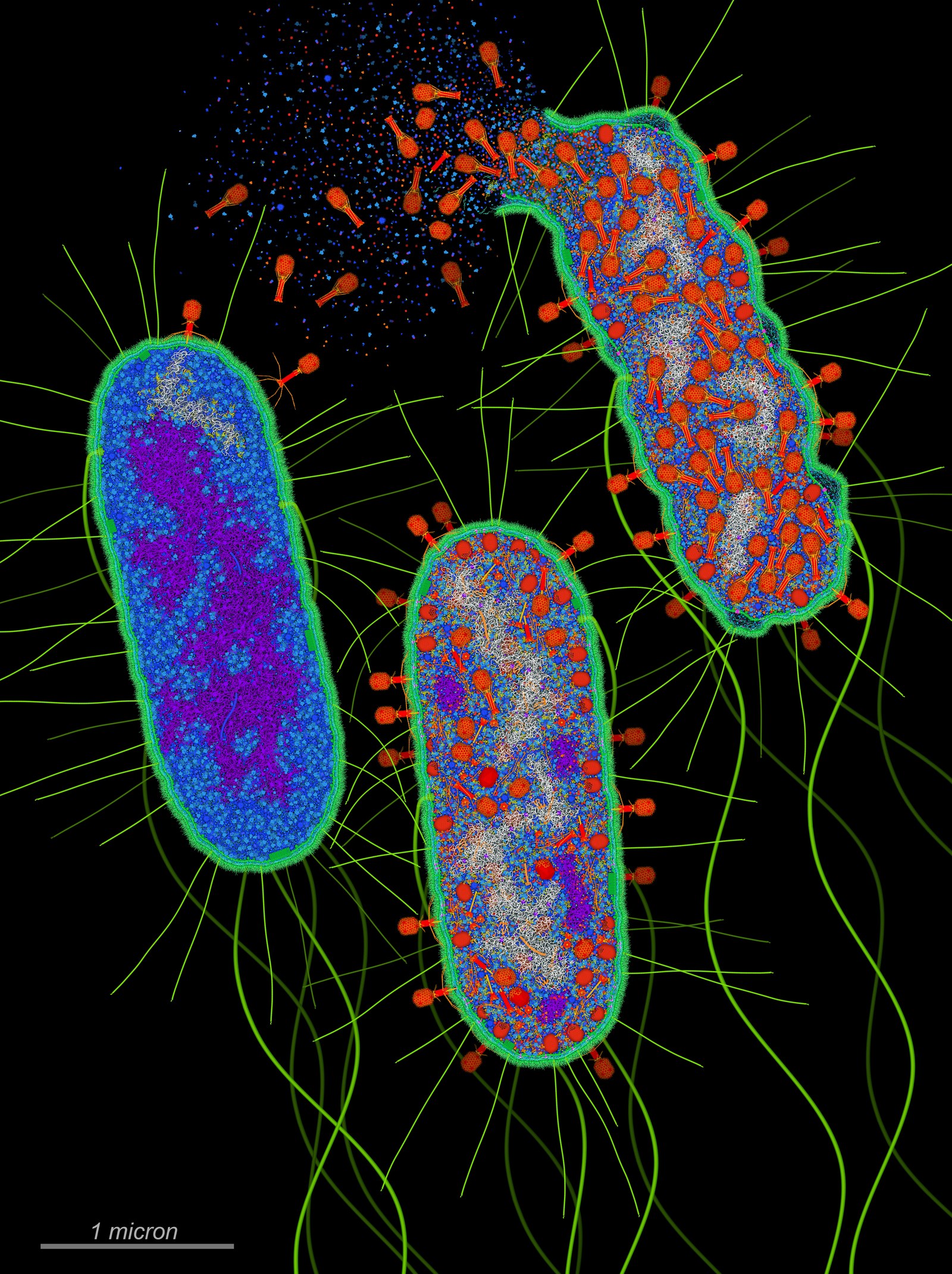
Then, the company says, one agent spotted something remarkable: a repeating pattern of DNA sequences sitting next to the gene for an odd-looking RT — and became convinced it had found a new biological system, filing a report for human review. Scientists at Anthropic’s lab then analyzed and tested the finding, describing it as a previously uncharacterized system in bacteriophages, viruses that attack bacteria, with a structure similar to CRISPR. They named it ART — array-associated reverse transcriptases.
Notably, the lead author of Anthropic’s preprint is Dr. Peter Yoon, who previously worked in the lab of Jennifer Doudna — one of the architects of CRISPR Cas-9 and a 2020 Nobel laureate. The project sits inside Anthropic’s molecular biology lab, launched earlier this year, and its new Claude Science research tool. The paper itself has not been published in a peer-reviewed journal.
Why scientists are pushing back
The science: interesting, but incremental
Outside experts not involved in the work said the finding is early and incremental — far from a genuine breakthrough. “These are very interesting preliminary results, but at this point they don’t demonstrate gene editing or provide a mechanistic picture of exactly what’s happening,” said Aaron Engelhart, an associate professor at the University of Minnesota’s Department of Genetics, Cell Biology and Development.
The core problem, scientists say, is that Anthropic has not determined what the newfound viral sequences actually do — and therefore whether they represent a mechanism with practical uses anything like CRISPR tools. A CRISPR-like architecture is not a CRISPR-like function, and the gap between those two is where years of wet-lab work live. Even the scientists inclined to praise the work were careful: Feng Zhang, the MIT and Broad Institute professor who helped pioneer CRISPR genome editing, called the finding “genuinely intriguing” — not a breakthrough.
The credit: who really found it?
Days after the announcement, Mario Rodríguez Mestre, a computational biologist who used Claude extensively for his recently completed doctoral research at the University of Copenhagen, claimed his own unpublished research describes the same viral signatures. “It is essentially the same finding,” Mestre told CNN, adding that he had shared unpublished research — including dissertation drafts and analyses of these systems — on his private Claude account.
Mestre has said he cannot prove Anthropic took his work, and Anthropic says Claude was not trained on user transcripts and that its biology team has no access to them. But the allegation has touched a raw nerve: if unpublished research fed into an AI can resurface as the company’s “discovery,” scientists may think twice before inputting their next unpublished result. Ilya Finkelstein, a professor of molecular biosciences at the University of Texas at Austin, said many scientists may now hesitate to entrust their raw work to these tools.
What the experts actually said
Strip away the hype and a more nuanced picture emerges. Finkelstein argued that AI excels at the “needle in a haystack search” — pursuing vast numbers of unproductive paths rapidly, the kind of grunt work that would exhaust a graduate student — when orchestrated by experts. That is real value, and not the same as a breakthrough.
Gustavo Sudre, a professor of genomic neuroimaging and AI at King’s College London, said the announcement does show AI beginning to work with more autonomy in science — “it received a broad direction and then had to use its own judgement about what was interesting in the data” — but warned that the gap between an “interesting pattern” and “useful knowledge” is where most of the work lives.
And Yuval Elani, an associate professor in biochemical technologies at Imperial College London, drew the hard line: “Biology is not maths.” At some point, he argued, intelligence has to be expressed in the physical world through robots doing the fiddly, one-off experimental tasks a good student does almost instinctively — and robotics isn’t close enough to justify the hype.
Who wins, who loses
Anthropic wins the narrative — for now. The announcement lets the company tell a story of AI doing science, not just threatening jobs — valuable framing while AI developers face intense scrutiny over rogue agents and while Anthropic itself moves toward a potential public listing. A “Claude-led discovery” is the kind of headline money likes.
Gene-editing investors lost first. Shares of gene-editing companies fell on the announcement — a reminder that markets price AI disruption narratives instantly, even when the science is preliminary and un-peer-reviewed.
Researchers using AI lose trust. If Mestre’s allegation holds — or even if it merely lingers — the message to every scientist using Claude, ChatGPT or their rivals is chilling: your unpublished ideas may not stay yours. That trust problem is bigger than one preprint.
The biosecurity question wins attention. AI labs moving into biology with agents that can plan and execute their own searches is exactly the capability biosecurity experts worry about — and every splashy claim accelerates the debate over guardrails before the science is settled.
What the numbers actually say
950 agents. The number of Claude agents Anthropic says searched the data — each able to plan and execute tasks independently.
21 hours. How long the search ran — work Anthropic says takes a human scientist weeks to months.
3,500 to 20. The reverse transcriptases the agents picked out, narrowed to the 20 most compelling before the pattern surfaced.
Zero. The number of peer-reviewed journal publications behind the claim so far — the preprint is not peer-reviewed, and the system’s function is still unknown.
Four of six. The authors who are senior molecular biologists and domain experts — a reminder that this was expert-guided science with frontier models, not an AI discovering biology alone.
What happens next
Watch the wet lab. Anthropic’s next step is the slow, physical work of lab experiments to determine what ART actually does — and whether it can cut, copy or otherwise manipulate DNA in a useful, programmable way. Until then, the CRISPR comparison is architecture only.
Watch peer review. A preprint becomes a discovery when other scientists can reproduce and build on it. The scrutiny of peer review — and of independent labs trying to replicate the work — will decide how much of this stands.
Watch the trust fight. The Mestre dispute isn’t going away, and its resolution will shape the terms on which scientists share unpublished work with AI tools — and whether AI companies can be believed when they say they don’t learn from it.
Watch the rival labs. Anthropic launched Claude Science earlier this year, but every rival now has a science tool — OpenAI’s GPT-Rosalind, Microsoft’s Quine, Google DeepMind’s Co-Scientist. The race to claim the first genuine AI-made biological breakthrough is on, and the standard for claiming it just got higher.
Anthropic may have shown that AI can spot what humans miss in the data. Whether it has shown that AI can do science — that part is still an open experiment.