Technology · Earnings · AI
The AMD Q3 2026 earnings data center numbers describe a company that has crossed a threshold: record revenue of $13.377 billion, a Data Center segment that nearly doubled to $8.5 billion and now supplies almost two-thirds of all sales, and the first Helios rack-scale AI systems live at five of the industry’s biggest buyers. Lisa Su called it the largest and most profitable quarter in AMD’s history — and guided the next one far higher.

SANTA CLARA, November 8, 2026 — Advanced Micro Devices reported third-quarter results on November 3 that reset every scale the company is measured by. Revenue reached a record $13.377 billion, up 45% year over year from $9.246 billion and up 16% sequentially. Non-GAAP gross margin was 56%, and non-GAAP net income was $3.471 billion, or $2.09 per diluted share. The engine was the Data Center segment: revenue of $8.5 billion, a record, up 97% year over year — a growth rate that lifted the segment from 47% of total sales a year ago to 64% now.
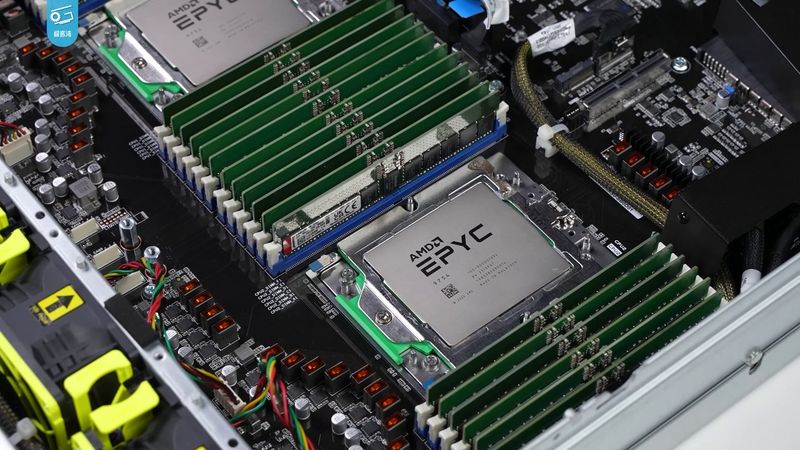
Two product lines did the work, per AMD’s release and prepared remarks. EPYC server CPUs continued their long share climb as cloud and enterprise buyers built out AI-era infrastructure — every AI cluster still needs host processors, and EPYC has become the default alternative in that socket. Layered on top was the launch of the Instinct MI450 GPU, AMD’s latest AI accelerator, and with it the first Helios rack-scale systems: full racks that combine EPYC CPUs, Instinct GPUs and AMD networking into a single deployable unit. Those first Helios systems are live and running real workloads at Anthropic, Meta, Microsoft, OpenAI and Oracle Cloud Infrastructure — a customer list that reads as a roll call of the AI build-out itself.
Background: the long road to a second ecosystem
AMD’s position was not built in a quarter. The EPYC line spent years grinding share from Intel in server CPUs, giving AMD the customer relationships, the platform presence and the cash flow to fund a serious GPU programme. The Instinct line then spent its own years as the credible-but-smaller alternative to Nvidia — competitive silicon held back, in buyers’ telling, by software maturity and by the absence of a rack-scale system they could buy as a unit rather than assemble. Helios is AMD’s answer to that second objection, and its arrival in the same quarter as the MI450 launch is why Q3 reads differently from earlier “good” AMD quarters: the company is no longer selling parts into other people’s AI systems; it is selling AI systems.
The demand backdrop is the same one lifting the whole sector — the hyperscale build-out that has also driven results such as Amazon’s AWS acceleration this earnings season — and the same logic pushing European and sovereign buyers toward diversified supply, as in the AMD-and-Nvidia supercomputer deals in Sweden and Denmark. Buyers want a second source for accelerators for the same reason they wanted one for CPUs: pricing leverage, supply security and a roadmap that does not depend on a single vendor’s allocation decisions.
The guidance is the story’s second half
For the fourth quarter, AMD guided revenue to about $17 billion, plus or minus 3% — roughly 66% year-over-year growth at the midpoint, and a sequential jump of more than $3.6 billion that would set another record by a wide margin. Guidance of that size, issued by a management team with a reputation for conservatism, is a statement about order visibility: rack-scale systems are not spot purchases, and a guide like this implies Helios deployments and MI450 volumes already contracted rather than hoped for. It also raises the bar the company will be judged against in February — the first quarter in years where AMD’s risk is execution against its own promise rather than scepticism about its products.
Who gains, who loses, who pushes back
AMD and its shareholders gain a re-rating argument grounded in shipments rather than roadmaps: five named AI giants running Helios in production is the credential the Instinct line has always lacked. The hyperscalers and AI labs gain what they have wanted for three years — a second accelerator ecosystem with rack-scale product, which disciplines Nvidia’s pricing and allocation power even where Nvidia keeps the larger share. Nvidia loses the “only option” premium at the margin, though nothing in AMD’s numbers suggests the overall AI-hardware pool is shrinking; both companies are selling into unmet demand. Intel loses further ground in the server CPU base that funds everything else.
The sceptics’ case deserves its own paragraph, because it is not frivolous. AMD’s accelerator software ecosystem still trails CUDA’s decade-deep moat — the same moat that, in China, keeps even a previous-generation Nvidia chip ahead of domestic rivals. Gross margin of 56% is strong but well below Nvidia’s levels, reflecting both mix and the price of winning share. And a 66% growth guide sets up a quarter in which any supply slip is punished. None of that contradicts the results; it prices the distance still to travel.
Why this matters
A duopoly is forming in AI compute — with different physics from the last one
The strategic fact of Q3 is structural: 64% of AMD is now data center, and its data-center growth rate (97%) is the kind normally associated with the market leader, not the challenger. Comparative context makes the point cleanly: a year ago AMD’s entire company was roughly the size its Data Center segment alone will approach next quarter. The AI-hardware market is consolidating into two full-stack ecosystems — Nvidia’s and AMD’s — with a fringe of custom silicon inside the hyperscalers. That shape matters for pricing, for export-control policy (which must now reckon with two American champions, not one), and for every buyer negotiating 2027 capacity.
Keep the results and the market mood in separate boxes
AMD reported into a week of AI-stock selling, and the two should not be confused. The selloff is an argument about valuations and the pace of returns on the build-out; the earnings are an argument about purchase orders already shipped and workloads already running. Both can be true at once — stocks can be ahead of themselves while the underlying vendor posts the best quarter in its history — and Q3 is a clean specimen of the difference: Anthropic, Meta, Microsoft, OpenAI and Oracle are not momentum traders, and their Helios systems are not a narrative. Readers pricing AMD’s future should watch whether those five names expand deployments, because that, not the week’s tape, is the variable the guidance depends on.
What happens next
The Q4 print, due in early February, is the immediate test: roughly $17 billion of revenue, with Data Center mix and MI450/Helios volumes the lines that matter. Between now and then, watch for three signals. Deployment expansions or new named Helios customers, which would confirm the rack business is broadening beyond the first five. Any commentary on 2027 accelerator supply and advanced-packaging capacity, the constraint most likely to cap the growth the guide implies. And Nvidia’s own results later this month, which set the market-share denominator against which AMD’s $8.5 billion quarter should be read. Su’s “largest and most profitable” line is, unusually for earnings rhetoric, simply what the filing says — the question Q4 answers is whether it was a peak or a new base.
What do you think — has AMD genuinely become Nvidia’s peer in AI systems, or is it still one product cycle behind? Follow Signal Post News for the Q4 numbers and the Helios deployment trail, and share your thoughts below.
Sources
Sources: AMD, Q3 2026 financial results release and prepared remarks (November 3, 2026), via the AMD Newsroom; AMD Form 8-K furnishing the Q3 2026 results, filed with the US Securities and Exchange Commission — revenue, segment, margin, net income, EPS and Q4 guidance figures are AMD’s reported numbers. Photos: Wikimedia Commons, as credited in the captions.