War / Algiers, Algeria — Algeria's parliament has voted unanimously to send National People's Army troops into Niger to protect energy installations around Madama, a remote desert outpost near the Libyan border — ending a 53-year era in which one of Africa's largest armies stayed inside its own frontiers.
Track it live: Live Global Trackers — Africa Wars
The Algeria troops Niger deployment authorised in Algiers on Sunday is the country's first foreign troop deployment since 1973, when Algerian forces were sent to support Egypt in the Arab-Israeli war. Parliament approved the mission in a closed-door session, with 148 members present voting unanimously in favour, according to Reuters, AFP and Algeria's official APS news agency — clearing the two-thirds majority that Algeria's 2020 constitution requires before its soldiers can be sent abroad. Foreign Minister Ahmed Attaf presented the proposal on behalf of President Abdelmadjid Tebboune, accompanied by representatives of the armed forces.
The destination, according to Reuters and AFP reporting of the APS account, is Madama in northern Niger, near the Libyan border, where Algerian units are to be based at a former French military post used during Operation Barkhane. Their stated mission is to protect energy installations and implement the two countries' bilateral security agreement — including the Kafra oil block, where Algeria's state energy company Sonatrach is exploring and operating. No Algerian troops had officially deployed yet, a Nigerien security source told Reuters, and neither government has disclosed the size of the force, its exact deployment date or how long it will stay.
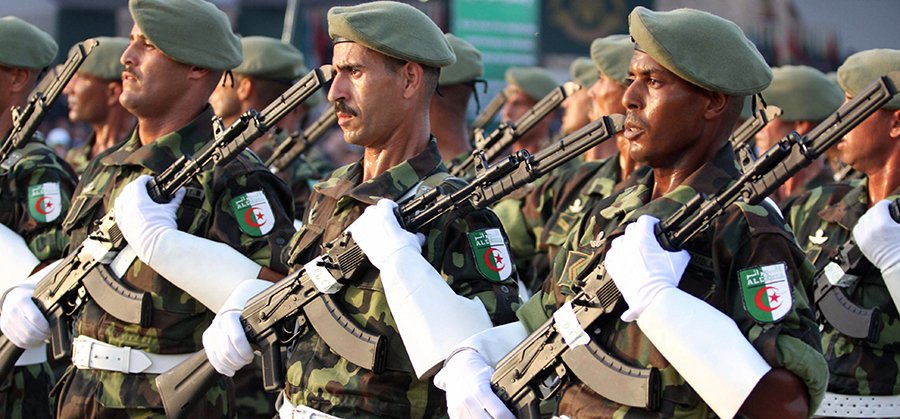
What parliament approved on Sunday
The vote was the final legal step in a build-up that had been visible for weeks. On October 21, Niger's Defence Minister Salifou Mody and Algerian army chief of staff Saïd Chanegriha signed a military cooperation protocol in Algiers; Mody had led a defence delegation to the Algerian capital a day earlier, Reuters reported. On October 3, Tebboune had already signalled the direction in a televised address, pledging: "We will protect Niger no matter what," and citing the oil and mining agreements between the two countries. Niger's President Abdourahamane Tiani visited Algiers in February, and Algeria has already donated four military helicopters to Niger and inaugurated a 40-megawatt power plant in June that supplies electricity to Niamey.
Wire reports differ slightly on the naming of the chamber that voted — AFP and APS accounts describe the Council of the Nation, parliament's upper house — but they agree on the operative facts: a closed-door sitting, a unanimous result, and 148 members present voting in favour. That figure matters because of the constitutional arithmetic explained below: a deployment abroad needs a two-thirds majority, and 148 votes clears that bar on any reading of the chamber's reported 174 seats.
On the ground in Niger, preparations appear to have started before the vote. General Bacharou Ibro Amadou, chief of staff to Niger's president, has been touring the Kawar area of the Bilma department, in the Agadez region, since October 19, according to Reuters. He travelled to Madama for talks with local military commanders, then continued to Dirkou to meet military and traditional authorities about plans for the base — the same base Algerian troops are now authorised to occupy.
The mission: Madama, a former Barkhane base and the Kafra oil block
Madama is a small desert outpost in Niger's far north-east, close to the Libyan frontier. France maintained a forward base there during Operation Barkhane, its decade-long counter-insurgency mission in the Sahel, because the location watches the smuggling and militant routes that cross the Sahara between Libya, Niger and Chad. Reuters, AFP and APS all describe the Algerian mission in the same terms: protect energy installations and implement the bilateral agreement — a mandate anchored on the Kafra oil field area, where Sonatrach, Algeria's state oil and gas company, holds exploration and operating interests. In other words, the first Algerian deployment abroad in half a century is, on paper, a guard mission for energy infrastructure at a strategically placed desert base — not, on anything said publicly so far, a combat deployment against the insurgents who operate across the wider Sahel.
Why this matters
The vote is a doctrinal break, not just a deployment order. Since independence, Algeria has treated non-intervention as a founding principle: its army, one of the largest and best-equipped in Africa, was built to defend Algeria's own vast borders and pointedly did not operate beyond them. The 1973 deployment to Egypt was the exception that proved the rule — and it took a pan-Arab war to produce it. For 53 years after that, through a civil war at home in the 1990s, the fall of Libya's Muammar Gaddafi next door in 2011, and a jihadist insurgency that consumed Mali and much of the Sahel, Algiers sent money, mediation and intelligence — but not soldiers. Sunday's vote ends that era in law as well as in practice.
It also fills a vacuum. France ended Operation Barkhane in 2022 and was pushed out of Niger entirely after the 2023 coup; the United States withdrew its forces from Niger in 2024, abandoning a major drone base at Agadez. The Sahel's military governments have since looked to Russia's Africa Corps, to Turkey, and to each other. Algeria's move inserts a regional power — with a long border, deep intelligence ties and energy assets at stake — into that competition, on an explicitly bilateral and, Algiers stresses, invited basis. Whether it stays a small guard force or becomes the template for a wider Algerian security role in the Sahel is the question the deployment now poses.
Background: the 1973 precedent and the doctrine that kept Algeria's army home
Algeria's last foreign deployment came in October 1973, when it sent forces to support Egypt during the Arab-Israeli war — the same conflict in which several Arab states committed troops and aircraft to the front. The army that returned home then settled into the role it has held ever since: guardian of a country of 2.38 million square kilometres, the largest in Africa, with long desert borders against Morocco, Mali, Niger, Libya, Tunisia, Mauritania and Western Sahara. Algeria fought a brief border war with Morocco in 1963 and endured a devastating internal conflict in the 1990s, but its doctrine — sovereignty, non-interference, and suspicion of foreign bases — kept its soldiers at home and kept foreign soldiers out.
The legal door to Sunday's vote was opened only five years ago. Algeria's 2020 constitution, for the first time, allowed the army to take part in operations abroad, but hedged the power with conditions: a deployment requires a two-thirds majority of each chamber of parliament. That is why the vote count — 148 members present, unanimous, comfortably above the two-thirds line — is more than a procedural detail. It is the mechanism the constitution's drafters built to ensure that ending five decades of non-intervention would require an overwhelming, public political consensus.
A Sahel vacuum after France
The regional setting changed faster than Algeria's doctrine. France's Operation Barkhane, which at its peak deployed more than 5,000 troops across the Sahel from bases including Madama, wound down in 2022 amid collapsing relations with Mali's junta. Coups in Mali (2020–21), Burkina Faso (2022) and Niger (2023) brought military governments that expelled French forces, ended the American presence in Niger, and formed the Alliance of Sahel States. All three countries are battling insurgents linked to al Qaeda and Islamic State across vast desert territories their own armies cannot fully control — the same violence Signal Post News has tracked in northern Nigeria and Niger, including the attacks that killed Nigerien soldiers in the Sahel in September. Into that gap stepped Russia's Africa Corps and Turkish suppliers. Algeria, which opposed the Niger coup at the time, has now chosen a different instrument: its own flag, on a neighbour's soil, by invitation.
From coup fallout to embrace in two years
The speed of the turnaround is easy to miss. When Niger's military seized power in July 2023 and detained elected President Mohamed Bazoum — who remains in detention — Algeria opposed the coup and resisted the military intervention threatened by West African regional bloc ECOWAS, but relations with the new junta were cold. They turned actively hostile in spring 2025, after Algeria shot down a Malian army drone near Tinzaouatène, on the Algeria–Mali border, on the night of March 31–April 1. Mali, Burkina Faso and Niger — the Alliance of Sahel States partners — recalled their ambassadors from Algiers in protest. Two countries that share a roughly 960-kilometre border were, eighteen months ago, in a diplomatic freeze. The February visit by Tiani to Algiers, the June power plant, the helicopter donation, the October 3 pledge and the October 21 protocol mark the stages of the repair. AFP also linked the timing of the deployment decision to a thwarted mutiny in Niger in August — a reminder, in that reading, of why Niamey wants a committed external partner now.
What Algiers gains — and what Niamey gains
Algiers: border security, Sonatrach's assets and Sahel influence
For Algeria, the gains are concrete. A friendly, stabilised northern Niger protects the southern approaches to Algeria's own oil and gas heartland and to the trans-Saharan routes Algiers hopes to develop. A guard force at Madama directly protects Sonatrach's Kafra interests and the wider energy cooperation the two governments have signed. And a visible, invited Algerian presence in the Sahel counters the influence of Russia and of regional rivals, asserting that the largest country in Africa intends to shape security on its own borders rather than subcontract it. The deployment also converts years of Algerian assistance — helicopters, electricity, training ties — into a formal security partnership with a government that, two years ago, was recalling its ambassador.
Niamey: a regional protector after the French and American exits
For Niger's military government, the calculation is equally plain. Since expelling French forces and ending the US military presence, the junta has faced an intensifying insurgency — Islamic State and al Qaeda-linked groups striking in the west and south-east — with a stretched army and new partners whose support comes in narrower forms. Algeria offers what Russia's Africa Corps does not: a neighbouring state with a direct interest in Niger's stability, a shared 960-kilometre border, energy investment, electricity supply and, now, troops committed by a unanimous parliamentary vote. For a government whose legitimacy is contested abroad — Bazoum's continued detention still blocks normal relations with many partners — a public pledge from Algiers that "we will protect Niger no matter what" is diplomatic capital as much as military help.
The risks: mission creep, insurgency and what has not been disclosed
The case against, and the uncertainties, deserve equal weight. Guarding fixed energy installations in northern Niger places Algerian soldiers inside a country where armed groups have repeatedly attacked military positions and infrastructure; a force sent to protect an oil block can find itself fighting the insurgency around it, which is how limited deployments widen — the mission-creep risk that critics of such arrangements routinely raise. Entanglement would also expose Algeria to the Sahel's alliance politics: Niger's partners Mali and Burkina Faso are the same states that recalled ambassadors from Algiers in 2025, and some regional reporting has framed Algeria's Sahel activism against its rivalry with Morocco and the Emirates' growing role in the region — a framing this article notes as reported context, not established motive.
What is not known is at least as important. AP and AFP both stress that the authorities have not disclosed the size of the force, the duration of the deployment, its exact start date, its command arrangements or its rules of engagement. No Algerian troops had officially crossed into Niger at the time of the vote, per the Nigerien security source cited by Reuters. Until those details are published — or the first Algerian vehicles are photographed at Madama — the deployment exists as a legal authorisation and a political signal, not yet as a fact on the ground.
What the numbers say
- 53 years: the gap between Algeria's last foreign deployment (Egypt, 1973) and Sunday's authorisation.
- 148 votes: members present, voting unanimously in favour — reported against a chamber of 174 members, clearing the two-thirds threshold the 2020 constitution demands.
- 960 kilometres: the length of the shared Algeria–Niger border (AFP).
- Four days: between the October 21 military cooperation protocol in Algiers and the October 25 parliamentary vote.
- 40 megawatts: the capacity of the Algerian-built power plant inaugurated in June that supplies Niamey.
- Four helicopters: donated by Algeria to Niger's military ahead of the deployment agreement.
What happens next
Three scenarios follow from here, and the first movements will discriminate between them quickly. In the narrowest, Algerian engineers and guards arrive at Madama over the coming weeks, the Kafra work proceeds under their protection, and the deployment stays the size of its stated mission — a precedent in law, a footnote in practice. In the second, the logic of protection expands: joint patrols, training missions and a wider Algerian footprint in northern Niger, formalising Algiers as the Sahel's northern security guarantor and the anchor of a new alignment with Niamey. In the third, an attack on the Madama force or the oil installations forces the question parliament has not yet had to answer — whether Algeria is willing to fight, and not merely guard, on foreign soil for the first time since 1973. Readers can follow the wider regional picture on our live war tracker, which follows the Sahel insurgency alongside the world's other active conflicts.
Related coverage
- Niger soldiers killed in Islamic State Sahel attacks
- Sudan's Burhan rejects peace talks and vows to retake territory
Sources
- Reuters — Algeria to send troops to Niger in first foreign deployment since 1973 (Oct. 25, 2026)
- Associated Press via Ottumwa Courier — Algeria to send troops to Niger in first foreign deployment in over 50 years (Oct. 25, 2026)
- AFP via News Central — Algeria senate approves troop deployment to Niger (Oct. 25, 2026)
- APS via El Democrata — Parliament of Algeria unanimously gives the green light to the deployment of troops in Niger (Oct. 25, 2026)
This report is based on Reuters, Associated Press, AFP and APS reporting of October 25, 2026, cross-checked across the three wire chains. Force size, deployment timing, duration and rules of engagement had not been disclosed by either government at publication. Analysis and scenarios are by Signal Post News.