Niger soldiers killed attack
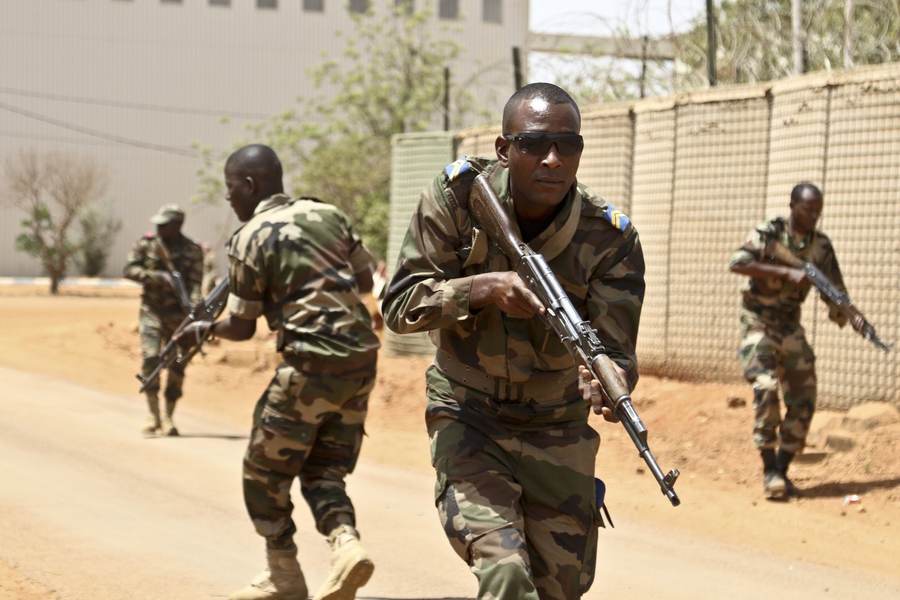
More than 50 members of Niger’s security forces have been killed in two separate attacks in the west of the country, two security sources told Reuters on Monday, September 28. A convoy of gendarmes was ambushed near the town of Abala-Filingué on Wednesday last week, the sources said, and a separate assault in Birni-N’Konni on Saturday killed more than 30 soldiers. The West African affiliate of Islamic State, known as Islamic State Sahel Province, issued two statements on Sunday claiming responsibility for the attacks, the SITE Intelligence Group said on Monday.
The toll makes last week one of the deadliest for Niger’s army in years — and it lands at a moment of acute political fragility for the military rulers who overthrew Niger’s elected president in 2023 on the explicit promise that soldiers could secure the country better than civilians could.
What happened: two ambushes, one devastating week
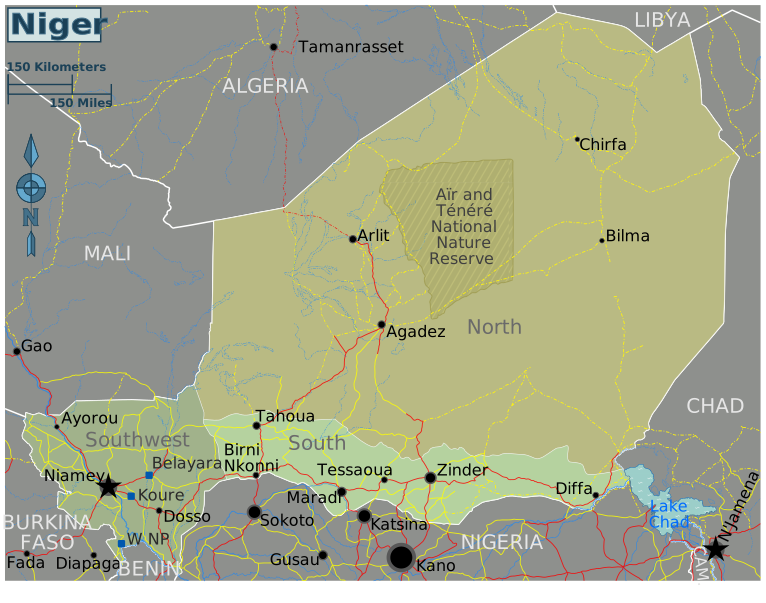
The first attack struck on Wednesday, September 23, when militants ambushed a gendarme convoy near Abala-Filingué, a town in the Tillabéri region close to Niger’s volatile borders with Mali and Burkina Faso. The area sits in the heart of the tri-border zone where jihadist groups move with relative freedom across frontiers the region’s armies cannot seal.
The second attack came on Saturday, September 26, in Birni-N’Konni in the Tahoua region, where more than 30 soldiers were killed, according to the two security sources who spoke to Reuters. The sources attributed both assaults to “terrorists” without going into further detail, and Reuters noted it could not independently verify the full toll.
There is some fog around the precise accounting, and honest reporting requires saying so. Days before the Reuters report, Nigerian security analyst Zagazola Makama — a widely followed tracker of the Lake Chad and Sahel conflicts — reported that at least 57 Nigerien defence and security personnel had been killed in two attacks on September 23 alone: 38 soldiers in an assault on a military outpost at Dabagu in Tahoua’s Konni Department, and 19 gendarmes ambushed around Abala-Filingué in Tillabéri. Makama attributed both to Islamic State militants and reported several soldiers missing, with bodies evacuated by road to Tahoua and by helicopter to Niamey. A separate ThisDay Nigeria compilation, also citing Makama, described a GARSI gendarmerie patrol attacked in Abala with 15 gendarmes killed, including two named officers.
The accounts differ on dates, locations, and the exact split of the dead — Dabagu versus Birni-N’Konni, Wednesday alone versus Wednesday and Saturday. What they agree on is the scale: upwards of fifty Nigerien security personnel killed in a single week by Islamic State-linked fighters, with the jihadist group itself now publicly claiming the attacks. Niger’s government had not publicly confirmed the casualty figures as of Monday.
Why this matters: the junta’s founding promise is failing in public
To understand why 50 dead soldiers in a week is a political earthquake and not just a military tragedy, you have to remember why Niger’s junta exists at all. When General Abdourahamane Tiani’s officers overthrew elected President Mohamed Bazoum in July 2023, their core justification was security: the civilian government, they argued, was losing the war against jihadists, and only the army could save the nation. It was the same script used by the coups in Mali (2020, 2021) and Burkina Faso (2022) — and it is the entire basis of the junta’s legitimacy, since it cannot claim democratic mandate.
Three years on, the ledger is grim. The insurgency has not receded; by most independent measures it has metastasized. In January, fighters struck the civilian airport and the military airbase in Niamey itself — the capital, the seat of junta power. Last month, mutinous soldiers attacked that same airport and the presidency, triggering a standoff with forces loyal to the government that was only resolved with the backing of Africa Corps troops, the Kremlin-controlled paramilitary force that succeeded Wagner in the Sahel. Analysts and security sources now speak openly of growing frustration within frontline army units after repeated losses to insurgents, particularly in the west.
A military regime that cannot protect its own soldiers cannot plausibly claim to protect its citizens. Every coffin that returns to Niamey or Tahoua is an argument the junta cannot answer — and the Islamic State’s public claim of responsibility, amplified through SITE, is designed to make sure the humiliation is visible far beyond Niger’s borders. Jihadist groups claim attacks not only to terrorize but to advertise: to recruits, to rivals, and to the populations they seek to govern, the message is that the state is a paper tiger.
How Niger got here: coups, expulsions, and a Russian gamble
The road to this week began with the 2023 coup, but the deeper history is a decade of state failure across the central Sahel. Niger was long considered the most reliable Western counterterrorism partner in the region — host to France’s Operation Barkhane forces and to the United States’ $110 million Air Base 201 in Agadez, the largest American drone base in Africa. After the coup, the junta ordered both out: French troops completed their withdrawal at the end of 2023, and the last American personnel left Agadez in 2024.
In their place came Russia. Africa Corps — the Kremlin’s rebranded paramilitary network — deployed to Niger, Mali, and Burkina Faso, the three juntas that banded together as the Alliance of Sahel States (AES) and walked out of the West African bloc ECOWAS. The bargain was straightforward: Moscow would provide the guns, trainers, and disinformation-age political cover that Paris and Washington would not, and the juntas would provide Moscow with a strategic foothold in West Africa.
The results, three years in, are the subject of fierce debate. The juntas and their supporters point to aggressive joint operations and argue that sovereignty was worth the price. Critics — including many Western analysts and, more quietly, some within the region’s own security establishments — argue that the Russian model has delivered propaganda victories and palace-guard protection while the countryside burns. What is not debatable is the trend line of violence: jihadist groups, above all the al-Qaeda-linked JNIM and the Islamic State’s Sahel Province, now operate across wider territory than at any point in the conflict, and the region’s armies are losing men at a staggering rate.
Who gains, who loses
The immediate winner is Islamic State Sahel Province. For a group competing with the larger, more entrenched JNIM for dominance of the Sahel jihad, a week like this is a recruiting sergeant. The two public claims of responsibility — issued as formal statements, not whispers — signal organizational confidence and a media operation functioning at full capacity. ISSP has been expanding from its Mali-Niger border heartland, and operations of this scale in Tahoua and Tillabéri suggest growing reach, not containment.
The losers start with the junta. Tiani’s government now faces the nightmare sequence for any military regime: battlefield losses severe enough to shake the rank and file, coming weeks after an outright mutiny that required foreign paramilitaries to suppress. The August standoff — mutinous soldiers attacking the airport and the presidency, loyalists saved by Africa Corps — revealed something extraordinary: a junta that seized power in the name of the army now needs Russian guns to protect itself from its own soldiers. Each new massacre of troops deepens the grievance pool from which the next mutiny could draw.
Russia’s Africa Corps sits in the middle. On one hand, Nigerien weakness is Moscow’s opportunity: the more the junta needs protection, the more indispensable — and the more politically leveraged — the Russian presence becomes. On the other, if the perception takes hold that the Russian partnership cannot deliver security either, the Kremlin inherits the same legitimacy trap that consumed the French. There is a bitter irony available to anyone who wants it: the junta expelled Western forces for failing to defeat the jihadists, then hired Russian forces who are faring no better at a far higher political price.
The heaviest price, as always, is paid by civilians. The tri-border regions where these attacks occurred are populated by farming and herding communities already squeezed between jihadist taxation and military suspicion. ThisDay’s reporting on the same violent week — 12 civilians reportedly killed in Karakara, eight more in Yeldou — is a reminder that the security forces’ body count is only the visible part of the week’s toll. Displacement, hunger, and the slow collapse of rural life continue largely off camera.
What the numbers actually say
Fifty-plus security personnel killed in a week is catastrophic by any standard, but context sharpens the picture. The deadliest single attack in Niger’s modern history remains the December 2019 assault on the Inates military camp, in which jihadists killed 71 soldiers — an event so shocking it forced then-President Mahamadou Issoufou to cut short a foreign trip and declare national mourning. Last week’s toll approaches that order of magnitude, except that it is spread across multiple attacks in multiple regions — which may actually be worse news, suggesting coordinated capability rather than a single lucky strike.
The geographic spread matters too. Tillabéri and Tahoua are different operational theaters, hundreds of kilometers apart. Hitting both in one week implies either a single command with real reach or a movement-wide offensive tempo — neither of which describes a defeated enemy. And the Dabagu detail in Makama’s reporting — 38 soldiers killed when militants overran a military outpost, with troops reportedly caught off guard — points to the tactical problem analysts keep flagging: static positions, predictable patrols, and units that are undermanned, under-equipped, or simply exhausted.
There is also the morale data point hiding in plain sight: Reuters’ own sources describe “growing frustration within frontline army units after repeated losses.” Armies do not mutiny over one bad week; they mutiny over a pattern. The August mutiny attempt — soldiers turning their guns on the airport and the presidency — is the pattern’s loudest expression so far. Watch the funerals, the promotions, and the purges in the coming weeks: they will tell you more about the junta’s stability than any communiqué.
What happens next: three scenarios
First, the crackdown scenario. The junta’s instinct, demonstrated after the August mutiny — when it detained a lawyer for disseminating army-related information and announced weapons discovered at a Niamey base — is to tighten information control and purge suspected disloyal officers. Expect more arrests, more secrecy around casualty figures, and possibly a reshuffle of the high command. The risk: purges driven by paranoia hollow out competence and breed the very disloyalty they aim to prevent.
Second, the escalation scenario. The AES juntas have increasingly favored large joint operations with heavy Russian involvement. A retaliatory offensive into the tri-border zone is likely — and with it, the familiar pattern of civilian harm that drives recruitment for the jihadists. ISSP and JNIM have both historically grown stronger after indiscriminate state reprisals; the groups understand the provocation cycle better than the governments do.
Third, the slow-burn scenario — arguably the most likely. No single dramatic collapse, but a steady erosion: more ambushes, more funerals, more quiet desertions, deeper dependence on Africa Corps, and a junta that governs an ever-shrinking archipelago of secured towns while the countryside slips away. This is the trajectory Mali and Burkina Faso are already on, and nothing in last week’s events suggests Niger is diverging from it.
None of these scenarios ends the war. The Sahel’s insurgency is now in its second decade, funded by kidnapping, gold mining, and taxation, and animated by grievances — ethnic, economic, political — that no amount of airstrikes can resolve. The question for Niger is not whether the junta can defeat the jihadists; it is whether the junta can survive its own failures. Last week gave the world new reason to doubt it.
Sources
- Reuters: More than 50 members of Niger’s security forces killed in attacks, sources say, September 28, 2026
- SITE Intelligence Group, via Reuters, September 28, 2026: Islamic State Sahel Province issued two statements on Sunday claiming responsibility for the attacks.
- NigerianUpdates, September 24, 2026, citing security analyst Zagazola Makama: 57 Niger Security Personnel Killed in Separate Attacks
- ThisDay Nigeria, citing Zagazola Makama: 35 reportedly dead as violence hits Niger in three separate incidents