Burhan rejects Sudan peace talks
War / Sudan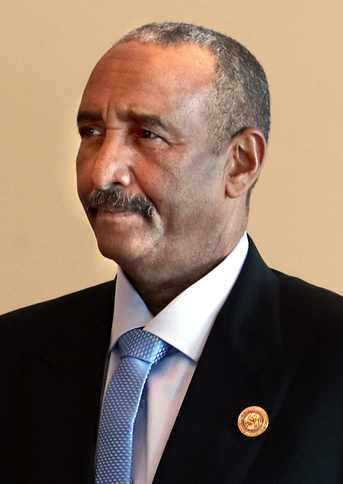
Burhan rejects Sudan peace talks. That is the blunt message General Abdel Fattah al-Burhan delivered on Tuesday in the northern Sudanese town of Merowe, where he promised to seize “every inch” of territory held by the paramilitary Rapid Support Forces and declared that the “military option” would continue until the RSF is removed from Sudan. The remarks, reported by the Sudan News Agency from a gathering in Village 5, are among the starkest rejections of diplomacy yet in a war now grinding through its fourth year — and they landed just a day after the RSF said it was ready to discuss an immediate and unconditional ceasefire.
The timing sharpens the message. It came days after the RSF captured El Fasher and completed its takeover of all five Darfur state capitals; days after Burhan held a rare weekend meeting in Egypt with U.S. senior adviser for Arab and African affairs Massad Boulos; and weeks after Washington withheld Burhan's visa for the UN General Assembly during a dispute over an American-backed 90-day ceasefire plan. The Merowe speech ties those events together as a battlefield answer to a diplomatic push.
Why this matters
This was a strategy statement, not merely rally rhetoric. Burhan presented total military victory as the only acceptable outcome, closing the door for now on the 90-day truce backed by Washington and on the “Sudanese-owned and Sudanese-led national dialogue” Boulos advocated after their meeting.
The venue matters too. Burhan was speaking at a domestic gathering in army-held northern Sudan, not across a negotiating table. His immediate audience was Sudanese, but the message was also aimed at U.S., Egyptian and regional mediators: pressure for a national deal will not move the army while it believes the RSF remains entrenched in cities and expanding its territorial control.
The paradox is that both camps now say they want peace, but only on terms the other side will not accept. The RSF is offering ceasefire talks from a position of strength in Darfur. The army says any process must begin with RSF fighters leaving cities. That is the shape of a conflict preparing for another violent phase, not a settlement.
What Burhan actually said — and where he said it
According to reporting based on the Sudan News Agency, Burhan spoke on Tuesday, October 6, in Village 5 in Merowe locality. He rejected negotiations to end what he called three and a half years of war, pledged to recover “every inch” and said the military course would continue until the RSF was removed from Sudan.
The position is consistent with his earlier demands. Burhan has said any meaningful peace must start with RSF fighters withdrawing from urban areas; anything short of that, in his description, is peace without substance. His deputy, Malik Agar, has likewise argued that military action remains the alternative if the RSF does not leave those areas.
The September parallel is clear. At Khartoum Stadium, Burhan rejected U.S. truce pressure and dismissed the visa dispute, saying he did not need a visa to any country. The Merowe appearance extends that line after the army's loss of El Fasher, when compromise could be read by supporters as accepting a battlefield reversal.
The other side of the table: the RSF's ceasefire offer
On the same Tuesday, the RSF said it was ready for immediate and unconditional ceasefire discussions with the army. In Addis Ababa, it signed a joint statement with the Coordination of Civil Democratic Forces, known as Taqaddum. Eastleigh Voice reported that RSF leader Mohamed Hamdan “Hemedti” Dagalo said he would sign a ceasefire document without hesitation if the army presented it.
The declaration describes the return of displaced people, secure humanitarian passages and civilian participation in peace negotiations. Those commitments matter on paper, but implementation would be the test: every previous national truce has broken down, and both armed camps face serious accusations over civilian harm.
The ceasefire offer also arrives as the RSF consolidates Darfur and masses fighters in West Kordofan. Critics see a proposal designed to freeze favorable front lines. Burhan's camp has long argued that pauses allow the paramilitary to entrench; his adviser Amjad Farid has warned that the U.S. plan could produce a Libya-style partition.
Washington has accused the RSF of genocide and members of the army of war crimes. Both sides deny wrongdoing. The U.S. State Department has also said neither the army nor the RSF represents legitimate constitutional governance for Sudan. That position leaves Washington pressing two armed forces it does not recognize as a legitimate government to negotiate the country's political future.
Washington's narrowing lane
Boulos met Burhan in Egypt over the weekend, Reuters reported on October 5, in rare direct contact less than two weeks after the visa was withheld. On Monday, Boulos wrote that peace must come through an inclusive Sudanese-led national dialogue and a transition toward civilian-led government, while reaffirming U.S. work with Egypt.
Washington has tools but no accepted enforcement mechanism. It can use diplomatic access, visas, atrocity designations and humanitarian funding to raise the price of intransigence. It cannot by itself compel either force to abandon military objectives. Read in that context, the Merowe speech was at least partly Burhan's answer to Boulos: the army will set its own sequence, and battlefield withdrawal by the RSF comes first.
How we got here: from an integration dispute to a two-zone war
The war began in April 2023 after the army and RSF fell out over the paramilitary's integration into the national armed forces and over command during a promised political transition. What began as a power struggle in Khartoum became a nationwide war lasting more than three and a half years.
The 2026 arc has moved in both directions. The army regained Khartoum and ground in central Sudan. The RSF then surged in Kordofan and Darfur. El Fasher's fall on October 6 gave it all five Darfur state capitals and reinforced the parallel administration based in Nyala. Meanwhile, the army has retaken ground in North Kordofan and is pushing toward En Nahud and Al Khuway as the RSF concentrates forces farther west.

The resulting map is hardening into zones: RSF dominance across Darfur, army control across much of the north, east and center, and Kordofan as the hinge between them. That does not make formal partition inevitable, but it is the drift that analysts and Burhan's own adviser have warned about.
Who gains, who loses, and what the critics say
Continued fighting offers each leadership a path to political facts. The RSF can try to convert control of Darfur into negotiating leverage and administrative permanence. Army hardliners can argue that a successful Kordofan offensive would reopen the route west and reverse the post-El Fasher map. External backers on both sides have little incentive to be seen conceding before those possibilities are tested.
Civilians bear the cost. A local charity group said an RSF attack in West Kordofan killed 10 civilians and wounded others. The Dar Hamar Emergency Committee accused RSF fighters of violations against civilians in Abu Ajal village in En Nahud's countryside. The International Organization for Migration said more than 5,500 people were displaced in Blue Nile state over three days. These claims come through local and international reporting in a war where access is limited; responsibility and totals should be independently investigated.
International criticism is growing. The UN Human Rights Council voted 28–10 to demand an immediate and unconditional ceasefire. The UN humanitarian chief called the turn in El Fasher a “terrible escalation.” Washington's position that neither armed camp is a legitimate constitutional government adds a political warning to the humanitarian one.
What the numbers say
Tens of thousands of people have been killed. More than 13 million have been displaced in what the UN describes as the world's largest displacement crisis: about 9.3 million inside Sudan and 4.3 million in neighboring countries. Reuters has placed the total above 14 million, reflecting different reporting dates and the speed of movement.
The UN says 33.7 million people — around two-thirds of Sudan's population — need aid in 2026. Famine has been confirmed in El Fasher and Kadugli, while more than 20 other areas are in or at risk of famine. Three and a half years into the war, every previous truce has collapsed. The scale explains why even a limited humanitarian pause could save lives, and why another failed national ceasefire would deepen public distrust.
What happens next: three scenarios
1. The Kordofan offensive
The army pushes toward En Nahud and Al Khuway while the RSF counter-masses in West Kordofan. That would make Kordofan the next decisive theater and place more civilians between two forces trying to connect or divide the country's rival zones. Burhan's Merowe speech makes this the most plausible near-term path.
2. Frozen partition drift
Darfur remains under RSF administration while the center, north and east remain under the army. Rival institutions harden into a Libya-style split in practice even without a declaration or internationally recognized border. This is the structural risk if neither side can break the other's zone.
3. A diplomatic reset
U.S., Egyptian and regional pressure produces a narrower humanitarian pause first: protected corridors, local ceasefires and aid access rather than a comprehensive political deal. That route requires a battlefield shock or a shift in outside leverage before it becomes likely, but it may be the only attainable bridge back to national talks.
Sources
- Africa Center for Strategic Studies media review — reporting on Burhan's Merowe speech
- GhanaSummary — Al Jazeera coverage of the Merowe remarks and battlefield context
- Reuters — Boulos–Burhan meeting in Egypt and the U.S. diplomatic position
- Eastleigh Voice — the RSF ceasefire offer and Addis Ababa declaration
- ADF Magazine — battlefield analysis and the balance of power
Verification note: Claims made by the SAF, RSF and local groups are attributed to their sources. Independent access to several affected areas remains limited.