channel migrant boat capsize deaths
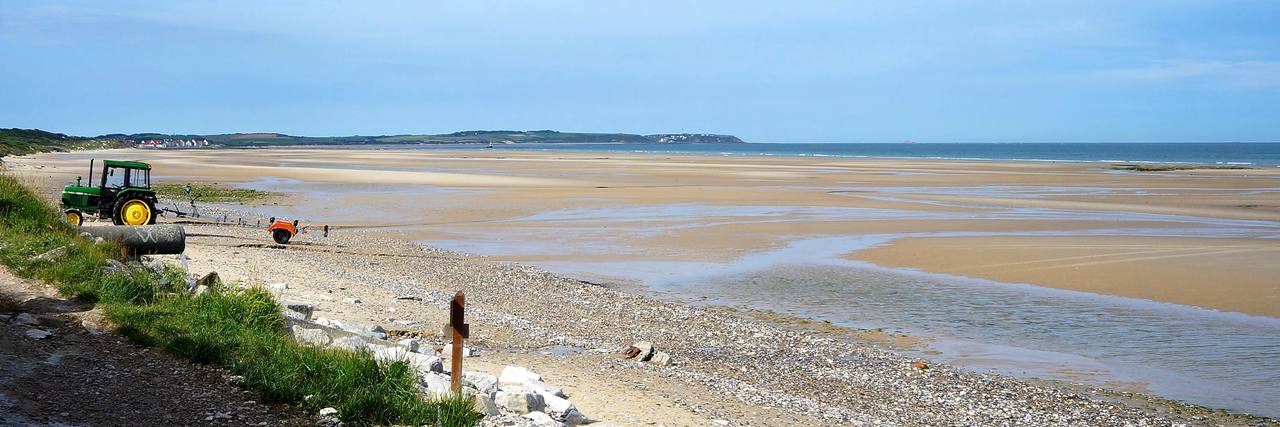
The channel migrant boat capsize deaths off Wissant on Monday morning — two women in their thirties and a ten-year-old boy — mark another grim milestone in the English Channel's deadliest stretch in years. The inflatable dinghy, crammed with around 105 people, capsized off the Pas-de-Calais coast near Calais as it attempted the crossing to Britain, French authorities said. Around 102 people were pulled from the water alive, many of them injured, in a rescue operation that at one point involved six boats. The sea was calm and the weather good. French prosecutors have opened a criminal investigation, and the judicial police are investigating how three people lost their lives. With these deaths, at least 24 people have now died attempting the Channel crossing this year.
What happened off Wissant
In the early hours of Monday, September 28, 2026, France's maritime police received a distress call from an inflatable dinghy that had run into trouble off Wissant, a small coastal town between Calais and Boulogne-sur-Mer. About 105 people were reported to be on board — an astonishing number for a single inflatable craft. Emergency workers at the scene identified the victims as two women in their thirties and a ten-year-old boy; their names and countries of origin had not been released, and all were believed to be asylum seekers. The local prefecture described the vessel as a "water taxi" — a method increasingly used by people-smuggling gangs, in which dinghies travel down the French coast and collect groups of migrants waiting in shallow water.
By about 10:30 a.m. local time, six rescue boats were still surrounding the scene, searching for survivors, as rescued passengers wrapped in survival blankets were brought ashore. A Pas-de-Calais prefecture spokesman confirmed "a provisional total of three deaths and many more injured." A rescue worker told reporters: "An investigation has already started into how they lost their lives."
The "water taxi" business model
How water taxi migrant smuggling gangs work
The gangs' logistics have industrialized. Instead of launching from a single beach, they now run what French officials call "water taxis": lightly loaded dinghies travel along the coast, stopping at prearranged points to scoop up groups wading out from the shallows. It spreads the risk of interception across miles of coastline and lets smugglers pack boats far beyond any safe capacity at the last possible moment. The Wissant boat, with 105 souls aboard, was not even an outlier: smugglers have been steadily inflating boat sizes all year.
Why the boats keep getting bigger
The numbers tell the story. The average number of people crammed onto each small boat has risen from 56 in the year to June 2025 to 65 in the year to June 2026, according to Home Office figures. Earlier this month a dinghy carrying a record 230 people was spotted "buckling" in the swell off Berck-sur-Mer; French rescuers said around 30 people ended up in the water during the rush to board, and their intervention "helped avert a tragedy." In July, a 165-person "mega dinghy" — some 13 meters long, the length of a bus — set the previous record. Every record is a warning the gangs are ignoring, because bigger boats mean more fares per crossing, and the fares are the entire business.
Why this matters: fewer crossings, more deaths
Here is the paradox at the heart of Monday's tragedy. By the headline numbers, deterrence appears to be working: more than 18,600 people had crossed the Channel in small boats by September 24 this year — down about 42 percent from the same period last year. Wednesday's 781 arrivals were the highest single-day total of the year, but the trend is unmistakably downward. Yet the death toll keeps climbing. Three people died during attempted crossings between Monday and Friday of last week alone, while 164 were rescued across 18 attempted crossings. At least 24 are dead this year, many drowned, others crushed in overcrowded boats.
The per-crossing risk is rising even as crossings fall — which suggests the crackdown is not stopping the trade so much as concentrating its danger. When enforcement makes each launch riskier to organize, gangs compensate with volume per boat, and the passengers absorb the entire cost of that arithmetic. That is the mechanism Monday's capsize exposes: a policy success measured in arrival statistics, and a human catastrophe measured in bodies.
The numbers, in context
Channel crossing deaths this year, and what the figures imply
Put 2026 against the benchmarks. The worst single incident on record remains November 2021, when 27 migrants died after a dinghy sank — an independent inquiry later found that tragedy "avoidable," noting a nearby French patrol vessel had failed to respond to a mayday. Monday's three deaths do not approach that scale, but the pattern is worsening in a different way: deaths are now spread across many smaller disasters — three here, three last week, a man found in cardiorespiratory arrest off Camiers on Thursday — a drumbeat rather than a single catastrophe.
Meanwhile the economics of enforcement look lopsided. Britain has handed France hundreds of millions of pounds for coastal policing (critics cite £660 million), France agreed in November 2025 to start intercepting small boats at sea — making its first on-water interception in January — and 10 "Raise the Colours" activists were recently banned from France after trying to stop crossings themselves. Yet the gangs still obtain dinghies and outboard motors "with ease," in the Home Office's own assessment. Money is being spent; the supply chain is intact; the boats are bigger; the dead are younger.
Who gains, who loses, and what the critics say
The winners are few and obvious: the smuggling networks, whose per-boat revenue rises with every extra passenger crammed aboard. Everyone else loses. The migrants lose most of all — including, with grim frequency, children. The French and British governments lose politically: Paris faces questions about why interceptions that were promised remain rare in practice, while London faces the mirror-image question of why a multi-hundred-million-pound deal has not dented the gangs' logistics.
Refugee charities such as Care4Calais argue the rising death toll is the predictable product of enforcement-first policies that close safer options without stopping demand. The Home Office counters that the gangs are "taking greater risks" and that criminal networks are the sole authors of the danger. Both claims contain truth, which is why the argument never resolves: enforcement raises the price of passage, the price is paid in risk, and the risk is borne by people with no seat at the table where the policy is made.
Notably, the capsize occurred on the very morning Pope Leo XIV — in France this week — was due to speak on European peace and unity, a coincidence that will not be lost on anyone watching how Europe talks about itself versus how it polices its borders.
What happens next
In the immediate term: a French criminal investigation, judicial police inquiries, and the grim administrative work of identifying the dead and notifying families. Expect both governments to restate their positions within days — London pointing to the interception agreement, Paris pointing to the arrests and seizures it does make.
Structurally, autumn weather will do what policy has not fully managed: rougher seas historically suppress crossings through winter, but each crossing attempted in worse conditions carries higher risk, so the death-per-attempt ratio may keep climbing even as absolute numbers fall. The strategic question is whether either government will treat the rising lethality as its own policy metric rather than an externality. Until deterrence is measured in lives not lost rather than arrivals not counted, the Channel will keep producing Mondays like this one — and the boats, the gangs' spreadsheets insist, will keep getting bigger.
Sources
- The Times — Child among three people dead as migrant boat capsizes in Channel
- Reuters via 106.5 Jack FM — Child and two women die after migrant dinghy flounders off French coast
- The Sun — Two women and boy, 10, die as dinghy capsizes crossing the Channel
- Full Fact — Context on France's at-sea interceptions
Reporting basis: Fixed September 28, 2026 snapshot. The coastline image shows Wissant and Cap-Gris-Nez; it does not show Monday's rescue or the boat involved.